Best Time to Visit Pamukkale Travertines to Avoid Crowds
Pamukkale is one of Turkey’s most visited attractions, and its terraces can feel crowded on summer days. But the crowds follow patterns that are easy to understand and easy to exploit.
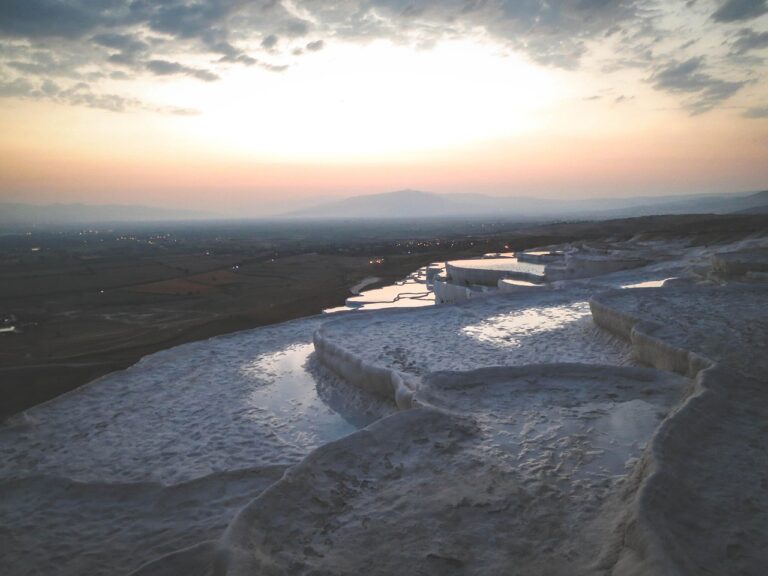
Pamukkale is one of Turkey’s most visited attractions, and its terraces can feel crowded on summer days. But the crowds follow patterns that are easy to understand and easy to exploit.

The white terraces of Pamukkale are older than any city, any empire, any religion. They were built by mineral water over thousands of years, and human history around them is a much shorter, later story.

The terraces of Pamukkale are a building without an architect, a structure created by water and chemistry over thousands of years.
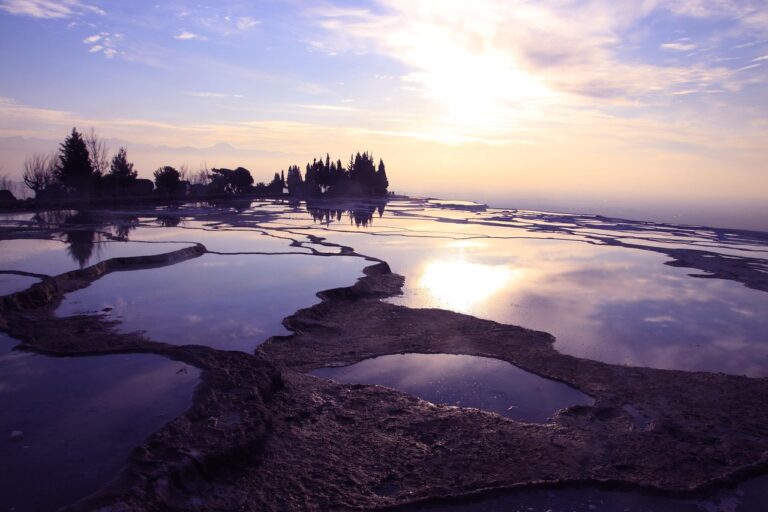
Some places are worth traveling across the world to see, and the white terraces of Pamukkale are among them.

The white terraces of Pamukkale are among the most famous sights in Turkey, and visiting them is a unique experience: you walk barefoot on a natural formation built by mineral water over thousands of years.

The white terraces of Pamukkale, the cotton castle of southwestern Turkey, look like a frozen waterfall poured over the hillside.

Hierapolis shares its gates with the travertine terraces of Pamukkale, and together they form one of the most visited attractions in Turkey.

Hierapolis lived for over a thousand years, and its history reads like the history of the ancient world in miniature: Hellenistic kings, Roman emperors, Jewish communities, Christian martyrs, earthquakes, and…

Hierapolis was built on a dramatic platform: a plateau above the white travertine terraces, with the valley floor far below.

Most travelers come to Pamukkale for the white terraces and discover the ancient city of Hierapolis almost by accident, standing on the plateau above the travertines.

Hierapolis is usually visited together with the white travertine terraces of Pamukkale, and the two are managed as a single destination.

Hierapolis sits on a plateau above the white travertine terraces of Pamukkale, and its story is inseparable from the hot springs that made its name.
We use cookies
Necessary cookies keep this site working. With your permission we also use cookies for analytics and advertising, which is how the site is funded. You can change your mind at any time. Cookie policy · Privacy policy