The white terraces of Pamukkale, the cotton castle of southwestern Turkey, look like a frozen waterfall poured over the hillside. They are the work of water and time, shaped over tens of thousands of years, but their history is also a human one. People have bathed in these springs, worshipped beside them, and built a city above them for millennia. This is the complete story of the travertines, from their geological birth to their protected present.
The Birth of the Travertines: Geology Over Millennia
The story of the terraces begins deep underground. Rainwater seeps through the earth, dissolves carbon dioxide and minerals from the rocks, and rises again as hot springs along the fault lines of the region. The water that emerges here is saturated with calcium carbonate, the raw material of the terraces.
When the spring water reaches the surface, it spreads across the slope and begins to release its carbon dioxide into the air. The chemical balance shifts, and calcium carbonate precipitates out of the water as a soft white mineral, building up layer by layer. Over thousands of years, this process creates terraces.
The result is a staircase of white pools, each rimmed by a natural dam of mineral, with warm water cascading from one level to the next. The process is slow, but it never stops: the terraces of today are still growing, and the landscape is a living work of geology.
Ancient Springs: Prehistoric Visitors
Human beings have been drawn to the hot springs for as long as people have lived in the region. The warm, mineral-rich water was a source of comfort and healing, and the pools at the foot of the terraces were natural baths long before any civilization built around them.
Archaeologists have found evidence of settlement near the springs going back to prehistoric times. The site offered what ancient people needed: water, warmth, and a dramatic, sacred landscape. The terraces themselves, impossibly white against the green valley, must have seemed like a place touched by the gods.
This sacred character would define the site’s history. When the first cities rose in the region, they were drawn to the springs, and the white mountain became a place of worship, healing, and legend.

The Sacred City Above
In the second century BC, the kings of Pergamon founded a city on the plateau above the terraces. They named it Hierapolis, the sacred city, and its position above the white pools was no accident. The city was built to command the springs and their extraordinary landscape.
The new city grew wealthy from its position. The healing waters attracted visitors from across the ancient world, and the city developed into a thermal resort of the Hellenistic and Roman periods. The terraces below became the city’s most famous attraction, a natural wonder on its doorstep.
The relationship between city and terrace was intimate. The city’s baths were fed by the same springs that built the white mountain, and the mineral water was channeled through the city’s streets. The sacred city and the cotton castle were one system.
Roman Bathing and the Healing Waters
Under the Roman Empire, the tradition of bathing reached its height. The Romans built grand bath complexes at Hierapolis, using the warm mineral water that rose from the springs. The vaulted halls of the great baths still stand on the plateau, and they housed one of the finest thermal spas of the ancient world.
The water was believed to heal all manner of ailments, from skin diseases to joint pain, and visitors came from across the empire to bathe in it. The Roman doctor and traveler writers described the springs with enthusiasm, spreading their fame through the classical world.
The terraces themselves became part of the experience. Bathers would descend the white steps to the pools, and the warm water cascading over the mineral shelves was considered a natural cure. The cotton castle was the ancient world’s health resort.

Christian and Byzantine Pamukkale
With the rise of Christianity, the sacred landscape acquired a new meaning. The Apostle Philip was said to have preached and been martyred at Hierapolis, and the city above the terraces became a Christian pilgrimage center, drawing believers from across the Byzantine world.
The healing tradition continued under Christian rule. The baths remained in use, and the hot springs were now seen as gifts of the Christian God. The white terraces, once sacred to pagan gods and the underworld, were absorbed into the Christian story of the region.
The Byzantine centuries saw the city shrink and change, but the springs never stopped flowing. Even as the great monuments of the ancient world crumbled, the warm water continued to build the terraces, and the pools continued to draw their visitors.
Earthquakes and the Changing Landscape
The history of the terraces is also a history of earthquakes. The region sits on active faults, and the seismic activity that creates the hot springs also shakes the landscape. Earthquakes have repeatedly damaged the city above and altered the flow of water that builds the terraces.
When the ground shifts, the springs can change course, and the terraces depend entirely on the water. A quake that redirects the springs can dry out parts of the white slope, while new flows build fresh terraces elsewhere. The landscape is constantly being rewritten.
This geological instability was one of the reasons the ancient city eventually declined. After the catastrophes of the seventh century AD, the population shrank, and the great city above the terraces was gradually abandoned, leaving the white mountain to the elements.

Medieval Silence and Ottoman Travelers
For centuries after the fall of the ancient city, the terraces passed through a long quiet. The region was ruled by Byzantine, Seljuk, and Ottoman powers, and the ruins of Hierapolis decayed on the plateau. The local people, however, never forgot the white mountain and its warm pools.
The Ottomans knew the site as Pamukkale, the cotton castle, a name that perfectly describes the terraces’ appearance. The hot springs continued to be used, and the pools remained a place of bathing and relaxation for the people of the region throughout the Ottoman centuries.
Western travelers began to reach the site in the seventeenth and eighteenth centuries, and their accounts brought the white mountain to the attention of Europe. They described the terraces with wonder, and their writings marked the beginning of Pamukkale’s modern history.
The Nineteenth Century: Western Discovery
The nineteenth century brought the first serious visitors and scholars to Pamukkale. Explorers and travelers, following the growing European fascination with the classical world, came to see the terraces and the ruins of Hierapolis, and their reports made the site famous across the West.
The descriptions of the period capture the terraces at a moment of natural glory. Travelers wrote of the dazzling white pools, the warm turquoise water, and the spectacular view down the valley. Their engravings and photographs spread the image of the cotton castle around the world.
The nineteenth century also saw the beginning of archaeological interest in the ruins above. Scholars identified the site as Hierapolis, the sacred city of the ancient sources, and the terraces and the city were finally reunited in the world’s imagination as one great destination.

The Twentieth Century: Damage and Recovery
The twentieth century brought mass tourism to Pamukkale, and with it, serious damage. Hotels were built directly on the terraces, and their construction and wastewater disrupted the delicate mineral formation. The pools dried in places, and the white slopes turned grey under the impact of visitors.
The damage was dramatic enough to force action. In the 1980s and 1990s, the hotels were demolished and removed, and the site was restored to a more natural state. The water flow was managed to refill the terraces, and visitor access was restricted to protect the fragile mineral surfaces.
The recovery has been remarkable. The white terraces have largely regained their color and their pools, and the site now balances public access with conservation. The lesson of the century was clear: the cotton castle is a living formation, and it can be killed or saved by human choices.
UNESCO and the Modern Era
In 1988, the terraces of Pamukkale and the ancient city of Hierapolis were inscribed together on the UNESCO World Heritage List, among the first Turkish sites to receive the honor. The listing recognized the site’s unique combination of natural wonder and ancient history.
Since the listing, management has focused on conservation. Visitors walk the terraces only in designated areas, and barefoot, to protect the mineral surface. The flow of the springs is monitored, and the pools are maintained while the formation continues its slow growth.
Today, the travertines of Pamukkale remain one of the most visited sites in Turkey, drawing millions each year. The white mountain that began as rainwater and minerals, that was sacred to a goddess, a city, and an apostle, continues its ancient work: one drop of mineral water at a time, building the cotton castle for the future.
Frequently asked questions
How were the travertines of Pamukkale formed?
The terraces were formed by hot springs rich in dissolved calcium carbonate. When the water reaches the surface, it releases carbon dioxide, and the calcium carbonate precipitates out as white mineral deposits, building up step by step over thousands of years into terraces and pools.
Why were hotels built on the terraces?
In the twentieth century, the growing tourist industry built hotels directly on the terraces, attracted by the spectacular setting. The construction and wastewater disrupted the mineral formation, causing damage and drying of the pools. The hotels were removed in the 1980s and 1990s as part of conservation efforts.
When did Pamukkale become a protected site?
Pamukkale and the ancient city of Hierapolis were inscribed on the UNESCO World Heritage List in 1988, among the first Turkish sites to receive the honor. Conservation measures since then have restored the terraces and restricted access to protect the fragile mineral surfaces.

All Over Information
The All Over Information editorial team researches and writes practical English-language guides to Turkey. Facts are checked against official and local sources before publication, prices are published as dated ranges rather than quotes, and guides are revised when things change. We accept no sponsored posts, paid placements or paid links.
More guides like this
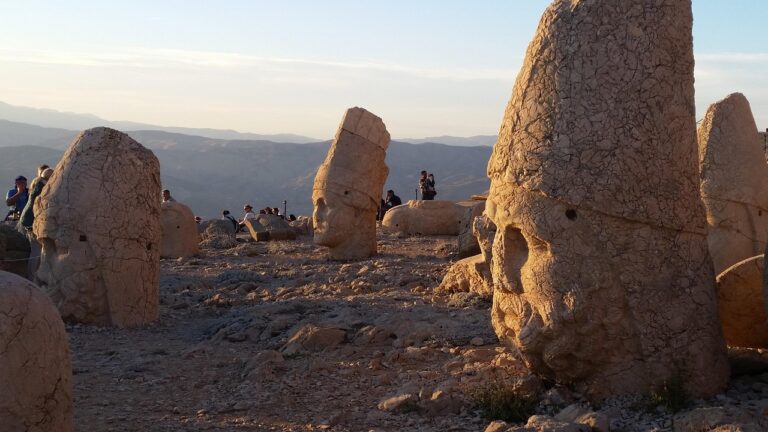
Best Time to Visit Mount Nemrut to Avoid Crowds
Mount Nemrut is one of the few ancient sites where the crowds gather at a specific hour, and that makes timing everything.

The Complete History of Aphrodisias
Aphrodisias, in the Aydin province of southwestern Turkey, is the city of the goddess Aphrodite and one of the best-preserved ancient cities…
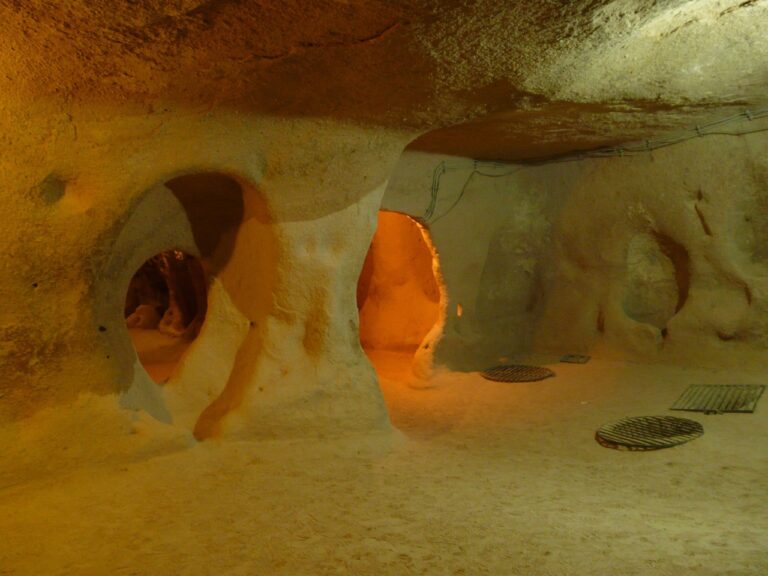
The Complete History of Derinkuyu Underground City
Beneath the rolling farmland of Cappadocia lies one of the most astonishing creations of the ancient world: Derinkuyu, an underground city carved…

The Architecture of Perge Explained
Perge is one of the best places in Turkey to learn how an ancient city actually worked, because its architecture is not…

Why Derinkuyu Underground City Should Be on Your Turkey Bucket List
Turkey is full of world-class sights, but few of them change the way you think about human history quite like Derinkuyu Underground…

Best Time to Visit Priene to Avoid Crowds
Priene is one of the quietest of the great ancient sites of Turkey, but it is not always empty.