If you travel eastern Turkey, you will see churches, monasteries, and carved stones that seem to belong to another world. They do: they belong to the Armenian civilization, which lived in Anatolia for over two thousand years. This beginner’s guide explains who the Armenians of Anatolia were, what they built, and how their heritage survives today, so that you can encounter these places with knowledge rather than confusion.
Who Were the Armenians of Anatolia?
The Armenians are an ancient people of the highlands between the Black, Caspian, and Mediterranean seas. Anatolia, especially its eastern region, was their historic homeland, and for most of recorded history the area around Lake Van and the eastern mountains was the center of Armenian life.
Armenian identity is built on a distinct language, a unique alphabet, and one of the world’s oldest national churches. Christianity came to Armenia in the early fourth century, making it among the first nations to adopt the faith, and the Armenian Apostolic Church became the anchor of national life.
The Armenians were not newcomers to Anatolia; they were among its oldest inhabitants. Their presence predates many peoples of the region, and their history is interwoven with the land’s, through kingdoms, empires, trade, and daily village life.
A Two-Thousand-Year Presence
Armenian history in Anatolia stretches back to the first millennium before the Common Era. Ancient Armenian kingdoms rose around Lake Van and the surrounding highlands, and successive empires, Persian, Roman, Byzantine, and later Ottoman, all ruled over Armenian populations within their domains.
Under these empires, Armenians maintained their language, church, and customs. They were farmers, herders, merchants, and craftsmen, and their communities spread across the eastern provinces and into central Anatolia, with a major presence in the imperial capital, Constantinople, now Istanbul.
The Ottoman era was the last long chapter. Armenian merchants and artisans flourished in the cities, while rural communities worked the highlands. By the nineteenth century, Armenians were one of the largest and most influential communities of the empire, until the catastrophic events of the early twentieth century.
Christianity and the Alphabet
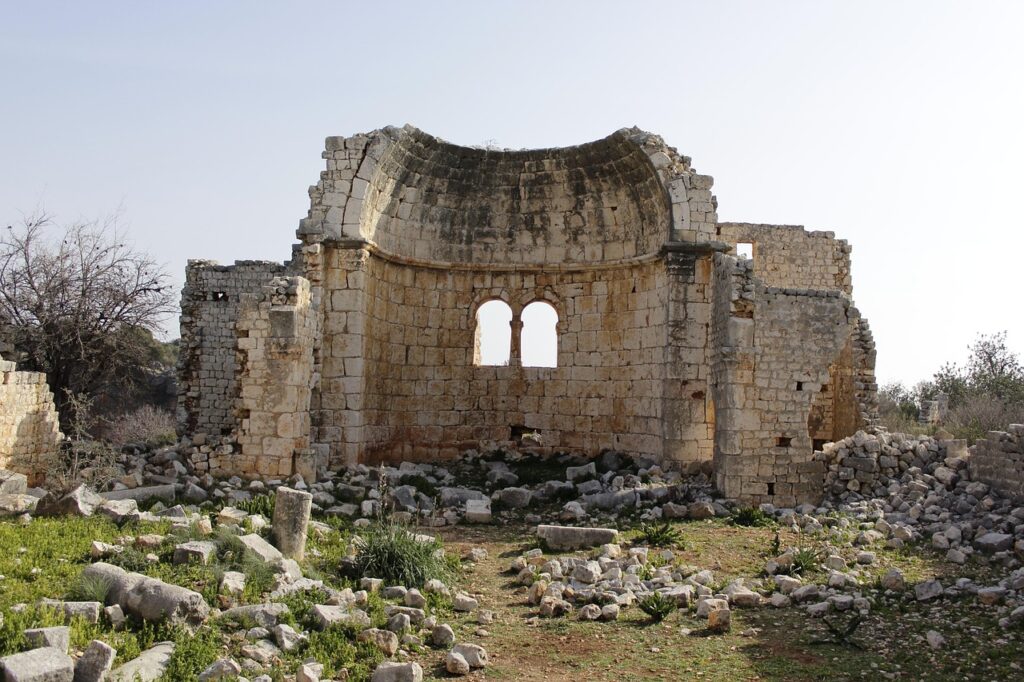
Two achievements define the Armenian heritage. The first is the adoption of Christianity as a state religion in the early fourth century, centuries before most of Europe. The Armenian church developed its own liturgy, calendar, and traditions, and the faith became inseparable from national identity.
The second is the creation of the Armenian alphabet in the early fifth century. A scholar named Mesrop Mashtots devised the script, which allowed the Bible and other texts to be translated into Armenian. The alphabet gave the people a written language and sparked a golden age of literature and translation.
Both achievements are visible in Anatolia today. The churches follow the distinctive Armenian rite, and the inscriptions on their walls are written in the alphabet’s elegant letters. The language and the faith, both born in this region, remain the core of Armenian identity.
The Great Kingdoms
The medieval Armenian kingdoms built the monuments you can still see. The Bagratid kingdom, with its capital at Ani, flourished in the tenth and eleventh centuries, and Ani became one of the great cities of its time, with churches, palaces, and markets, known as the city of a thousand and one churches.
The kingdom of Vaspurakan, centered on Lake Van, produced the other great monument, the Church of the Holy Cross at Akdamar, built in the tenth century. Its carved reliefs, telling biblical stories around the exterior, are among the finest sculpture of the medieval world.
These kingdoms were regional powers, rich on trade and agriculture, and their courts patronized architecture, scholarship, and art. Their collapse under invasions did not end Armenian life in Anatolia, but their monuments remain the heritage’s greatest treasures.

Monastic Life and Learning
The monasteries were the heart of Armenian culture. Scattered across the eastern mountains, they combined churches, libraries, and scriptoria, where monks copied and illuminated manuscripts by hand. Some of the world’s most beautiful books were made in these Anatolian monasteries.
The monasteries were also schools and social centers. They trained clergy, preserved chronicles, and sheltered travelers, and their festivals drew people from the surrounding countryside. The monastic network tied the scattered Armenian communities together.
Visiting the surviving monasteries, often spectacularly sited, gives a sense of their importance. The carved portals, the frescoes, and the valley views evoke a world of learning and devotion that shaped the region for a millennium.
Cities and Crafts
Armenians were prominent in the towns and cities of Anatolia. In Constantinople, they formed a major community of bankers, merchants, and craftsmen, and in the eastern cities, such as Van, Erzurum, and Kayseri, they dominated trade and skilled crafts.
Their crafts shaped the region’s material culture. Armenian silversmiths were famous across the empire, and their filigree work set standards that still influence Turkish jewelry. They excelled in stonework, carpet weaving, and printing, and their contributions to Ottoman urban life were immense.
The urban heritage survives in buildings: churches, schools, houses, and workshops built by Armenian craftsmen, often indistinguishable from the surrounding townscape. Learning to recognize their handiwork adds a layer of appreciation to any city walk.
The heritage is also woven into the region’s everyday geography. Many place names in eastern Turkey, from rivers and mountains to villages, preserve Armenian forms adapted over centuries, and local dialects still carry words of Armenian origin. Even the landscape of terraced hillsides, orchards, and irrigation channels bears the mark of generations of Armenian farmers. Recognizing these traces turns a drive through the countryside into a journey through a deeper past, and the beginner who looks for them will find the heritage is not only in the monuments but in the land itself.

Architecture You Can See
The beginner’s guide to seeing the heritage is simple: visit the two great monuments, then look for the smaller traces. Ani, near the modern border in Kars province, is the unmissable site, a vast ruined city on a dramatic plateau, with its cathedral, churches, and walls.
Akdamar, on its island in Lake Van, requires a short boat ride and rewards it with the island’s church, its reliefs, and a stunning setting against the lake and mountains. Both sites have been restored and are open to visitors, with signage and museums.
Between the great sites, the countryside holds hundreds of smaller monuments: village churches, chapels, and bridges. Some are marked and accessible, others stand quietly in fields. The traveler with time and curiosity will find the heritage everywhere in the east.
The Twentieth-Century Catastrophe
No account of the heritage is honest without the catastrophe. During the First World War, the Ottoman government deported and killed much of the Armenian population of Anatolia, in events widely recognized as genocide. The communities, the villages, and the urban quarters were emptied, and the survivors scattered across the world.
The catastrophe ended two thousand years of Armenian presence in most of Anatolia. The churches stand empty, the villages are gone, and the memory of the lost community is carried by a global diaspora of millions. The history remains deeply painful and politically contested.
For the traveler, the catastrophe is part of the landscape. The ruined churches you visit were not always ruins, and understanding what happened is a responsibility of serious travel. Approaching the sites with this knowledge honors both the civilization and its victims.

Heritage Today
In recent decades, the Armenian heritage of Anatolia has been rediscovered and increasingly protected. Akdamar Church was restored and reopened in 2007, Ani has received conservation work and world heritage attention, and other monuments are being repaired and documented.
Visits are welcomed, and the sites draw Armenians from the diaspora, international tourists, and Turkish visitors alike. Museums display Armenian artifacts, academic study is expanding, and the heritage is increasingly presented as part of the region’s shared history.
The present is mixed. Much remains ruined and unrestored, and the political sensitivities persist, but the direction is toward recognition. The heritage is no longer invisible, and the traveler can engage with it openly.
Visiting with Understanding
To visit the Armenian heritage well, prepare yourself. Read a little history, including the twentieth-century events, before you go. Approach the sites with respect, dress and behave as you would in any sacred place, and take time to absorb what you are seeing.
Understand that the ruins are not curiosities but the remains of a living civilization, and that for many people they carry profound meaning and pain. Your visit can be a form of respect, an acknowledgment that the world remembers.
The heritage of Anatolia is shared. The churches, the crafts, the place names, and the food belong to the region’s common past, and meeting them with knowledge and dignity is one of the most rewarding experiences eastern Turkey offers.
Frequently asked questions
How long did Armenians live in Anatolia?
Armenian presence in Anatolia goes back more than two thousand years. Ancient Armenian kingdoms around Lake Van and the eastern highlands flourished before the Common Era, and Armenian communities continued to live across the region through Persian, Roman, Byzantine, and Ottoman rule, until the deportations and massacres of 1915 destroyed them.
What are the most important Armenian sites to visit?
The ruined city of Ani in Kars province and the Church of the Holy Cross on Akdamar Island in Lake Van are the two essential sites. Both are restored and accessible. Beyond them, churches, monasteries, and old quarters survive in Van, Kayseri, Sivas, and elsewhere, and Istanbul preserves the legacy of its historic Armenian community.
How should visitors approach the painful parts of this history?
Visit with knowledge and respect. Read about the 1915 genocide and the loss of the communities before you go, and understand that the churches and ruins carry deep meaning for Armenians worldwide. Approach the sites with the seriousness they deserve, and treat your visit as an act of remembrance as well as tourism.

All Over Information
The All Over Information editorial team researches and writes practical English-language guides to Turkey. Facts are checked against official and local sources before publication, prices are published as dated ranges rather than quotes, and guides are revised when things change. We accept no sponsored posts, paid placements or paid links.
More guides like this

Turkey’s Earthquake Risk: What Residents and Visitors Should Know
Turkey is one of the most earthquake-prone countries on earth.

Understanding the Ottoman Empire: A Beginner’s Guide
The Ottoman Empire ruled over a vast region for more than six hundred years, and its story is one of the great…

A Deep Dive into the Role of Tea in Daily Turkish Life
Tea in Turkey is not a drink but a system: an agricultural industry on the Black Sea coast, a brewing technology built…

Understanding Respect for Elders in Turkish Culture
Respect for elders is one of the first things visitors notice about Turkey.

Turkish Hamam Etiquette: What First-Timers Should Know
A visit to a Turkish hamam, the traditional bathhouse, is one of the most memorable experiences Turkey offers, but it can be…

Turkish Hamam (bath) Rituals Explained for Foreigners
As a visitor, walking into a Turkish hamam for the first time can feel both exciting and intimidating.