Cappadocia is a photographer’s dream destination, and not only because of the famous balloons. The region’s geology has produced landscapes that look designed for the camera: towering fairy chimneys, sculpted valleys, cave dwellings, and underground cities, all painted by the changing light of central Anatolia. Whether you shoot with a professional body or a phone, the region rewards planning and patience. This guide covers the best locations, the ideal times of day, the practicalities of shooting in the valleys, and the techniques that turn a good Cappadocia photo into a great one.
Why Cappadocia Rewards Photographers
Cappadocia’s photographic appeal is its strangeness. Volcanic ash hardened into soft rock, then eroded by wind and water over millions of years, has produced a landscape of towers, cones, and sculpted cliffs that looks like another planet.
The region’s human history adds the second layer. For thousands of years, people have carved their homes, churches, and entire cities into the rock, and the combination of the natural and the man-made is unique. No other place on earth offers this density of subject matter in one landscape.
The light completes the picture. The high, dry plateau of central Anatolia produces clear air, dramatic skies, and long golden hours, and the region’s famous dawns and sunsets turn the rock valleys into scenes of extraordinary color. The landscape was built for the camera.
The Balloons: Sunrise Over Goreme
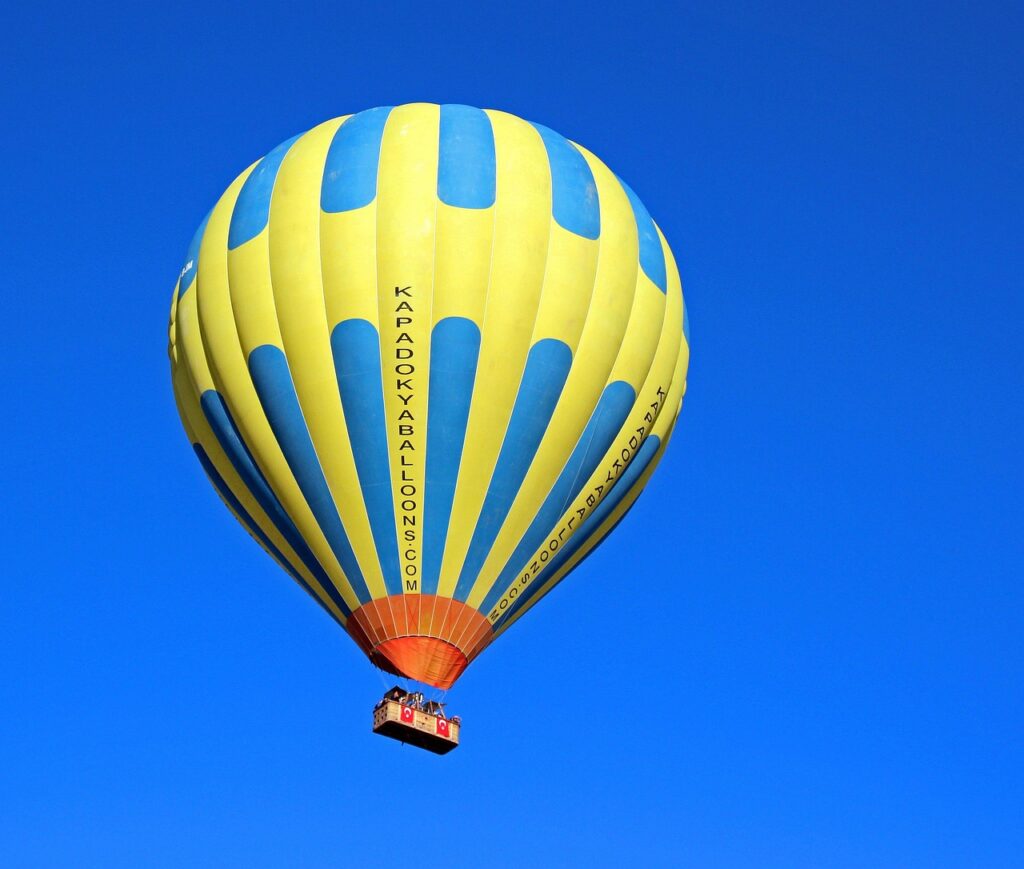
The hot-air balloons are the defining Cappadocia image, and photographing them well is a craft. The balloons launch around sunrise, and the show lasts about an hour, as dozens of them rise from the valleys and drift across the region.
The viewpoints are the first choice. The ridge above Goreme, the terraces of the cave hotels, and the castle of Uchisar all give overviews of the balloon-filled sky. The key is being in position before the launch, with your camera ready and the light coming from the east.
The in-flight option is the second choice. A dawn balloon flight lets you photograph the fleet from inside the sky, with the valleys falling away beneath you. Either way, the dawn hours are non-negotiable, and the balloon season, from spring through autumn, defines the schedule.

Fairy Chimneys and Rock Formations
The fairy chimneys are the region’s signature geology: tall cones of soft rock topped by harder caps, standing in fields and valleys as if placed there by design. The most famous clusters are around the villages of Goreme, Avanos, and Urgup.
The best light for the chimneys is the low sun. In the early morning and late afternoon, the rock textures come alive, the shadows stretch, and the colors warm from white to gold. The mid-afternoon light flattens them, so plan the chimneys for the ends of the day.
The compositions reward exploration. The chimneys look best with a human scale in the frame, from the trails that wind between them, and the valleys around the main villages are full of quiet corners where you can photograph them without crowds.
The Valleys: Love, Rose, and Red
The named valleys of Cappadocia are the walkers’ and photographers’ playgrounds. The Love Valley is famous for its tall, phallic chimneys, the Rose Valley for its colored rock and its cave churches, and the Red Valley for the intensity of its evening color.
The valley walks are the best photography strategy because they put you inside the landscape. The trails are well marked, the walks take a few hours, and the light changes constantly as you move between the cliffs and the open ground. The valleys are quiet in the early morning.
The sunset is the pay-off. The Rose and Red Valleys are named for the colors they show in the last light, and the viewpoints at their edges give the classic panoramas. Carry a headlamp for the walk back, and stay for the blue hour.
Cave Churches and Their Frescoes
The rock-cut churches of Cappadocia are a photographer’s challenge and reward. The churches of the Goreme Open-Air Museum, carved from the rock and painted with frescoes, preserve the art of the Byzantine era in remarkable condition.
The photography is constrained, and that is part of the craft. The interiors are dark, the frescoes are fragile, and flash is forbidden, so the successful shots come from high ISO settings, wide apertures, and careful use of the available light from the carved doorways and windows.
The reward is unique. The frescoes, from the simple geometric patterns of the earliest churches to the narrative scenes of the later ones, are among the oldest and best-preserved religious paintings in the world. The quiet interiors, the worn stone, and the painted faces make intimate, atmospheric images.
The Underground Cities
The underground cities, of which Derinkuyu and Kaymakli are the most famous, are the strangest subject in the region. Entire communities once lived beneath the ground in these multi-level warrens, with stables, kitchens, chapels, and ventilation shafts carved into the rock.
The photographic challenge is extreme. The tunnels are narrow, the light is dim, and the spaces are tight, so the images are about atmosphere rather than scale. The wide, dark corridors, the round stone doors, and the shafts of light from above make moody, mysterious frames.
The technique is simple: embrace the dark. Use a fast lens and high ISO, photograph the texture of the carved rock, and include a human figure for scale. The underground cities photograph like nowhere else, and the sense of history is palpable in every frame.
The Towns: Goreme, Uchisar, and Avanos
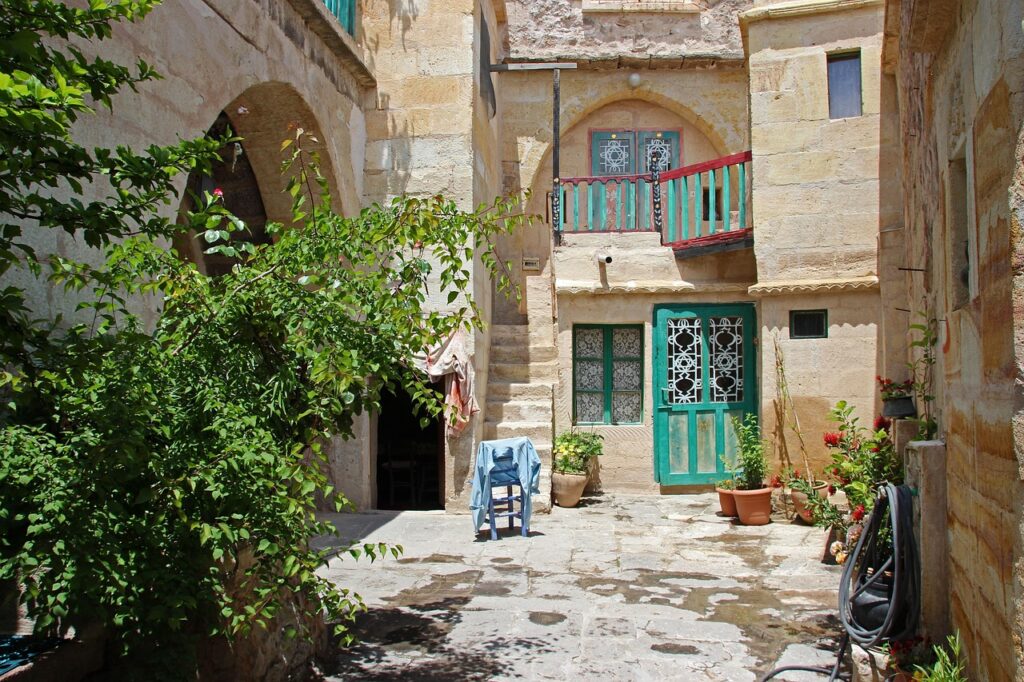
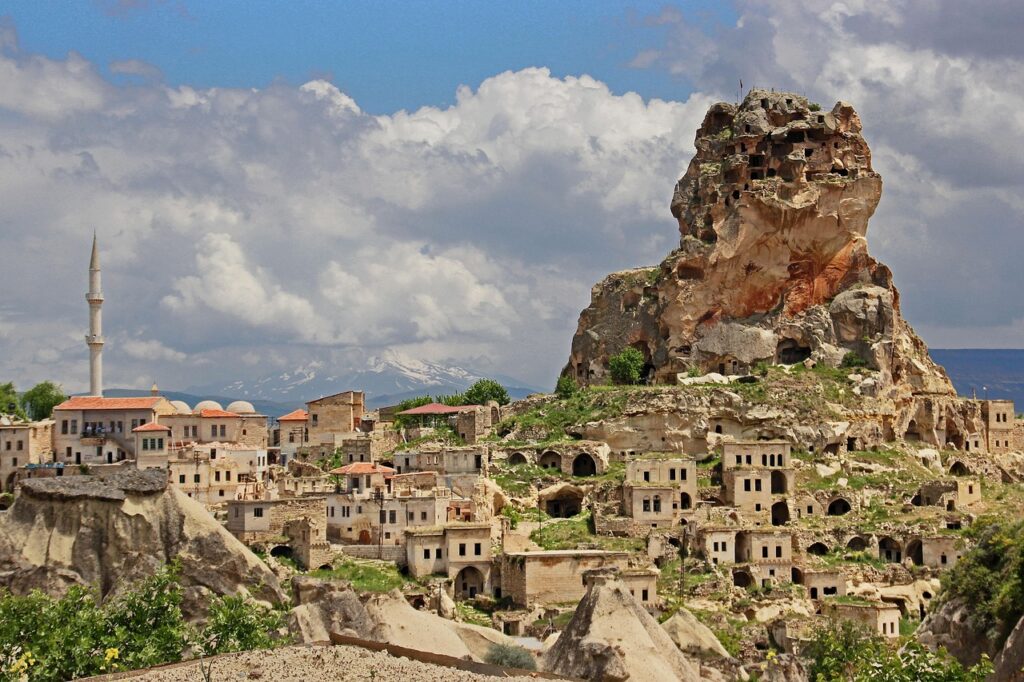
The towns of Cappadocia are photographic subjects in their own right. Goreme, with its cave hotels and its rock-cut houses, is the tourist heart; Uchisar is crowned by its rock castle; and Avanos, on the red river, is the pottery town.
Each has its moment. The rooftops of Goreme’s hotels at dawn, with the balloons rising behind them, are the classic town shot. Uchisar’s castle, best photographed from the road below as the evening light hits its face, dominates the surrounding plain. Avanos’s riverside and workshops reward the quieter eye.
The towns also solve the practical problems. They offer the cafes, the laundry, and the comfortable beds that the valley photography needs, and the pottery and carpet workshops give portraits and details a change of pace from the geology.
Light, Weather, and the Golden Hours
Cappadocia’s light is its great gift, and the golden hours rule the region. The hour after sunrise and the hour before sunset produce the warm, raking light that brings the rock to life, and the blue hour adds a cooler, quieter mood.
The weather adds variety. The clear days give the postcard colors, but the days with broken clouds give the dramatic skies, and the rare snow days transform the valleys into a monochrome wonderland. The summer storms, common in the late afternoons, can produce the most dramatic skies of all.
The practical lesson is to shoot all day, not just at dawn. The light at midday is harsh, but the rock textures, the markets, and the interiors photograph well at any hour, and the photographers who work the full day come home with the fullest portfolios.
Equipment and Practical Advice
The right equipment makes the difference, and the list is simple. A wide-angle lens covers the valleys, a telephoto compresses the balloon-filled sky, and a tripod handles the dawn, the dusk, and the dark church interiors. A headlamp is essential for the valley walks and the underground cities.
The physical planning matters more than the gear. The valleys are dusty, the terrain is uneven, and the weather swings from cold dawns to warm middays, so dress in layers, protect the camera from the dust, and carry water on every walk.
The logistics of the light: the balloons fly at dawn, the valleys glow at dusk, and the distances between the locations are small. Rent a car or join the tours, and plan each day around the sun. The photographers who return with the best work are the ones who moved with the light.
Building a Photo Itinerary
A three-day itinerary captures the full range. The first day covers the dawn balloons and the Goreme valleys, the second the Rose and Red Valleys at dusk plus the Open-Air Museum, and the third the underground cities and the towns, with Uchisar and Avanos in the softer light.
The daily rhythm is consistent: a dawn shoot, a mid-morning walk or museum, a rest through the midday heat, and an evening shoot. The famous locations are at their quietest at first light, so the early starts deliver both the best light and the fewest crowds.
Finally, allow the region to surprise you. The best Cappadocia photographs are often the unplanned ones, the flock of sheep on a ridge, the tea glass on a hotel terrace, the balloon passing over a fairy chimney. Keep the camera ready, and the region will provide.
Frequently asked questions
When is the best time for balloon photos?
The balloons fly at dawn, and the photo window runs from about sunrise for an hour. The balloon season runs mainly from spring through autumn, when the weather is calm enough for flights. Arrive at your viewpoint before the launch, and be ready as the light comes up.
Do I need a drone to photograph Cappadocia?
No, the region’s viewpoints, hotels, and valley trails provide outstanding compositions without a drone. Drones are also subject to local regulations, and the balloon traffic makes flying risky. The classic images are made from the ridges and terraces, and a wide lens and patience are all you need.
Which valley is best for landscape photography?
The Rose and Red Valleys are the favorites for their evening color and their panoramas, while the Love Valley is known for its striking chimneys. The Ihlara Valley, south of the main region, offers a green gorge with churches. All are best shot in the low light of morning or evening.

All Over Information
The All Over Information editorial team researches and writes practical English-language guides to Turkey. Facts are checked against official and local sources before publication, prices are published as dated ranges rather than quotes, and guides are revised when things change. We accept no sponsored posts, paid placements or paid links.
More guides like this
Turkish Scholarship Programs for Foreign Students
Turkey funds one of the most generous scholarship systems in the world for foreign students, and you do not need to be…

Turkey for Adventure Travelers: A Complete Guide
Turkey is an adventure destination hiding in plain sight.
High-Speed Trains in Turkey: Routes and Tips
Turkey has quietly built one of the fastest-growing high-speed rail networks in the world.

Off-the-Beaten-Path Destinations in Turkey
Turkey is so rich in famous sights that its hidden corners are easy to miss, but the traveler who ventures off the…

The History and Ritual of the Turkish Bath
The Turkish bath, the hamam, is one of the great institutions of the Middle East, a tradition that stretches back two thousand…

Turkey for Luxury Travelers: A Complete Guide
Turkey is a country of natural luxury.