Tea means something different in Turkey than it does in Britain, even though both nations are famous for their devotion to the drink. In Britain, tea is tied to ritual, afternoon tradition, and a cup with milk and biscuits. In Turkey, tea is the fabric of daily life, served everywhere, to everyone, at any hour, in small tulip-shaped glasses. Understanding these differences will transform how you experience tea in Turkey. This guide compares the two tea cultures and explains what to expect on a Turkish table.
Tea at the Center of Daily Life
In Turkey, tea is not a ceremony reserved for certain hours; it is a constant companion. Turks drink tea throughout the day, at home, at work, in tea gardens, and on the street. The first question when guests arrive is not how they are, but whether they would like tea.
The ubiquity is astonishing to visitors. Shopkeepers offer tea to customers, officials receive visitors with tea, and workdays are punctuated by tea breaks. In Britain, tea is a daily ritual too, but it is more scheduled, with morning tea, afternoon tea, and the evening cuppa framing the day.
The social role differs as well. In Turkey, sharing tea is an act of hospitality that creates connection between strangers and friends alike. The tea is the conversation starter, the companion to the discussion, and the signal that you are welcome.
The Brew: Two Methods, Two Results
The brewing methods reveal the cultures. Turkish tea is made in a double teapot, çaydanlık, with strong tea concentrate on top and hot water below. Each glass is filled partly with concentrate and topped with water, so every cup can be exactly as strong as the drinker wishes.
British tea is typically brewed by steeping a teabag in a pot or cup, then adding milk and sometimes sugar. The strength is fixed by steeping time, and the ritual of adding milk varies by region and taste. The two systems produce very different drinks.
Turkish tea is served black, without milk, its strength adjusted with hot water. This concentration method means the same pot serves a whole gathering, each person tailoring their cup. It is practical, social, and endlessly flexible.

The Glass and the Cup
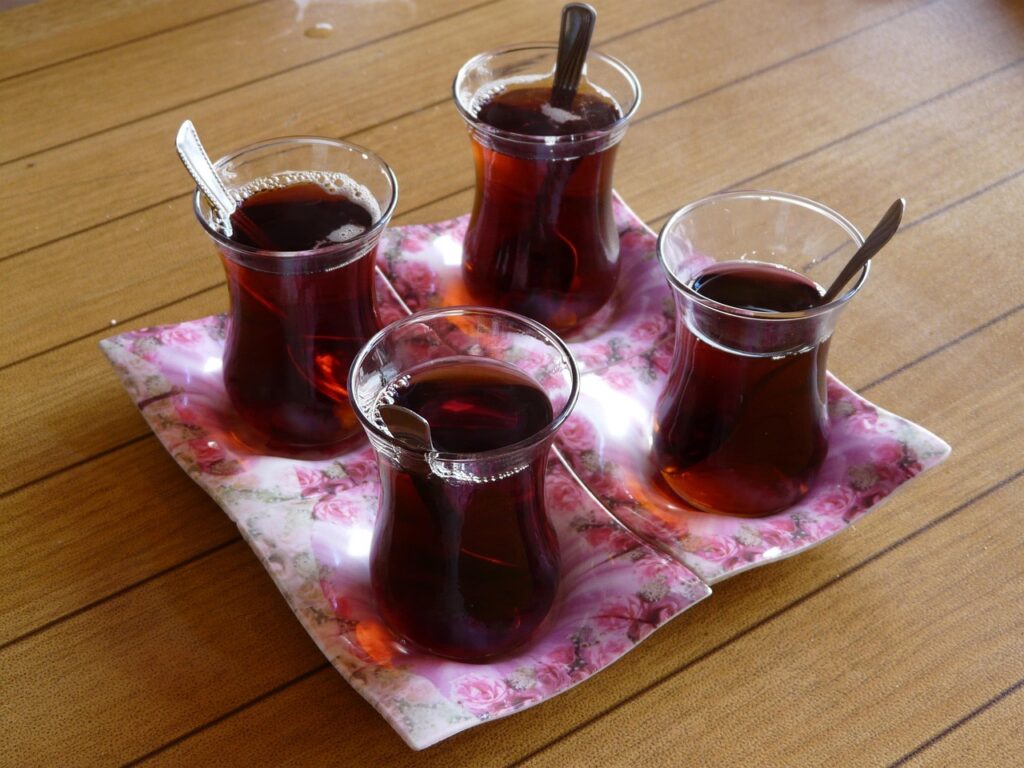
The vessel is one of the most visible differences. Turkish tea arrives in a slim, tulip-shaped glass, which lets you see the deep red color and appreciate the clarity of the brew. The glass is held by the rim, and the tea is drunk hot, often with a sugar cube between the lips.
British tea is served in a ceramic cup or mug, often with a saucer. The cup holds more, keeps the tea warmer longer, and suits the milky, larger-volume style of British drinking. Afternoon tea is served in fine porcelain, adding an elegance the everyday Turkish glass does not pursue.
The glass itself has meaning in Turkey. It shows the tea’s color and strength, and pouring a proper glass is a small art. In Britain, the mug is the symbol of everyday comfort, while the fine cup belongs to ceremony. Both vessels tell their culture’s story.
Sugar, Not Milk
The great difference in serving is milk. British tea is almost unthinkable without it, while Turkish tea is never served with milk. Instead, Turks add sugar, and even that is optional. The tea is judged on its own character, clear and strong.
Sugar cubes are the traditional companions to Turkish tea. Many Turks hold a cube between their teeth and sip the tea through it, a habit that is both practical and playful. Others stir in loose sugar, and some drink the tea unsweetened.
For visitors, this means the tea tastes unfamiliar at first, with no cream to soften it. Give it a chance; the clear, brisk flavor is refreshing, especially after rich food. If you need sweetness, add sugar to your taste, but leave the milk for your British memories.

When Tea Is Drunk
The timing of tea reveals the cultures. In Turkey, tea flows all day, but the strongest wave comes after meals and in the late afternoon. After lunch, tea is nearly automatic, and evening tea gardens stay busy until late. Tea is also the default at any gathering, from business to friendship.
In Britain, tea has defined moments. The morning cup starts the day, and afternoon tea is a social institution with sandwiches, scones, and cakes. The evening cuppa winds down the day. These rhythms give British tea its ceremonial character.
The Turkish approach is more continuous, less scheduled. There is always tea available, and the invitation to drink it is always open. This constant presence makes tea feel less like an event and more like the air people breathe. A Turkish meal rarely ends without tea, and a conversation that stretches on will simply be joined by another glass.
The Tea Garden and the Tea Room
The settings for tea differ as much as the drink. Turkey’s tea gardens, çay bahçesi, are open-air gathering places under trees, where friends play backgammon, families relax, and whole afternoons dissolve into conversation. They are informal, inexpensive, and essential to Turkish social life.
Britain’s tea rooms are more formal, offering afternoon tea with tiered stands of treats in a genteel setting. They are destinations for special occasions and tourists. The tea room is about presentation and tradition, while the tea garden is about ease and company.
Both are beloved institutions, but they express different values. The tea garden is a public living room, the tea room a stage for ritual. Experiencing both, if you travel widely, shows how the same leaf serves two very different societies.
Tea Houses and Workplace Tea
In Turkey, the tea house, kahvehane, is a male-dominated social space where men gather for tea, games, and conversation. It is a deep-rooted tradition, and the tea boy, carrying a tray of glasses through the streets, is an icon of Turkish cities. Tea even arrives at workplaces via these delivery men.
In Britain, the workplace tea round is a famous ritual, with colleagues taking turns to make a pot for the whole office. The etiquette of the round, from who brews to who collects the cups, is a subtle social code. Tea in British offices is both caffeine and community.
Both cultures use tea to oil the gears of daily work, but in different styles. The Turkish tea boy delivers to shops and offices alike, while the British tea round is made in-house. Each system keeps the workplace humming in its own way.
The Tea Regions
The geography of tea is another contrast. Turkey grows its own tea in the lush Black Sea region around Rize, where steep, rainy slopes produce a distinctive, strong-leafed tea. This domestic production makes tea deeply local and self-sufficient.
Britain grows no tea at all, importing its leaves from former colonies and other producers. The British tea tradition is built on trade, empire, and global supply chains. The tea itself is usually a blend designed for consistency with milk.
For travelers, this difference matters. Turkish tea tastes of Rize, and Turks are proud of their domestic crop. Asking about the tea’s origin in Turkey will earn you a story about the Black Sea hills.

The Ritual of Offering Tea
The offer of tea in Turkey is almost a reflex of hospitality. When you visit a shop, sit down at a business meeting, or arrive at someone’s home, tea appears without being requested. The host does not ask whether you drink tea; they simply bring it, and refusing feels like refusing their goodwill.
This ritual has rules of its own. The tea is served hot, in a glass held by the rim, and it is polite to take at least a few sips even if you are not thirsty. Refills are offered automatically, and the glass stays full as long as the conversation lasts. The tea is the rhythm of the encounter.
In Britain, offering tea is also a hospitality gesture, but it is more negotiated. Guests are asked whether they would like a cup, and the reply shapes the ritual. Both cultures use tea to say you are welcome, but Turkey’s version arrives unbidden, as a pure act of giving.
A Guide for the Tea-Drinking Visitor
When in Turkey, expect tea to appear constantly, and accept it. If you do not want a full glass, say so, but know that refusing tea can seem distant. The glass is small, and the offer is a gesture of welcome.
Ask for your tea as you like it. “Açık” means light, “demli” means strong, and “şekersiz” means without sugar. These simple words will make you feel instantly at home in any Turkish tea setting.
Finally, slow down. Turkish tea is meant to be sipped over conversation, not rushed. Adopt the pace of the tea garden, and you will experience one of the great pleasures of Turkish life.
Frequently asked questions
Why is Turkish tea served without milk?
Turkish tea culture developed without milk, relying on strength and clarity instead. The tea is brewed as a strong concentrate and diluted with hot water, and sweetness comes from sugar cubes if desired. Serving it black lets the flavor and color of the Rize leaf show.
Is Turkish tea stronger than British tea?
It can be, but the strength is personal. The double teapot allows each drinker to control how much concentrate goes into the glass. In practice, Turkish tea is often more astringent and brisk than the milky British cup, but it is usually drunk in smaller quantities.
What is the best time to visit a Turkish tea garden?
Tea gardens are pleasant from late morning until late evening, but the liveliest hours are late afternoon and warm summer evenings. They are most atmospheric in the cool of the evening, when families and friends gather to unwind.

All Over Information
The All Over Information editorial team researches and writes practical English-language guides to Turkey. Facts are checked against official and local sources before publication, prices are published as dated ranges rather than quotes, and guides are revised when things change. We accept no sponsored posts, paid placements or paid links.
More guides like this

The Ultimate Guide to Turkish Flatbread (Bazlama)
Bazlama is the soft, puffy flatbread of the Turkish countryside, baked on a griddle and served warm with almost anything.

How to Make Authentic Manti (Turkish Dumplings) at Home
Making manti at home is one of the most rewarding projects in Turkish cooking.

Pide Vs. International Variations: What Makes It Turkish
The filled bread is one of the oldest and most widespread foods of the world, and the Turkish pide belongs to a…

The History Behind Testi Kebab (Pottery Kebab)
Testi kebab is a dish with a deep past and a thin paper trail.
Turkish Simit Sandwiches Vs. International Variations: What Makes It Turkish
Every great bread culture has its ring, its roll, or its crust that gets split and filled, from the New York bagel…

The Ultimate Guide to Gozleme
Gozleme is the great comfort food of the Turkish countryside: a thin, hand-rolled flatbread, folded over a savory filling, and cooked on…