Fethiye is the gateway to the Lycian world, and its history runs through the ancient, the Byzantine, the Ottoman, and the modern layers of the Turquoise Coast. The rock tombs carved into the cliffs above the town are the monuments of the ancient Telmessos, and the region beyond holds the cities of the Lycian League, the ghost towns of the exchange, and the living traditions of the coast. This guide explores the history and the culture of Fethiye.
The Name and the Place
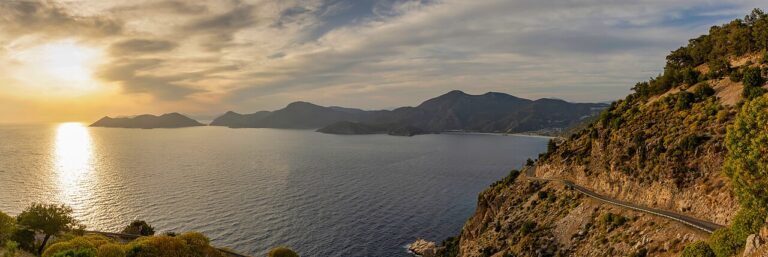
The name of Fethiye tells the first part of the modern story. The town was renamed in the early twentieth century in memory of Fethi Bey, the Ottoman aviator, and the modern name honors the early years of the republic; the ancient name of the town was Telmessos, the Lycian and the Greek city that left the rock tombs and the theatre; and the modern town grew from the ancient port. The town sits at the head of a deep bay, ringed by the mountains, and the position — the harbor of the coast, the gateway to the Lycian interior — has shaped its whole history.
The place of Fethiye in the region is the central one: the ancient Telmessos at the coast, the Lycian cities of the interior, and the islands of the bay all connect through it. The town that the ships passed has always been the door to the Lycian world, and the history flows through it.
The Ancient Roots: Telmessos and the Lycians
The history of Fethiye begins with the ancient Telmessos, and the rock tombs are the monuments of the deep past. The city of Telmessos was one of the important centers of the Lycian world — the people who inhabited the region before the Greeks, with their own language and their own culture — and the rock-cut tombs carved into the cliffs above the town are the Lycian burial chambers of the antiquity; the theatre and the scattered remains of the ancient city fill the modern town; and the region beyond holds the cities of the Lycian League — Tlos, Xanthos, Letoon — the federation of the ancient cities that the region is famous for. The ancient roots of Fethiye are the Lycian heritage, and the rock tombs are the living link to it.
The practical ancient notes: the rock tombs are the free, the visible monuments of the town, and the climb to them gives the close views; the Fethiye Museum holds the Lycian and the archaeological collections; and the Lycian cities of the region — Tlos, Xanthos, Letoon — are the day trips from the town. The ancient roots of Fethiye are the deep history, and the Lycian world is the region’s identity.

The Lycian League: The Federation of the Cities
The Lycian League is the distinctive heritage of the region, and the federation of the ancient cities is the political legacy that the modern world admires. The Lycians organized their cities into the league — the federation with the shared council, the proportional representation, and the common defense — and the model influenced the founding fathers of the modern democracies; the cities of the league — Tlos, Xanthos, Patara, Myra — spread across the region, and their ruins give the day trips from Fethiye; and the monuments of the league — the theatres, the tombs, the inscriptions — survive throughout the coast. The Lycian League is the political heritage of the region, and the federation is the legacy that the world remembers.
The practical league notes: the cities of the league are the accessible ruins, and the day trips from the town reach the best of them; the Xanthos and the Letoon, the UNESCO-listed sites, are the highlights; and the museum and the guidebooks connect the cities into the league’s story. The Lycian League is the distinctive heritage, and the federation’s cities are the exploration.
The Byzantine and the Ottoman Centuries
The history of the region runs through the Byzantine and the Ottoman centuries, when the coast stood at the crossroads of the empires. The Byzantine era left the churches and the monasteries of the region, and the Christian life of the coast continued through the medieval centuries; the Ottoman era brought the trade and the settlement, and the town grew as the Ottoman port of the coast; and the fortress and the civic buildings of the Ottoman centuries, and the mosques of the town, established the character that the modern Fethiye grew from. The medieval and the Ottoman centuries of the region are the layers between the ancient and the modern, and the town and the coast bear their marks.
The cultural inheritance of these centuries is the layered one: the Christian heritage of the churches and the monasteries, the Islamic heritage of the mosques, and the shared traditions of the coast’s people — the crafts, the foods, the hospitality — that predate and outlast the empires. The history of the Fethiye region is the history of the coast in miniature, and the layers are visible in the stones and the customs of the area.

The Exchange of Populations and the Ghost Towns
The modern history of the region includes the exchange of populations, and the ghost towns are the haunting monuments of the twentieth century. After the First World War, the populations of the region were exchanged — the Greek communities of the coast moving to Greece, and the Turkish communities of Greece moving to the coast — and the villages that the Greeks left behind became the ghost towns; Kayaköy, the largest of them, stands empty on its hillside, the stone houses and the churches of the village silent since the exchange; and the other abandoned villages of the region repeat the pattern. The exchange of populations is the modern history of the region, and the ghost towns are its monuments.
The practical ghost-town notes: Kayaköy is the accessible, the poignant visit, and the wander through the empty streets is the step back in time; the other abandoned villages reward the explorers; and the stories of the exchange give the context of the silence. The exchange of populations is the modern history, and the ghost towns are the memory.
The Modern Town and the Name
The modern era shaped the Fethiye that the visitor sees today. The town was renamed for Fethi Bey in the early twentieth century, and the Republican era brought the modernization; the tourism that transformed the coast arrived in the later decades, and the town grew as the gateway to the Turquoise Coast; and the result is the Fethiye of today — the working port and the full resort, the harbor town and the base for the region’s wonders. The modern town is the living layer of the history, and the daily life of the harbor continues the maritime tradition of the centuries.
The practical modern notes: the town’s modern life — the harbor, the promenade, the markets — is the living culture; the museum and the heritage sites connect the modern to the ancient; and the growth of the tourism is the recent chapter of the long story. The modern town of Fethiye is the present layer, and the maritime and the welcoming life continue the tradition.

The Culture of the Coast
The culture of the Fethiye region is the culture of the Mediterranean coast, and the traditions of the area are the living ones. The sea anchors the culture: the fishing boats of the harbor, the daily catch, the maritime trades; the food of the region — the fish of the day, the mezes, the produce of the fertile valley — is the daily table; and the crafts and the markets of the town continue the commerce of the centuries. The cultural calendar of the region follows the seasons and the faith, and the hospitality of the coast — the tea that is always offered, the conversation that is always welcomed — is the culture’s most visible face.
The Culture Today: The Town and the Visitors
The culture of Fethiye today is the meeting of the town and the visitors, and the balance is the town’s achievement. The tourism has made the region what it is — the resorts, the lagoon, the adventures — and the town has woven the new economy into its old rhythms: the fishing boats alongside the tour boats, the harbor serving the boats and the visitors, the locals serving the travelers with the warmth of the coast; yet the town remains the working place, the port and the market of the region. The culture of Fethiye is the living one, and the traveler who looks past the resort finds the town’s own life.
The practical engagement with the culture: the morning at the harbor, the rock tombs’ climb, the lokanta lunch, the market’s wander, and the conversations with the people who live and work in the town. The culture of Fethiye is not the museum — it is the daily life — and the visitor who participates rather than observes finds the history and the culture of the Lycian coast alive in the present.

The Takeaway
The history and culture of Fethiye run through the Lycian tombs, the ancient league, and the modern town: the rock-cut monuments of Telmessos, the federation’s cities, the ghost towns of the exchange, and the working harbor of the present. Climb the tombs, explore the ruins, and engage with the daily life of the town. The gateway of the Lycian coast holds the history of the region, and the harbor town tells it best.
Frequently asked questions
What does the name Fethiye mean?
The town was renamed in the early twentieth century in memory of Fethi Bey, the Ottoman aviator; the ancient name was Telmessos, the Lycian and the Greek city.
What is Fethiye famous for historically?
The rock tombs of the ancient Telmessos, its role as the gateway to the Lycian world, and the ghost towns of the population exchange.
What are the rock tombs of Fethiye?
The Lycian burial chambers carved into the cliffs above the town, with the Tomb of Amyntas the most famous of them.
What is the Lycian League?
The federation of the ancient Lycian cities — Tlos, Xanthos, Letoon and the rest — whose ruins give the day trips from the town.
Is Fethiye worth visiting for history?
Yes — the rock tombs, the museum, the Lycian cities, and the ghost towns give the deep and the varied history of the coast.

All Over Information
The All Over Information editorial team researches and writes practical English-language guides to Turkey. Facts are checked against official and local sources before publication, prices are published as dated ranges rather than quotes, and guides are revised when things change. We accept no sponsored posts, paid placements or paid links.
More guides like this

Family-Friendly Activities in Fethiye
Fethiye is a family destination that delivers on every level: the Blue Lagoon is the children's paradise, the beaches are safe and…
Fethiye in Summer: A Complete Travel Guide
Summer is the season that Fethiye runs on: the long, hot days over the turquoise bay, the Blue Lagoon at its most…
Shopping Guide: What to Buy in Fethiye
The shopping of Fethiye reflects the working town and the resort: the bazaar and the old quarter give the traditional wares, the…

Best Local Restaurants in Fethiye
The food of the Fethiye region is the Mediterranean table at its freshest: the seafood of the harbor, the mezes, the produce…

Top 10 Things to Do in Fethiye
Fethiye packs an unusual amount of beauty and history into one bay: the Lycian tombs in the cliffs, the Blue Lagoon, the…

Fethiye Airport and Transport Guide
Getting to Fethiye is the easy part of the trip, and moving around the town and the region is the straightforward one.