Kuşadası gives the photographer the Aegean in every frame: the marble streets of Ephesus, the island castle over the bay, the waterfront at sunset, and the hills and the villages of the region beyond. The town and its surroundings offer the variety that the single-destination trips lack, and the light of the coast turns the ordinary scenes golden twice a day. This guide covers the spots that the camera cannot miss.
The Library of Celsus: The Iconic Frame
The Library of Celsus at Ephesus is the iconic photograph of the region, and the shot that every visitor takes is the one worth taking well. The library’s facade — the two-story columns, the statues in their niches, the marble glowing in the light — rises at the end of the Curetes Street, and the approach down the marble avenue gives the classic composition; the morning light on the facade is the golden one, with the crowds still thin, and the evening light adds the warm tones; and the details — the statues, the carvings, the inscriptions — give the close-up frames beyond the postcard. The Library of Celsus is the must-have frame of the region, and the early visit earns it.
The practical library notes: the early arrival at the site’s opening gives the cleanest frames, before the cruise crowds fill the street; the wide lens captures the facade with the street’s perspective, and the telephoto the details; and the light of the morning and the late afternoon is the library’s best. The Library of Celsus is the region’s signature photograph, and the marble facade is the frame that defines the trip.
The Great Theatre of Ephesus
The great theatre of Ephesus gives the photographer the scale and the drama, and the ancient arena frames the views. The theatre — the twenty-five-thousand-seat arena cut into the hillside — gives the shots from the stage looking up at the tiers, and from the top rows looking out over the excavated city and the plain beyond; the morning and the late afternoon light rake across the stone, and the visitors on the tiers give the sense of the scale; and the theatre’s combination with the city below makes the panorama of the site. The great theatre is the second essential frame of Ephesus, and the climb to the top rows is the reward.
The practical theatre notes: the top rows need the climb, and the sturdy shoes and the water matter; the wide lens captures the full sweep of the tiers, and the telephoto the details of the carvings; and the quieter moments — the empty tiers in the early morning — give the atmospheric frames. The great theatre of Ephesus is the scale shot of the region, and the ancient arena is the frame.

The Güvercinada Island at Sunset
The Güvercinada island — the pigeon island with its castle at the harbor mouth — is the symbol of Kuşadası, and the sunset from the causeway is the town’s classic frame. The walk out along the causeway gives the compositions in every direction: the castle over the water, the town’s silhouette behind, the bay and the sea to the west where the sun drops; the sunset turns the sky and the sea golden, and the castle’s lights come on as the dark falls; and the island itself — the ramparts, the towers, the walkways — gives the frames from within. The Güvercinada at sunset is the essential Kuşadası photograph, and the golden causeway is the memory.
The practical island notes: the sunset times vary with the season, and the arrival before the golden hour claims the spot; the tripod earns its place for the long exposures of the sunset and the night lights; and the castle closes at the sunset, with the causeway and the views the free part. The Güvercinada island at sunset is the town’s signature frame, and the castle over the bay is the shot.
The Waterfront Promenade
The waterfront promenade of Kuşadası gives the everyday frames of the town, and the harbor life fills the compositions. The promenade — the yachts and the cruise ships at the docks, the cafés and the strollers, the fishing boats of the old harbor — gives the scenes of the port town in motion; the morning light on the harbor and the evening lights of the promenade give the two moods of the waterfront; and the details — the ropes, the buoys, the gulls, the faces — give the human frames that the landmarks lack. The waterfront promenade is the town’s daily photography, and the harbor in its two lights is the subject.
The practical promenade notes: the morning gives the working harbor — the boats, the catch, the activity — and the evening the lights and the crowds; the candid photography of the people deserves the respectful distance; and the reflections in the water, on the calm mornings, double the frames. The waterfront promenade of Kuşadası is the everyday frame, and the harbor life is the living subject.
The Back Lanes of the Old Town
The back lanes of the old town give the photographer the authentic Kuşadası, and the hidden quarter frames the life beyond the bazaar. The narrow streets behind the waterfront — the old houses with their wooden balconies, the courtyards with their pots of flowers, the cats and the washing lines and the daily life — give the warm, the human compositions; the morning and the late afternoon light filter into the lanes, and the shadows and the textures of the old walls give the depth; and the small details — the doors, the windows, the faces — fill the frame with the character. The back lanes of the old town are the hidden photography of Kuşadası, and the real town is the subject.
The practical lane notes: the respectful photography is the rule, and the asking before the portraits of the people opens the doors; the morning light is the lane’s best, coming low and warm; and the telephoto lens captures the details without the intrusion. The back lanes of the old town are the authentic frames, and the everyday Kuşadası is the collection that the postcards never include.
The Dilek Peninsula: The Wild Frames
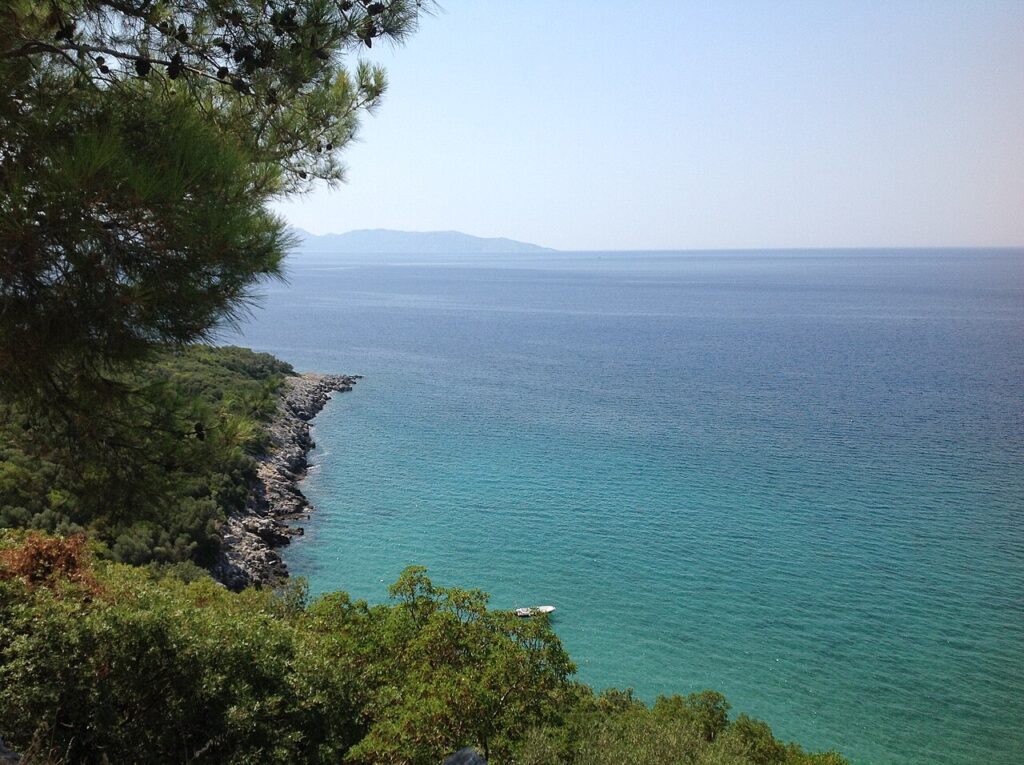
The Dilek Peninsula National Park gives the photographer the nature frames of the region, and the wild coast delivers the landscapes. The bays with their clear water, the forested hills, the cliffs over the Aegean, and the views toward the Greek island of Samos give the compositions of the coast; the wildlife — the peacocks, the wild boars — adds the unexpected subjects; and the morning and the late afternoon light on the bays and the hills gives the soft, the golden frames. The Dilek Peninsula is the nature photography of the region, and the wild coast is the escape from the town’s frames.
The practical park notes: the park needs the car or the tour, and the walks to the viewpoints reward the effort; the sturdy shoes and the water are the essentials of the trails; and the morning light on the bays is the park’s best, with the calm water for the reflections. The Dilek Peninsula is the wild-frame destination, and the coast’s landscapes are the reward.

The Şirince Village: The Hilltop Frames
The hilltop village of Şirince gives the photographer the scenic frames of the region, and the old Greek village is the photogenic wander. The cobbled lanes, the white houses with their red roofs, the terraced hillsides, and the views over the valleys give the compositions that the coast cannot; the late afternoon light on the village’s lanes and rooftops is the golden one; and the details — the doors, the windows, the vines, the village life — fill the frames with the charm. Şirince is the scenic photography of the region, and the hilltop village is the frame that the postcards of the area use.
The practical Şirince notes: the village lies about a half hour from Kuşadası, and the dolmuş, the taxi, or the tour reaches it; the late afternoon light is the village’s best, with the long shadows and the golden tones; and the wander through the lanes, with the camera ready, finds the frames at every turn. The Şirince village is the scenic frame of the region, and the hilltop charm is the photograph.
The Aegean Light: The Practical Photography Guide
The practical guide to photographing the Kuşadası region comes down to the light and the timing. The golden hours are the gold: the hour after the sunrise and the hour before the sunset give the warm light and the long shadows that the coast is made for; the midday light flattens the colors, and the wise photographer uses the middays for the interiors, the bazaar, and the rest; and the winter’s low sun gives the longest, the most dramatic shadows of the year. The gear is the flexible kit: the wide-angle for the ruins and the panoramas, the telephoto for the details and the wildlife, the tripod for the sunsets and the night shots, and the polarizer for the skies and the sea. The practical logistics: the early starts at Ephesus beat the crowds and the heat; the walking covers the town, and the car or the tour reaches the region’s spots; and the respect for the people and the places is the rule that keeps the welcome warm. The Aegean light of the Kuşadası region is the photographer’s gift, and the timing and the patience turn the ordinary scenes into the golden frames.

The Takeaway
The photography in the Kuşadası region is the reward of the light and the timing: the marble library and the theatre of Ephesus, the island castle at the sunset, the waterfront and the back lanes of the town, and the wild coast and the hilltop village beyond. Rise early for the ruins, stay late for the sunsets, and let the Aegean light do the rest. The frames from Kuşadası are the ones that the postcards cannot improve, and the region’s variety is the photographer’s playground.
Frequently asked questions
What is the best photography spot in Kuşadası?
The Güvercinada island at sunset for the town’s signature frame, and the Library of Celsus at Ephesus for the region’s iconic shot.
When is the best light for photographing the Kuşadası region?
The golden hours — the hour after sunrise and the hour before sunset — with the winter’s low sun giving the longest shadows.
Is photography allowed at Ephesus?
Yes — the personal photography is welcome, with the tripods and the commercial shoots subject to the site’s rules.
What should I photograph first in Kuşadası?
The Library of Celsus in the early morning, before the cruise crowds, and the island castle at the sunset.
Do I need a permit to photograph in Kuşadası?
No permit is needed for the personal photography, with the drones restricted in the region.

All Over Information
The All Over Information editorial team researches and writes practical English-language guides to Turkey. Facts are checked against official and local sources before publication, prices are published as dated ranges rather than quotes, and guides are revised when things change. We accept no sponsored posts, paid placements or paid links.
More guides like this
Shopping Guide: What to Buy in Kusadasi
The shopping of Kuşadası runs on the bazaar tradition, and the town that feeds the cruise passengers knows how to sell.

Top 10 Things to Do in Kusadasi
Kuşadası is the base for some of Turkey's greatest sights, and its own resort charms fill the spaces between.
The Best Day Trips from Kusadasi
Kuşadası is the perfect base for the excursions of the Aegean region, and the day trips from the town reach some of…

A Solo Traveler’s Guide to Kusadasi
Kuşadası is a welcoming solo destination on the Turkish coast: the town is safe, walkable, and sociable, and it serves as the…
How to Get to Kusadasi from Istanbul
The journey from Istanbul to Kuşadası is the well-trodden path to the Aegean coast, and the options — the flight, the bus,…

Best Local Restaurants in Kusadasi
The food of Kuşadası is the Aegean table, served with the energy of a port town that feeds the cruise passengers and…