Ortahisar is the photographer’s town of Cappadocia. The giant castle rock rises from the center, the valleys of the region fan out in every direction, and the light of the plateau turns the tuff stone pink and gold twice a day; yet the crowds pass it by for the bigger names, which leaves the frames empty and the viewpoints free. This guide covers the spots that the camera cannot miss, and when to stand in each one.
The Castle Summit: The View from the Top
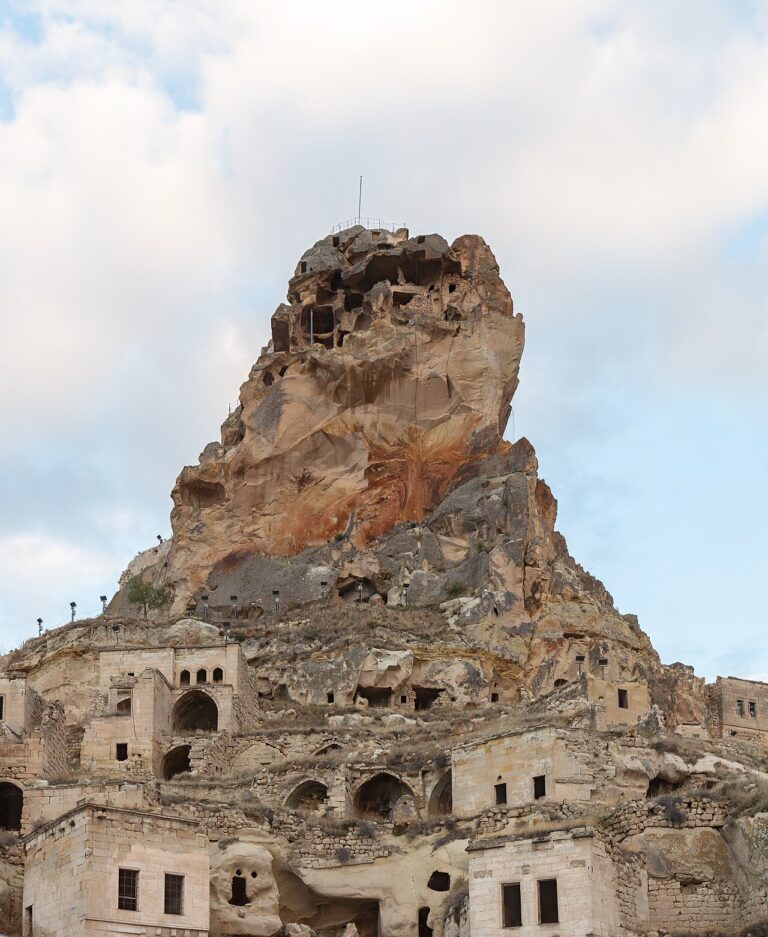
The summit of Ortahisar Castle is the town’s signature frame, and the climb is the reward. The giant rock — the tallest in Cappadocia — rises a hundred meters above the town, hollowed by the centuries of the tunnels and the rooms that made it the fortress and the refuge, and the stairs and the ladders lead to the top; from the summit, the whole plateau spreads below: the town of Ortahisar with its tuff houses, the valleys of the region in every direction, and on the clear days the peaks of Erciyes on the horizon. The summit is the 360-degree panorama, and the frames from the top are the postcards that the traveler did not buy.
The practical summit notes: the climb takes the twenty minutes and the sure feet, and the tunnels are the narrow and the dark, so the flashlight and the care matter; the summit is the small and the crowded-in-season space, and the early morning or the late afternoon visits catch the light and avoid the queue; and the wide lens and the telephoto both earn their place, the wide for the panorama and the tele for the details of the town below. The castle summit is the Ortahisar shot, and the climb is the essential rite of the photographer’s visit.
The Sunset Terraces: Golden Hour over the Town
The sunset terraces of Ortahisar give the golden-hour frames that the town is made for. The boutique hotels and the guesthouses have built their terraces facing the castle and the valleys, and as the sun drops, the tuff turns through the pink and the red and the gold, with the castle rock catching the last light and the town below falling into the blue shadow; the frames from the terraces combine the foreground — the terrace, the tea glass, the rooftops — with the drama of the sky. The sunset is the daily show, and the terraces are the front-row seats.
The practical terrace notes: the terraces of the hotels are free for the guests, and the public terrace near the castle square is the open option; the sunset times vary with the season, and the arrival should come at least the half hour early to claim the spot and watch the light build; and the golden hour rewards the patience, with the best color often arriving in the minutes after the sun has disappeared. The sunset terraces of Ortahisar are the evening frames, and the golden town is the shot that the whole region travels for.

The Red Valley: The Colored Rock
The Red Valley lies a short walk from Ortahisar, and its name is the promise that the light keeps. The valley’s rock — the iron-rich tuff — burns in the reds and the oranges and the pinks, and the color deepens as the sun sinks; the walking trail winds through the valley past the fairy chimneys and the rock-cut churches, and every bend gives the new composition. The Red Valley is the photographer’s playground, and the light at the end of the day turns the whole valley into the studio.
The practical valley notes: the trail is the easy-to-moderate walk, and the sturdy shoes matter on the sandy and the rocky paths; the sunset light is the valley’s best, with the colors at their deepest in the hour before the dark; and the mid-afternoon light flattens the colors, so the timing is the whole game. The Red Valley is the Ortahisar area’s color shot, and the evening walk through the red rock is the essential frame.
The Rose Valley: The Soft Light
The Rose Valley — the neighbor of the Red — gives the softer counterpart: the rock in the blush and the cream and the rose tones, the valleys and the ridges folding into each other, and the churches carved into the cliff faces. The valley is the walking valley, with the trail that connects to the Red Valley and continues past the hidden churches and the fairy chimneys; the light of the morning and the late afternoon gives the valley its name, and the soft tones make the gentle, romantic frames that the Red Valley’s drama does not.
The practical valley notes: the loop walk through the Rose Valley takes the half day and passes the churches — the Church of the Cross, the more hidden ones — that reward the exploration; the morning light is the valley’s gentlest, and the low sun rakes across the rock; and the wide shots of the ridges and the close shots of the carved facades both belong in the set. The Rose Valley is the soft beauty of the Ortahisar area, and the blush rock in the low light is the frame that the photographers return for.

The Town Lanes: The Everyday Frames
The lanes of Ortahisar itself give the frames that the viewpoints cannot: the everyday life of the town, the tuff houses with their carved details, the cats on the walls, the pots and the rugs at the doors, the old men at the tea gardens, and the children in the alleys. The town is the working village wrapped around the castle, and the streets that the tour groups skip are the streets where the real Cappadocia lives; the photographic gold is in the details — the wooden doors, the stone stairways, the washing lines, the workshop windows with the potters and the carvers at work.
The practical lane notes: the morning is the lane’s best time, when the light comes low and the town wakes; the respectful photography is the rule, and the asking before the portraits of the people is the courtesy that opens the doors; and the telephoto lens captures the details without the intrusion. The lanes of Ortahisar are the human frames, and the everyday town is the collection that the postcard shots never include.
The Fairy Chimneys of the Area
The fairy chimneys of the Ortahisar area stand among the best in Cappadocia, and several of the best specimens rise within the easy walk of the town. The tall cones with their caps of harder rock, the clustered groups in the valleys, and the ones with the carved doors and the windows — the rock-cut dwellings of the centuries — give the classic Cappadocian compositions without the crowds of the famous viewpoints; the roadside clusters and the valley trails both deliver, and the light of the late afternoon gives the cones their depth and their shadows.
The practical chimney notes: the best clusters lie on the walk to the Red Valley and along the valley trails; the framing with the foreground interest — the wildflowers, the rocks, the path — lifts the shots above the standard; and the morning and the evening light give the shadows that make the cones three-dimensional. The fairy chimneys of the Ortahisar area are the classic frames, and the empty viewpoints make them the photographer’s secret.

The Balloon Sunrise: The Sky Full of Color
The sunrise over Ortahisar brings the region’s most famous show: the hot-air balloons of Cappadocia rising with the dawn, filling the sky with the dozens of the colored envelopes, and drifting over the valleys and the ridges toward the town. The balloons are the aerial ballet of the plateau, and the frames from the Ortahisar viewpoints — the castle summit, the valley edges, the terraces — capture the sky full of the color with the town in the foreground. The sunrise show runs through most of the year on the calm mornings, and the photographers plan their mornings around it.
The practical balloon notes: the balloons launch around the sunrise, and the arrival at the viewpoint needs to come before the light; the weather rules the show — the wind and the rain cancel the flights — and the flexible mornings catch the best chances; and the burst mode and the telephoto lens capture the balloons as they rise over the ridges. The balloon sunrise over Ortahisar is the region’s signature frame, and the sky full of the color over the town is the shot that the whole plateau is famous for.
The Winter and the Seasonal Frames
The seasons change the Ortahisar frames, and the winter gives the frames that the summer cannot. The snow dusts the castle and the valleys, and the red rock against the white becomes the dramatic shot; the winter sun hangs low, stretching the shadows and gilding the snow; and the empty trails and the quiet town give the photographer the solitude that the summer never offers. The spring brings the green valleys and the wildflowers, the autumn brings the golden light and the harvest colors, and each season gives the return visit its new set of frames.
The practical seasonal notes: the winter requires the warm layers and the care on the icy paths; the spring and the autumn give the mildest weather and the richest light; and the summer, for all its crowds, gives the longest days and the balloon shows on the most mornings. The seasonal frames of the Ortahisar area are the reason the photographers return, and the plateau in each season is a different subject.

The Practical Photography Guide
The practical guide to photographing Ortahisar comes down to the light and the timing. The golden hours are the gold: the hour after the sunrise and the hour before the sunset give the warm light and the long shadows that the plateau is made for; the midday light flattens the colors and the relief, and the wise photographer uses the middays for the town interiors, the workshops, and the rest. The gear is the flexible kit: the wide-angle for the panoramas, the telephoto for the details and the balloons, the tripod for the night sky and the long exposures, and the polarizer for the skies and the rock.
The practical logistics: the walking covers the whole area, and the comfortable shoes and the water matter for the valley trails; the permits are not needed for the personal photography, and the drone flights are restricted in the region, so the drone stays packed; and the respect for the people and the places is the rule that keeps the welcome warm. The practical guide to photographing Ortahisar is the simple one: be there at the golden hours, walk the valleys, climb the castle, and let the plateau do the rest.
The Takeaway
The photography in Ortahisar is the reward of the patient: the castle summit, the sunset terraces, the red and the rose valleys, the fairy chimneys without the crowds, and the balloons filling the dawn sky. Come at the golden hours, walk the valleys, climb the rock, and point the camera at the plateau doing its daily work. The frames from Ortahisar are the ones that the postcards cannot improve, and the empty viewpoints are the gift of the town that the crowds skip.
Frequently asked questions
What is the best photography spot in Ortahisar?
The summit of Ortahisar Castle for the 360-degree panorama, and the sunset terraces for the golden-hour frames over the town.
When is the best light for photographing Ortahisar?
The hour after sunrise and the hour before sunset, when the tuff rock turns pink and gold; the winter’s low sun gives the longest, most dramatic shadows.
Can I photograph the balloons from Ortahisar?
Yes — the balloons rise with the dawn over the valleys, and the castle summit and the valley edges give the frames with the balloons over the town.
Do I need a permit to photograph in Ortahisar?
No permit is needed for the personal photography, though the drone flights are restricted in the region.
Are the valleys around Ortahisar easy to photograph?
Yes — the Red and the Rose Valleys are short walks from the town with the easy trails and the spectacular rock.

All Over Information
The All Over Information editorial team researches and writes practical English-language guides to Turkey. Facts are checked against official and local sources before publication, prices are published as dated ranges rather than quotes, and guides are revised when things change. We accept no sponsored posts, paid placements or paid links.
More guides like this

The Best Day Trips from Ortahisar
Ortahisar sits at the heart of Cappadocia, between Göreme and Ürgüp, and the region's best day trips start from its door.

Family-Friendly Activities in Ortahisar
Ortahisar is a natural base for the family trip to Cappadocia: the castle is the giant climbing frame, the orchards and the…
Top 10 Things to Do in Ortahisar
Ortahisar is the quiet, authentic town of Cappadocia, and its ten best experiences run from the summit of the rock castle to…
Best Time of Year to Visit Ortahisar
Every season gives Ortahisar a different face, and the best time to visit depends entirely on what the traveler wants from the…
History and Culture of Ortahisar
Ortahisar is the fortress town of Cappadocia, and its history is written in the rock.

Where to Stay in Ortahisar: Neighborhood Guide
Ortahisar is a small, authentic town, and the choice of where to stay is the choice of the style and the view:…