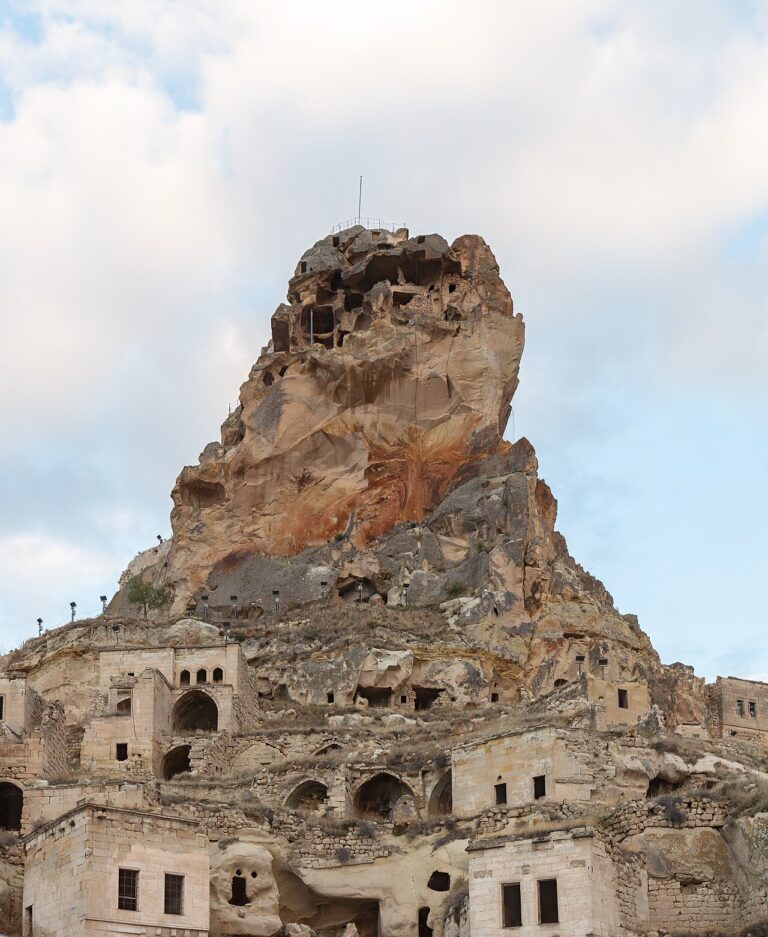
Ortahisar is the fortress town of Cappadocia, and its history is written in the rock. The giant castle that gives the town its name — orta hisar, the middle fortress — has watched over the plateau for centuries, and the tunnels, the churches, and the dwellings carved into the tuff tell the story of the people who lived through the invasions, the faiths, and the trades of the region. This guide explores the history and the culture of Ortahisar, from the rock-cut past to the living present.
The Name and the Place
The name of Ortahisar tells the first part of the story. The town sits in the middle of the region — between the settlements of the plateau — and its giant rock made it the natural fortress, the orta hisar of the area; the castle served as the refuge, the watchtower, and the storehouse of the surrounding villages, and the town that grew at its base took the name. The rock itself is the largest in Cappadocia, rising over a hundred meters above the town, and its sheer presence has defined the settlement for as long as the people have lived here.
The place of Ortahisar in the region is the strategic one: the town guards the approaches between the valleys, and the castle commands the views in every direction. The position made Ortahisar the middle fortress in the network of the plateau’s defenses, and the history of the region flows through it.
The Rock-Cut Past
The history of Ortahisar begins in the rock. The tuff of the plateau — the soft volcanic stone that the region is famous for — was the material of the centuries, and the people carved their lives into it: the dwellings with their rooms and their niches, the storerooms for the grain and the wine, the dovecotes for the pigeons that fertilized the fields, and the tunnels that connected the spaces and provided the escape routes in the dangerous times. The rock-cut heritage of Ortahisar is visible everywhere — in the castle itself, in the carved facades of the houses, and in the abandoned dwellings of the valleys around the town.
The rock-cut past is also the artistic past. The churches of the area — carved into the cliffs of the valleys, decorated with the frescoes of the Byzantine centuries — stand among the treasures of the region; the painted saints and the scenes of the scriptures cover the walls and the ceilings of the hidden chapels, and the colors survive in the dry air of the caves. The churches of the Ortahisar area — the Church of the Cross and the others of the valleys — reward the walkers who find them, and they connect the town to the great monastic history of Cappadocia.

The Byzantine and the Seljuk Centuries
The history of Ortahisar runs through the Byzantine and the Seljuk centuries, when the region stood at the crossroads of the empires. The Byzantine era left the churches and the monastic settlements of the valleys, the rock-cut refuges that the monks and the villagers carved into the cliffs; the Seljuk era that followed brought the trade and the prosperity, and the plateau’s position on the routes between the coast and the interior made it the land of the caravans and the markets. The castle of Ortahisar watched over these centuries, and the rock bears the marks of the building and the rebuilding that the changing rulers brought.
The cultural inheritance of these centuries is the layered one: the Christian heritage of the churches and the monasteries, the Islamic heritage of the mosques and the medreses of the region, and the shared traditions of the plateau’s people — the crafts, the foods, the hospitality — that predate and outlast the empires. The history of Ortahisar is the history of the region in miniature, and the layers are visible in the stones and the customs of the town.
The Ottoman Era and the Modern Town
The Ottoman era shaped the Ortahisar that the visitor sees today. The town that grew at the base of the castle became the market town of the area, and the stone houses with their carved details, the mosques, and the public buildings of the Ottoman centuries stand in the modern streets; the town’s position in the middle of the fertile valleys made it the center of the agriculture and the trade, and the prosperity of the era is visible in the scale of the houses and the richness of the carving.
The modern era brought the changes that transformed the region: the Republican period, the shift of the population and the economy, and then the discovery of Cappadocia by the world. The tourism that reshaped the region arrived late in Ortahisar, and the town that the crowds passed by kept more of its working character than its famous neighbors; the result is the town that the visitor finds today — the living settlement, still farming the valleys and still carving the rock, with the tourism woven into the daily life rather than replacing it.

The Castle and Its Stories
The castle of Ortahisar is the centerpiece of the town’s history, and its stories are the ones that the guides love to tell. The rock was the fortress and the refuge: the tunnels and the rooms carved into its heart sheltered the people of the surrounding villages in the times of the danger, and the storehouses held the grain and the supplies that kept them through the sieges; the summit served as the watchtower, with the views that the defenders used to spot the approaching threats; and the dovecotes of the lower rock provided the fertilizer, the meat, and the messages of the centuries. The castle was the town’s beating heart, and the rock still bears the marks of every role.
The climb of the castle today is the walk through this history: the tunnels, the carved stairs, the rooms with their niches and their windows, and the summit with the panorama that the defenders once scanned. The stories of the castle — the sieges and the refuges, the hidden passages and the stored harvests — come alive in the climb, and the visitors who make it understand why the rock meant everything to the people of the plateau.
The Culture of the Working Plateau
The culture of Ortahisar is the culture of the working plateau, and the traditions of the town are the living ones. The agriculture of the valleys — the grapes of the famous vineyards, the apricots and the apples of the orchards — still drives the economy, and the harvests still mark the seasons of the town; the crafts of the region — the pottery, the carpet weaving, the stone carving — continue in the workshops, passed from the generations; and the food of the plateau — the testi kebab, the manti, the gözleme, the wines of the volcanic soils — remains the daily table of the town.
The cultural calendar of Ortahisar follows the seasons and the faith: the harvest festivals of the autumn, the religious holidays with their shared meals and their visits, the weddings and the celebrations that fill the town with the music and the dancing. The hospitality of the plateau — the tea that is always offered, the conversation that is always welcomed — is the culture’s most visible face, and the visitor who engages with it finds the real town beneath the tourist surface.

The Wines and the Vineyards
The wine culture of Ortahisar is one of the region’s oldest and most distinctive traditions. The volcanic soils of the plateau and the high, dry climate have grown the grapes for millennia, and the vineyards of the Ortahisar area — the ancient ones with their ungrafted vines, the newer boutique plantings — produce the wines with the character that the terroir gives them; the native varieties — the Emir, the Kalecik Karası, the Dimrit — express the plateau in the glass, and the wineries of the area have built the tasting rooms and the cellars that celebrate them.
The wine culture is also the culture of the cave: the cellars carved into the tuff, where the constant temperature has aged the wine for centuries, and where the modern wineries now age their vintages. The tasting of the region’s wines in the setting of the rock-cut cellars connects the visitor to the deepest history of the plateau — the wine that the Hittites and the Byzantines and the Ottomans all drank, in the same valleys and the same caves.
The Culture Today: The Town and the Visitors
The culture of Ortahisar today is the meeting of the town and the visitors. The tourism has brought the boutique hotels, the restaurants, and the galleries, and the town has woven the new economy into its old rhythms — the cave houses turned into the hotels, the workshops opened to the visitors, the festivals expanded to include them; yet the town remains the working place, with the farming in the valleys and the crafts in the workshops continuing alongside the tourism. The balance is the town’s achievement, and the travelers who stay in Ortahisar experience the culture that the bigger towns have traded away.
The practical engagement with the culture: the staying in the cave hotels and the guesthouses, the eating in the lokantas, the shopping in the workshops, and the talking with the people who live and work in the town. The culture of Ortahisar is not the museum — it is the daily life — and the visitor who participates rather than observes finds the history and the culture of the plateau alive in the present.

The Takeaway
The history and culture of Ortahisar are written in the rock and the daily life: the fortress castle, the rock-cut churches, the ancient vineyards, and the working traditions that the crowds have not eroded. Climb the castle, walk the valleys, taste the wine, and talk with the people. The middle fortress of Cappadocia holds the history of the whole region, and the town that the tourists skip is the one that tells it best.
Frequently asked questions
What does the name Ortahisar mean?
It means “middle fortress” in Turkish, referring to the town’s position and to the giant castle rock that has guarded the area for centuries.
How old is Ortahisar Castle?
The rock has been inhabited for millennia, and the fortress with its tunnels and rooms served as the refuge and the watchtower of the region through the Byzantine, the Seljuk, and the Ottoman eras.
What is Ortahisar famous for historically?
The giant rock-cut castle, the rock-cut churches of the valleys, the ancient vineyards and the wine culture, and its role as the working market town of the plateau.
Is Ortahisar worth visiting for history?
Yes — the castle climb, the valley churches, and the living traditions of the town give the deep and the uncrowded view of Cappadocian history.
What is the culture of Ortahisar today?
A working plateau town where the farming, the crafts, and the wine traditions continue alongside the tourism, with the famous hospitality of the region.

All Over Information
The All Over Information editorial team researches and writes practical English-language guides to Turkey. Facts are checked against official and local sources before publication, prices are published as dated ranges rather than quotes, and guides are revised when things change. We accept no sponsored posts, paid placements or paid links.
More guides like this

Ortahisar in Summer: A Complete Travel Guide
Summer in Ortahisar is the season of the long days, the orchard shade, and the town at its quiet liveliest.

Hidden Gems of Ortahisar Most Tourists Miss
Ortahisar shows its famous face to every visitor — the castle, the old town — but the town and its surroundings keep…
How to Get to Ortahisar from Istanbul
Getting to Ortahisar from Istanbul is the straightforward journey to the heart of Cappadocia: the flight to the regional airports, the transfer…
Top 10 Things to Do in Ortahisar
Ortahisar is the quiet, authentic town of Cappadocia, and its ten best experiences run from the summit of the rock castle to…

Family-Friendly Activities in Ortahisar
Ortahisar is a natural base for the family trip to Cappadocia: the castle is the giant climbing frame, the orchards and the…
A First-Timer’s Guide to Ortahisar
Ortahisar is the quiet, authentic town of Cappadocia, built around its rock castle — the towering outcrop that gives the town its…