The camel wrestling festival is one of the oldest and most distinctive traditions of western Anatolia, a winter spectacle in which decorated camels are brought to arenas to wrestle before crowds of thousands. To the outsider it can seem strange, but to the people of the Aegean region it is a living link to their nomadic past, a celebration of identity, and one of the most eagerly awaited events of the year. This article explores the history of the festival and the meaning it holds for the communities that keep it alive.
A Tradition of the Yoruk Nomads
The story of camel wrestling begins with the nomads of Anatolia, the people known as Yoruk, who moved with their herds and their camels across the lands of western Turkey for centuries.
For the Yoruk, the camel was everything: a beast of burden, a source of milk and wool, and the companion of a life on the move. The camel caravans of Anatolia were the great highways of trade and migration.
The wrestling began, it is believed, as a natural and seasonal thing: in the mating season, the male camels fought over the females, and the nomads, watching their animals, began to take an interest in the contests.
From this observation grew a tradition. The strongest and most aggressive males were kept for the contests, and the winter wrestling of camels became a part of the nomadic way of life.
Why Camels Wrestle
The wrestling is rooted in the biology of the camel. Male camels, especially in the winter mating season, are naturally aggressive toward other males, and they establish their dominance by fighting.
The fighting of wild and domestic camels follows a set pattern: the animals push against each other, try to unbalance their opponent, and bite at the neck and the legs until one yields.
The nomads recognized this behavior and gave it a purpose. The contests were a way of testing the strength of their animals, of choosing the best, and of providing entertainment in the long winter months.
The tradition also holds that the wrestling is a controlled outlet for the camels’ seasonal aggression: the animals are given their contest, and then they are separated, and the peace of the herd is restored.

The Tulu Camel and Its Breeding
Not every camel can wrestle. The festival camels are a special breed, known as tulu camels, which have been raised for generations specifically for their strength, their size, and their fighting spirit.
The tulu is a crossbreed, the product of careful matings designed to produce the powerful, hardy animals that the wrestling demands. The best of them are magnificent creatures, standing far taller than a man.
A champion tulu camel is a celebrity. It has a name, a reputation, and a following, and its victories are remembered and retold in the region for years.
The breeding of the wrestling camels is a specialized craft, passed down through families, and it is part of the deeper meaning of the festival: the celebration of an animal that the region bred and honored for centuries.
How the Tradition Developed
From the camps of the nomads, the camel wrestling moved into the towns, and over the centuries it became the festival we know today. The wrestling found a home in the settlements of the Aegean region.
The contests became organized events, held on fixed dates, with arenas, rules, and prizes. The winter season of the wrestling became part of the region’s calendar of festivals.
The festival grew around the wrestling: the music, the food, the crowds, and the celebration all gathered around the contests, until the festival became a great annual gathering of the whole community.
By the time the modern era arrived, the camel wrestling festival was deeply rooted in the life of western Anatolia, a tradition carried from the nomadic past into the settled present.
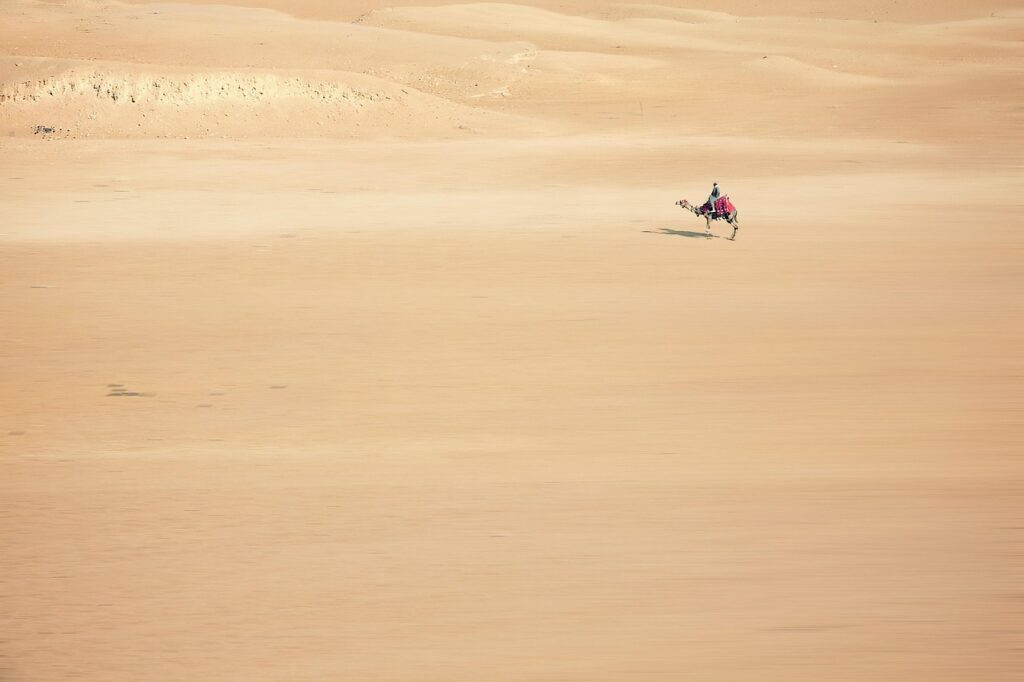
The Decorations and Their Meaning
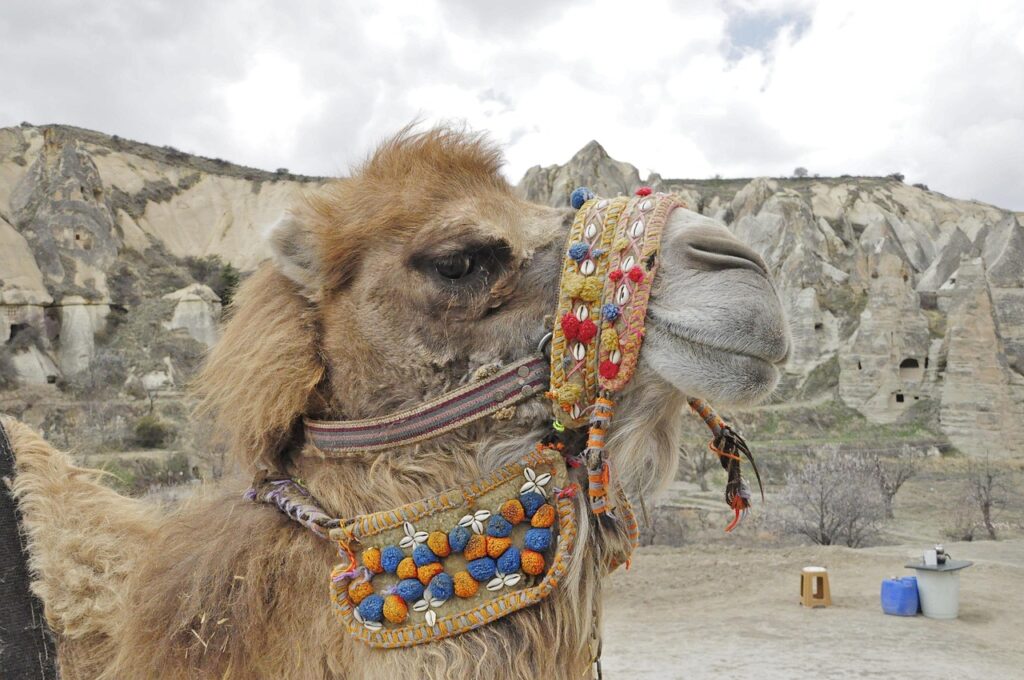
The decoration of the festival camels is one of the most beautiful parts of the tradition, and it carries its own meaning. The camels are dressed in colorful saddles, rugs, bells, and tassels, each ornament with its place.
The decorated saddle, known as the havut, is covered with embroidered cloths, and the camel’s head and neck are hung with bells and charms. The decoration is the owner’s pride and the camel’s glory.
The tradition of decoration reaches back to the nomadic past, when the riding camels were dressed for ceremony and celebration. The festival camels carry that tradition into the present.
The bells are not just ornament; they announce the camel’s coming. As the decorated camels parade through the town, their bells ringing, they are unmistakably the stars of the day.
The Rituals of the Match Day
The festival day follows a pattern that has been repeated for generations. It begins with the parade, when the decorated camels are led through the town, their bells ringing and their owners walking proudly beside them.
The crowd follows the parade to the arena, where the wrestling will take place. The atmosphere builds through the morning, with the music of the drums and pipes and the chatter of the crowd.
The matches begin in the afternoon, and the rhythm of the day is set: match follows match, with the crowd cheering the favorites and the handlers working tirelessly beside their animals.
As the evening falls, the festival turns to celebration: music, dancing, and food, with the day’s stories retold. The match day is a complete festival, from the morning parade to the night’s celebration.
Music, Food, and Celebration
The festival is a feast of the senses, and its music and food are as important as the wrestling. The davul and zurna, the great drum and the piercing pipe, play from morning to night.
The music is the sound of the festival’s ancient soul, the same melodies that have accompanied the wrestling for generations. It drives the parade, marks the matches, and carries the evening’s celebration.
The food of the festival is the hearty cooking of the Aegean: grills, kebabs, soups, and sweets, served from the stalls that line the festival ground. The day is a great shared meal as much as a spectacle.
The celebration is communal. Families, neighbors, and visitors eat together, watch together, and cheer together, and the festival binds the community in the way that only a shared tradition can.
The Festival Calendar of the Aegean
The camel wrestling season follows the winter, running from around December to March, when the camels are in their aggressive season and the weather suits an outdoor festival.
Each town of the region holds its festival on a fixed weekend, and the calendar of the season is well known throughout the Aegean. The most famous festivals draw camels and crowds from across the region.
The towns of the provinces of Izmir, Aydin, Denizli, and Mugla are the heart of the tradition, and the festival at Selcuk, near the ancient city of Ephesus, is among the most celebrated.
The season ends as the weather warms and the camels’ aggression fades, and the festival towns return to their quiet work until the next winter brings the wrestling back.

The Tradition Today
The camel wrestling festival has survived into the modern era, and today it is as popular as ever. In a region transformed by tourism and industry, the festival remains a constant of the winter calendar.
The festivals are supported by the municipalities and celebrated by the communities, and they have found a new audience among the visitors who come to the Aegean in winter.
The tradition has also become a matter of cultural pride. The festival is promoted as part of the region’s heritage, and its history is told and retold, connecting the modern towns to their nomadic past.
At the same time, the tradition is a living one, adapting while it endures. The music, the food, and the excitement are of the present, and the camels themselves are as celebrated as they ever were.
What the Festival Means
The camel wrestling festival means many things, and that is the secret of its survival. For the owners, it is pride and competition, the testing of their animals and the glory of victory.
For the community, it is continuity: the same grounds, the same music, and the same excitement that their parents and grandparents knew, a thread running through the generations.
For the region, it is identity: a festival that belongs to the Aegean, that speaks of the nomads and the caravans, and that no other place can claim.
And for everyone, it is celebration: a winter day of color, noise, and food, when the whole community gathers to honor an animal and a tradition that shaped this corner of the world. That is the meaning of the festival, and it is why it endures.
Frequently asked questions
How old is the camel wrestling tradition?
The wrestling grew out of the nomadic life of the Yoruk people of Anatolia, and the tradition is believed to be centuries old, carried from the Ottoman era into the modern age. Its exact beginnings are lost, but its roots in the region’s pastoral past are certain, and the living practice carries the memory of that past into the present.
Why are the camels decorated so richly?
The decoration is a tradition of pride and honor. The colorful saddles, rugs, bells, and tassels dress the camel as a champion, and they echo the ceremonial decoration of riding camels in the nomadic past. The owner’s reputation is bound up in the beauty of his camel’s finery.
Is camel wrestling still popular today?
Yes, more than ever. The winter festival season fills towns across the Aegean region with crowds, the famous festivals draw spectators from across Turkey, and the tradition has found a new audience among international visitors, while remaining a source of pride for the communities that keep it alive.

All Over Information
The All Over Information editorial team researches and writes practical English-language guides to Turkey. Facts are checked against official and local sources before publication, prices are published as dated ranges rather than quotes, and guides are revised when things change. We accept no sponsored posts, paid placements or paid links.
More guides like this

When and Where to See Nowruz in Eastern Turkey
Nowruz, the festival of the spring equinox, is one of the most vivid experiences eastern Turkey has to offer, and the timing…

Experiencing Hidirellez Spring Festival as a Foreign Visitor
On the night of May 5 and the day of May 6, communities across Turkey celebrate Hidirellez, the great spring festival that…

The History and Meaning of Nowruz in Eastern Turkey
Nowruz is one of the oldest living festivals in the world, a celebration of the spring equinox that has been observed for…
Experiencing Nowruz in Eastern Turkey as a Foreign Visitor
Every spring, as the snows begin to melt in the mountains of eastern Turkey, the region comes alive with the oldest celebration…
Experiencing the Istanbul Film Festival as a Foreign Visitor
Every spring, Istanbul transforms into a city of cinema as the Istanbul Film Festival fills its screens with the best of world…

When and Where to See the Efes Pilsen Blues Festival
The Efes Pilsen Blues Festival brings the blues to Istanbul every spring, and attending is refreshingly simple.