In Turkey, no meal truly begins until a bowl of corba has been set on the table. Soup is not a simple appetizer here; it is a daily ritual, a warm welcome offered to guests, and the first thing many Turks eat before sunrise during the month of Ramadan. From the red lentil soup that steams on every family stove to the slow-fermented tarhana of the villages, Turkish soup culture is deep, regional, and endlessly comforting. This guide walks you through the identity of corba, its essential ingredients, the classic varieties, the regions that shaped them, where to eat, and how this simple bowl became a symbol of Turkish hospitality.
What Is Corba?
Corba is the Turkish word for soup, but it means much more than a liquid dish. In Turkish kitchens, corba anchors the day, eaten at breakfast, as a starter at lunch, or as a light supper late in the evening. It is the dish mothers prepare for sick children, the first warm comfort after a long winter walk, and the standard opener of any traditional restaurant meal.
Unlike the heavy cream soups of some cuisines, Turkish corba tends to be light, brothy, and built on legumes, grains, yogurt, or vegetables. Its flavor comes from patience: long simmering, careful seasoning, and a final flourish of butter melted with dried mint or red pepper flakes.
A corba can be as simple as a few ingredients or as complex as a fermented village recipe passed down for generations. What unites every version is the same philosophy: soup should comfort, nourish, and bring people together around one pot. Whatever the season and whatever the budget, soup always works.
The Essential Ingredients
Turkish soups are built on a small pantry of staples that appear again and again. Red lentils, bulgur, rice, chickpeas, beans, and wheat form the backbone of filling soups. Yogurt is the star of cold-weather classics like yayla corbasi, where it is tempered with egg and thickened with rice.
Flour, onions, tomatoes, and tomato paste give many soups their body and color, while dried mint, red pepper flakes, black pepper, and salt do most of the seasoning work. Because the base ingredients are inexpensive and available everywhere, soup has always been the great equalizer of the Turkish table.
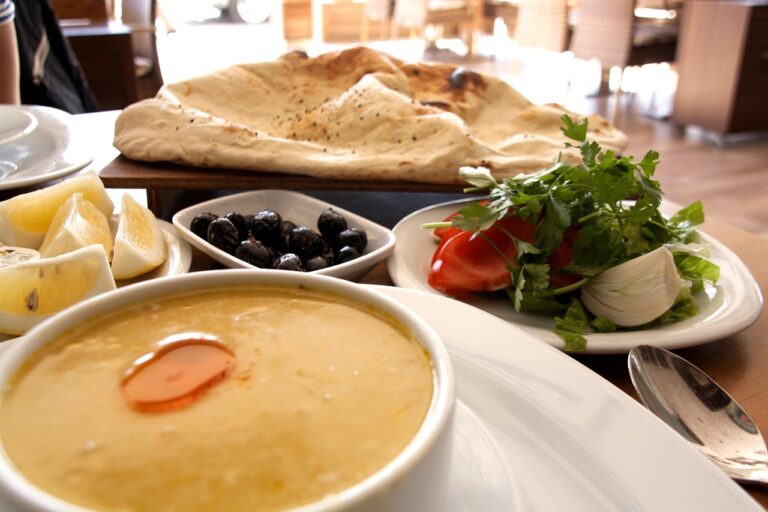
The finishing touches are what elevate a Turkish soup from good to memorable. A spoonful of butter sizzled with mint or paprika is poured over the surface just before serving, creating a glossy, fragrant layer. Lemon wedges sit on every table, ready to be squeezed into lentil soups.
The Great Classics of the Corba Bowl
Mercimek corbasi, the red lentil soup, is the undisputed king of Turkish soups. Velvety, earthy, and often finished with lemon, it appears on menus from the humblest lokanta to the grandest hotel.
Ezogelin corbasi is a spicier lentil soup enriched with bulgur and rice, named after a legendary woman who cooked it to win the hearts of her in-laws. Its warming red tone and slightly coarse texture make it a favorite in the cold months. Yayla corbasi, the mountain pasture soup, is a soothing blend of yogurt, rice, and dried mint, beloved for its gentle tang.
Tarhana is a world of its own: a fermented mixture of flour, yogurt, tomatoes, peppers, and onions that is dried into granules and stored for winter. Stirred into simmering water or stock, it becomes a hearty, slightly sour soup that tastes of sun and tradition.
More Treasures of the Soup Pot
Beyond the classics, Turkish soup culture is remarkably inventive. Domates corbasi, a silky tomato soup served with fried bread cubes and grated cheese, is a modern favorite. Tavuk suyuna corbasi, chicken broth with fine noodles or rice, is the universal remedy for colds and rainy evenings.
Dugun corbasi, the wedding soup, is a celebratory mix of lamb, yogurt, and butter that has welcomed guests at Anatolian weddings for centuries. Its rich, tangy broth is considered a sign of the host’s generosity.
For those who enjoy offal, iskembe corbasi, tripe soup, is a legendary late-night dish, garlicky and sharp. Paca corbasi, made from lamb’s feet, is another traditional pick-me-up, valued for its gelatinous body. Fish soup, vegetable soup, and green lentil soup round out the everyday rotation. There is a Turkish soup for every mood.

Regional Variations Across Turkey
Every region puts its own signature on the soup pot. In the southeast, around Gaziantep and Urfa, soups are bolder, spicier, and built on lamb, tomato, and chili, with specialties like beyran, a fiery rice-and-lamb soup served at dawn.
In the Black Sea region, anchovy appears in fish soups, while corn and cabbage feature in the hearty mountain kitchens. The Aegean coast favors light vegetable soups, bright with lemon and olive oil. In central Anatolia, yogurt-based soups and tarhana rule, reflecting dairy-rich pastoral traditions.
Istanbul, as the meeting point of all these traditions, offers the full national map in its soup houses. A single street in the old city can serve Southeastern spicy lentil, Black Sea fish broth, and Aegean vegetable soup within a few doors of each other. The same dish tastes subtly different in every city, and locals will always tell you theirs is the authentic one.
How Corba Is Made
Most Turkish soups follow a patient, forgiving method. Onions are softened in oil or butter, tomato paste is stirred in until fragrant, and the main ingredient, whether lentils, beans, or rice, is added with water or stock. The pot simmers slowly until everything is tender.
For a smooth texture, the soup is blended, then thinned with more liquid to the desired consistency. Seasoning is kept simple at first, with salt, pepper, and maybe a pinch of dried mint.
The finishing ritual is almost sacred. A small pan of butter is heated until it foams, dried mint or paprika is added, and the sizzling mixture is poured over the soup in the bowl. Yogurt-based soups require extra care: the yogurt is tempered with hot broth and stirred back in so it never curdles. With these techniques, a pot of corba needs little more than patience.
Where to Eat Corba in Turkey
The best place to taste corba is a corbaci, a dedicated soup house. These small, no-frills shops open early in the morning and stay busy until the pot is empty, serving bowls of soup with fresh bread, lemon, and pickled peppers.
In Istanbul, you will find them clustered in old commercial districts and near busy markets, their windows steaming in the winter cold. In Ankara, the government quarter has its own famous soup houses, and in the southeast, the same shops often serve beyran from before dawn.
For a more complete experience, order corba at a traditional restaurant, where it arrives as the first course of a multi-dish meal. Breakfast places serve soup to early risers, and during Ramadan, soup is the classic opener of the evening fast-breaking meal. Follow the locals: the shop with the fullest tables at seven in the morning is almost always the one to choose.
How Corba Is Served
Turkish soup is served with a strict but simple etiquette. The bowl arrives steaming, usually with a plate of fresh bread, a wedge of lemon, and sometimes pickled hot peppers. You squeeze the lemon into lentil soup, tear the bread into pieces, and eat with a spoon, dipping the bread into the broth.
The mint-and-butter finish is best stirred in before you start, so every spoonful carries the fragrant oil. Many Turks add a little red or black pepper from the table shakers.
Soup is often the entire meal for breakfast or a late snack, but at lunch and dinner it is a course like any other. In homes, the soup pot is set in the middle of the table and everyone serves themselves. Sharing soup is sharing warmth, and Turkish hospitality guarantees that your bowl is never left empty for long.

Corba and Turkish Culture
Corba occupies a unique place in the Turkish language and heart. The word itself appears in everyday expressions: “corba gibi” describes something messy and tangled. Yet the dish itself is pure comfort, the taste of home for millions of Turks.
It is the first solid meal given to babies, the recovery food for the sick, and the traditional opener of Ramadan iftar meals, when the day’s fast is broken with dates and a hot bowl of soup. Soup houses have also been places of community, where workers, students, and travelers sit side by side over shared pots.
Charitable soup kitchens feed the poor during the holy month, continuing an Ottoman tradition of public soup distribution. In a country famous for its hospitality, corba is often the very first thing offered to a guest, the simplest proof that someone is welcome.
Why Corba Belongs on Every Visitor’s List
No trip to Turkey feels complete without a few bowls of corba. It is inexpensive, widely available, and endlessly varied, so even the pickiest eater will find a version to love. It is also the perfect introduction to Turkish cooking: light, honest, and dependent on fresh ingredients and careful technique.
A bowl of mercimek corbasi at a neighborhood soup house tells you more about everyday Turkish life than any museum tour. For travelers, soup is easy to digest, good for cold days, and gentle on the stomach after long journeys. It pairs beautifully with the country’s bread.
Once you have tasted the silky lentils of a proper ezogelin or the tangy creaminess of yayla, you will understand why the Turks treat their soups with such reverence. Start your meal the Turkish way, and the rest of the table will follow.
Frequently asked questions
What is the most popular Turkish soup?
Mercimek corbasi, red lentil soup, is the most widely loved Turkish soup. Made from red lentils simmered with onion, carrot, and tomato paste, then blended until silky, it is served in homes, restaurants, and soup houses across the country. It is usually finished with a drizzle of butter and dried mint and brightened with a squeeze of fresh lemon before eating.
What is tarhana and how is it made?
Tarhana is a fermented soup base made from flour, yogurt, tomatoes, peppers, and onions. The mixture is kneaded, fermented for several days, then dried and ground into coarse granules. To serve, the granules are stirred into simmering water or stock until thick and creamy. The result is a hearty, slightly sour soup with deep flavor, prized across Anatolia as a winter staple.
Why is lemon served with Turkish soup?
Lemon is served with Turkish soups, especially lentil varieties, to add brightness and balance. The acidity cuts through the earthy, starchy richness of the soup and enhances the other seasonings. Squeezing a fresh lemon wedge over the bowl just before eating is a beloved ritual, and most Turks consider it an essential step rather than an optional garnish.

All Over Information
The All Over Information editorial team researches and writes practical English-language guides to Turkey. Facts are checked against official and local sources before publication, prices are published as dated ranges rather than quotes, and guides are revised when things change. We accept no sponsored posts, paid placements or paid links.
More guides like this

Turkey for Foodies: A Complete Guide
Turkey is one of the great cuisines of the world, and for the foodie it is a destination of the first rank.
Iskender Kebab: A Taste of Turkish Culture
Iskender kebab is more than a meal; it is a piece of Turkish identity, born in Bursa and carried across the country…

Where to Find the Best Balik Ekmek (Fish Sandwich) in Turkey
Balik ekmek is a dish of the waterfront, and the best versions in Turkey are found where the boats land and the…
Turkish Ice Cream (Dondurma) Vs. International Variations: What Makes It Turkish
Every country with a summer has an ice cream, and nearly every one of them is different. Italy has gelato, France has…

Where to Find the Best Turkish Flatbread (Bazlama) in Turkey
Bazlama is everywhere in Turkey, but the best examples are found where the tradition runs deepest: in villages, at roadside breakfast stops,…

Cig Kofte: A Taste of Turkish Culture
Cig kofte is the kind of dish that tells you more about a place than any monument.