Misafirperverlik is the Turkish word for hospitality, but it is also a key to the whole culture. The concept explains why Turks welcome strangers, how families relate, how business is conducted, and how the society holds itself together. This deep dive examines the concept from every angle: its definition, its roots, its psychology, its rituals, and its future. You will understand not only what misafirperverlik is, but what it does for Turkey.
Defining the Concept
Misafirperverlik literally means guest-loving, from misafir, guest, and perverlik, loving or nurturing. The definition is the argument: hospitality in Turkish is an orientation of love toward the guest, not a duty performed for the guest. The word captures a moral attitude, and the attitude is the foundation of the concept.
The concept has three dimensions. It is a virtue, praised in individuals and expected of families. It is a social institution, with rituals, rules, and a history. And it is an identity, a way Turks describe themselves to each other and to the world. The dimensions reinforce each other.
Defining the concept precisely matters because the English word misleads. Hospitality in English suggests service, hotels, and hosting events. Misafirperverlik suggests something warmer and deeper: a moral stance that the stranger is a gift and that receiving them is an honor.
Historical and Religious Roots
The roots of misafirperverlik lie in the history of Anatolia. The region has been crossed by merchants, pilgrims, and armies for millennia, and in a land with few inns, the welcome of a household could save a traveler’s life. Hospitality was survival technology before it was a virtue, and the necessity shaped the custom.
Religion gave the custom its moral force. The Quran urges kindness to the guest and traveler, and the Prophet Muhammad’s teaching on honoring guests is central to Islamic practice. In Turkey, the religious command and the practical custom fused, and hospitality became a matter of faith as well as habit.
The Ottoman centuries added the institutional layer. The empire supported guesthouses, the sultans embodied generosity, and hospitality became a marker of honor and status. The modern concept carries all these layers: the survival memory, the religious command, and the imperial heritage.
The Psychology of Generosity
Misafirperverlik rests on a psychological foundation that explains its power. The host who gives experiences the giving as a gain, not a loss: the guest brings blessing, honor, and the pleasure of the relationship. The psychology is the opposite of scarcity thinking, and it makes generosity self-reinforcing.
The psychology also explains the guest’s role. The guest who accepts and shows gratitude completes the exchange, and the completion produces the bond. The guest who refuses everything disrupts the cycle, which is why refusal carries so much weight in the culture. Both sides need the exchange to succeed.
The psychology extends to identity. Practicing misafirperverlik makes the host feel worthy, generous, and Turkish, and the feeling is the reward. The concept is not altruism in the strict sense: it is a system in which giving builds the giver’s own status and self-respect.
Rituals of Welcome
The rituals of misafirperverlik give the concept its visible form. The welcome begins with the greeting at the door, warm and personal, and proceeds through tea, the best seat, food, and a long farewell. The sequence is consistent across Turkey, and its consistency is part of its meaning.
Each ritual element does work. The tea signals that the guest is welcome and that time is available. The best seat signals the guest’s honor. The food signals the household’s generosity. The farewell signals that the bond will continue. The rituals are the concept made visible.
The rituals also discipline both sides. The host knows what to provide, and the guest knows what to accept, and the shared knowledge makes the interaction smooth. The ritual is a choreography that turns a stranger into a guest in the space of an hour, and its reliability is its genius.

Food and Drink as Social Language
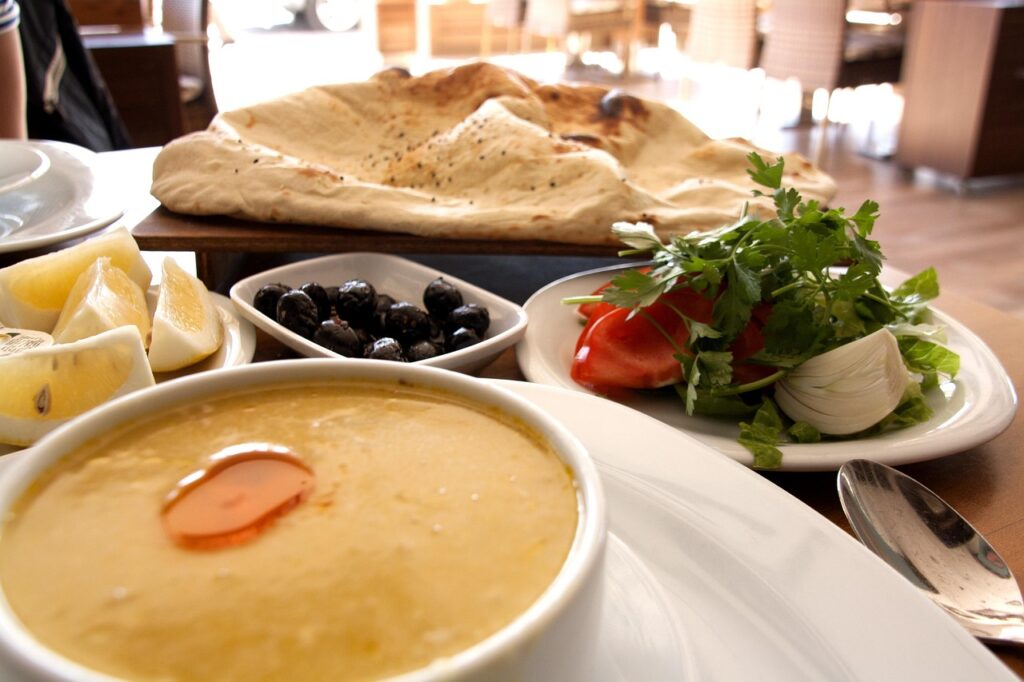
Food and drink are the primary vocabulary of misafirperverlik. The tea is the everyday word, offered constantly and drunk slowly. The meal is the ceremonial word, abundant and shared. The sweets and coffee carry their own meanings, and the whole vocabulary expresses welcome, honor, and relationship.
The language has grammar. The first glass of tea is welcome, the second is conversation, the third is friendship. The meal’s abundance is deliberate, and the insistence on eating is the host’s way of saying the guest is precious. The food is not fuel: it is communication.
Learning the language is part of becoming fluent in the culture. Accept the tea, praise the food, and understand the insistence. The visitor who reads the language of food and drink will understand what is happening in every Turkish interaction, from the shop to the wedding.
The Guest’s Reciprocal Duties
Misafirperverlik includes a fully developed code for the guest, and the code is essential to the concept. The guest’s first duty is acceptance: accept the tea, the food, the seat, and the warmth. The second is gratitude: thank the host, praise the home, and express appreciation. The third is reciprocity: return the welcome when the chance arises.
The code explains behaviors that puzzle visitors. The guest who accepts a second serving is not greedy but gracious, because the acceptance completes the host’s giving. The guest who refuses everything is not polite but disruptive, because the refusal breaks the exchange. The guest’s role is as structured as the host’s.
For the analyst, the reciprocal code shows that misafirperverlik is a system, not a one-way service. The concept works because both sides participate, and the participation creates the bond. The system is the mechanism by which Turkish society turns strangers into relationships.

Hospitality as Social Glue
Misafirperverlik functions as social glue in Turkish society, and its binding power explains its persistence. The hospitality exchange creates bonds between families, between shopkeeper and customer, between hosts and guests. The bonds form a network that holds the society together, and the network is the concept’s real product.
The glue works across every boundary. It binds generations, as elders host and young people learn the ritual. It binds regions, as travelers carry the custom with them. It binds strangers, turning chance meetings into relationships. The concept is the society’s connective tissue.
The binding function explains why the state and the culture defend the concept so fiercely. Misafirperverlik is not only a virtue: it is infrastructure, and the society relies on it. When the concept weakens, the bonds weaken, which is why its preservation is treated as a national interest.
Regional Expressions
Misafirperverlik is national, but its expressions vary by region, and the variation is instructive. In the Black Sea region, the tea culture is at its most intense, and guests are pressed to drink glass after glass. In the southeast, the hospitality is the most elaborate, with guests treated as family and meals that seem endless.
The variations follow geography. Mountain communities, where guests are rare, practice the most intense hospitality, because the guest is an event. Coastal communities, accustomed to visitors, practice a more relaxed version. The cities compress the ritual, and the villages expand it, but the concept is the same.
For the analyst, the regional expressions show the concept’s adaptability. Misafirperverlik is not a fixed script but a value that takes local form. The unity of the concept and the variety of its expressions are both part of its strength.

Hospitality in the Modern Economy
The modern economy has tested misafirperverlik and found it adaptable. Tourism has made hospitality a commodity, and the state has turned the Turkish welcome into a brand. Hotels and restaurants professionalize the concept, and the commercial hospitality is genuine but structured. The value has entered the marketplace.
The sharing economy has revived the older forms. Travelers are hosted in homes, and the hosting is closer to the traditional ritual than to the hotel experience. The digital age has globalized the concept, with stories of Turkish hospitality spreading through social media and drawing visitors from around the world.
The modernization has costs as well as gains. When hospitality becomes a brand, it risks becoming performance, and the economic pressure can strain the old generosity. Yet the concept endures because it is embedded in the culture, and the modern economy has changed its forms without destroying its core.
The Concept’s Future
The future of misafirperverlik depends on forces pulling in both directions. The forces against it are real: urbanization, busy lives, economic pressure, and the anonymity of modern cities. The forces for it are equally real: deep cultural commitment, national identity, and a tourism economy that rewards the value.
The signs are hopeful. Young Turks still describe hospitality as a core value, and the digital age has given them new ways to practice it. The state promotes the concept as heritage, and the global reputation of the Turkish welcome continues to grow. The concept is being renewed from below as well as from above.
For the observer, the future is already present. The hospitality you receive in Turkey is the living edge of an ancient concept, and your visit is part of its story. Accept the tea, praise the food, and be a good guest, and you will have participated in the tradition at a moment of transformation.
Frequently asked questions
What makes misafirperverlik different from Western hospitality?
Misafirperverlik means guest-loving and treats the guest as a blessing who brings honor to the host. It is a moral value with religious and historical roots, practiced in homes, shops, and streets. Western hospitality is often service-oriented, while the Turkish concept is relationship-oriented.
Why is refusal so difficult in Turkish hospitality?
Because the guest’s acceptance completes the host’s giving. Refusing everything breaks the exchange and can feel like rejecting the host. The ritual of insistence and acceptance is understood by both sides, and polite, warm refusals are fully possible.
Is misafirperverlik disappearing in modern Turkey?
No, but its forms are changing. Tea is quicker and visits shorter in the cities, and tourism has professionalized the welcome. Yet the value remains central, young Turks still hold it, and it continues to shape Turkish social life and the country’s global reputation.

All Over Information
The All Over Information editorial team researches and writes practical English-language guides to Turkey. Facts are checked against official and local sources before publication, prices are published as dated ranges rather than quotes, and guides are revised when things change. We accept no sponsored posts, paid placements or paid links.
More guides like this

Turkish Barbershop Culture Explained for Foreigners
If you are visiting Turkey, the neighborhood barbershop is an experience you should not miss, even if you usually avoid barbers.

A Deep Dive into Turkish Hamam (bath) Rituals
Few institutions capture the spirit of Turkey quite like the hamam.

A Deep Dive into Turkish Folk Dances like Halay and Zeybek
Turkish folk dance looks simple, but it is a complex cultural system: a code of history, ritual, and identity written in the…
A Deep Dive into Turkish Football Fan Culture
Turkish football fan culture is one of the most powerful social forces in the country, a living tradition that combines music, ritual,…

Understanding the Street Cats of Istanbul
Istanbul is a city of many wonders, but few are as beloved as its cats.

How Turkey Celebrates Youth and Sports Day
On May 19 each year, Turkey celebrates the day it considers the true beginning of its modern history.