Foça is the Aegean’s fishing town: a small, unpretentious place of stone houses and harbor cafes, ancient walls and Mediterranean monk seals, an hour from Izmir and a world away from the big resorts. The first visit rewards the slow pace, and this guide covers the essentials of Foça.
Why Foça
Foça is the different Aegean: a working fishing town that the mass tourism never really found, and the charm is exactly in that. The town sits on the coast north of Izmir, and its two bays — the Büyükdeniz and the Küçükdeniz — cradle the old town and the harbor; the stone houses, the medieval Genoese castle, and the ancient walls of the town give the history; and the Mediterranean monk seals of the bay, the town’s famous symbol, swim in the waters nearby. The visitors come for the quiet, the fishing-town life, and the unspoiled coast, and the town delivers all of it.
The practical why note: Foça is the authentic, the local end of the coast, without the stylish crowds of Alaçatı or the resorts; the pace is the fishing-town one, and the evenings run on the harbor and the tables; and the charm is in the simplicity. The first-timer comes for the authenticity, and the town delivers it in spades.
Getting to Foça
Foça sits about seventy kilometers north of Izmir, and the journey from the city is the easy one. The nearest airport is Izmir Adnan Menderes, about an hour and a half away by road, with the shuttle buses and the rental cars connecting; the buses from Izmir run to Foça, and the minibuses connect the town; and the drive from Izmir runs the coastal road, about an hour. The journey to Foça is the straightforward one, and the arrival at the fishing town is the reward.
The practical arrival note: the flight to Izmir plus the transfer is the common route; the bus from Izmir runs the direct route; and the rental car gives the freedom of the coast. The journey to Foça is the easy one, and the coastal road delivers the traveler.

The Old Town and the Harbor
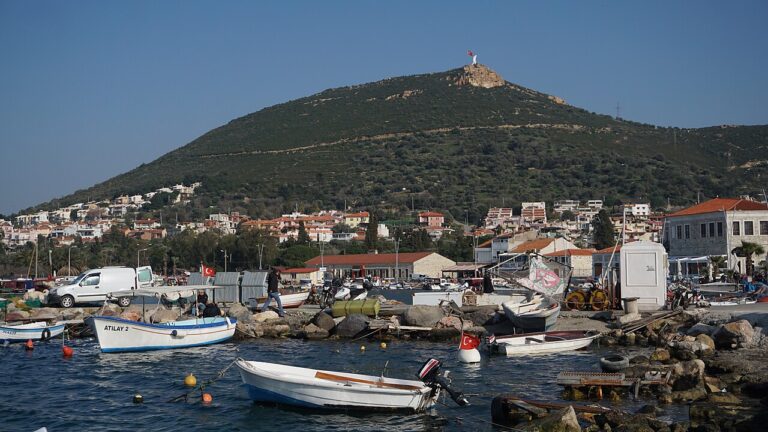
The heart of Foça is the old town and the harbor, and the two together give the town its character. The old town — the stone houses, the narrow lanes, the bougainvillea — climbs the hill behind the harbor, and the life of the town runs through it; the harbor holds the fishing boats and the small restaurants, and the waterfront is the meeting place of the evenings; and the medieval castle and the ancient walls of the town add the history. The old town and the harbor are the Foça of the postcards, and the first visit starts there.
The practical town note: the old town rewards the wandering, and the lanes give the views over the bays; the harbor restaurants serve the fish of the day; and the castle climb gives the panorama of the town and the sea. The old town and the harbor are the essential Foça, and the first day finds the rhythm there.
The Bays and the Beaches
The bays of Foça give the swimming of the town, and the two bays of the settlement give the water. The Büyükdeniz, the big bay, holds the harbor and the town’s beach life; the Küçükdeniz, the small bay, gives the quieter water; and the coves and the beaches around the town — the ones the locals favor — give the swimming beyond the center. The water of the area is the clear Aegean one, and the bays deliver the swims. The beaches of Foça are the essential summer experience, and the coves reward the exploration.
The practical bay note: the town’s bays are the walkable ones, and the coves around the area need the car; the water shoes help at the pebbly spots; and the summer season runs long, from the late spring through the autumn. The bays and the beaches of Foça give the swimming, and the clear water delivers the dips.

The Ancient and the Medieval History
The history of Foça reaches back to the ancient world, and the town’s layers give the depth to the visit. The ancient city of Phocaea stood on the site, and the ancient Greeks of the city were the famous seafarers who founded the colonies across the Mediterranean; the walls of the ancient city and the medieval Genoese castle of the town give the visible history; and the town’s name carries the ancient legacy — the French and the Italian words for the seal come from the ancient Greek word for the animal, the phoka of the bay. The history of Foça gives the texture, and the walls and the castle deliver the depth.
The practical history note: the castle and the ancient walls are the walkable sights, and the views from the castle are the lovely ones; the museum of the town holds the finds; and the monk seals of the bay give the town its symbol. The history of Foça gives the first-timer the context, and the layers of the town reward the curious.
The Mediterranean Monk Seals
The Mediterranean monk seals of Foça are the town’s famous residents, and the conservation of the bay is the local pride. The monk seal, one of the rarest marine mammals of the world, lives in the waters and the caves of the area, and the bay of Foça is the protected home of the species; the sightings are the rare, the lucky ones, and the conservation efforts of the town protect the animals; and the seal is the symbol of Foça, appearing in the town’s art and its souvenirs. The monk seals give the town its identity, and the conservation delivers the pride.
The practical seal note: the sightings are the rare ones, and the patience and the luck are the requirements; the boat trips of the area sometimes pass the seal caves; and the seal souvenirs and the art of the town celebrate the animal. The monk seals of Foça give the unique identity, and the bay’s protection is the local honor.

The Food of Foça
The food of Foça is the fishing-town food, and the table of the town runs on the sea. The fish of the day comes fresh from the harbor’s boats, and the fish restaurants of the waterfront grill it simply; the mezes of the Turkish table and the local produce of the region follow; and the lokantas of the town serve the honest home cooking. The food of Foça is the taste of the sea, and the harbor delivers the freshest.
The practical food note: the fish of the day is the order at the harbor’s restaurants, and the meze spreads precede it; the lokantas of the town give the affordable, the honest meals; and the rakı and the fish dinner is the classic evening of the fishing town. The food of Foça is the fresh, the local, and the honest, and the table rewards the slow diner.
The Practical First-Timer Notes
The practical notes for the Foça first-timer: the pace is the slow one, and the itinerary should be the relaxed one; the cash is the useful one, as the smaller places take the card less often; the Turkish phrases help, though the English works in the tourist spots; and the sun protection and the water are the essentials of the coast. The first visit to Foça is about the unwinding, and the town rewards the traveler who lets it happen.

The Essential PackingnnThe packing for Foça follows the coast’s needs, and the light bag serves the fishing town best. The swimsuit and the towel come first, because the bay swimming is the daily ritual; the water shoes help at the pebbly coves, where the stones meet the clear water; and the sun protection — the hat, the sunglasses, the sunscreen — is the essential of the exposed days. The light layers cover the evenings, when the sea breeze cools the harbor tables; the sturdy sandals and the walking shoes split the duties between the beach and the old town’s lanes; and the small backpack carries the water and the picnic for the cove days. The packing for Foça is the simple one, and the light bag leaves the room for the olive oil and the honey on the way home.n
The Takeaway
Foça is the Aegean’s fishing town: the stone old town and the harbor, the clear bays, the ancient walls and the Genoese castle, and the monk seals of the bay. The first visit rewards the relaxed itinerary, and the town gives the authentic Turkey — the one of the fishing boats, the harbor cafes, and the slow evenings. Arrive, slow down, and let the fishing town do the rest.
Frequently asked questions
Is Foca worth visiting?
Yes — the fishing-town charm, the clear bays, the ancient and the medieval history, and the monk seals make it one of the most authentic towns of the Aegean.
How do I get to Foca?
By flight to Izmir plus the transfer, by bus from Izmir, or by rental car along the coastal road.
What is Foca known for?
The fishing harbor, the stone old town, the Genoese castle, the ancient Phocaea, and the Mediterranean monk seals of the bay.
Is Foca expensive?
No — it is the unpretentious end of the coast, with the simple stays and the honest fish restaurants.
How many days do I need in Foca?
Two to three days give the time for the town, the bays, and the relaxed pace; a weekend is the classic visit.

All Over Information
The All Over Information editorial team researches and writes practical English-language guides to Turkey. Facts are checked against official and local sources before publication, prices are published as dated ranges rather than quotes, and guides are revised when things change. We accept no sponsored posts, paid placements or paid links.
More guides like this

48 Hours in Foca: The Perfect Itinerary
Two days in Foça give the time for the essentials of the fishing town: the old town and the harbor, the swimming…
Where to Stay in Foca: Neighborhood Guide
The stays of Foça match the fishing town's character: the old town's pensions, the harbor's waterfront rooms, and the bays' quiet hideaways.

Family-Friendly Activities in Foca
Foça is the family holiday of the natural kind: the shallow bays, the gentle pace, the castle adventure, and the space to…

Best Local Restaurants in Foca
The dining of Foça is the fishing-town dining: the fish of the harbor, the mezes of the Turkish table, and the honest…

Nightlife Guide to Foca
The nightlife of Foça is the fishing-town one: the long dinners at the harbor, the evening promenade, the bars and the cafes…

Foca Airport and Transport Guide
Getting to Foça and around the Aegean region is the straightforward part of the trip, and the transport network of the area…