Galata is one of the most photogenic quarters in Istanbul, and photographers of every level will find their material here. The medieval Genoese heritage, the tower that crowns the hill, the curved Kamondo Steps, the cobbled lanes, the galleries and the view terraces, and the Tünel funicular all offer compositions that reward a patient eye. Below, the waterfront at Karaköy and the Galata Bridge add sea, light, and motion. This guide collects the essential photography spots in Galata, with advice on light, timing, and the details that make the difference between a snapshot and a photograph.
Why Galata Is a Photographer’s Dream
Galata has everything a photographer could want: a dramatic landmark, layered history, vertical geography, and light that changes by the hour. The tower rises above the rooftops, the lanes fall steeply toward the water, and every stairway offers a new angle on the city.
The quarter’s texture is part of its appeal. Old stone, peeling paint, faded shop signs, and the patina of centuries give the frame a richness that new districts cannot match. The details, a door, a cat, a window box, are endless subjects in themselves.
The compact scale is a practical gift. All the great spots are within a short walk, so you can photograph the sunrise, the midday lanes, and the sunset from different corners without losing time to transport. Galata is a single, walkable studio.
The Tower from Below
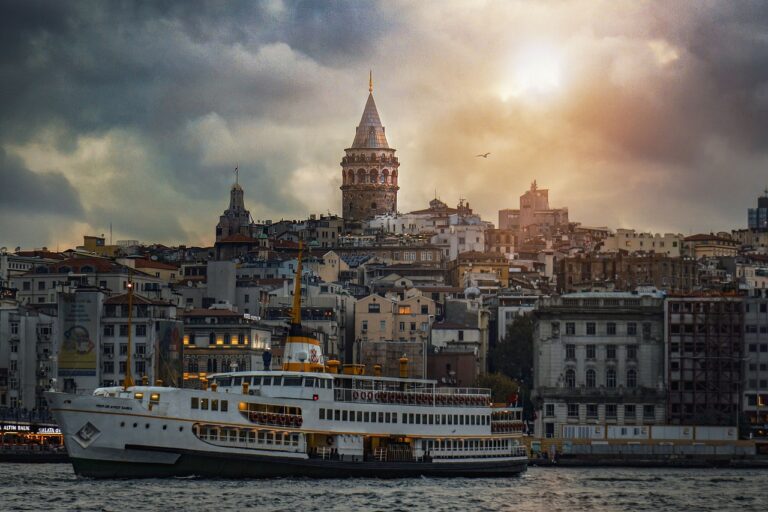
The Galata Tower is the quarter’s defining subject, and the best photographs come from the streets below, not from the top. The lanes frame the tower in unexpected ways, and the play between the medieval cone and the modern street life is endlessly photographable.
Walk the streets that radiate from the tower and study the compositions. The classic shots look up from the lanes near Bankalar Caddesi, where the tower rises over the rooftops, and from the upper streets, where it presides over the rooftops like a sentinel.
The light matters more than the gear. Early morning gives a clean silhouette; golden hour warms the stone; and the blue hour after sunset sets the tower against a deep sky with its lights glowing. Visit at several hours and choose your favorites.

The Kamondo Steps: Iconic Curves
The Kamondo Steps are Galata’s most famous photograph, and for good reason. The sweeping double curve, built in the 1860s, is a pure composition in stone, and it rewards photographers with a shape that needs no explanation and no caption.
The classic view looks down the steps from the top, where the curve and the descending lanes form a diagonal toward the Golden Horn. From below, the staircase becomes an elegant ribbon against the buildings. Both angles are essential.
The steps are busiest from mid-morning onward, so arrive early for a clean frame. In the evening, the warm lights of the surrounding streets add depth, and the occasional resident with a bag of groceries gives the composition its human scale.
Cobbled Lanes and Colorful Doors
The lanes of Galata are a catalogue of small perfections: cobblestones polished by centuries, doors painted in bold colors, windows with shutters and flower boxes, and walls carrying the layered history of paint and time. These are the photographs that make the quarter personal.
Serdar-ı Ekrem, the side lanes toward Kuledibi, and the stairways that connect them are the richest hunting grounds. Look for the details: a brass door handle, a faded sign, a cat arranged on a step. The quarter composes itself if you wait.
Shoot in the morning for clean side light, and again in the evening for the warmth of lit windows. Rain brings reflections and gloss to the cobbles, and fog turns the lanes into something out of another century.

Terraces at Golden Hour
The view terraces of Galata are not only for drinks; they are prime photography positions. The rooftop bars and restaurants offer elevated frames over the Golden Horn, the Galata Bridge, and the Old City, and the golden hour transforms the entire panorama.
Arrive before sunset, claim an edge position, and shoot the sequence: the sun dropping behind the Old City, the water turning metallic, and the city lights coming on in the blue hour. The exposure changes by the minute, and the sequence is the story.
Many terraces are open to the public for drinks, so a small purchase buys you a professional viewpoint. Bring a telephoto for the compressed views of the bridge and the minarets, and a wide lens for the sweep of the Golden Horn.
A second visit after dark is equally rewarding. The same terrace that caught the sunset now frames the city in lights, the bridge strung across the water like a necklace, and a long exposure will turn the ferries’ wakes into ribbons of light.
The Tünel and Its Square
The Tünel funicular is a photograph in motion. Its carriages, its tunnel mouth, and its square all offer distinctive compositions, and the contrast between the 1875 machinery and the modern city makes for images with story.
Photograph the entrance at Karaköy, where the funicular vanishes into the hillside, and the square at the top, where the lanes and İstiklal Avenue meet. The carriages themselves, with their period styling and their passengers, are a compact subject.
At night, the Tünel’s lights and the square’s glow create a theatrical mood. Shoot with a longer exposure to blur the passing crowds and let the static architecture stand out against the motion of the city.

Night Photography: Lights on the Hill
Galata is spectacular after dark. The tower is floodlit, the lanes are strung with the glow of cafes and bars, and the waterfront lights trace the shore of the Golden Horn. Night is when the quarter shows its most dramatic self.
For night shots, use a tripod or rest the camera on a wall, shoot in the blue hour for the richest skies, and let the lights do the work. The reflections on the wet cobbles after an evening shower are among the most beautiful images Galata offers.
The waterfront at Karaköy and the Galata Bridge add their own night scenes: the ferries’ lights, the fishermen’s lamps, and the bridge’s illuminated curve. Move between hill and shore and build a night portfolio of the quarter.
Bring a remote release or use the camera’s self-timer to avoid shake, and check the forecasts: the clearest night skies follow the wind, and the best nights often come after rain has washed the air.
Karaköy and the Bridge from Above
Some of the best photographs of Karaköy and the Galata Bridge are taken from the heights of Galata. The terraces and the upper lanes frame the waterfront, the bridge, and the ferry routes in layered compositions that compress the city’s motion.
The classic view looks down over the rooftops toward the bridge and the Old City beyond. Ferries crossing the Golden Horn add points of motion, and the seagulls, if you are lucky, add punctuation to the sky.
Shoot the same view at different times and you will have a portfolio: the morning bustle, the midday haze, the golden evening, and the night lights. The frame never tires, and neither will you.

Street Portraits and Everyday Life
Beyond the monuments, Galata’s life is its richest subject. The shopkeepers, the cafe waiters, the fishermen, the children, and the cats of the quarter are the human texture that makes the place real, and they reward photographers who approach with respect.
For portraits, ask first, smile, and often the answer is yes. The quarter is used to cameras, and many residents enjoy the attention. A conversation before the photograph nearly always produces a better portrait than a stolen shot.
For candid work, the cafes, the bridge, and the ferry docks are the best stages, and a long lens keeps you unobtrusive. Patience is the skill: wait for the moment, and Galata will provide it.
The ferry docks at Karaköy are another rich stage, with passengers arriving and departing in a constant rhythm. A fast lens and a patient finger will catch faces and gestures that sum up the city in a single frame.
Timing and Light: A Practical Guide
Light is everything in Galata, and timing is light. The morning hours, from sunrise to mid-morning, give the clearest light and the emptiest lanes. Golden hour, the last hour before sunset, warms the stone and the water, and the blue hour after sunset gives the sky its deepest color.
The seasons change the light too: winter’s low sun is long and golden, summer’s is harsh at midday and glorious at the edges of the day. Plan your shooting around the weather, and use the fog and rain as gifts rather than obstacles.
Finally, revisit your subjects. Galata changes by the hour, and the tower, the steps, and the lanes will look different on every visit. The photographers who love this quarter most are the ones who return to the same frame again and again.
Frequently asked questions
What is the best time of day for photography in Galata?
The early morning offers the cleanest light and the emptiest lanes, while golden hour and the blue hour after sunset give the most dramatic skies and warmest tones. Night brings the lit tower and the waterfront lights. For the fullest range, shoot morning, sunset, and night.
Do I need special equipment?
A camera with manual controls and a tripod helps for low-light and night work, but a good phone camera can capture Galata beautifully, especially in daylight. A telephoto is useful for compressed views of the bridge and minarets, and a wide lens for the Golden Horn panoramas.
Is it polite to photograph people in Galata?
Yes, if you do it with respect. Ask before taking close portraits, and most people will agree, often warmly. For candid street photography, be discreet and unobtrusive. The quarter is used to cameras, and a smile and a few words make everything easier.

All Over Information
The All Over Information editorial team researches and writes practical English-language guides to Turkey. Facts are checked against official and local sources before publication, prices are published as dated ranges rather than quotes, and guides are revised when things change. We accept no sponsored posts, paid placements or paid links.
More guides like this

How to Get to Galata from Istanbul
Galata may look like a maze of steep lanes, but reaching it is remarkably simple, because it sits directly above one of…

Galata on a Budget: Money-Saving Travel Tips
Galata is one of the most budget-friendly corners of Istanbul, and not only because the walking is free.

A Foodie’s Guide to Galata
Galata is a neighborhood built on appetite. For centuries, this hillside above the Golden Horn fed sailors, merchants, and bankers, and its…

Best Local Restaurants in Galata
Galata has been a place to eat and drink well for centuries.

Family-Friendly Activities in Galata
Traveling with children in Istanbul is easier than many parents expect, and Galata is one of the most family-friendly corners of the…