Beyoglu is the nightlife district of Istanbul — the place the city’s own residents mean when they say “let’s go out.” Where the old city rolls up its streets by ten, Beyoglu is just getting started: the avenue crowded until the small hours, the rooftops glowing, the meyhane taverns roaring, the live-music bars full, and the clubs doing business until dawn. If you want the modern Istanbul at night, this is the district where it happens.
This guide covers the full range of Beyoglu’s night: the rooftops, the meyhane ritual, the bars and clubs, and the practical details that keep a night out smooth.
The Night in Three Acts
Beyoglu’s evening runs on a structure that locals follow instinctively:
Act one — the sunset rooftop (6–9 p.m.). The night starts with the view. The terraces of the Pera hotels and 360 Istanbul fill as the light fades, and the old city lights up across the water. This is the warm-up: a drink, the skyline, the decision about where the night goes next.
Act two — the meyhane table (8:30 p.m.–midnight). The real night is the meyhane — the Istanbul tavern where raki, meze, and conversation are the event. Nevizade Street and Çiçek Pasajı are the temples; the ritual is the same: raki with water and ice, meze in waves, fish or grill, and the long loud dinner that runs on its own momentum.
Act three — the bars and the small hours (after midnight). For the night owls, the bars of the avenue’s side streets, the live-music rooms, and the clubs around Taksim carry the evening until dawn. This is the act that belongs to the young, the insomniac, and the visitor who refuses to let the night end.
The Rooftops: The District’s Living Rooms
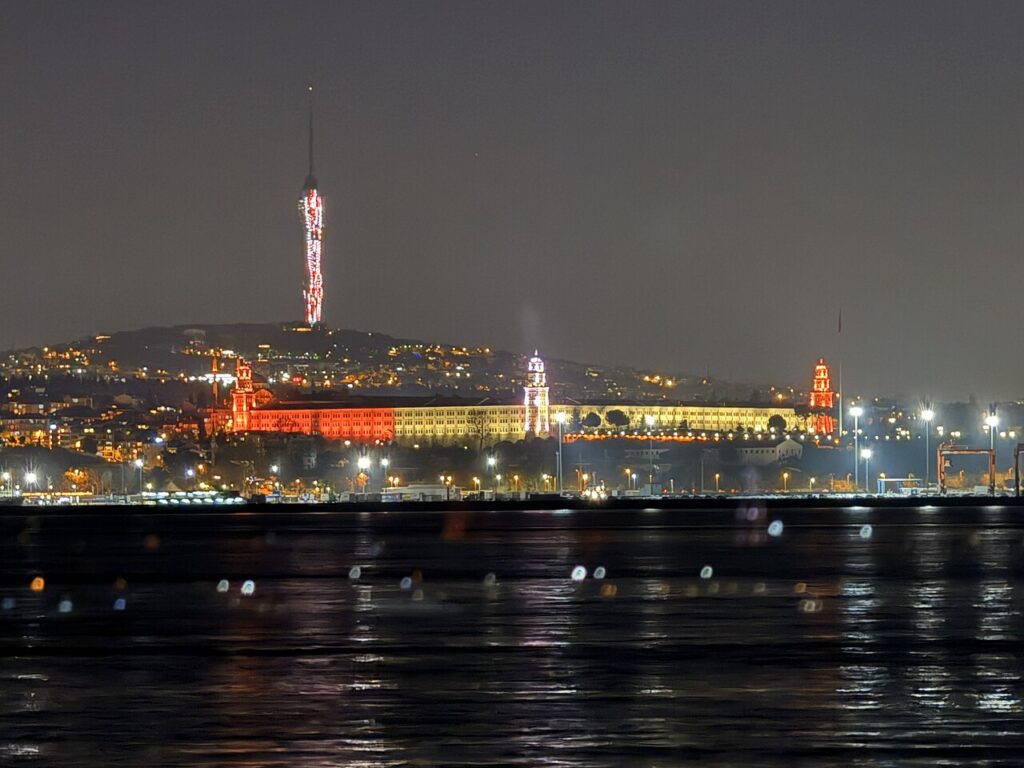
Beyoglu’s rooftops are the city’s most famous night venues, and for good reason: the skyline — the old city’s minarets, the Bosphorus, the bridges — is the backdrop. The classics:
- 360 Istanbul — the glass-walled rooftop at the top of Istiklal; the view runs from the Bosphorus to the old city. Busy, glamorous, book ahead.
- The hotel terraces — the Marmara Pera and the Pera Palace’s bars have the classic views, with the old city glowing across the water.
- The Karaköy waterfront bars — lower, closer to the water, and the stylish modern alternative to the hotel rooftops.
The rooftop rules: arrive before sunset for the changeover, dress smart-casual, and expect the famous ones to need reservations in summer.
The Meyhane: The True Ritual
The meyhane is the soul of Beyoglu’s night, and it rewards the visitor who understands it. The setting is a tavern — sometimes grand, sometimes a hole in the wall — where the tables fill with groups, couples, and solo regulars, and the room’s mood rises with the raki.
The ritual, step by step: the raki arrives (half raki, half water, over ice); the meze follows in waves — white cheese and melon, haydari, smoked eggplant, octopus, the grilled fish of the day; and the evening stretches. The Turkish word muhabbet — the good conversation — is the actual point, and the meyhanes are organized around it: no one hurries you, the music is low and live, and the bill comes only when you ask.
Nevizade Street is the classic lane — a row of meyhanes spilling into the street, the tables almost touching, the night a single continuous party. Çiçek Pasajı, the 1876 arcade, is the historic version, its balconies and columns packed with the same ritual for a century and a half. Expect 800–1,500 lira a head with raki at the established houses, and book a table on weekends.
The Bars and the Clubs
When the meyhane ends, the night shifts to the bars:
- The avenue’s side streets — Asmalımescit and the lanes off Istiklal hold the district’s bar scene: cocktail bars, rock bars, jazz rooms, and the tiny pubs where the same crowd gathers every night.
- The live-music rooms — Istanbul’s music scene lives in Beyoglu: the venues around Taksim and the avenue host everything from Turkish rock to jazz to the traditional fasıl evenings.
- The clubs — the dance clubs cluster around Taksim and the surrounding streets, with the heavier nights running from midnight to dawn. Dress codes and door policies apply; the scene is young, loud, and very Istanbul.
For the visitor, the honest advice: the meyhane is the experience you’ll remember; the clubs are the experience the locals use to end the night. Do the meyhane, then follow the crowd.

The Night Ferry and the After-Hours City
Two Beyoglu night rituals cost almost nothing and belong in every night out. The night ferry from Karaköy to Kadıköy — the skyline in lights, the water black beneath you — is the perfect interlude or finale, running until around midnight. And the after-hours food — the kokoreç grills near Taksim, the doner shops, the simit carts — is how the night ends properly: a warm bite on the empty avenue, the floodlights on the tower, and the city quiet at last.
Practical Night Notes
- The dress code is smart-casual for the rooftops and the meyhanes; the clubs are their own world. When in doubt, avoid beachwear and sportswear.
- Book the sunset rooftops and the Nevizade tables ahead, especially Thursday to Saturday.
- The metro and the tram run until around midnight. After that, the night buses and the taxis carry the city — use the official ranks or the app-based fares.
- Watch your belongings in the avenue’s late-night crowds; the nightlife district attracts its share of pickpockets, and the standard zip-and-keep-close rules apply.
- The evening is the point. Nobody in Beyoglu rushes a night out, and the meyhane tables that close the restaurant at 2 a.m. are not the ones having the bad time.

The Nights of the Seasons
The Beyoglu night changes with the calendar, and each season has its own version. The summer nights are the long ones: the terraces open, the avenue crowds into the small hours, and the ferries run late — the night begins later, with the sunset drink stretching through the warm evening. The winter nights are the room nights: the meyhane tables pressed close, the fasıl music filling the heated rooms, and the rain on the arcade glass — the night that belongs to the taverns and the live rooms. The spring and the autumn nights are the balanced ones: the terraces still open, the crowds moderate, and the evening long enough for the full ritual without the summer crush.
The seasonal advice is simple: in the summer, book the rooftops and go late; in the winter, lean into the indoor scene — the meyhanes and the music rooms are at their best when the avenue is cold; and in the shoulder seasons, do the whole ritual at your own pace. The festival nights — the New Year’s Eve crowd on the avenue, the street events of the summer — add their own energy, and the visitor who checks the calendar finds the district at its most theatrical. However the season falls, the structure of the night holds: the view, the table, the music, and the ferry home.
The Solo Night in Beyoglu
The night of Beyoglu works for the solo traveler, and it is worth saying plainly: the district is built for it. The rooftops are the easy start — a drink, the skyline, and nobody to wait for; the counter seats of the live rooms and the bars of Asmalımescit are the sociable middle, where the crowd is the company and the conversation finds you; and the meyhane, contrary to its group reputation, welcomes the solo table — the staff will steer a single diner to the good meze, and the room’s ritual runs the same for one as for six. The night ferry at the end is the perfect solo finale: the lights, the water, and the quiet of the crossing.
The practical solo notes are the same as the general ones, with the extra freedoms: the walking is safe on the main streets until late, the bars are walk-in friendly on the weeknights, and the solo traveler who wants company has it in the live rooms and the tavern tables — while the solo traveler who wants the quiet has the rooftops and the ferry. The night of Beyoglu does not require a group to be the experience; it requires only the willingness to stay out late and let the district do the rest.

The Takeaway
Beyoglu is where Istanbul goes out, and the night here is a ritual with a structure: the rooftop sunset, the meyhane table, the bars, and the ferry home across the lights. It is the district that never needs to be explained to locals — only to visitors, who leave wondering why every city’s nightlife isn’t built on raki, meze, and muhabbet. Do the ritual properly, and you will understand why Beyoglu’s nights are the reason half of Istanbul stays awake.
Frequently asked questions
Is Beyoglu good for nightlife?
It is the nightlife district of Istanbul — the rooftops, the meyhanes, the bars, and the clubs are all here, and the avenue runs until the small hours.
What is the classic Beyoglu night out?
Rooftop sunset, a meyhane dinner on Nevizade with raki and meze, and then bars or a club until dawn — or a night ferry across the Bosphorus to end it beautifully.
Do you need to book in advance?
The sunset rooftops and the popular meyhanes, yes, especially on weekends. The bars and the clubs are walk-in affairs.
Is Beyoglu safe at night?
Yes — it is the busiest, most policed district in Istanbul, crowded until late. The usual city sense applies: main streets, zipped valuables, official taxis after the metro closes.
How late does the night go?
The meyhanes run until 2–3 a.m., the bars until 4, and the clubs until dawn. The avenue itself is lively until the small hours and quiet by 4 a.m.

All Over Information
The All Over Information editorial team researches and writes practical English-language guides to Turkey. Facts are checked against official and local sources before publication, prices are published as dated ranges rather than quotes, and guides are revised when things change. We accept no sponsored posts, paid placements or paid links.
More guides like this

How to Get to Beyoglu from Istanbul
Beyoglu is one of the easiest districts in Istanbul to reach, because the city's transport network is built around it: the M2…

Photography Spots in Beyoglu You Can’t Miss
Beyoglu is a photographer's playground that hands you the composition before you ask for it: the medieval tower on its hill, the…

Shopping Guide: What to Buy in Beyoglu
Beyoglu is the shop window of modern Istanbul — the district where the old crafts and the new design scene stand side…

Hidden Gems of Beyoglu Most Tourists Miss
Istiklal Avenue is Beyoglu's billboard, and it is where most visitors spend their time — walking the same kilometer of shops and…

A Foodie’s Guide to Beyoglu
For a serious eater, Beyoglu is the center of the gastronomic universe in Istanbul — the district where the city's old traditions…

Best Time of Year to Visit Beyoglu
Beyoglu is a four-season district, and each season sells a different version of it.