Aksaray makes a surprisingly good hub for exploring western Cappadocia, because the region’s great sights fan out from it in every direction. Within an hour’s drive you have a canyon full of Byzantine churches, the largest rock-cut monastery in the area, a chain of Seljuk caravanserais, and a Neolithic settlement nearly nine thousand years old. The city itself is compact, the roads are excellent, and each day trip can be built around a single theme, from early Christianity to the Silk Road to volcanic geology. This guide lays out the best excursions and how to combine them without spending your whole holiday in a car.
Planning Your Day Trips from Aksaray
The golden rule for day trips from Aksaray is to pick one direction per day. The valleys, monasteries, and caravanserais are spread across the province, and trying to see everything in a single day means spending more time driving than exploring.
A car makes the region effortless, and rental options exist in the city. Without one, the otogar runs minibuses to the main towns, and a morning bus followed by an afternoon walk works for the valley destinations, though you will move on village schedules.
The best season is spring or autumn, when the light is soft and the walking is pleasant. Summer heat is real on the valley floor, so start early, carry water, and plan the shaded hikes for midday. Winter is quiet and dramatic, with snow on Mount Hasan, but some valley paths can be slippery.
Ihlara Valley: The Canyon of a Hundred Churches
The Ihlara Valley is the day trip that defines this corner of Turkey. The Melendiz River has carved a canyon some fourteen kilometers long and up to a hundred meters deep, and the soft volcanic cliffs are honeycombed with more than a hundred rock-cut churches and chapels.
A walk here is a staircase experience: you descend from the village of Ihlara into the green valley floor, then follow the river past frescoed churches, springs, and terraced gardens. The best-preserved interiors, with their Byzantine paintings of saints and biblical scenes, repay the climb back up.
Allow a full day and walk only a section, because the whole canyon is long. The classic stretch runs from Ihlara village to Belisirma, where riverside restaurants serve the valley’s famous trout. Between April and November, the valley is green, cool, and alive with birdsong; in winter it is empty and dramatic.
Selime Monastery and Belisirma
At the northern end of the Ihlara region, the rock-cut complex of Selime is the most theatrical sight in the province. This enormous monastic settlement was carved into a cliff face, and its cavernous cathedral church, with columns, arches, and a soaring central nave cut entirely from the rock, is astonishing.
You can wander through rooms and corridors that once housed hundreds of monks, and climb to the top of the complex for a view over the valley toward Mount Hasan. The scale is hard to grasp from the road, so allow time to climb and explore the upper chambers.
Combine Selime with a stop in Belisirma, the village in the middle of the canyon, where you can eat trout by the river and then walk along the valley floor between the two. This pairing makes a perfect medium-length day that includes both hiking and monument time.
Guzelyurt and the Red Church
The hillside town of Guzelyurt is one of the most atmospheric corners of Cappadocia, and it is barely forty-five minutes from Aksaray. Its lanes of restored stone houses climb past rock-cut churches and monastic cells, and the view south over the valley is the kind that stops you mid-step.
Below the town stands the Red Church, a sixth-century Byzantine building of deep red stone that survives almost complete, its dome and cross-shaped plan intact. It sits alone in the fields, and visiting it feels like archaeology rather than tourism, with sheep for company and silence for background music.
Guzelyurt is also the gateway to a network of cave monasteries and hermit cells tucked into the cliffs around it. A few hours here, with a walk to the Red Church and a coffee in the old square, makes a gentle counterpoint to the busier valley trails.

Sultanhani Caravanserai and the Silk Road
No visit to Aksaray is complete without the caravanserai of Sultanhani, about forty kilometers east of the city on the old Silk Road. Built in the thirteenth century under the Seljuk sultan Alaeddin Keykubad, it is one of the largest and best-preserved caravanserais in Turkey.
The plan is pure Seljuk grandeur: a monumental portal carved with geometric patterns, a vast open courtyard surrounded by covered galleries, and a great vaulted hall where merchants and their animals sheltered through winter storms. In the middle of the courtyard, a small domed prayer room stands on columns, a signature of these roadside complexes.
Wander slowly, because the architecture rewards attention, and climb to the roof for a view across the flat steppe. The site is atmospheric at almost any hour and pairs beautifully with Agzikarahan on the same theme.
Agzikarahan and the Caravanserai Circuit
On the road toward Nevsehir, another thirteenth-century caravanserai waits at Agzikarahan, smaller than Sultanhani but arguably more beautiful in its carved detail. Its portal and inner hall show the same Seljuk craftsmanship, and because fewer visitors come, you may have it almost to yourself.
The two monuments work perfectly as a pair: one on the Konya road, one on the Nevsehir road, both built in the same golden age of trade when Aksaray sat at the crossroads of Anatolia. A drive connecting them, with lunch in between, is a half-day of pure history.
For travelers interested in the medieval economy, the caravanserai circuit is the most focused day trip from Aksaray. These were the hotels, warehouses, and fortresses of their time, and standing in their empty halls gives you a direct line to the merchants who once slept there.

Mount Hasan and the Volcanic Landscape
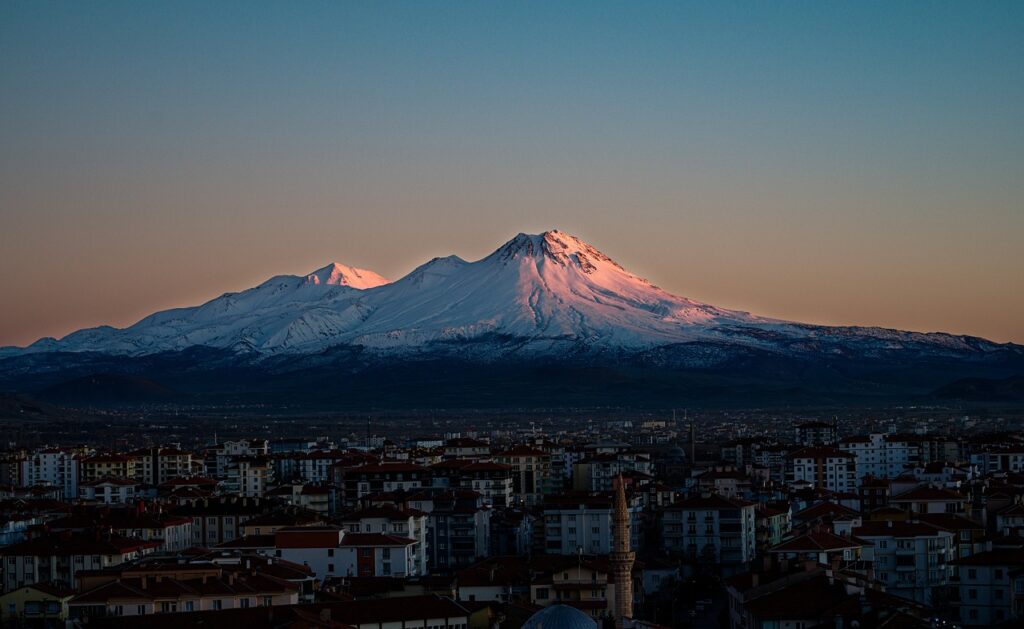
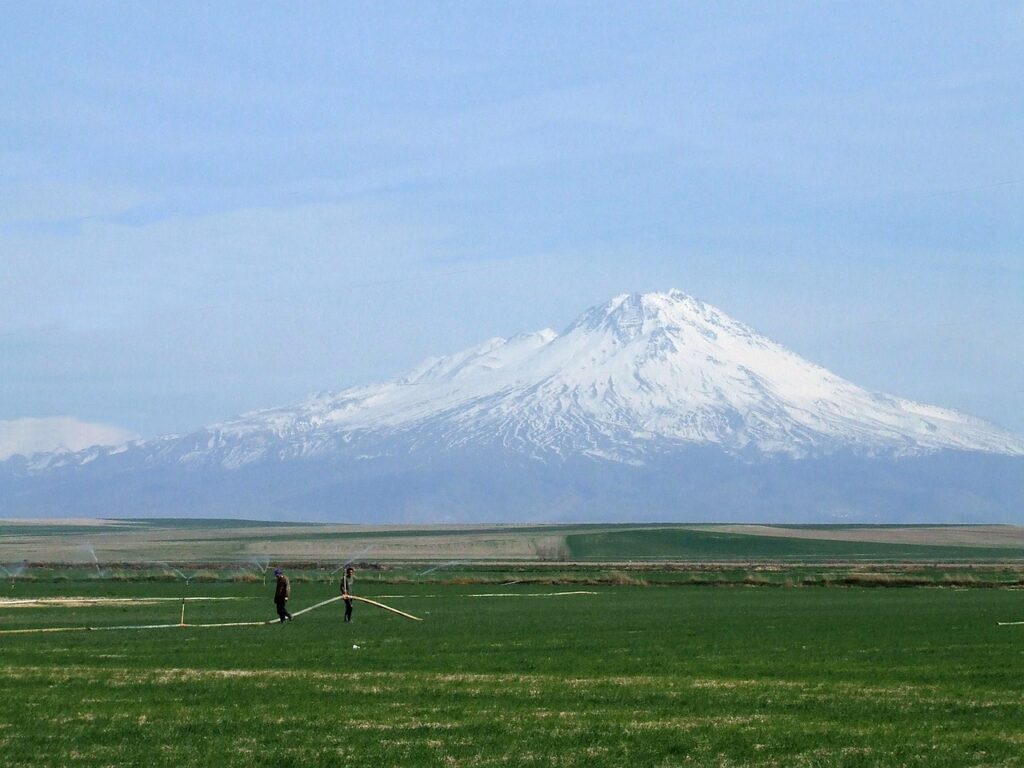
The great double peak of Mount Hasan dominates the skyline south of Aksaray, a dormant volcano that shaped this entire landscape. The volcanic ash it erupted millions of years ago is exactly the material in which the valleys and their cave dwellings were carved.
You can admire Hasan from almost every day trip, but a dedicated loop brings you close to its lower slopes, through villages of volcanic stone and past lava fields. For hikers, the mountain itself is a serious undertaking, best attempted with local guidance and good weather.
The reward of the volcanic perspective is understanding the region in one glance: the cone, the ash plateau, the valleys cut by rivers, and the tuff cliffs that became churches and monasteries. It is the geological story behind every fresco you will see.
Asikli Hoyuk and the Earliest Villages
About twenty-five kilometers from the city, the mound of Asikli Hoyuk is one of the earliest settled villages in Anatolia, occupied around nine thousand years ago. Excavations here have uncovered houses built of mud brick, streets, and evidence of the region’s first attempts at animal herding.
The site is low-key: an archaeological dig rather than a museum, with walkways and panels explaining the layers of occupation. Its importance is enormous, though, because it rewrites what we know about when and where settled farming life began in this region.
Pair Asikli with the Aksaray Museum, which displays finds from the mound, and you have a thoughtful half-day about deep history. It is the perfect counterpoint to the medieval monuments, and it rarely appears in guidebooks, so you will likely have it quiet.
The Road to Cappadocia: Goreme and Beyond
Aksaray sits just an hour and a half from the heart of Cappadocia, which means the famous sights of Goreme and Uchisar are within comfortable day-trip range. The fairy chimneys, the Goreme Open-Air Museum, and the hot-air balloon flights over the valleys are all reachable from your Aksaray base.
The obvious plan is a dawn start, a morning at the Open-Air Museum, and an afternoon among the chimneys and cave houses, returning to Aksaray for dinner. It is a long day, but it lets you enjoy Cappadocia’s signature sights while sleeping in a quieter, cheaper city.
Keep the visit focused: the Open-Air Museum and one viewpoint valley are enough.
Longer Options: Konya and the Salt Lake
For travelers with extra time, Aksaray is also a practical base for two classic excursions. Konya, the city of the Whirling Dervishes and the great Seljuk capital, lies about two hours to the south, and its Mevlana Museum and Seljuk monuments make a full day.
In the other direction, the immense Salt Lake lies between Aksaray and Ankara, and its white expanse, best seen at sunset, is a photographer’s stop on the road north. It is not a destination in itself, but it turns a transit day into a memory.
Both options work because Aksaray’s position on the main highways makes the province a natural staging point. With two or three days here, you can cover the valley circuit, the Silk Road, and still reach the region’s headline sights without once changing hotels.
Sample Itineraries
With one day, take the classic Ihlara loop: walk the valley, visit Selime, and end with trout in Belisirma. It is the province’s greatest hit and fits comfortably in daylight hours.
With two days, add Guzelyurt and the Red Church to the valley day, then give the second day to the caravanserais of Sultanhani and Agzikarahan, with a stop at Asikli Hoyuk on the way. This covers the full range of the province’s history.
With three days, the third day belongs to Cappadocia proper, or to Konya, depending on your appetite for driving. Whichever you choose, the base stays the same, and the packing and unpacking stays at zero, which is the quiet genius of using Aksaray as your hub.
Frequently asked questions
Which day trip from Aksaray should I do first?
The Ihlara Valley loop, including Selime Monastery and a trout lunch in Belisirma, is the essential excursion. It combines the province’s most dramatic scenery with its most important monuments, and it works in any season. If you only have one day, this is the one to take.
Do I need a car for day trips from Aksaray?
Not strictly, but it helps enormously. Minibuses from the otogar reach Ihlara, Guzelyurt, and Sultanhani, though on village schedules. The caravanserai circuit and the Cappadocia day trip are much easier by car. A rental for two or three days unlocks the whole region comfortably.
Can I see Cappadocia as a day trip from Aksaray?
Yes. Goreme is about an hour and a half away, so a dawn departure gives you a full morning at the Open-Air Museum and an afternoon among the fairy chimneys. It is a long day, but it works well, especially if you prefer sleeping in a quieter city than Goreme.

All Over Information
The All Over Information editorial team researches and writes practical English-language guides to Turkey. Facts are checked against official and local sources before publication, prices are published as dated ranges rather than quotes, and guides are revised when things change. We accept no sponsored posts, paid placements or paid links.
More guides like this

Top Things to Do in Aksaray
Aksaray is the western edge of Cappadocia, a province of volcanic valleys, rock-cut churches, and Silk Road monuments that most travelers rush…

Where to Stay in Aksaray
Aksaray rarely makes the first draft of most Turkey itineraries, and that is precisely why it rewards the traveler who includes it.
History and Culture of Aksaray
Aksaray is easy to underestimate and hard to forget.
Best Local Food in Aksaray
Aksaray is not a food city in the showy sense, and that is exactly what makes eating here so good.
A First-Timer’s Guide to Aksaray
Aksaray is the quiet western door to Cappadocia, a Central Anatolian city that most travelers pass on their way to somewhere else…