Winter changes Galata the way it changes any great city: the crowds thin, the light turns soft and low, and the quarter reveals its quieter, more intimate self. The medieval lanes below the Galata Tower, the Kamondo Steps, the cafes and galleries, and the view terraces over the Golden Horn all take on a different character under winter skies. Rain, fog, and an occasional dusting of cold air from the north make the historic quarter feel even more atmospheric. This guide tells you what to expect from a winter visit to Galata, and how to make the most of the season.
Winter’s Character in Galata
Istanbul’s winters are cool and changeable, and Galata, on its exposed hillside above the water, feels every shift. Days are short, skies are often grey, and rain is common, but the mood of the quarter becomes softer and more contemplative. The lanes that bustle in summer turn quiet and personal.
The tower stands clear against the winter light, and the old buildings, with their warm windows and steam rising from cafe doorways, look at their most romantic. Fog occasionally rolls up the Golden Horn and wraps the quarter in a blanket of grey, a sight that photographers travel for.
Winter is also the season of the city’s indoor life. The coffee houses, the meyhanes, and the galleries come into their own, and Galata’s historic rooms, with their thick walls and tall ceilings, were built for exactly this weather.
Dressing for the Season
The first rule of a winter visit is layers. Galata’s days start cold, warm up briefly, and turn cold again by evening, and the wind off the water can be sharp. A warm coat, a scarf, gloves, and shoes with good grip for wet cobbles are essentials.
Rain is always possible, so a compact umbrella or a waterproof jacket belongs in your bag. The steep lanes turn slick in the wet, and the stairways of the quarter demand careful footing. Waterproof footwear is worth more than any other item.
Don’t overdress for the indoors, though. The cafes, museums, and meyhanes are warm and welcoming, and you will be shedding layers constantly. The key is the system: warm outer layer, adjustable middle, and a base you are comfortable sitting in for hours.
The Tower in Winter Light
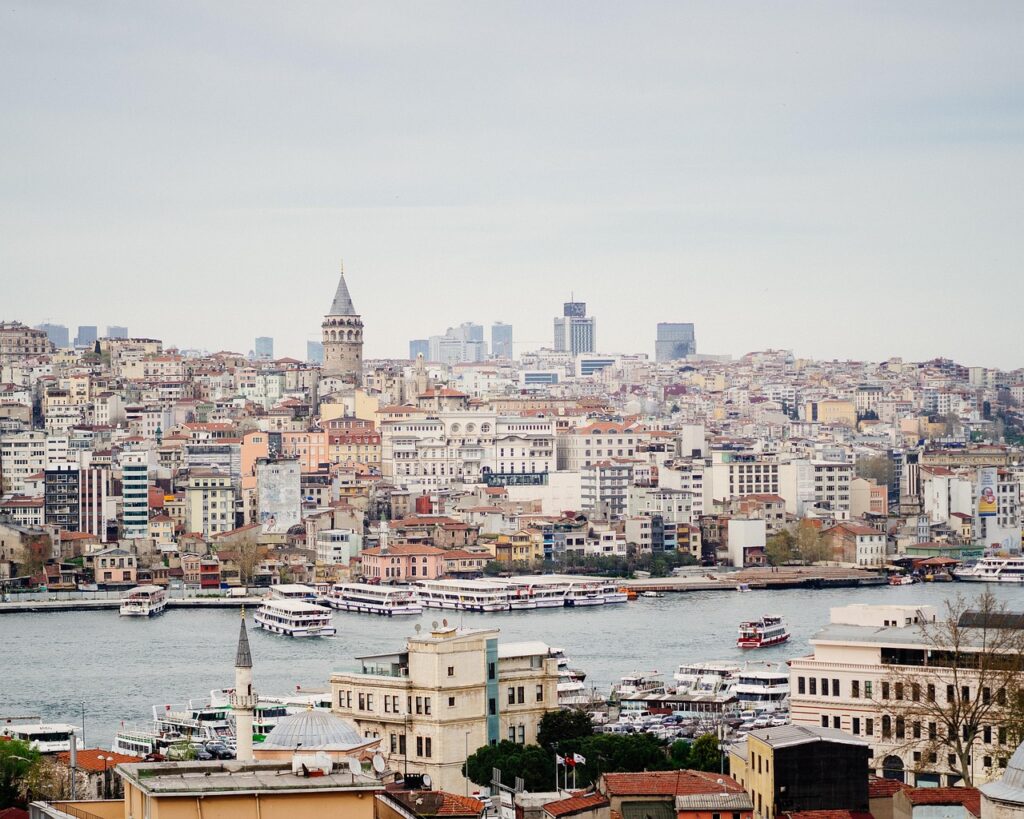
The Galata Tower rewards winter visitors with some of the clearest views of the year. The low sun, the clean air after rain, and the relative absence of haze can make the panorama sharper and more dramatic than in summer, when the heat distorts the horizon.
Snow is rare in Istanbul, but when it falls, the tower becomes a sight to remember, its cone capped in white above a city turned grey and silver. Such days draw crowds of locals, and the lanes below ring with the sound of cameras.
Check the weather before you climb. A clear morning after a storm is ideal; a day of low cloud may hide the view entirely. On good days, the winter light on the Golden Horn and the Old City is worth every step of the climb.
Fog, Rain, and Atmospheric Photos
Winter is the season when Galata turns mysterious. Fog rolling off the Golden Horn softens the tower into a silhouette, the wet cobbles mirror the streetlights, and the lantern-lit lanes of the quarter look like a stage set from another century.
Photographers love this weather. The low light, the muted colors, and the empty streets make for images that summer’s harsh sun can never produce. A rainy evening in Galata, with the windows glowing and the reflections underfoot, is one of the city’s hidden beauties.
Embrace the weather rather than fleeing it. Walk slowly, look upward, and let the grey skies and damp air become part of your memory of the quarter. The best winter photos are the ones that capture the mood.

Cafes and Indoor Retreats
When the cold bites, Galata’s cafes become sanctuaries. The coffee houses of the quarter, some of them serving for generations, are warm, wood-paneled, and made for lingering. A Turkish coffee or a glass of tea, taken slowly by a window, is the winter ritual of the quarter.
The patisseries and teahouses offer the same comfort with sugar, and the museum rooms of the Galata Mevlevi House provide culture with their calm. Long lunches and afternoon teas, the slow pleasures of winter, are exactly what this season is for.
Choose your cafe like a local: look for full tables, steam on the windows, and the murmur of conversation. In winter, the coffee houses of Galata are at their most alive, and they make the short days feel generous.
A table by the window is worth waiting for. From it you can watch the rain turn the cobbles to mirrors, the steam rise from the tea glasses, and the passersby hurry past with umbrellas, while the room behind you hums with warmth and conversation. It is winter in Istanbul, distilled into an hour.
Warming Food and Drink
Winter is the season of hearty food, and Galata’s kitchens rise to it. The meyhanes of Kuledibi serve their meze and rakı with a warmth that defies the cold outside, and the fish of the season, grilled and glistening, is at its best.
Soups, stews, and slow-cooked dishes appear on the lokanta trays, and the bakers of the quarter send out their börek and bread with the steam still rising. A bowl of lentil soup, a plate of baked beans, or a slice of hot pastry is the perfect winter lunch.
For drinks, the classics lead: strong Turkish tea, coffee brewed over heat, and salep, the hot, milky drink of the winter streets, flavored with orchid and cinnamon. It is the taste of an Istanbul winter, and Galata pours it generously.

Fewer Crowds, Gentler Prices
Winter is Galata’s secret season for the traveler. The summer crowds, the queues at the tower, and the packed terraces are gone, and the quarter’s lanes return to their residents. You will share the Kamondo Steps with photographers rather than tour groups.
With the crowds go the prices. Hotels in and around Galata offer their gentlest rates in the low season, and restaurants welcome a quieter trade. The same room and the same table that cost a premium in summer can be a bargain in February.
The trade-off is weather, and it is a fair one. A week of winter in Galata costs less, feels more authentic, and offers the quarter at its most atmospheric. For many travelers, that is the best season of all.
Short Days, Long Evenings
Winter days in Istanbul are short, and the darkness arrives early, but Galata is made for evenings. The tower is floodlit, the lanes glow, and the meyhanes and bars fill with the warmth of the night. The quarter may look different after dark, but it looks its best.
Plan your sightseeing for the morning and early afternoon, when the light is best, and save the evenings for the indoor life: dinner, music, and conversation. The winter evening is when Galata’s social heart beats strongest.
Embrace the early darkness. It gives you permission to slow down, to eat long and talk longer, and to experience the quarter the way its residents do. In winter, night is not the end of the day in Galata; it is the best part.

Seasonal Events and Festivities
Winter in Istanbul carries its own calendar of events. As the year ends, the city lights up for the holidays, with decorations along İstiklal and festive markets appearing in the surrounding squares. Galata’s lanes, strung with lights, look like something from a storybook.
The New Year brings its own celebrations, and the meyhanes and bars of the quarter host long, joyful evenings. Later, the winter months are the season of indoor culture: concerts, exhibitions, and the sema ceremonies that keep the Mevlevi tradition alive.
Check what is on during your visit. A winter evening in Galata might include a concert, a ceremony, or simply the spectacle of the lit tower above a city preparing for the holidays. The season is richer than its short days suggest.
Planning a Winter Visit
Plan your winter days around the light. Rise early, walk the lanes in the clean morning air, and climb the tower when the forecast is clear. Use the middle of the day for the waterfront and the long views, and keep the evenings for the indoors.
Book a hotel with good heating and a room that faces away from the street if you are sensitive to noise, since the winter evenings, though shorter, are still lively. A rooftop terrace is less useful in winter, but a room with a view of the tower is magic in the low light.
Finally, pack for change and plan for flexibility. Winter weather in Istanbul turns on a coin, and the quarter is glorious in sun, rain, and fog alike. Whichever version you get, Galata in winter will give you something to remember.
Frequently asked questions
Is Galata worth visiting in winter?
Yes, and many travelers prefer it. The crowds vanish, the prices soften, and the fog, rain, and low light make the medieval quarter dramatically more atmospheric. The tower, the lanes, the cafes, and the meyhanes all reward a winter visit, provided you dress warmly.
Does it snow in Istanbul in winter?
Snow is possible but not common, and it rarely lasts more than a day or two in the city center. When it does fall, Galata is magical under a dusting of white. The more typical winter weather is cool, grey, and rainy, with occasional clear, cold days.
What should I pack for a winter trip to Galata?
Layers, waterproof footwear, a warm coat, and an umbrella or waterproof jacket. The wind off the Golden Horn is sharp, the cobbles get slippery in the rain, and the evenings are cold. Comfortable, grippy shoes are the single most useful item.

All Over Information
The All Over Information editorial team researches and writes practical English-language guides to Turkey. Facts are checked against official and local sources before publication, prices are published as dated ranges rather than quotes, and guides are revised when things change. We accept no sponsored posts, paid placements or paid links.
More guides like this

Galata Airport and Transport Guide
Getting between Galata and Istanbul's airports is simpler than it looks, because the quarter sits directly above Karaköy, one of the best-connected…

Shopping Guide: What to Buy in Galata
Shopping in Galata is a journey through the quarter's creative soul.

Family-Friendly Activities in Galata
Traveling with children in Istanbul is easier than many parents expect, and Galata is one of the most family-friendly corners of the…
A Foodie’s Guide to Galata
Galata is a neighborhood built on appetite. For centuries, this hillside above the Golden Horn fed sailors, merchants, and bankers, and its…

How to Get to Galata from Istanbul
Galata may look like a maze of steep lanes, but reaching it is remarkably simple, because it sits directly above one of…

Best Time of Year to Visit Galata
Galata has no bad season, but each season gives the quarter a different character.