Manti are more than a dish in Turkey; they are a thread running through family life, hospitality, and the country’s memory of home. These tiny folded dumplings, served with garlic yogurt and tomato butter, carry centuries of tradition on a single plate. This article looks beyond the recipe to explore what manti mean to Turkish people: the kitchens where they are folded, the hands that shape them, and the culture of patience, sharing, and pride that surrounds them.
The Soul of a Winter Kitchen
Manti belong to the cold months, and their story is bound up with the long winters of Anatolia. In the past, when fresh meat and vegetables were scarce in winter, dried manti were a household treasure.
Families would fold hundreds of tiny dumplings in the autumn, dry them on trays, and store them in sacks for the months ahead. A handful of dried manti, boiled with care, could feed a family when the snow was deep.
This history explains the smallness of the parcels, which dried quickly and cooked fast. Manti were built for survival as much as for taste, and that practical origin is part of their cultural weight. The drying rack in the autumn kitchen was as common a sight as the hearth itself, and the sacks of manti hanging from the rafters were a quiet promise of security. When the first snow fell, the household knew it would eat well, and that confidence is woven into the memory of the dish. Even today, when freezers do the work, the image of manti drying on a cloth is part of the nostalgia that surrounds them.
A Food of Patience
Manti are the opposite of fast food, and that is precisely their point. Rolling the dough thin, cutting the squares, and folding dozens of tiny parcels takes hours, and the process cannot be rushed.
The patience required is part of the value of the dish. When a family serves manti, the guest knows that time and care went into the meal, and the dish becomes a statement of respect.
In a culture where hospitality is measured in effort, manti say more than words can. The hours spent at the table are a gift to the people who will eat, and the dish carries that intention in every bite. There is also a ritual slowness to eating manti. The dumplings are eaten one after another, and the plate invites you to linger, to talk between mouthfuls, and to let the meal stretch into the evening. In a world that rushes, manti demand a pause, and that pause is exactly what makes them feel like a gift.

The Women of the Household
Traditionally, the folding of manti was women’s work, passed down from grandmother to mother to daughter. The skill was taught at the kitchen table, where the youngest watched and learned the exact pinch of the fold.
A young woman’s manti were once a measure of her preparation for marriage, and the famous saying about forty manti on a spoon comes from this tradition of judging a cook by the smallness of her dumplings.
Today the craft is shared more widely, but the memory remains. The folding table is still a place where generations meet, and the recipes still carry the names and the habits of the women who perfected them. Some families guard their filling recipe as a secret, while others compete over who folds the smallest parcels. The kitchen table where the folding happens is often the warmest room in the house, and the sound of rolling pins and the smell of fresh dough are childhood memories for millions of Turks.
Manti and the Family Table
Manti are a family dish in the truest sense. They are rarely eaten alone, and they are almost always made for a table full of people.
The boiling pot, the big bowl of yogurt, and the plates passed around the table create a shared meal in the old style. Everyone eats from the common rhythm, and the conversation moves with the serving.
Because manti take time to prepare, they are reserved for gatherings, holidays, and visits. The dish marks an occasion, and its presence on the table tells the guests that they matter to the household. There is an unspoken etiquette to serving manti as well. The yogurt is always thick, the butter is always hot, and the first bowl is offered to the oldest guest as a sign of respect. These small rituals, repeated without discussion, are the grammar of Turkish hospitality.

Celebration and Festivity
Manti appear at moments of celebration across Turkey. They are served at religious holidays, at family gatherings, and at the meals that follow a birth or a wedding.
The dish is also a favorite for the nights when relatives visit from far away, and the pot of manti is understood as a welcome in itself. The effort of the folding makes the welcome generous.
In many homes, manti are also the dish that children request for their birthdays, and the sight of the small parcels in a bowl of yogurt is the taste of celebration for an entire generation. During the month of Ramadan, manti often appear on the iftar table after a day of fasting, when the rich combination of dough, meat, yogurt, and butter is exactly what the body craves. The dish is generous enough to restore energy and comforting enough to end the day’s fast in a warm glow.
The Kayseri Identity
No city owns manti the way Kayseri does. The central Anatolian city has made the tiny dumpling a symbol of local identity, and its cooks are famous for the smallest and neatest folds.
The Kayseri saying about forty manti fitting on a spoon is repeated with pride, and the city’s restaurants serve the dish as a declaration of heritage.
Visitors to Kayseri are expected to try the manti, and the city treats its dumplings with the same seriousness that other cities give their castles and their museums. The dish is civic history on a plate. Kayseri even produces its own fine flour and its own lamb, and local cooks insist that the quality of these two ingredients is what separates their manti from all others. The city’s pride is not idle boasting; it is the confidence of a place that has spent generations perfecting a single craft.
The Art of the Fold
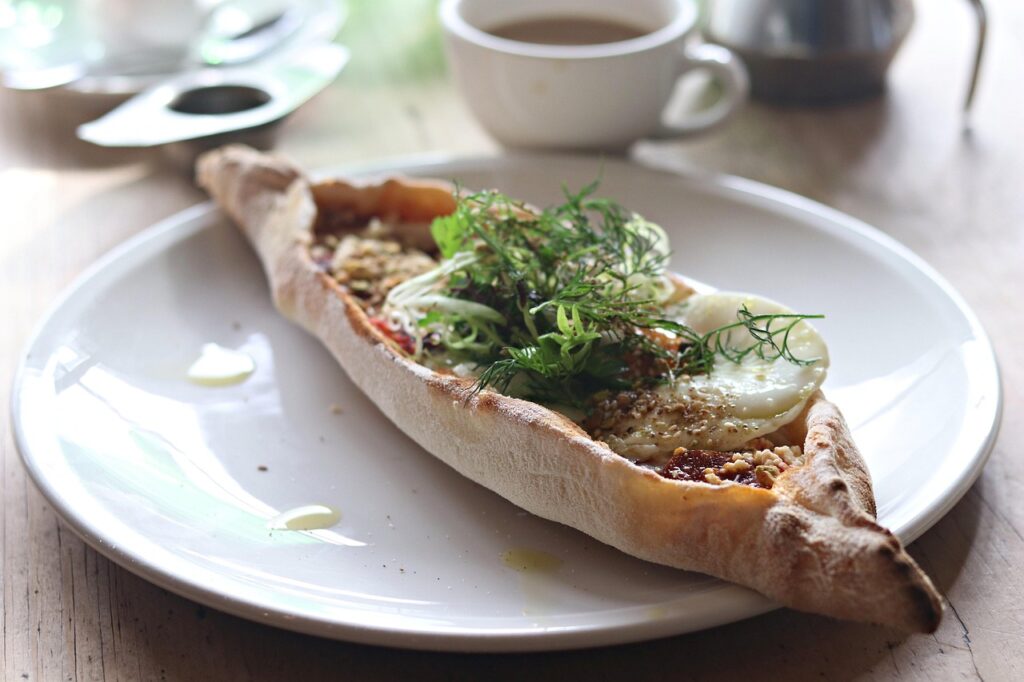
The fold of a manti is a small work of art. The dough square is pinched so that the corners meet, and the shape that results is neat, symmetrical, and identical to its neighbors.
The repetition of the fold, hundreds of times over, is a kind of meditation, and experienced cooks can fold without looking while keeping every parcel identical.
This uniformity is the mark of skill. A tray of evenly folded manti is beautiful in itself, and the pride of the cook lies in the precision of the row, a craft that turns food into pattern.
Manti in Everyday Life
Despite the ceremony around them, manti are also an everyday food in many Turkish homes. Packaged manti are sold in every market, and busy families boil them for a quick dinner.
The packaged versions are a convenience, but they carry the tradition forward, and many cooks still add their own yogurt and tomato butter to finish the dish.
The everyday bowl of manti is a small daily connection to the old ways. Even when time is short, the dumplings keep the culture of the dish alive.

Manti Across Anatolia
Travel across Turkey and you will find manti speaking in different accents. In the east, the dumplings grow larger and the sauces grow spicier. In the Black Sea region, butter and local flavors take over.
In the west, the Kayseri style dominates, with tiny parcels and generous yogurt. Every version claims to be the true one, and every region defends its fold with affection.
This variety is itself a taste of Turkish culture, which is a mosaic of regional voices. Eating manti in several cities is a journey through the country’s many faces, one dumpling at a time.
The Taste of Home
For Turks living abroad, manti are the taste of home. The small parcels in yogurt and butter carry the memory of grandmothers’ kitchens, winter evenings, and family tables.
Turkish communities around the world keep the tradition alive, folding manti together for holidays and teaching the next generation the old pinch of the fold.
The dish is proof that culture travels in the kitchen. Wherever there is a pot of boiling water and a bowl of garlic yogurt, a piece of Turkey is being remembered, and a taste of home is being served. Restaurants run by Turkish families abroad often make manti the centerpiece of the menu, and the folding is done by hand in the back room even when the dining room is busy. For the second and third generations born far from Anatolia, the plate of manti is a bridge to a country they may only know through its food.
Frequently asked questions
Why are manti so important in Turkish culture?
Manti are a symbol of family, patience, and hospitality. They take hours to fold by hand, so serving them is a statement of care and respect. The dish is tied to winter traditions, family gatherings, and the pride of cities like Kayseri.
What does the size of manti represent?
The tiny size of traditional manti represents skill and patience. In Kayseri, cooks are judged by how small they can fold their dumplings, and the old saying claims forty manti can fit on one spoon. Small manti dry faster and cook quickly.
When are manti traditionally eaten?
Manti are traditionally eaten during the cold months and at family gatherings, holidays, and celebrations. In the past they were dried in autumn to feed families through the winter. Today they are enjoyed year-round, both homemade and packaged.

All Over Information
The All Over Information editorial team researches and writes practical English-language guides to Turkey. Facts are checked against official and local sources before publication, prices are published as dated ranges rather than quotes, and guides are revised when things change. We accept no sponsored posts, paid placements or paid links.
More guides like this

Balik Ekmek (Fish Sandwich) Vs. International Variations: What Makes It Turkish
Fish sandwiches exist all over the world, from the battered fish and chips of Britain to the fish tacos of Mexico, and…

Simit Vs. International Variations: What Makes It Turkish
Simit belongs to a worldwide family of ring-shaped breads that includes the bagel of New York, the pretzel of Germany, the bublik…

Where to Find the Best Pide in Turkey
Pide is baked in every city of Turkey, but the best versions come from the regions where the craft runs deepest.

Where to Find the Best Turkish Pilav in Turkey
Pilav is served everywhere in Turkey, which makes the hunt for the best version both easy and surprisingly specific.

The History Behind Turkish Breakfast (Kahvalti)
Turkish breakfast looks like a modern invention, a spread so abundant and so deliberate that it feels designed by a marketing department.

The Ultimate Guide to Turkish Coffee
Turkish coffee is one of the oldest coffee traditions in the world, a method that has barely changed since it arrived in…