Bursa is a photographer’s city: the domes and the minarets of the first capital, the tiles of the famous mosques, the lanes of the bazaar, and the mountain that watches over it all. The city of the founding holds the images of the Ottoman beginning — the monuments, the markets, and the views — and the region around it holds the villages, the lakes, and the coasts. This guide collects the essential photography spots of Bursa, with the times of the light and the angles of the best shots. Here are the photography spots you can’t miss.
The Green Mosque and the Green Tomb
The masterpieces of the early Ottoman tiles — the Green Mosque and the Green Tomb — are the essential photographs of Bursa. The Green Mosque holds the exterior drama — the marble facade, the fine stonework, and the elegant proportions — and the interior glory: the tiles of the prayer hall, the blues and the greens of the Iznik ceramics, the light through the windows, and the details of the mihrab. The Green Tomb — the octagonal tower of the tiles — photographs against the sky, the blue-green surfaces glowing in the light. The light is the key: the morning for the exterior, and the interior for the whole day. The photographer of the Green Mosque and the Green Tomb captures the heart of the Ottoman art — the beauty that made the district famous.
The Ulu Cami
The great mosque of the twenty domes — the Ulu Cami — is the monumental photograph of the city. The exterior reads as the mass of the domes: the twenty white domes of the roof, the pattern of the skyline, and the two minarets of the mosque. The interior holds the extraordinary scene: the forest of the pillars, the arches, the central fountain, and the calligraphy of the walls — the vast prayer hall of the early Ottoman architecture. The photographs of the interior need the wide lens: the domes and the arches stacked, the fountain in the center, and the light from the windows. The Ulu Cami photographs through the day — the morning light, the midday gloom, and the evening glow of the lamps.

The Tophane View
The view over Bursa from the Tophane hill is the panorama of the city — the shot that places the whole city in the frame. The terrace of the park looks over the old city: the minarets of the Ulu Cami and the Green Mosque, the spread of the bazaar and the houses, and the plain stretching beyond. The view is the photograph of the city’s geography — the history in the foreground and the region beyond. The light of the Tophane view: the morning for the clear air, and the sunset for the golden city. The photograph of the sunset over Bursa — the minarets in the orange light, the mountain darkening above — is the classic image of the city, and the Tophane hill is the place of it.
The Koza Han
The silk caravanserai — the Koza Han — is the atmospheric photograph of the market: the two-story courtyard, the colonnades, the arches, and the life of the old commerce. The courtyard photographs in the symmetry: the arcades of the two floors, the central space, and the shops around the galleries. The details hold the texture: the stone, the wood of the galleries, the silks of the stalls, and the tea of the courtyard tables. The life of the han fills the frames — the vendors, the visitors, and the pigeons of the courtyard. The light of the Koza Han: the morning for the clear arcades, and the afternoon for the long shadows of the galleries. The han is the photograph of the trade — the market of the silk, in its historic house.
The Bazaar Lanes
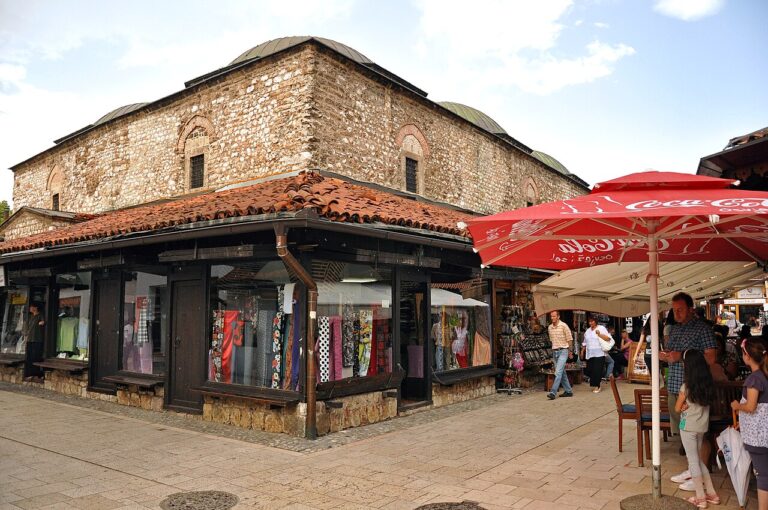
The lanes of the great bazaar hold the photography of the market life: the covered streets, the shops, and the commerce of the city. The bazaar photographs in the candid: the vendors at the stalls, the shoppers in the lanes, the goods of the displays, and the steam of the food. The light of the covered streets — the shafts through the skylights, the lamps of the shops — gives the bazaar its mood: the warm glow of the commerce, and the shadows of the lanes. The details of the bazaar fill the frames: the textiles, the copper, the sweets, and the faces of the market. The bazaar is the photograph of the city’s daily life — the trade of the first capital, in the streets where it has run for the centuries.
The Muradiye Complex
The Muradiye complex — the mosque and the tombs of the later sultans — holds the photography of the deeper history: the courtyards, the marble, and the extraordinary tilework of the tombs. The complex photographs in the quiet: the courtyard of the mosque, the cypress trees, and the tombs of the princes around the yard. The interiors of the tombs hold the glory: the Iznik tiles of the princes’ mausoleums — the blues and the greens, the patterns and the calligraphy — in the intimate rooms of the dead. The light of the Muradiye: the morning for the courtyard, and the soft light of the interiors through the day. The complex is the photographer’s secret of Bursa — the tiles of the connoisseur, in the quiet of the complex.

The Village of Cumalıkızık
The Ottoman village of Cumalıkızık — at the foot of the mountain — is the photography of the past: the timber houses, the cobbled lanes, and the village life of the Ottoman centuries. The village photographs in the lanes: the facades of the houses, the overhanging upper floors, the flowers of the windows, and the cats of the cobbles. The texture of the village fills the frames: the timber, the whitewash, the red tiles, and the patina of the centuries. And the setting completes the shots: the mountain of Uludağ rising behind the village, and the light of the morning over the roofs. The village is the photograph of the Ottoman life — the settlement of the past, preserved in the present.
The Mountain from the City
The mountain of Uludağ — the great mass above the city — is the constant of the Bursa photographs: the backdrop that frames the whole city. The shots of the mountain from the old city place the history against the heights: the minarets and the domes in the foreground, and the mountain rising behind. The mountain photographs through the seasons: the snow of the winter, the green of the summer, and the clouds of the changing weather. And the shots from the mountain place the city below: the plateau, the views over the plain, and the sea on the clear days. The mountain is the frame of the Bursa photography — the constant of the city’s images, in every season.

The Water of the Region
The water of the region — the lakes and the coasts around Bursa — holds the photography of the quiet: the reflections, the shores, and the villages by the water. The lake of Uluabat — and the village of Gölyazı — photographs in the early morning: the still water, the mist, the village on the island, and the reflections of the light. The coast of Mudanya holds the sea photographs: the harbor, the boats, and the sunsets over the Marmara. And the waterfalls of the region — the Suuçtu and the falls of the valleys — hold the photography of the moving water: the long exposures, the white falls, and the green of the gorges. The water of the region is the photographer’s day trip — the lakes, the sea, and the falls, in the quiet of the region.
The Practical Notes of the Photography
The practical notes of the Bursa photography make the shots work. The times of the light: the morning for the clear air and the clean facades, the golden hour for the warm city, and the night for the lit monuments. The permissions of the photography: the mosques allow the photography — respectfully, without the flash in the prayer areas — and the interiors of the tombs are the quiet ones. The lenses of the city: the wide for the domes and the courtyards, the tele for the details of the tiles, and the tripod for the night and the long exposures. The photographer of Bursa plans the days around the light: the monuments in the morning, the views at the golden hour, and the details in between.
The Rhythm of the Photography
There is a rhythm to the photography of Bursa that the light sets. The morning belongs to the monuments — the Green Mosque and the Ulu Cami in the clean light, before the crowds. The midday belongs to the markets — the covered lanes of the bazaar and the courtyard of the Koza Han, in the working light. The afternoon belongs to the views — the Tophane hill and the mountain, in the long light of the day. And the golden hour belongs to the city — the minarets and the domes in the warm glow, the village in the last light, and the sunset over the plain. The photographer follows the rhythm of the light — the first capital revealed in the frames of the day.
Frequently asked questions
Where can I take good photos in Bursa?
The best photo spots are: the Green Mosque and the Green Tomb, the Ulu Cami, the Tophane view over the city, the Koza Han, the bazaar lanes, the Muradiye complex, and the village of Cumalıkızık. The mountain and the region’s lakes add the wider shots.
What is the best time for photography in Bursa?
The morning is the best time for the monuments — the clean light and the calm before the crowds. The golden hour of the evening is the best for the views — the Tophane sunset and the warm city. The midday belongs to the covered markets.
Can I take photos inside the mosques of Bursa?
Yes — the mosques of Bursa allow the photography, with the respect for the worshippers: the photos without the flash in the prayer areas, and the quiet observation during the prayers. The interior of the Ulu Cami and the Green Mosque are the classic shots.

All Over Information
The All Over Information editorial team researches and writes practical English-language guides to Turkey. Facts are checked against official and local sources before publication, prices are published as dated ranges rather than quotes, and guides are revised when things change. We accept no sponsored posts, paid placements or paid links.
More guides like this
The Best Day Trips from Bursa
Bursa is a city that repays the extra days — not only for the city itself, but for what lies beyond it.


How to Get to Bursa from Istanbul
The journey from Istanbul to Bursa is one of the great commutes of the Turkish travel — the crossing of the Marmara…

48 Hours in Bursa: The Perfect Itinerary
Two days in Bursa is enough to see the first capital's essentials — the Ottoman monuments, the old city, and the mountain…

Where to Stay in Bursa: Neighborhood Guide
Bursa is a spread-out city, and the choice of the neighborhood shapes the whole visit. The old city holds the monuments —…