Ani is one of the most atmospheric archaeological sites in Turkey, a walled ghost city of cathedrals and mosques on the remote highland border with Armenia. It is also one of the simplest to visit: a single open site with a clear entrance, a walking route through the ruins, and spectacular scenery on every side. This guide covers getting there, practical details, and the monuments you should not miss.
Where Ani Is and How to Get There
Ani sits in Kars Province, in the far northeast of Turkey, about forty kilometers from the city of Kars, close to the border with Armenia. The drive takes about an hour through open highland country, and the border area gives the whole journey a frontier atmosphere.
The practical base is Kars, which has hotels, restaurants, and transport connections by air and rail. From Kars you can reach Ani by car, taxi, or organized tour, and most visitors make it a day trip. A tour is the easiest option, because the driver handles the long approach and can also show you the other sights of the region.
You need a valid passport or identity card because the area is a border zone, and you may pass a checkpoint on the way. Without identification you will not reach the site.
Tickets and Opening Hours
Ani is an open-air archaeological site with a single entrance, where you buy your ticket and pass through the gate. The site is generally open daily throughout the year, but hours change with the seasons, so check the current schedule before you travel. The entrance area has basic facilities, and you can usually pay by card as well as cash.
Ticket prices are set by the official authorities and change over time, so it is wise to confirm the current rate when planning your budget. There are reduced rates for students and holders of museum passes, and the Turkish museum card is accepted at the site. Arrive early in the day to have the full afternoon ahead of you.
One practical warning: the site is large, exposed, and unshaded, with no café inside the walls. Bring water, snacks, and everything you need for several hours of walking.
The Walls and the Entrance
Your visit begins at the great walls that made Ani famous. The double line of fortifications, built largely under King Smbat II in the tenth century, runs across the plateau with semicircular towers at intervals, and the entrance passes through one of the ancient gates. Walking under the dark stone towers, you step directly into the medieval city.
From the gate, the ground rises gently through the ruins, and the scale of the site becomes clear: the remains of churches, palaces, and houses spread across a wide grassy plateau between two river gorges. The main path leads you along the spine of the city, past the largest monuments, with the Arpacay river visible far below on the Armenian side.
The best approach is to take the main path first, visiting the great churches, and then wander the quieter corners where grass covers the old streets. The whole plateau is the museum.
The Cathedral of Ani
The cathedral is the first great monument you reach and the finest building on the site. Begun in 989 by the architect Trdat and completed around 1001, it was the largest church of the medieval Armenian kingdom, a long vaulted hall with clustered columns and pointed arches that look forward to Gothic architecture in Europe.
Today the cathedral stands roofless, its great vault collapsed in the earthquake of 1319, but the walls remain largely intact, and the vast interior is strangely beautiful. Walking inside and looking up at the sky through the broken arches is one of the most moving experiences at any ancient site in Turkey.
The building has survived remarkably well for a structure with no roof. Its stone is sound, its proportions still read clearly, and it is easy to imagine the cathedral crowded with worshippers a thousand years ago. Give it time; it deserves more than a quick photograph.

The Church of the Redeemer
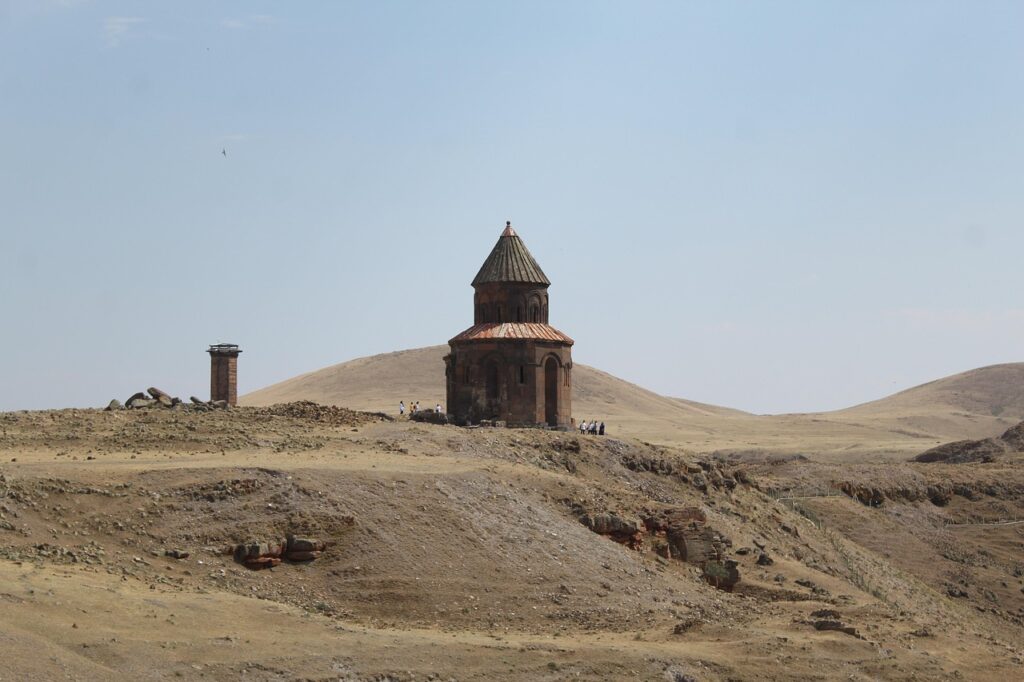
Close to the cathedral stands the Church of the Redeemer, built in 1035 by the Armenian prince Ablgharib Pahlavuni, who said he was fulfilling a vow after surviving an accident. Its plan is a circle with a ring of chapels, and it once carried a conical roof and dome that made it one of the most distinctive buildings in the city.
The church’s fate is a lesson in fragility. In 1966, the eastern half of the structure collapsed in a storm, leaving the building sliced in half, with one side standing open to the sky and the other still complete. The ruin is one of the most photographed sights at Ani, and it shows exactly why the site needs constant care.
Even in its damaged state the church is beautiful, with its semicircular chapels and carved stonework on the standing half, and it is a sobering reminder that these monuments remain at the mercy of wind and time.
The Church of St Gregory of Tigran Honents
The most richly decorated of Ani’s churches is the church of St Gregory, built in 1215 for the merchant Tigran Honents during the Zakarid revival of the city. Its exterior is covered with intricate stone carving, bands of interlaced ornament, and figures of saints, a display of the Armenian mason’s art at its height.
Inside, the church preserves something almost unique in Anatolia: its medieval frescoes. The walls still carry scenes from the life of Christ, the saints, and the donors, painted in the early thirteenth century and protected from destruction by the building’s survival. They are faded and damaged but unmistakably beautiful.
This is the one building where you should stop and look closely. The carvings outside reward a slow circuit of the exterior, and the frescoes inside reward the eyes that adjust to the dim light.

The Mosque of Manuchihr
The mosque of Manuchihr stands at the edge of the plateau, above the gorge, and its minaret is one of the iconic images of Ani. Built in the late eleventh century, soon after the Seljuk conquest, it is among the earliest surviving Seljuk monuments in Anatolia, and it shows the city’s new Muslim rulers building in the local stone tradition.
The prayer hall is small and simple compared with the great churches, but the position is spectacular: the mosque looks directly down the gorge toward the modern border, and the setting alone is worth the visit.
Standing by the minaret, you see both sides of Ani’s history at once: the Armenian churches behind you and the mosque at the cliff edge, with the river beyond. It is the perfect place to understand that this was a city of two faiths.
The Border Setting and the River
Ani’s setting is part of its magic. The city stands on a triangular plateau between two deep river gorges, and the Arpacay river below marks the modern border with Armenia. Across the water you can see Armenian territory, and the sense of standing at the meeting point of countries and histories is unlike anywhere else in Turkey.
The views are extraordinary. From the cliff edges you look down into the gorge and across the valley, and on clear days the Armenian highlands stretch to the horizon. Photographers find their best shots at the edges of the plateau.
The border also explains the site’s history. Ani grew rich on the trade routes through these passes, and it declined when the routes closed and the frontier hardened. The river that made its fortune is still there, silent and swift, a thousand years later.
What to Wear and Bring
Ani is a highland site at around fifteen hundred meters, with weather that changes fast. Even in summer, the wind can be sharp and the evenings cool, so layers are the rule; in spring and autumn you need a warm jacket, and in winter the site can be snow-covered and bitterly cold. Sturdy walking shoes are essential.
The site is completely exposed, with no shade, so sun protection matters from spring to autumn: a hat, sunglasses, and sunscreen. Carry more water than you think you need, plus snacks, because there is nowhere to buy food inside the walls. A small pack is the practical answer.
Photography equipment is welcome, and a telephoto lens helps with the frescoes and the distant views. Charged phone and camera batteries, and a pair of binoculars for the gorge, complete a sensible kit. Travel light, but travel prepared.
Planning Your Day Around Kars
A visit to Ani fits naturally into a day based in Kars, which is itself one of the most interesting small cities in Turkey. Start early to reach Ani for the morning light, spend three to four hours among the ruins, and return to Kars for lunch and the afternoon at the city’s sights.
Kars has its own attractions worth your time: the grand Russian-era buildings from the nineteenth century, the castle above the town, and a strong local character shaped by borders and change.
If your schedule allows, combine Ani with an overnight in Kars rather than a rushed day trip. The city is quiet, and the unhurried pace lets the ghost city of Ani leave its full impression before you move on.
Frequently asked questions
Do I need a passport to visit Ani?
Yes. Ani is in a border zone close to Armenia, so you need valid identification, and you may pass a security checkpoint on the road from Kars. Carry your passport or identity card at all times; without it you cannot enter the area or the site.
How long should I spend at Ani?
Allow three to four hours to see the main monuments comfortably. The cathedral, the Church of the Redeemer, the frescoed church of St Gregory, and the mosque each deserve time, and the plateau rewards walking. A full half-day with a relaxed pace is the ideal.
Is Ani suitable for winter visits?
Winter visits are possible but demanding. The site may be snow-covered, the wind is severe, and facilities are limited, so you need warm clothing and careful planning. Spring through autumn is the comfortable season, with May, June, September, and October offering the best balance of weather and light.

All Over Information
The All Over Information editorial team researches and writes practical English-language guides to Turkey. Facts are checked against official and local sources before publication, prices are published as dated ranges rather than quotes, and guides are revised when things change. We accept no sponsored posts, paid placements or paid links.
More guides like this

Sardis Through the Centuries
Sardis is one of the oldest and most storied cities of Anatolia, and for a few centuries in the first millennium BC…

Best Time to Visit Kaymakli Underground City to Avoid Crowds
Kaymakli Underground City is one of Cappadocia's most atmospheric experiences, and one of its great advantages is that it rarely feels as…
Best Time to Visit Mount Nemrut to Avoid Crowds
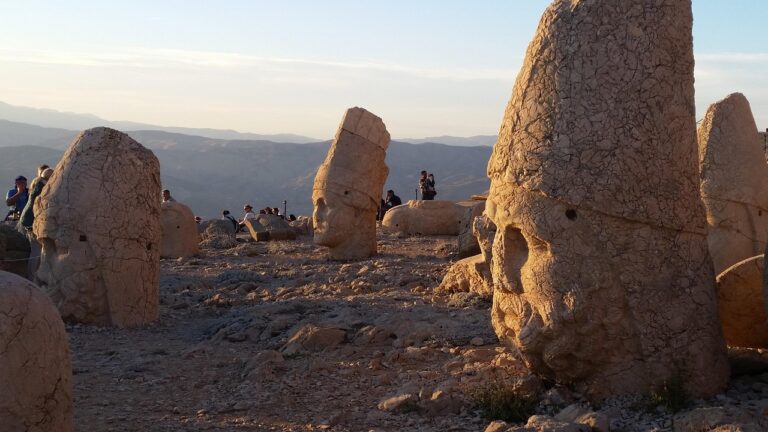
Mount Nemrut is one of the few ancient sites where the crowds gather at a specific hour, and that makes timing everything.

Visiting Gobekli Tepe: Tickets, Hours, and Tips
Gobekli Tepe is the oldest monumental site in the world, a hilltop of stone circles and carved pillars built around 9500 BC,…

The Architecture of Ani Ruins Explained
Ani is a city built from stone and skill, and its architecture tells the story of medieval civilization in the Caucasus.

Visiting Cappadocia’s Underground Cities: Tickets, Hours, and Tips
Few experiences in Turkey are stranger or more memorable than descending into a Cappadocian underground city.