Moda is a photographer’s neighborhood in the truest sense: the whole shore is a composition, and the light over the Marmara does the rest. The quarter concentrates its beauty in a compact stretch of waterfront — the promenade, the points, the streets, the tram — and each spot offers its own angle on the sea and the old city across the water. This guide maps the essential photography locations in Moda, the best hours for each, and the tricks that turn the neighborhood’s beauty into photographs worth keeping.
The Promenade at Golden Hour
The promenade in the late afternoon is the photographer’s Moda at its most golden. The low sun turns the Marmara amber, the old city across the water catches the light — the minarets and the domes glowing — and the ferries cross in silhouette. The compositions are everywhere: the benches with the sea behind, the ferry arrivals, the sunset-watchers lining the wall. The golden hour stretches long in the summer, and the light in the autumn is the richest of the year. Shoot wide for the sweep of the shore, and tight for the details — the gulls, the moorings, the faces turned to the sunset.
The Moda Point: The Wide View
The Moda point at the southern end of the promenade gives the widest views in the neighborhood. The point juts into the Marmara, and from its end the sea opens in three directions — the old city across the water, the islands on the horizon, the shore curving away on both sides. The point is the spot for the panoramas: the sunset from the end of the point, with the sea on both sides and the city ahead, is the shot that defines the Moda photography. Bring the wide lens, arrive before the golden hour, and let the point give you the neighborhood in its full setting.

The Nostalgic Tram: The Street Scenes
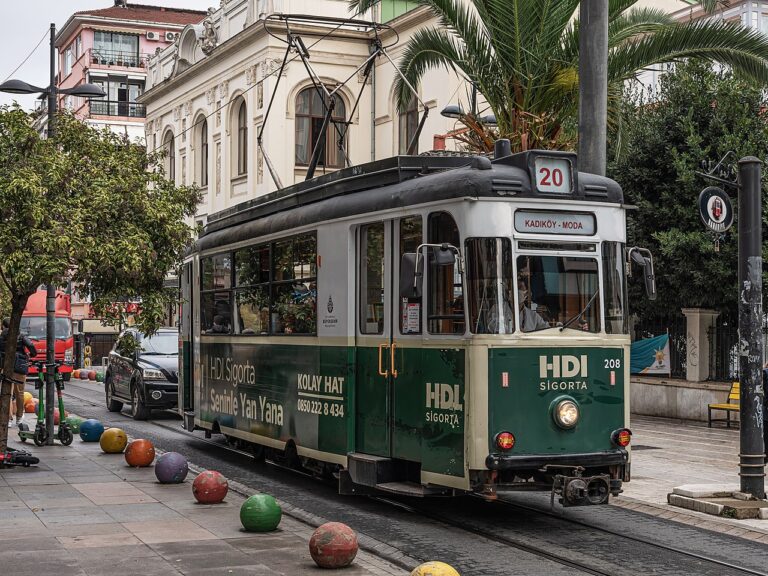
The nostalgic tram is the photographer’s street subject. The vintage carriages against the neighborhood’s streets — the old buildings, the cafés, the cats — make the classic Moda scenes, and the tram at the stops, with the passengers boarding and the bells ringing, is the neighborhood’s character in motion. The best shots come from the pavement: the tram approaching down the avenue, the light catching the windows, the streets stretching behind. The tram is also the subject from inside — the conductor, the swaying carriage, the streets passing the windows. Shoot the tram from both sides, and you have the neighborhood’s signature in frames.
The Cem Karaca Statue
The statue of Cem Karaca, the legendary Turkish rock musician, stands in the heart of Moda, and it is the neighborhood’s cultural landmark. The statue is the meeting point — the residents gather there, the visitors photograph it, and the musicians pay their respects — and the surrounding square gives the human scenes that the promenade lacks. The statue works as the subject itself, and as the anchor for the street photography around it: the musicians, the skaters, the coffee drinkers, the daily life of the square. The statue is the Moda photography’s human heart, and the square around it is where the neighborhood shows its character.

The Streets and the Murals
The side streets of Moda are the photographer’s quieter territory. The old buildings, the leafy lanes, the gardens, the cats — the residential Moda is a different subject from the promenade, and it rewards the wander. The murals and the graffiti of the surrounding streets add the color and the commentary, and the street art of the Asian side is among the best in the city. The morning light is the cleanest for the streets, the raking light catching the facades, and the quiet hours give the empty lanes. The street photography of Moda is the practice of noticing, and the side streets give the photographer the material the promenade never offers.
The Market: The Color and the Commerce
The Kadıköy market is the photographer’s destination for the color and the commerce. The produce stalls pile the fruit and the vegetables in the morning light, the fish counters gleam, the spice shops glow with the warm colors, and the vendors and the shoppers fill the frames with the human energy. The market is the classic street-photography territory — the candid shots, the busy compositions, the daily life at its most colorful — and it is minutes from Moda by tram. The morning is the time, when the produce is freshest and the light is cleanest. The market gives the Moda photography its liveliest chapter.

The Street Photography
Beyond the postcard spots, Moda rewards the street photographer. The promenade is the stage for the human scenes — the joggers, the fishermen, the ferry commuters, the couples, the children — and the candids capture the neighborhood’s life better than any posed shot. The side streets hold the quieter scenes: the cats on the walls, the shopkeepers at their doors, the old buildings in the raking light. The market gives the color and the commerce, the most classic of the street-photography territories. The street photography of Moda is the practice of noticing — the moments between the attractions, the life that the postcards crop out — and it is the most personal work the neighborhood offers.
The Light and the Timing
The timing of the Moda shoot follows the light, and the light follows the neighborhood’s rhythm. The first hour of the day gives the empty promenade and the soft clarity; the late afternoon gives the warmth and the long shadows; the blue hour gives the magic; and the night gives the lights. The midday is for the shaded streets and the interiors, the cafés and the shops that the harsh light spares. The practical trick is the return: the same spot at a different hour is a different photograph, and the neighborhood repays the photographer who revisits. The light over the Marmara is never the same twice, and the photographer who treats the day as a series of returns collects the neighborhood in all its moods.
A final note for the photographer: the gear matters less than the patience. The phone in the pocket at the right hour beats the camera at the wrong one, and the neighborhood’s beauty is available to anyone who waits for it. Shoot the postcards, and then shoot the life between them — the Moda photographs that matter are the ones you notice when you stop looking for them.

The Post-Processing and the Return
The work continues after the shoot, and the Moda photographs reward the careful return. The editing is the light work — the exposure, the color, the crop — and the neighborhood’s images take it well, the blue hour needing the gentle touch and the gold hour none at all. The return to the same spots is the deeper practice: the photograph taken at the first light becomes a different photograph at the last, and the series tells the story the single shot cannot. The sharing is the final step — the album, the print, the post — and the Moda photographs carry the light of the Marmara into the homes they reach. Shoot, edit, return, and share: the neighborhood’s beauty is the gift that keeps giving, long after the trip ends.
The photography of Moda, in the end, is the practice of noticing. The promenade, the point, the tram, the statue, the streets, the market — each is a set of possibilities, and the light and the life fill them differently every day. The neighborhood gives the patient photographer the frames the postcards cannot, and the images that come home are the ones that keep the Marmara and the old city in the room. Point the camera at what you feel, not just what you see, and Moda will keep giving.
The Takeaway
Moda gives the photographer a compact set of perfect locations — the promenade, the point, the tram, the statue, the streets, the market — each with its hour and its angle. The neighborhood is small enough to shoot in a day and rich enough to reward the return, and the sea and the old city supply the light and the drama. Bring the camera, follow the light, and let the neighborhood compose itself.
Frequently asked questions
What is the best time for photography in Moda?
The golden hour in the late afternoon for the promenade and the point, the morning for the streets and the market, and the blue hour after the sunset for the lights.
Where is the best wide view in Moda?
The Moda point — the sea opens in three directions from its end, with the old city across the water and the islands on the horizon.
Is the tram a good photography subject?
Excellent — the vintage carriages against the neighborhood’s streets are the classic Moda scenes, and the tram is the subject’s signature.
Where can I find the street art?
The murals and the graffiti of the surrounding Kadıköy streets are among the best in Istanbul, and they reward the wander beyond the promenade.

All Over Information
The All Over Information editorial team researches and writes practical English-language guides to Turkey. Facts are checked against official and local sources before publication, prices are published as dated ranges rather than quotes, and guides are revised when things change. We accept no sponsored posts, paid placements or paid links.
More guides like this

Hidden Gems of Moda Most Tourists Miss
Moda is a neighborhood that keeps its secrets close.

Where to Stay in Moda: Neighborhood Guide
Moda is one of the most pleasant bases for an Istanbul trip, and staying there means trading the tourist bustle of the…
48 Hours in Moda: The Perfect Itinerary
Moda rewards a slow visit, and forty-eight hours is the perfect amount of time to let the neighborhood work its charm.
Moda on a Budget: Money-Saving Travel Tips
Moda is one of the most budget-friendly neighborhoods in Istanbul, and that is part of its appeal.

Family-Friendly Activities in Moda
Moda is one of the most family-friendly corners of Istanbul, and the neighborhood seems designed for children.
Best Time of Year to Visit Moda
Moda is a neighborhood of seasons, and each one gives the Marmara a different character.