Taksim is one of the most photogenic neighborhoods in Istanbul, and its images, the square, the avenue, the tram, the rooftops, are the postcards of the modern city. The district rewards the photographer who knows where to stand and when, because its best frames depend as much on timing as on location. This guide maps the essential photography spots of Taksim and the hours that make them work.
Photography in Taksim: The Basics
The photography of Taksim is a photography of people and motion. The crowds, the tram, the vendors, and the street life are the subjects as much as the buildings, and the best images are the ones that catch the district in movement.
The practical kit is simple: a camera that handles low light or a phone with a good night mode, plus a power bank for the long evenings. A small tripod helps for the night shots of the square, though the street photographers manage without one.
The etiquette is the same as everywhere: photograph the people with respect, and ask when the shot is intimate. The district’s crowds are used to cameras, and a smile before the shutter makes every frame better.
The district is also generous to the photographer in practical ways: the cafes and the terraces double as rest stops with views, and the daytime crowd, used to cameras, largely ignores the lenses in its midst.
Taksim Square and the Republic Monument
The square is the district’s anchor shot, and the Republic Monument at its center is the classic subject. The monument works from every angle, and the framing changes with the hour: the morning backlight, the midday crowds, and the evening floodlights.
The best square shots come from the edges, where the monument, the buildings, and the passing people combine into a layered composition. The pigeons taking flight, the flags on the holidays, and the trams crossing the square all add the motion that makes the frame alive.
The night version of the square is the photographer’s reward. The monument lit against the dark, the light trails of the traffic, and the reflections after rain all belong to the late hours, when the square shows its most cinematic face.
The holiday mornings are the bonus sessions: the flags, the crowds, and the ceremonies give the square a color and a motion that the ordinary days never match.

Istiklal Avenue at Dusk
The avenue at dusk is the essential Taksim photograph. The light at the end of the day is soft and golden, the shop lights come on, and the crowds take on the warm tones that make the street look like a film set.
The classic shot is the long view down the avenue from the Taksim end, with the tram tracks leading the eye into the distance. The side angles, with the grand buildings receding in perspective, give the second-best frames, and the balconies and the upper windows give the overviews.
The dusk hour is short, so arrive early and shoot through the transition. The avenue moves from daylight through golden hour to the blue hour, and each stage gives a different street.
The avenue also rewards the patience of the long shot: a single position held for an hour catches the trams, the crowds, and the light all changing in sequence, and the contact sheet tells the whole story of the evening.
The Nostalgic Tram
The red tram is the district’s most photographed moving subject, and the shots of it are the ones everyone takes and everyone loves. The tram works in every light, but the best frames come in motion, rounding the curves with the avenue behind it.
The classic positions are the stops, where the tram pauses and the passengers board, and the curve near the passages, where the tracks bend and the tram leans into the turn. The front-on shot, with the driver and the headlights, is the portrait version.
The tram also frames the street life: the vendors in the foreground, the crowds on the platform, and the reflection in the shop windows. The photographer who waits for the right passenger, the right light, or the right moment of motion gets the frame the postcards use.
The tram also photographs well from above: the upper windows of the avenue give the overhead angle that turns the red car into a ribbon through the crowds.

The View from the High Streets
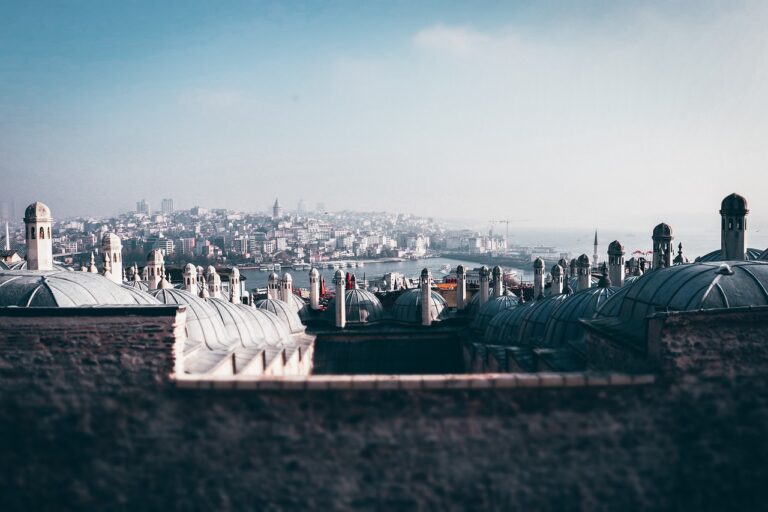
Taksim sits on a hill, and the high streets of the district are a chain of viewpoints. The streets of Cihangir, the terraces of the upper Beyoglu, and the slopes toward the water all open onto the Bosphorus, the bridges, and the old city across the water.
The classic high-street shot is the Bosphorus panorama: the strait, the bridges, the ferries, and the domes and minarets of the historic peninsula in the distance. The golden hour and the sunset give the light, and the ferries give the motion.
The high streets are free, and the viewpoints repeat at every turn, which makes them the photographer’s best value in the district. The climb is the price, and the frames are the payment.
The high streets also carry the neighborhood’s everyday frames: the laundry between the buildings, the cats on the walls, and the neighbors at the windows, all with the water as the backdrop.
The Ataturk Cultural Center
The cultural center at the square’s edge is the district’s most striking modern subject. Its glass facade reflects the square, the monument, and the sky, and the building changes its face with the light and the weather.
The reflection shots are the center’s specialty: the monument doubled in the glass, the clouds moving across the facade, and the lights of the square glittering after dark. The clean lines and the wide angles give the architectural frames.
The center also works as a foreground for the wider square shots, and its public spaces, with the light falling through the glass, make the interior photography worth the visit on its own.
The center also pairs with the square in the wide shots: the modern glass against the old plaza, and the monument in the foreground, gives the district’s architecture its sharpest contrast.

The Funicular and the Transport Scenes
The transport of the district is a photographic world of its own. The funicular stations, the metro entrances, and the ferry piers all hold the geometry and the light that make good frames, and the people moving through them add the life.
The funicular ride itself is a short, photogenic sequence: the descent, the doors, and the arrival at the water. The piers below the district give the ferry shots, with the boats, the seagulls, and the skyline behind.
The transport scenes are the candid heart of the district’s photography. The commuters, the travelers, and the vendors at the stations are the city’s daily cast, and the frames that catch them in the passing light are the ones that age well.
The evening piers add the final layer: the ferries lit against the dark water and the last light on the skyline make the waterfront the district’s second act.
The Passages and the Courtyards
The passages of the avenue are the district’s indoor photography studio. The glass roofs, the painted ceilings, and the long perspectives of the arcades give the frames that the open street cannot, and the light through the old glass is the best in the district.
The Cicek Pasaji is the classic passage shot: the taverns, the tables, and the painted ceiling all in one frame, with the activity of the evening below. The smaller passages give the quieter frames, and the courtyards beyond them hold the pools of light and shadow.
The passage photography works best in the late afternoon and the evening, when the lamps come on and the rooms fill. The arcades of Taksim are the place where the nineteenth century photographs itself.
The passage shots need a steady hand and patience: the light is low and mixed, but the frames that come out carry an atmosphere the bright street never delivers.

Cihangir’s Lanes and the Bosphorus Views
Cihangir, the hillside quarter above the avenue, is the district’s most atmospheric photographic neighborhood. The steep lanes, the stairways, the laundry lines, and the old buildings give the frames of everyday Istanbul that the main streets cannot.
The quarter’s viewpoints are the prize: the lanes that end at the water and the terraces with the Bosphorus behind them, sunset views the residents treat as a daily right. The cats on the stairs and the neighbors at the windows complete the candid set.
The Cihangir photography is a morning and evening pursuit: the soft light of the early hours for the lanes, and the golden hours for the views. The quarter rewards the photographer who walks it twice.
The stairways of Cihangir are the hidden stars: the long flights, the worn stone, and the light falling between the buildings make them the district’s most underrated frames.
Light, Weather, and Timing
The light of Taksim runs the day in stages. The morning gives the clean, low light on the square and the avenue; the midday is the harshest hour, best spent on the indoor subjects; and the evening gives the golden hour and the blue hour that the district is famous for.
The weather adds the character: the rain polishes the cobbles and the streets into mirrors, the mist softens the skyline, and the rare snow turns the familiar corners into something new. The dramatic weather days are the photographers’ best days.
The final timing tip is the crowd chart. The early morning gives the empty frames, the late evening gives the lights and the life, and the in-between hours give the crowds that make the district’s photography what it is. The photographer who knows the hours owns the district.
The final discipline is the edit: the district produces more frames than any card needs, and the photographers who shoot with intention come home with the keepers.
Frequently asked questions
What is the best time of day for photography in Taksim?
The dusk and the blue hour, from about an hour before sunset until the lights take over. The avenue, the square, and the viewpoints all perform best in that window. The early morning gives the clean, empty frames, and the rainy days give the reflections.
Where are the best free viewpoints in Taksim?
The high streets of Cihangir and the slopes toward the water, which open onto the Bosphorus and the old city without any ticket. The terraces of the upper Beyoglu and the streets above the avenue repeat the views at every turn, and the climb is the only cost.
Do you need a special camera for Taksim photography?
No. A phone with a good night mode covers the square, the avenue, and the tram beautifully, and a small tripod helps with the long night exposures of the monument. The district’s subjects are the light and the life, and both fit in any camera.

All Over Information
The All Over Information editorial team researches and writes practical English-language guides to Turkey. Facts are checked against official and local sources before publication, prices are published as dated ranges rather than quotes, and guides are revised when things change. We accept no sponsored posts, paid placements or paid links.
More guides like this

Taksim in Winter: What to Expect
Winter changes Taksim in ways that suit some travelers perfectly and surprise others.

A Solo Traveler’s Guide to Taksim
Taksim is one of the best neighborhoods in Istanbul for traveling alone.
Taksim on a Budget: Money-Saving Travel Tips
Taksim has a reputation as an expensive district, but most of that reputation is optional.

Nightlife Guide to Taksim
Taksim is the nightlife capital of Istanbul, and the neighborhood's nights are the reason many visitors choose it as a base.

How to Get to Taksim from Istanbul
Taksim is the best-connected point in Istanbul, and getting to it is rarely the hard part of the journey.

The Best Day Trips from Taksim
Taksim is a superb base for exploring beyond the neighborhood, partly because the transport hub at the square puts the whole city…