Avanos is the shopping heart of Cappadocia, because the town is where the region’s signature craft is made: the pottery of the red clay, spun and fired in the workshops along the river. Beyond the pottery, the town’s shopping covers the carpets, the stonework, and the edible treasures of the plateau, all bought at the source. This guide covers what to buy, where to find it, and how to buy well.
The Pottery: The Town’s Signature
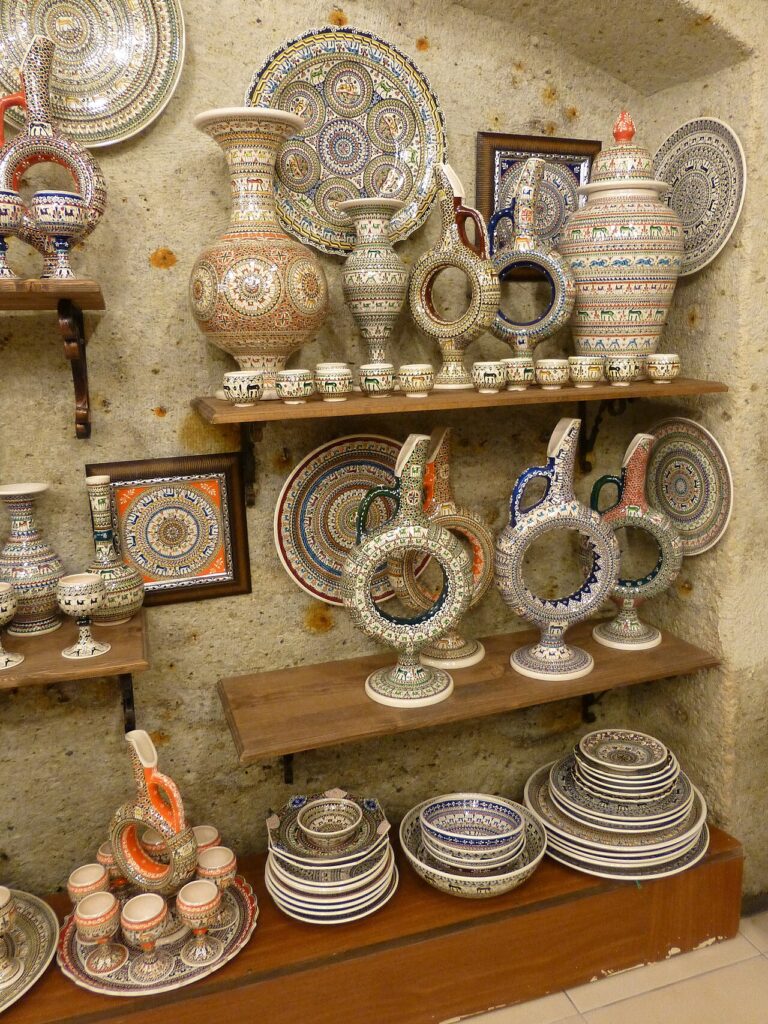
The pottery is the essential Avanos purchase, and the town’s workshops sell the pieces made in the town. The range covers the practical — the bowls, the plates, the jugs, the pitchers — and the decorative, in the earthy reds of the local clay and the glazed patterns of the tradition. The workshops show the making before the selling: the wheels spinning, the hands shaping, and the kilns firing, and the visitors buy the pieces from the hands that made them. The pottery is the souvenir with the story, and the source buying is the best of it.
The pottery buying notes: the prices run the honest ones of the workshops, and the bargaining is the expected dance; the signed pieces by the known potters cost more and hold the value; and the shipping is arranged for the large pieces, while the small ones pack into the luggage. The pottery of Avanos is the region’s art in the hands, and the pieces carry the clay of the Kızılırmak home.

The Güray Museum Shop
The shop of the Güray Museum is the curated pottery stop, and it collects the works of the contemporary potters of the region. The pieces in the museum shop are the gallery versions — the artistic, the experimental, the signed — and the selection differs from the workshop showrooms. The museum shop suits the collectors and the travelers who want the curated piece, and the prices reflect the gallery setting. The shop also sells the smaller gifts and the books on the region’s craft.
The museum shop notes: the pieces are the investment purchases, and the certificates accompany the major works; the shop is open with the museum hours, and the staff explain the makers and the techniques. The Güray Museum shop of Avanos is the gallery layer of the town’s shopping, and the curated piece is the collector’s find.

The Carpets and the Kilims
The carpets and the kilims of the region carry the patterns of the Anatolian tradition, and the weaving workshops of the area explain the craft. The carpets — the knotted, the dense, the valuable — and the kilims — the flat-woven, the lighter, the cheaper — come in the traditional designs and the natural dyes, and the workshops show the looms and the weavers at the work. The carpet buying is the serious purchase of the region, and the education is the first step: the knots per inch, the materials, and the provenance.
The carpet buying notes: the prices vary widely with the quality, and the comparisons across the shops are essential; the bargaining is the expected dance, and the tea is the ritual of the negotiation; and the shipping is arranged for the large pieces, with the certificates of the authenticity. The carpets and the kilims of the region are the investment purchases, and the educated buyer takes home the woven history of Anatolia.

The Stonework and the Local Crafts
The stonework and the local crafts of the region turn the volcanic rock into the polished ornaments, and the workshops of the area work the onyx and the stone. The onyx pieces — the vases, the bowls, the candle holders, the eggs, and the jewelry — come in the translucent whites, the ambers, and the greens, and the workshops show the cutting and the polishing. The stonework is the lighter, more affordable craft of the region, and the pieces make the elegant, packable souvenirs.
The local crafts also include the textiles: the scarves and the shawls of the local weaves, the felt hats and the slippers, and the traditional towels of the cotton. The craft buying notes: the onyx prices run the low to the middle range, and the bargaining is expected; the quality shows in the polish and the translucency, and the small pieces pack easily. The stonework and the local crafts of the region are the polished treasures, and the pieces catch the light of the Cappadocian stone.

The Edible Treasures
The edible treasures of the region travel well and taste of the plateau. The Turkish delight — the lokum — comes in the rose, the pomegranate, the pistachio, and the walnut flavors, and the boxed versions make the classic gifts. The local honey, from the flowers of the highlands, ranges from the light and the floral to the dark and the intense. The dried apricots, the figs, the mulberries, and the walnuts fill the market stalls, and the spices — the sumac, the pul biber, the oregano of the mountains — pack the flavors of the region.
The edible buying notes: the markets and the specialty shops sell at the honest prices, and the tasting is the expected courtesy — the sellers offer the samples, and the trying before the buying is the norm; the vacuum-sealed and the boxed versions pack and ship well. The edible treasures of the region are the tastes of Cappadocia, and the gifts of the honey and the delight carry the plateau home.
The Practical Shopping Tips
The practical shopping tips of Avanos save the money and the regret. The first tip: the comparisons — the same pottery, the same carpet, and the same onyx appear across the shops, and the prices vary with the location, with the tourist streets costing more than the side lanes. The second tip: the bargaining — the haggling is expected in the bazaars and the smaller shops, and the polite back-and-forth brings the fair price. The third tip: the authenticity — the handmade pieces carry the character that the machine-made cannot, and the workshop labels are the proof.
The fourth tip: the logistics — the large purchases ship, the sellers arrange the delivery, and the certificates accompany the valuable pieces; the small purchases pack, and the fragile ones wrap in the clothing. The fifth tip: the money — the cash helps with the smaller shops and the markets, and the cards work in the larger ones. The practical shopping tips of Avanos are the rules of the buying well, and the well-bought pieces are the lasting memories.
The Shopping Seasons
The shopping in Avanos follows the seasons, and the timing shapes the finds. The spring brings the craft fairs and the new collections of the workshops — the potters show the fresh glazes and the young artists the experimental pieces. The summer brings the fullest stock and the busiest bargaining, with the tourist trade at its height. The autumn brings the harvest goods — the wine, the dried fruits, the honey of the season — alongside the crafts. And the winter brings the quietest shopping and the best prices, with the workshops less crowded and the bargaining easier. The shopping seasons of Avanos are the calendar of the finds, and the traveler who times the buying to the season buys the best of it. One further note: the shipping times vary with the season too — the summer orders move quickly, while the winter shipments wait for the routes — so the large pieces bought late in the trip should confirm the delivery dates.
The Takeaway
The shopping in Avanos is the buying of the region’s art at the source: the pottery of the red clay, the curated pieces of the museum shop, the Anatolian carpets, the onyx stonework, and the edible treasures. Compare, bargain, and ship the large — pack the small — and the purchases carry the craft of Cappadocia home. The pottery town is the region’s shopping heart, and the well-chosen piece is the trip’s lasting souvenir.
Frequently asked questions
What should I buy in Avanos?
The pottery — the jugs, the bowls, the plates, and the decorative pieces — made and sold at the source workshops, plus the carpets, the onyx, and the edible treasures of the region.
Is bargaining expected in the shops of Avanos?
Yes — the polite haggling is expected in the bazaars and the smaller shops, and it brings the fair price for both sides.
Can I ship large pottery and carpets home?
Yes — the sellers arrange the shipping for the large pieces, and the certificates of the authenticity accompany the valuable ones.
What are the best souvenirs that pack easily?
The small pottery, the onyx ornaments, the scarves, the Turkish delight, and the spices pack easily and travel well.
Where is the best place to buy pottery in Avanos?
The workshops along the river, where the pieces are made and sold at the source, offer the best selection and the fairest prices.

All Over Information
The All Over Information editorial team researches and writes practical English-language guides to Turkey. Facts are checked against official and local sources before publication, prices are published as dated ranges rather than quotes, and guides are revised when things change. We accept no sponsored posts, paid placements or paid links.
More guides like this
Best Time of Year to Visit Avanos
The best time to visit Avanos depends on what the traveler wants: the green valleys and the mild air of the spring,…

Avanos in Winter: What to Expect
Winter transforms Avanos into the quiet, cozy version of the pottery town: the kilns warm against the cold, the river runs dark…

How to Get to Avanos from Istanbul
Getting to Avanos from Istanbul is the straightforward journey to the crafty corner of Cappadocia: the flight to the regional airports, the…

Photography Spots in Avanos You Can’t Miss
Avanos is the photographer's craft town of Cappadocia, and its positions run from the riverbanks to the hilltops: the bridges over the…
Hidden Gems of Avanos Most Tourists Miss
Avanos shows its famous face to every visitor — the pottery, the river, the old town — but the town and its…
Avanos on a Budget: Money-Saving Travel Tips
Avanos is one of the most budget-friendly bases in Cappadocia, because the town's best experiences are cheap or free: the pottery demonstrations,…