Sleeping inside a cave in Cappadocia sounds like a gimmick, but it is actually one of the most memorable hotel experiences in the world. The region’s soft volcanic rock has been carved into dwellings for thousands of years, and modern hoteliers have transformed those ancient spaces into comfortable, stylish places to stay. If you are planning a trip to Cappadocia, a cave hotel should be high on your list. This guide tells you what to expect, from the rooms and the service to the famous sunrise view.
The History of Living in Rock
Cappadocia’s caves are not a tourist invention; people have lived in them for millennia. The region’s soft volcanic stone, called tuff, is easy to carve and hardens on contact with air, making it the perfect building material for a land with little timber.
The most extraordinary examples are the underground cities, some extending many levels deep, which sheltered the population in times of danger. The cave churches of the Goreme valley were carved by early Christian communities, and living in rock was simply the local way of life.
In the twentieth century, the cave dwellings were largely abandoned for modern houses. The revival came with tourism, when entrepreneurs saw that the ancient homes could become hotels, and since then the concept has matured into a refined art.
What the Rooms Are Actually Like
The first thing to know is that cave rooms vary enormously, covering everything from a simple rock chamber to a luxury suite with a jacuzzi. The most authentic rooms retain the original carving: curving stone walls, vaulted ceilings, and niches hollowed for storage.
The second thing to know is comfort. Modern cave hotels add everything a good hotel should have: quality beds, proper bathrooms, winter heating, and lighting designed for rock walls. The stone gives the rooms natural coolness in summer and warmth in winter, and the quiet is remarkable.
A practical detail: many cave rooms have no external windows in the traditional sense, because the room is carved into the rock. The better hotels carve windows or add skylights, and the suites often open onto private terraces, so check the room details if natural light matters to you.
The Unique Atmosphere
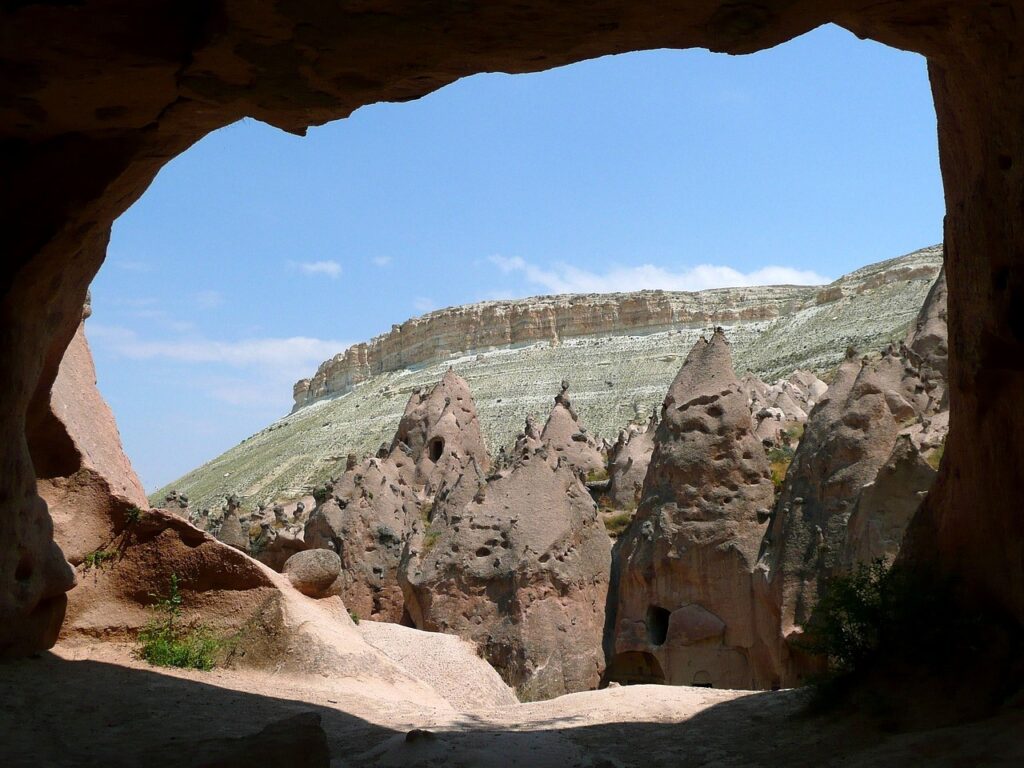
Staying in a cave creates an atmosphere no other hotel can match. The rooms feel ancient and calm, with a sense of shelter that is deeply restful. The stone absorbs sound, so the quiet at night is total, broken only by the wind outside and, in the morning, the distant sound of balloons firing their burners.
The design of the best cave hotels respects the architecture. Soft textiles, carpets, and local crafts warm the stone, and the lighting is designed to bring out the texture of the carved walls. The result is interiors that feel both luxurious and organic, as if the hotel grew out of the landscape rather than being built on it.
There is also the sheer novelty, which never quite wears off. Sleeping in a room that was carved out of a mountain a thousand years ago, waking up under a vaulted stone ceiling, and walking out onto a terrace over the fairy chimneys: these are the moments that make the stay unforgettable. Every evening brings a different sky, and the changing light on the rock is a show in itself.
The Famous Sunrise and the Balloons
The centerpiece of the cave hotel experience is the morning view. As dawn breaks, the hot-air balloons of Cappadocia rise from the valleys and drift across the sky, and watching the sunrise from your terrace with a cup of Turkish tea is the classic Cappadocian morning.
The timing depends on the season. In summer the balloons fly around sunrise, often between five and six in the morning; in winter they fly later and less often. Ask at your hotel about the schedule and the best terrace, and set your alarm accordingly.
A cave hotel terrace is also the perfect place for the famous photo: your breakfast table, laid out in the traditional Turkish style, with the balloons rising behind you. Many hotels offer a balloon-viewing breakfast or a rooftop terrace reserved for guests. The experience is genuinely as good as the pictures suggest.

What the Service Is Like
Service in Cappadocia’s cave hotels reflects the region’s warm, personal, unhurried hospitality culture. The hotels are mostly small, and the staff often include the owners, who greet you by name, help you plan your days, and remember how you take your tea.
Breakfast is a highlight of the stay. The traditional Turkish breakfast, spread across the table with cheeses, olives, eggs, honey, and fresh bread, is served with care, and on the terraces in good weather. The hotels often use local produce, from the region’s famous grapes and wines to honey from the high plateaus.
The staff can also arrange everything you need for exploring: balloon flights, tours of the valleys, horse rides, and transfers. They know the region deeply and will steer you to the quieter valleys and the better restaurants. Asking for their advice is the best way to make your Cappadocia trip better.
Choosing the Right Cave Hotel
Choosing a cave hotel in Cappadocia starts with location. Goreme is the center of the action, closest to the balloons and the open-air museum, with the widest choice of cave hotels. Urgup offers a more refined, luxurious scene with excellent restaurants, and Uchisar, perched around its rocky castle, has the most dramatic views.
Then consider the style. Some hotels preserve the caves in their raw state, atmospheric but basic. Others add pools, spas, and luxury suites, with rock-carved jacuzzis that are among the most photographed features in the region. Decide whether you want authenticity, luxury, or a balance of the two.
Check the practical details before you book: the number of rooms, the type of room (cave, cave suite, or stone house room), the breakfast, and the terrace. Read recent reviews and look at the photos carefully. A good cave hotel is worth planning around, and the region rewards the extra effort of choosing well.

What to Know Before You Go
A few practical points will make your cave hotel stay smoother. The rooms are naturally cool, which is lovely in summer but can feel chilly in spring and autumn; the better hotels have heating, but check and pack layers. The carved rooms are dark in places, so bring a good book light if you like to read at night.
Mobility is worth considering. Cave hotels are built into hillsides, which means stairs, terraces, and uneven stone paths. If stairs are a problem, ask for a room with minimal steps or consider a hotel designed with accessibility in mind. The atmosphere is worth it, but plan for the terrain.
Finally, remember that cave hotels are part of a fragile landscape. The tuff is soft, and the caves need maintenance and care. Choose hotels that respect the heritage, and enjoy the knowledge that your stay is supporting the preservation of one of the world’s most extraordinary landscapes.
Combining Your Stay with the Region
A cave hotel is the perfect base for exploring Cappadocia, and the region rewards a stay of several nights. The Goreme Open-Air Museum, with its frescoed rock churches, is essential, as are the valleys of Love, Rose, and Swords, each with its own character. The underground cities of Derinkuyu and Kaymakli offer a chilling, fascinating descent into the region’s history.
The area around your hotel is also worth lingering over. The villages of the region, the pottery town of Avanos, and the vineyards that make the local wines are all within easy reach. In the evenings, the restaurants and terraces of Goreme and Urgup buzz with travelers comparing balloon photographs.
One of the quiet pleasures of staying in a cave hotel is the unhurried rhythm of the place: breakfast on the terrace, a morning in the valleys, a long lunch, an afternoon nap in the cool stone, and an evening watching the sky change color. Give yourself that rhythm, and the stay becomes the highlight of your Turkish journey.

The Seasons of a Cave Hotel Stay
The experience of a cave hotel changes with the seasons, and each has its defenders. Spring brings the almond blossom and the first warm days, with the valleys green and the crowds still thin. It is many travelers’ favorite time.
Summer is hot and busy, but the caves’ natural coolness makes the hotels a refuge, and the long evenings on the terraces are wonderful. Autumn brings the grape harvest and the golden light, while winter, cold and quiet, offers the most atmospheric stay of all, with the fairy chimneys dusted in snow.
Whichever season you choose, the essential advice is the same: book early for the famous rooms, and let the hotel staff guide you through the region. The cave hotel is the centerpiece, but the surrounding landscape is the true reward.
The Cave Hotel and Its Setting in the Landscape
The setting of a cave hotel is inseparable from the stay itself. The hotels sit among the most extraordinary scenery in the world: the valleys of Cappadocia, with their fairy chimneys, their rock-cut churches, and their layers of volcanic stone colored in creams, pinks, and ochres.
The landscape changes through the day. The morning light floods the valleys, the midday sun bakes the rock, and the evening turns everything gold and rose before the stars come out. From a cave hotel terrace, you watch all of it without leaving your seat.
The hotels also sit within a living landscape. The villages around them are working places, with vineyards, orchards, and farms, and the valleys are crisscrossed by walking trails. The setting is not a backdrop but a neighborhood, and the best stays treat it as such.
Frequently asked questions
Is staying in a cave hotel safe and comfortable?
Yes. The caves have been inhabited for thousands of years, and modern cave hotels are fully converted with proper plumbing, heating, electricity, and quality beds. The soft volcanic rock is stable when carved correctly, and the hotels are inspected and maintained. The experience is safe, comfortable, and one of the most memorable in Turkey.
When is the best time to see the balloons from a cave hotel?
The balloons fly at sunrise year-round when weather permits, which is most days in summer and fewer in winter. In summer, that means between about five and six in the morning; in winter, the flights are later and more weather-dependent. Ask your hotel for the schedule and the best terrace for watching.
Are cave hotel rooms dark and windowless?
Many authentic cave rooms have limited natural light because they are carved into the rock, though most have windows, skylights, or terraces added during conversion. If natural light is important to you, choose a room type with a window or terrace, or a stone house room, which is above ground. Check the room details before booking.

All Over Information
The All Over Information editorial team researches and writes practical English-language guides to Turkey. Facts are checked against official and local sources before publication, prices are published as dated ranges rather than quotes, and guides are revised when things change. We accept no sponsored posts, paid placements or paid links.
More guides like this

How to Visit the Kaz Mountains (Mount Ida): Practical Tips
The Kaz Mountains are one of Turkey's easiest big landscapes to visit, sitting close to the Aegean coast with good roads, friendly…
How to Visit Salt Lake (Tuz Golu): Practical Tips
Tuz Golu, Turkey's great Salt Lake, is one of the easiest natural wonders in the country to visit, yet a little planning…
Butterfly Valley: Turkey’s Natural Wonder
Butterfly Valley is a natural wonder in the truest sense: a deep, green canyon that opens onto the Mediterranean with cliffs so…

Egirdir Lake: Turkey’s Natural Wonder
Egirdir Lake is one of the great natural wonders of Turkey, and one of the least known.

Turkey’s Caves and Underground Cities Explained
Beneath the surface of central Turkey lies a hidden world that has fascinated travelers for centuries: vast underground cities, churches carved into…
Exploring the Kure Mountains National Park: A Complete Guide
The Kure Mountains National Park is Turkey's wild Black Sea forest: a protected expanse of ancient woodland, deep canyons, and cave systems…