Pamukkale is famous for its terraces, but the surrounding landscape holds some of the region’s best walking, from the ancient streets of Hierapolis to the paths that cross the plateau above the white pools. Hiking here combines easy rambling with serious history, and the routes suit everyone from casual walkers to dedicated hikers. This guide covers the best trails around the thermal pools, with what to expect on each one.
Why the Region Rewards Walkers
The terrain around Pamukkale is varied and generous to walkers. The plateau above the terraces offers gentle paths through ancient ruins, while the hills and valleys around the region provide longer routes with wide views.
Walking here is also the best way to experience the site. The terraces themselves must be crossed on foot, and the ruins of Hierapolis reward those who wander beyond the main monuments.
The climate adds to the appeal. Spring and autumn bring clear, mild days, and even in summer the plateau has a breeze that makes walking comfortable when you pace yourself.
The Terrace Walk Itself
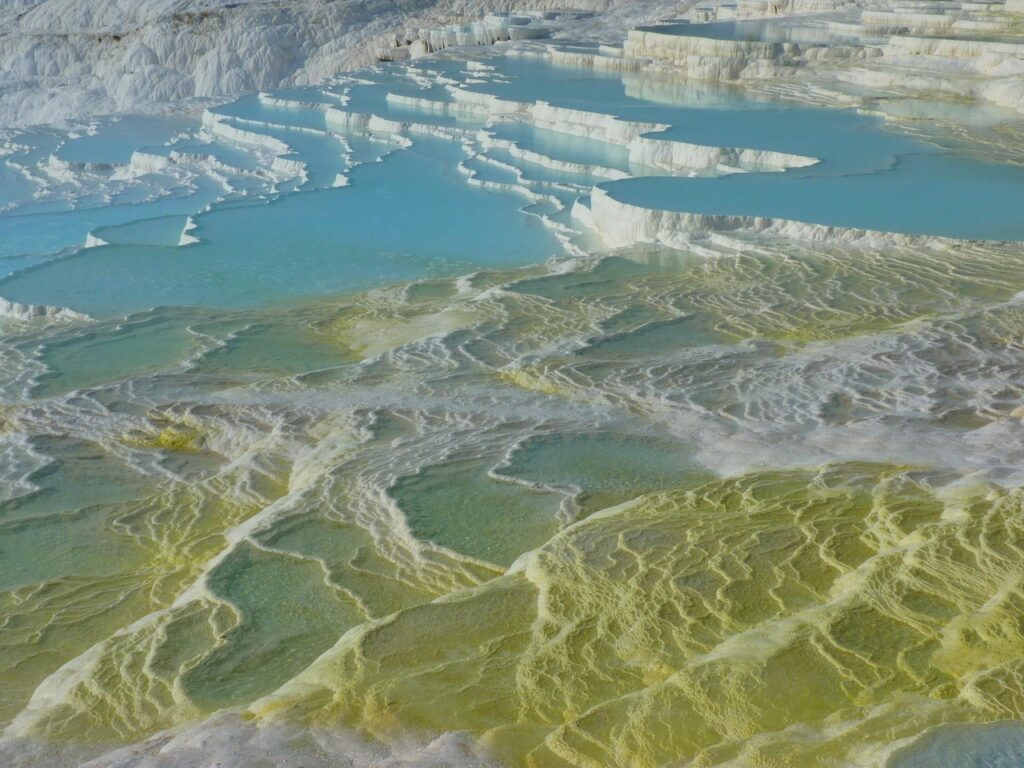
The terraces are the essential walk of the site. From the lower entrance, you follow the designated path barefoot, climbing through the rows of white pools while water flows over your feet.
The route is short in distance but rich in experience. The texture of the travertine, the warm water, and the changing views make it a walk to savor rather than rush, and the light at either end of the day transforms the scene.
Take your time and watch your footing, because the travertine is smooth and the basins are uneven. The walk connects the lower gate to the plateau, where the ancient city begins.

The Hierapolis Plateau Circuit
Once you reach the plateau, a circuit through Hierapolis is the natural next walk. The ancient city spreads across the high ground, and a route linking its monuments makes a rewarding two or three hours.
The circuit can start at the theater, whose seats face the valley, continue through the remains of the city center, and finish at the great necropolis with its hundreds of tombs. The paths are broad and mostly level.
Along the way you pass the city baths, the agora, and the colonnaded streets, each ruin inviting a pause. The plateau also offers panoramic views back down over the white terraces.
The Necropolis Trail
The necropolis of Hierapolis is one of the largest ancient cemeteries in Anatolia, and the trail that passes through it is among the most atmospheric walks in the region.
Hundreds of tombs line the paths, ranging from simple stone boxes to elaborate funerary monuments. The variety reflects the city’s long history and its mix of cultures, and the silence of the place makes the walk deeply memorable.
The route is easy and can be combined with the plateau circuit. Allow an hour for a proper look, and remember that the tombs are protected, so explore with respect and stay on the paths.

The Northern Valleys
Beyond the plateau, the valleys north of Hierapolis offer routes away from the crowds. These trails cross scrubland and terraced fields, with the white terraces visible behind you and the mountains ahead.
The walking is moderate, with gentle climbs and open country. Wildlife, wildflowers in spring, and the quiet of the inland landscape reward walkers who leave the main site behind.
These paths are less marked than the site trails, so carry water, wear proper shoes, and let someone know your route. The solitude is the reward, and the views of the terraces from a distance are excellent.
The Laodicea Extension
A separate walk worth building into your stay is the route to Laodicea, the ancient city a short distance from Pamukkale. The site spreads across a hilltop and can be explored on foot in a couple of hours.
Laodicea was one of the wealthiest cities of the region, and the ruins include a stadium, theaters, baths, and an early Christian church. The site is open and walkable, with paths connecting the monuments.
Combining Laodicea with the Pamukkale site makes a full two-day walking program. The contrast between the two ancient cities, one by the terraces and one across the plain, enriches both visits.
Walking the Thermal Countryside
The countryside around the thermal springs offers its own gentle routes. Streams, hot springs, and the pale travertine outcrops scattered across the fields make for walks with a distinctly geothermal character.
These short rambles are ideal for a relaxed afternoon after the main site. Follow the lanes between villages, watch the water birds, and enjoy the unhurried pace of rural life in the region.
Many of these routes are unmarked, so a map and some curiosity are your guides. The landscape is safe and welcoming, and the locals are used to visitors exploring the area.
What to Bring
Good footwear is essential for the walks beyond the terraces. The site trails are easy, but the valley and countryside paths need sturdy shoes with grip.
Carry water on every route, because the region is dry and exposed, and take sun protection even in spring. A hat, sunscreen, and a light layer for the cooler hours cover most days.
For the terrace walk itself, you go barefoot, so bring flip-flops or sandals for the paved sections between areas, and a towel if you plan to swim at the Antique Pool.

Safety and Etiquette
The main risks in the region are heat, dehydration, and uneven ground. Start walks early, pace yourself, and turn back if the weather turns, because afternoon storms can arrive quickly in the mountains.
Respect the archaeological sites and the natural formation. Stay on the marked paths, do not climb on the ruins or the travertine, and leave everything exactly as you found it.
Carry a phone with a map application and tell someone where you are going on the quieter routes. The region is safe, but good habits make every walk more relaxed.
Planning Your Walking Days
A day and a half gives you time for the terraces, the Hierapolis plateau, and one of the longer walks. Two days allow the full circuit, the necropolis, and a visit to Laodicea.
Walk in the mornings and take the hot afternoons for swimming or rest. The light is best early and late, and the temperatures are kinder at the edges of the day.
Stay in the village of Pamukkale to be at the gates early. The site opens in the morning, and the first hours are the calmest for walking.
The Antique Theatre Route
A walk that rewards every visitor is the approach to the great theater of Hierapolis. The theater stands on the hillside above the plateau, and the path to it climbs through the remains of the ancient city with the valley opening below.
From the top of the seating, the view is one of the finest in the region: the terraces of Pamukkale spilling down the hillside, the plain stretching west, and the mountains closing the horizon. The theater itself is remarkably complete, with its carved stage building still standing.
The route suits all walkers, and the climb is modest when taken at a gentle pace. Combine it with the rest of the plateau circuit, and give the theater the time it deserves, because it is the single most impressive monument on the site.
Springs and Water Features
The walking routes around the thermal springs pass a series of water features that add interest to any ramble. Small springs bubble up along the slopes, and the channels that once fed the ancient baths can still be traced in places.
The main spring near the site feeds the terraces and the Antique Pool, and walking to its source gives you the full story of the water: from the ground, through the settlement, and down the white slope.
These features are best seen on the quieter paths in the early morning, when the water is still and the light is soft. Carry a camera, because the combination of ancient stonework and running water photographs beautifully.
Watching the Light Change
The light around Pamukkale changes the walking experience hour by hour. Early morning walks cross the terraces in cool silver light, while the golden hour at sunset turns the whole hillside warm.
For hikers, this means the classic strategy: walk the exposed routes in the morning, rest through the hot middle of the day, and finish with an evening route along the plateau as the sun drops toward the valley.
Plan your routes so that the best viewpoints are reached at the best light. The theater at sunset, the terraces at first light, and the necropolis in the long afternoon shadows each offer a different face of the same landscape. A final practical note: keep a pair of dry socks and sandals in your bag for the walk back, because the terrace crossing at the end of the day leaves feet damp, and the short drive home is far more comfortable in dry shoes.
Frequently asked questions
How difficult are the walks around Pamukkale?
Most of the walking is easy to moderate. The terraces and the Hierapolis plateau are gentle, while the valley and countryside routes involve some climbing and are best for reasonably fit walkers. No technical skills are needed on any of the main routes.
Can I walk the terraces with shoes?
No. Walking on the travertine terraces is only permitted barefoot, because shoes damage the formation. You can wear sandals between sections, but on the terraces themselves you walk in the warm water with bare feet.
Is it possible to walk from Pamukkale to Laodicea?
Yes, but the walk is a serious distance through open countryside, and most visitors use transport for part of the way. The alternative is to drive or take a short bus ride and then explore Laodicea’s hilltop site on foot, which is how most people do it.

All Over Information
The All Over Information editorial team researches and writes practical English-language guides to Turkey. Facts are checked against official and local sources before publication, prices are published as dated ranges rather than quotes, and guides are revised when things change. We accept no sponsored posts, paid placements or paid links.
More guides like this

How to Visit the Nemrut Crater Lake: Practical Tips
Visiting the Nemrut crater lake is a journey into one of Turkey's most remote and rewarding landscapes, but it demands planning.
Turkey’s National Parks Overview
Turkey's national parks protect an extraordinary range of landscapes, from the fairy chimneys of Cappadocia to the glaciers of the Kackar Mountains,…

Egirdir Lake: Turkey’s Natural Wonder
Egirdir Lake is one of the great natural wonders of Turkey, and one of the least known.

Turkey’s Thermal Springs and Wellness Retreats
Turkey sits on one of the richest geothermal regions in the world, and its thermal springs have been drawing bathers for thousands…

Turkey’s Best Beaches Ranked
Turkey has more than eight thousand kilometers of coastline, and its beaches range from the world-famous to the secret coves that only…

Mount Ararat: Turkey’s Natural Wonder
Mount Ararat is the great natural landmark of eastern Turkey, a vast snow-crowned volcano that rises more than five thousand metres above…