Most of the great wonders of the world are famous for what they are; Gobekli Tepe is famous for what it changed. A hilltop of stone circles near Sanliurfa, built around 9500 BC by people who had not yet invented farming, it is the oldest monumental architecture on earth and the site that rewrote the history of civilization. A UNESCO World Heritage Site since 2018, it is a place you can feel in your bones. Here is why it belongs on your Turkey bucket list.
The Oldest Monumental Architecture
Gobekli Tepe holds a title that cannot be taken from it: the oldest monumental structures ever built. The great stone circles of T-shaped pillars were erected around 9500 BC, more than eleven thousand years ago, thousands of years before the pyramids of Egypt and before the first cities of Mesopotamia.
The age is almost impossible to grasp. When the builders of Gobekli Tepe raised their pillars, the last ice age had only recently ended, and there was no writing, no wheel, no metal, and no village agriculture as we know it. Yet the architecture is monumental in the truest sense.
Standing among the enclosures, you are in the presence of the beginning. The site does not just show you ancient history; it shows you the very threshold of monumental human achievement, and no other place on earth does that. The pillars were already old when the pyramids were built, and that thought never quite leaves you.
A Rewritten History of Civilization
Gobekli Tepe matters because it changed what we thought we knew. For generations, archaeologists taught that farming came first: people settled down, grew surplus food, and only then built monuments. Gobekli Tepe turned that story upside down, showing monumental building that predates agriculture.
The discovery forced a new understanding. It appears that the hunters who built the site came together, organised vast labour, and created a sacred place, and that this ritual world may have helped drive the development of farming itself. The order of history was reversed.
Visiting Gobekli Tepe is visiting the site of a revolution in thinking. You are not just seeing ruins; you are seeing the evidence that changed the textbooks, and there is a rare thrill in being at the place where history itself was rewritten. The site forced scholars to reconsider everything they had assumed about the rise of civilization.

The Mystery of the Builders
The builders of Gobekli Tepe remain a mystery, and the mystery is part of the power. They were hunter-gatherers, people without farms or cities, yet they quarried and raised pillars of many tons, organised thousands of workers, and maintained the site for over a thousand years.
How they did it is unknown. There is no evidence of kings, priests, or rulers at the site, and the organisation behind the building seems to have come from something else: shared belief, shared ceremony, and the pull of a sacred place. The builders are invisible, but their work endures.
That anonymity makes the site strangely moving. The people who built Gobekli Tepe left no names and no faces, only their astonishing labour, and standing among their pillars you feel a connection across eleven thousand years to people you will never know. It is the most humbling monument on earth, because it belongs to no one and to everyone.
The Pillars and Their Carvings
The art of Gobekli Tepe is unlike anything else. The T-shaped pillars, each carved from a single block of limestone, stand up to five and a half meters tall, and their surfaces carry some of the oldest sculpture in the world: foxes, boars, aurochs, snakes, scorpions, and birds, cut in low relief.
The carvings are the work of accomplished artists. The animals are rendered with a naturalism that still surprises, and the pillars themselves, with their folded arms and belts, are clearly human figures of enormous scale. The composition of each enclosure is deliberate and ceremonial.
Standing on the walkway, looking down at the carved stones, you are looking at the oldest monumental art on earth. The animals seem to move in the changing light, and the sense of standing at the beginning of art is overwhelming.
A UNESCO World Heritage Site
In 2018, Gobekli Tepe was inscribed on the UNESCO World Heritage List, taking its place among the supreme achievements of humanity. The listing recognised the site as the earliest known monumental architecture and as a testimony to the capabilities of prehistoric people.
The UNESCO status has brought the world’s attention and the resources to protect the site. The shelters, the visitor centre, and the careful management of the excavations are all products of the international recognition the listing brought.
For the traveller, the listing is a guarantee. It tells you that this quiet hilltop in southeastern Turkey is one of the most important places on earth, and that the journey to see it is a journey to the heart of human history.
The Sense of Wonder
Gobekli Tepe produces a particular feeling that few places can match: genuine wonder. The site is old beyond comfortable comprehension, strange beyond expectation, and beautiful in its stark hilltop setting. It is a place that makes you think, and feel, and question.
Part of the wonder is the silence. The site is quiet, the plain stretches away, and the only sounds are the wind and the birds, much as they were eleven thousand years ago. It is a rare place where the deep past feels present, and many visitors find themselves simply standing still, trying to take it in.
Travel is full of impressive sights, but very few change the way you see the world. Gobekli Tepe is one of them, and the wonder it produces stays with you long after you leave.
The Ongoing Excavation
Gobekli Tepe is a living excavation, and that adds a special energy. The shelters cover the excavated enclosures, while the rest of the mound waits untouched, and archaeologists estimate that most of the site still lies buried. Every season has the potential for new discovery.
The ongoing work means the site is constantly changing. New enclosures, new carvings, and new interpretations emerge regularly, and the visitor who returns after a few years finds a different, richer site. It is history being made as you watch.
The sense of a story still unfolding is rare in world heritage. You are not visiting a finished monument but a beginning, and the thrill of being present while the oldest temple yields its secrets is part of the experience. Every visit may be the one after which the story changes again, and that living quality is something no museum can offer.
The Sanliurfa Connection
The journey to Gobekli Tepe passes through Sanliurfa, and the city is half the experience. One of the most atmospheric cities in Turkey, with its bazaars, its sacred pool of Balikligol, and its traditions linked to the prophet Abraham, it surrounds the prehistoric site with living culture.
The city’s archaeology museum displays the region’s treasures, including material from the prehistoric sites, and it explains the Tas Tepeler world of which Gobekli Tepe is the centre. The museum and the hilltop together tell the complete story.
Few places on earth combine the oldest temple and a living holy city so closely. Sanliurfa makes the visit to Gobekli Tepe a full journey through time, from the Stone Age to the present, and it enriches the experience immeasurably.

Few Crowds, Big Experience
Despite its fame, Gobekli Tepe remains a quiet place. The site is off the main tourist trail, reached by travellers who have made an effort to come to southeastern Turkey, and the crowds that besiege other world wonders are largely absent. The hilltop keeps its peace.
The result is an experience of rare quality. You can stand alone above the enclosures, study the carvings without jostling, and let the eleven thousand years sink in without interruption. The absence of crowds is itself part of the value.
In an age of queued wonders, Gobekli Tepe offers the combination that travellers dream of: a world-class site, a world-historical significance, and the space to experience both in solitude.
A Site That Changes You
The final reason to visit Gobekli Tepe is the simplest: it changes you. The scale of the time involved, the mystery of the builders, and the beauty of the carved stones combine into an experience that alters your sense of human history and your own place within it.
Travellers return from Gobekli Tepe with more than photographs. They return with a new understanding of what people are capable of, of the depth of our shared past, and of the fragility of everything we assume about civilization. It is an education in wonder.
Put Gobekli Tepe on your bucket list, and go before the crowds find it. Eleven thousand years have waited for you, and the oldest temple on earth will not disappoint.
Frequently asked questions
Why is Gobekli Tepe so important?
Gobekli Tepe is the oldest monumental architecture ever found, built around 9500 BC by hunter-gatherers. It proved that monumental building predates agriculture, overturning the traditional story of civilization, and its carvings are the oldest monumental art known. It changed the understanding of human prehistory.
Is Gobekli Tepe older than the pyramids?
Yes, by a very wide margin. Gobekli Tepe was built starting around 9500 BC, while the Great Pyramid of Giza dates to about 2560 BC. The stone circles of Gobekli Tepe are more than six thousand years older than the pyramids.
Are there other sites like Gobekli Tepe?
Yes. Gobekli Tepe is the centre of a wider landscape of prehistoric sites in the region around Sanliurfa, known as the Tas Tepeler, or Stone Hills. Karahan Tepe, with similar T-shaped pillars, is the best known, and dozens of related sites have been identified.

All Over Information
The All Over Information editorial team researches and writes practical English-language guides to Turkey. Facts are checked against official and local sources before publication, prices are published as dated ranges rather than quotes, and guides are revised when things change. We accept no sponsored posts, paid placements or paid links.
More guides like this

The Architecture of Aphrodisias Explained
Aphrodisias is the rare ancient city you can read like a textbook, because almost all of it was built from the same…
The Architecture of Gobekli Tepe Explained
Gobekli Tepe is the oldest monumental architecture in the world, and its design is unlike anything built before or since.

The Complete History of Sardis
Sardis was one of the great cities of the ancient world, the capital of the Lydian kingdom, the seat of the legendary…
The Complete History of Derinkuyu Underground City
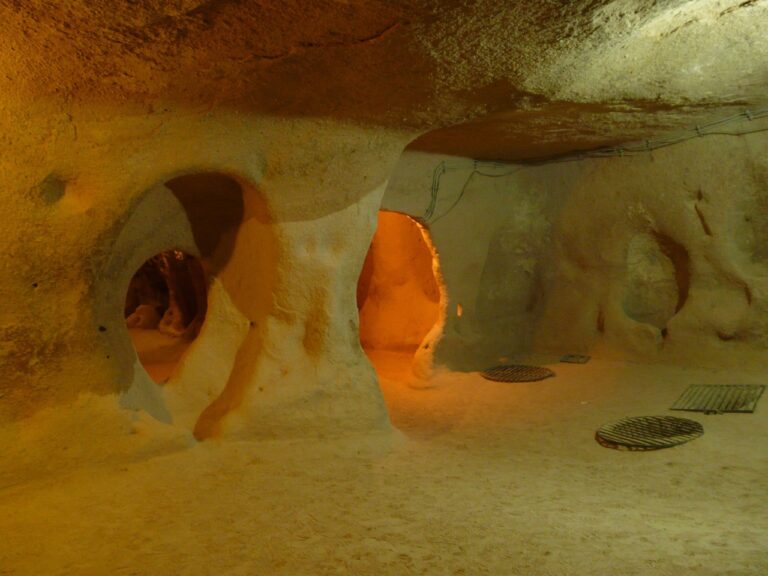
Beneath the rolling farmland of Cappadocia lies one of the most astonishing creations of the ancient world: Derinkuyu, an underground city carved…

Visiting Termessos: Tickets, Hours, and Tips
Termessos is the wildest of Turkey's great ancient cities, a Pisidian stronghold built high in the Taurus mountains above Antalya, surrounded by…

Visiting Ani Ruins: Tickets, Hours, and Tips
Ani is one of the most atmospheric archaeological sites in Turkey, a walled ghost city of cathedrals and mosques on the remote…