Turkish society runs on a subtle system of respect that shapes every interaction, from greeting a shopkeeper to how a family dinner is served. Understanding these hierarchies transforms your travels, because Turks read courtesy as a form of intelligence and are remarkably warm to visitors who try. The rules are not written anywhere, yet everyone follows them instinctively: age commands respect, guests are treated like royalty, and hospitality is a matter of family honor. This guide unpacks the layers of Turkish social order so you can move through the country with confidence.
The Foundations of Turkish Social Order
Turkey is a society built on relationships rather than rules. The family is the center of social life, and beyond it stands a web of neighbors, colleagues, and friends who form an extended network of trust. Your position in this network matters more than your job title, and Turks invest heavily in maintaining the bonds that hold it together.
The roots of this order reach back through Ottoman traditions, where rank, age, and learning carried clear privileges. Modern Turkey has changed enormously, but the reflexes of respect remain. You will see them in how people defer to the eldest person in the room, in the formal greetings between strangers, and in the care taken never to embarrass anyone publicly.
The practical lesson is simple: assume respect costs nothing and wins everything. Greet people warmly, accept the tea you are offered, and treat every interaction as the start of a relationship rather than a transaction.
Age: The First Rank
Age is the most reliable measure of status in Turkish society, and it trumps almost every other factor. An elderly shopkeeper commands more deference than a young professional, and older people are always served first, seated first, and addressed with the formal you. This respect reflects a genuine belief that life experience carries wisdom.
You will notice the pattern everywhere. On public transport, seats are offered to elders without hesitation. In homes, the oldest person gets the best place at the table and is served first. At gatherings, younger people stand when an elder enters the room and rarely interrupt an older speaker.
As a guest, mirror these instincts. Let older people go ahead of you in queues, offer your seat, and use the respectful forms of Turkish. The smallest gesture of deference to age earns disproportionate goodwill.

Family: The Core of the Hierarchy
The extended family is the beating heart of Turkish social structure. Grandparents, parents, children, aunts, uncles, and cousins form a tight unit that shares meals, celebrations, finances, and decisions. When a Turk says family, they mean this whole network, and its opinions carry enormous weight in every aspect of life.
This family unit is also the source of social standing. A family’s reputation and history open doors or close them, and Turks are careful to behave in ways that honor their relatives. A family gathering is a serious occasion with its own etiquette of seating, serving, and conversation.
If you are invited to a home, you are being admitted into this inner circle. Bring a small gift, greet every family member in turn, and praise the cooking. Your respect for the family structure will be returned with hospitality you will remember for years.
Education and Profession as Status Markers
Alongside age and family, education and profession shape how Turks place you in the social order. A university degree commands respect, and professions such as medicine, law, and teaching carry particular prestige. When Turks meet someone new, asking about work is a way of locating you within the social map.
The honor attached to a profession is about service as much as income. Teachers, doctors, and public servants are respected for their contribution to society, and people who work with their hands are valued for their skill. Turks take pride in honest work well done.
Speak about your own work with dignity, whatever it is, and show genuine interest in what your Turkish counterparts do. Respect for work is a language everyone in Turkey speaks.

The Etiquette of Greeting
Greetings are where Turkish hierarchy becomes visible in the first seconds of contact. Between men, a firm handshake is standard, often with the left hand on the other person’s heart or forearm. Between a man and a woman, the woman usually extends her hand first; if she does not, the man places his hand on his chest and nods respectfully.
The verbal forms matter as much as the gestures. The formal greeting is Merhaba, answered with Merhaba, while the religious greeting Selamun aleykum receives the reply Aleykum selam. When you meet someone older or of higher status, you greet them first, and when you enter a room, you greet the eldest person present before circulating.
Turkish greetings are warmer than many visitors expect. Do not rush the exchange, ask after the other person’s wellbeing in return, and match the warmth you receive.
Hospitality: The Guest Is King
Turkish hospitality is legendary because the guest occupies the highest rank in the domestic hierarchy. The word for guest, misafir, carries almost sacred weight, and the saying Misafir kismettir means a guest is a gift of fate. When you enter a Turkish home, you are an honored presence to be served.
The rituals are predictable and generous. Tea arrives within minutes, and the host will press a second glass even after you politely refuse. Food is placed before you in abundance, and the best portions are pushed your way. Refusing too firmly can cause genuine offense, so accept with visible pleasure and praise the spread.
The guest has duties in return: bring a small gift, remove your shoes at the door, and never rush your departure. Treat the ritual as a ceremony of mutual honor, and doors will open throughout Turkey.

Titles and Forms of Address
Turkish speech builds respect directly into its grammar. The second person has two forms: the informal sen and the formal siz, and choosing correctly is a matter of social navigation. Use siz with strangers, elders, and anyone in authority, and switch to sen only when the other person invites the intimacy.
Titles follow names in daily speech. Bey after a man’s first name and Hanim after a woman’s first name are the standard respectful forms, so you will hear Ahmet Bey and Ayse Hanim constantly. Professional titles carry the same devotion: Doktor, Hoca for teachers, Müdür for managers.
The safe path for a foreigner is simple: use siz, attach Bey or Hanim to first names, and let Turks set the pace for moving to first-name informality. When a taxi driver calls you abi or abla, brother or sister, it is affection, not disrespect.
Body Language and Personal Space
Turkish body language is expressive and warm, and reading it correctly prevents misunderstandings. Eye contact is expected during conversation and signals sincerity. Hand gestures are frequent, and a head tilt with a clicking tongue sound signals no.
Personal space is smaller than in Northern Europe or North America, and physical warmth is normal between friends. Men may walk arm in arm, women may greet with kisses on both cheeks, and patting a friend’s shoulder is common. Boundaries exist too: the soles of the feet should never point at another person, and the head is considered private.
The most important gesture is the hand on the heart. When you thank someone sincerely or accept a favor, placing your hand over your heart communicates genuine warmth. It costs nothing and is understood everywhere in Turkey.
Hierarchy at Work and in Public Life
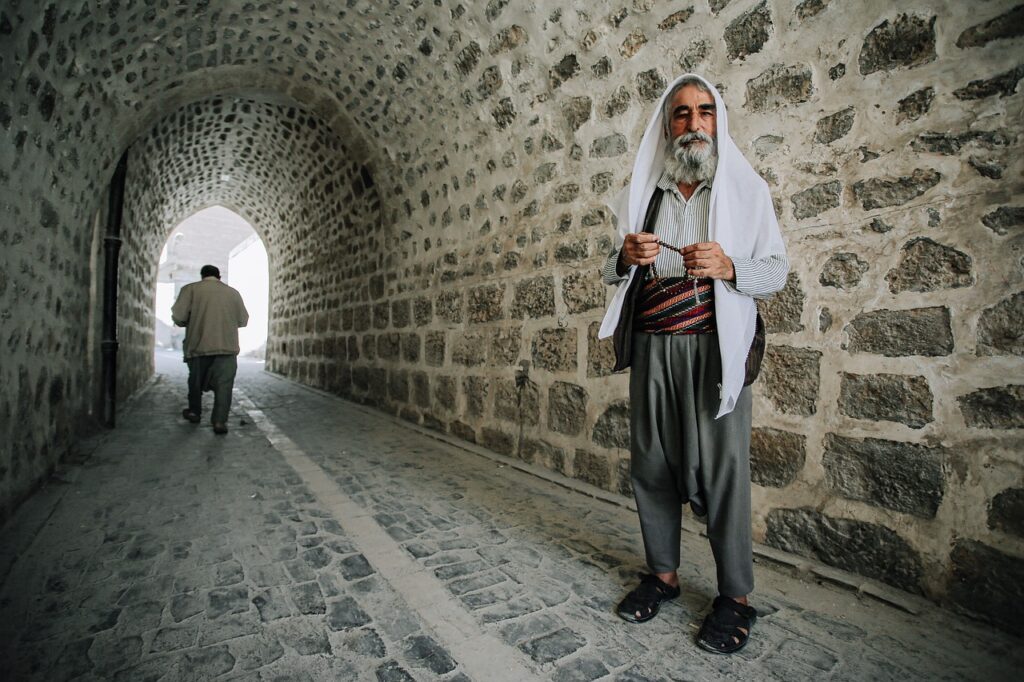
The workplace mirrors the wider social order, with visible deference to seniority and title. Decisions flow from the top, and challenging a superior directly is considered rude; the polite path is to express views respectfully and let the senior person decide. Meetings often begin with personal conversation, because Turks believe business works best between people who know each other.
Public life shows the same patterns. In queues, elders and pregnant women are commonly invited to move ahead, and young people offer seats to those who need them. When you enter a shop or office, the senior person is addressed first even if a junior employee stands at the counter.
As a visitor, your best approach is patience and observation. Let the senior person speak first, use titles generously, and never be the first to leave a gathering.
Navigating the Hierarchy as a Foreigner
The good news is that foreigners occupy a special place in Turkish social logic: you are a guest of the whole country, and Turks extend the hospitality of the home to the entire nation. Mistakes in etiquette are forgiven with a smile, and genuine attempts to honor the hierarchy are rewarded with remarkable warmth.
Your first move should be humility. Admit when you do not know the custom, ask how to greet properly, and let your Turkish hosts guide you. Your second move should be participation: stand when elders enter, accept the tea, praise the cooking, and express thanks with a hand on your heart.
Remember that the hierarchy is not about putting you in your place; it is about keeping everyone in their place of honor. Play your part in this dance of respect, and Turkey will receive you as it receives its most cherished guests.
Frequently asked questions
Is it rude to address older people by their first name in Turkey?
Using the formal siz and adding Bey or Hanim to a first name is always safe with people older than you. Turks often use first names with titles rather than surnames, so Ahmet Bey is the respectful standard. Wait for an older person to invite the informal sen before switching, and when in doubt, stay formal.
Do I have to accept every offer of tea or food?
The first offer should be accepted, because refusing it reads as rejecting the host’s hospitality. After that, a polite no with a hand on the heart is understood and accepted. A common trick is to accept the glass and sip it slowly; leaving it mostly full signals you are satisfied without offending anyone.
How should I greet a Turkish woman I have just met?
Let the woman extend her hand first. If she does not offer it, place your hand on your chest and nod with a smile instead of reaching out. This gesture is polite, never awkward, and it is the standard way Turkish men greet women in formal settings. Follow her lead in every subsequent interaction.

All Over Information
The All Over Information editorial team researches and writes practical English-language guides to Turkey. Facts are checked against official and local sources before publication, prices are published as dated ranges rather than quotes, and guides are revised when things change. We accept no sponsored posts, paid placements or paid links.
More guides like this

Understanding Rumi’s Legacy in Turkey
Rumi, the great poet and mystic of the thirteenth century, is one of the most beloved figures in Turkish culture, and his…
Understanding Religious Diversity in Turkey
Turkey is often described as a Muslim country, and in many ways it is, but that description hides a far richer reality.

Turkish Football Fan Culture Explained for Foreigners
If you are planning to experience football in Turkey, you are about to discover something far more intense than a typical match…

Turkish Wedding Traditions Explained for Foreigners
If you spend any time in Turkey, you will probably be invited to a wedding. Turkish weddings are the great celebrations of…
Understanding the Ottoman Tulip Era: A Beginner’s Guide
Few chapters of Ottoman history are as charming, and as confusing, as the Tulip Era. It lasted barely a dozen years, it…

Understanding Turkish Restaurant Etiquette
Dining in Turkey is about far more than the food. Meals are social events, built on generosity, sharing, and hospitality, and the…