No symbol of daily Turkey is more universal than the tulip-shaped glass of tea. It arrives on your table within moments of sitting down anywhere, from a mountain village to a corporate office. Tea is not a drink in Turkey; it is the social glue of the nation. This guide explains how tea became the national drink, what the rituals around it mean, how it organizes Turkish daily life, and what visitors should know to enjoy it like a local.
The National Drink
Turkey leads the world in tea consumption per person, and the numbers tell only part of the story. Tea appears at breakfast, after every meal, in every meeting, and at every social gathering. The question is never whether tea will be served, only when the next glass will arrive.
The drink crosses every boundary in Turkish society. The wealthy and the worker, the conservative and the secular, the villager and the city dweller all share the same glass, the same brewing style, and the same habits. Tea is the great equalizer of Turkish life.
Its role is so central that the Turkish word for tea, “cay,” appears in dozens of everyday expressions. To say someone is “cay order” means they are about to need a new glass, and hospitality is measured partly in how quickly and how often the tea is refilled.
A Brief History: From Coffee to Tea
The tea story begins with coffee. For centuries, the Ottoman coffee house was the center of social life, and coffee was the empire’s celebrated drink. When coffee became expensive and difficult to obtain, especially during wartime shortages, the search for an alternative began.
Tea arrived in Anatolia from the East, and its cultivation was encouraged by the young republic in the twentieth century as a national project. The Black Sea coast of Turkey proved ideal, and the Rize region became the heart of Turkish tea growing.
The shift was swift and total. Coffee remained the ceremonial drink, served at weddings and special occasions, while tea conquered the everyday. By the mid-twentieth century, tea had become the true national drink, and it has never surrendered the throne.

The Tea Garden: A Social Institution
The tea garden, “cay bahcesi,” is one of Turkey’s most beloved institutions. It is an open-air or garden cafe where tea is served from morning until night, under trees, on terraces, and by the water. The tea garden is where Turks meet to talk, play backgammon, and watch the world pass.
Every Turkish town has its tea gardens, and each has its regulars. Older men gather for their daily card games, young people meet for dates and gossip, and families come on weekends. The tea garden is neutral ground, welcoming to everyone.
The tea garden is also the political parliament of the neighborhood. Conversations about everything, from local gossip to national politics, happen over endless glasses of tea. Many a business deal and many a marriage have been arranged in a tea garden.
The Ritual of Serving Tea
Turkish tea service is a ritual with its own rules. The tea is brewed strong in a double teapot: a large pot of water below, a small pot of concentrated tea above. The server pours a little strong tea and adds boiling water, adjusting the strength to the drinker’s taste.
The ratio matters. Turks ask for “acik” for light tea, “demli” for dark, strong tea, and “tavsan kani,” literally rabbit’s blood, for the deepest, reddest brew. The color of the tea is a subject of genuine connoisseurship.
The server carries the glasses on a tray, offering them first to guests and elders. The tea is always served hot, in a glass with its saucer and two sugar cubes, and the refill arrives without being asked. In a Turkish home, an empty tea glass is a silent request.

The Tulip Glass and Its Meaning
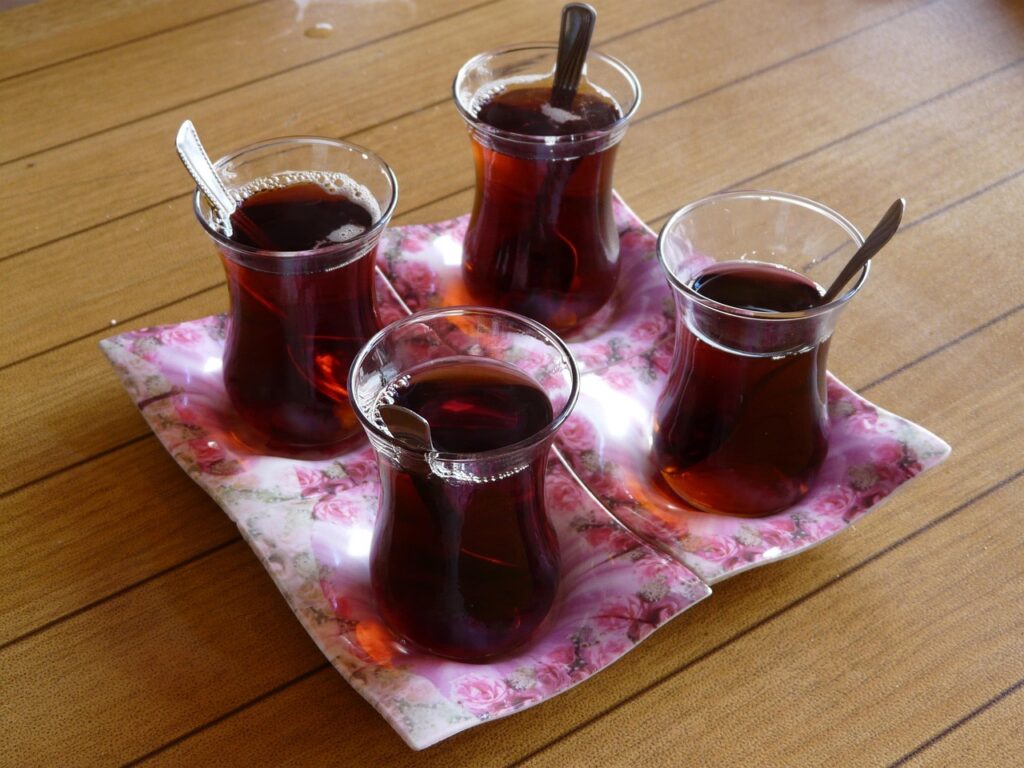
The tea is always served in the tulip-shaped glass, “ince belli,” which means slender-waisted. The shape is not decoration; it is function. The narrow waist lets the drinker hold the hot glass without burning the fingers, and the flared top releases the aroma.
The glass also shows the tea’s color, which matters as much as its taste. The deep red brew against the clear glass is part of the experience, and the color is the first thing a Turk evaluates in any tea. A pale glass is a failed tea.
The glass has become a symbol of the country itself, appearing in design, art, and souvenirs. The tiny ornamented glasses, each holding a modest portion, encourage the Turkish habit of drinking many glasses over a long conversation rather than one large cup.
Tea at Work and in the Market
Tea structures the Turkish working day. In offices, the tea boy or “cayci” circulates with a tray at regular intervals, and the entire staff pauses together for the ritual. Meetings without tea are almost unthinkable; the teapot is part of the agenda.
In the bazaar and the market, the shopkeeper offers tea to customers as a matter of course. A carpet shop, a spice shop, or a jewelry shop will present tea within seconds of your arrival, and the negotiation that follows is conducted over refills.
The offering of tea in commerce is both hospitality and strategy. The glass slows the encounter, creates goodwill, and gives both sides time to talk. Visitors who refuse tea outright may be seen as rushing; accepting it, even a sip, is the social key.

Tea in the Home
In the Turkish home, tea is the everyday expression of hospitality. A guest is offered tea within moments of arriving, and the host disappears to the kitchen to prepare it fresh. The tea is served with whatever the house has: biscuits, sweets, or a tray of treats.
The home tea ritual is particularly strong in the evening. Families gather after dinner for a long tea session, and the television, the conversation, and the tea glasses share the table. The evening tea is the daily family parliament.
When guests arrive, the tea keeps flowing as long as the visit lasts. The host watches the glasses and refills without being asked, and the guest signals the end of the visit partly by refusing further tea with thanks. The tea glass is the clock of Turkish visits.
Tea and Conversation
Tea is the companion of Turkish conversation, and the two are inseparable. The steam of the glass, the clink of the spoon, and the pause for a sip give conversations their rhythm. A Turk rarely speaks for long without reaching for the tea glass.
This is why tea is served at every serious conversation: marriage negotiations, business deals, family disputes, and love affairs. The tea creates the space in which words can flow, and the shared pot signals shared intent.
For visitors, this means that tea is the doorway to conversation. When a Turk offers you tea, the conversation is being offered with it. Accepting, and sipping slowly, is the most natural way to become part of the talk.
The Black Sea Connection
Turkish tea is a Black Sea story. The region’s rainy, humid climate and steep, green slopes are ideal for tea bushes, and the province of Rize is the center of the industry. The harvest season turns the hillsides into terraced gardens of green.
The tea economy supports hundreds of thousands of families along the coast. Small growers, processing plants, and the state tea institution shape the industry, and the regional identity is deeply bound to the crop. The Black Sea accent is the accent of Turkish tea.
The region’s love for its own product is famous. Travelers who visit the tea gardens of Rize find the freshest, most personal connection to the national drink, and the view of the misty plantations explains why Turks are so devoted to their tea.
Tea Etiquette for Visitors
For visitors, Turkish tea etiquette is simple and generous. Accept the tea when it is offered, in shops, homes, and offices. Hold the glass by the rim or the saucer, since the narrow waist keeps the glass hot, and stir the sugar gently with the small spoon.
You may specify your strength: “acik” for light, “demli” for strong. Sugar is offered as cubes, and you may take one or two. If you prefer no sugar, simply say so; no one will mind. Milk in tea is nearly unknown in Turkey, so the clear, black brew is the norm.
Finally, know that refusing tea is acceptable if you genuinely do not want it, but the refusal should be gentle, with thanks. The ritual of the glass is one of the warmest experiences in Turkey, and visitors who surrender to it will find themselves endlessly welcomed.
Frequently asked questions
Why do Turks drink so much tea?
Tea became Turkey’s national drink in the twentieth century, when the young republic promoted Black Sea cultivation and coffee became scarce and expensive. Today tea is the default beverage of every social occasion, from breakfast to business. Its constant presence, endless refills, and central role in conversation make consumption per person among the highest in the world.
What is a tea garden like?
A tea garden is an open-air or garden cafe where tea is served all day under trees, by the water, or on a terrace. It is a social institution where friends meet for backgammon, conversation, and people-watching, and where every town’s regulars gather. Tea gardens are welcoming, inexpensive, and open to everyone.
How is Turkish tea prepared?
Turkish tea is brewed in a double teapot: a large pot of boiling water below and a small pot of concentrated tea above, kept warm together. The server pours a small amount of the strong tea and tops it with water to the drinker’s preferred strength, from light “acik” to dark “demli.” It is served in tulip glasses with sugar cubes, without milk.

All Over Information
The All Over Information editorial team researches and writes practical English-language guides to Turkey. Facts are checked against official and local sources before publication, prices are published as dated ranges rather than quotes, and guides are revised when things change. We accept no sponsored posts, paid placements or paid links.
More guides like this

Gift-Giving Customs in Turkish Culture
Gift-giving in Turkey is a heartfelt ritual, and understanding it deepens every friendship you make here.

Understanding the Ancient Greek Ionia: A Beginner’s Guide
Ancient Greek Ionia is one of the most important regions you have never studied in detail, and its story is astonishing.

A Deep Dive into Ebru Marbling Art
Ebru, the Turkish art of marbling, looks like pure magic: paint that floats on water, then transfers to paper in patterns of…

A Deep Dive into Rumi’s Legacy in Turkey
Rumi's legacy in Turkey is one of the most remarkable survival stories in the history of religion and culture.

Understanding the Phrygian Civilization: A Beginner’s Guide
If you know the legend of King Midas and the riddle of the Gordian knot, you already know something of the Phrygians.

Turkish Etiquette: Dos and Don’ts for Visitors
Turkish culture runs on warmth, respect, and hospitality, and the rules visitors worry about are simpler than they fear.