Giresun is the hazelnut city of the Black Sea: a green, rain-washed town climbing from a busy harbor up a hillside crowned by an ancient castle. First-time visitors find a place that is compact, friendly and gloriously untouristed, where the old quarter’s timber houses look out over the sea and the mountains behind are covered in orchards. This guide covers how to reach Giresun, how to find your bearings, which sights matter, what to eat, and the practical details that make a first visit go smoothly.
Why Giresun Works for First-Timers
Giresun’s appeal is its scale and its authenticity. The town is small enough to walk in a day, but it packs a castle, an old quarter, a museum, an offshore island and one of the liveliest harbors on the Black Sea coast into that small space.
The geography is simple to grasp. The town climbs from the harbor up a hillside, with the castle on the heights, the old quarter around its foot, and the modern streets between. The sea is always downhill, the orchards always uphill, and the harbor is the social heart.
Few visitors from abroad pass through, which means the town feels entirely itself: markets full of local produce, tea gardens full of families, and none of the tourist infrastructure that can flatten other coastal towns. That authenticity is the real reason to come.
The town’s citizens are proud of its unhurried character, and the pace of life shows it: the tea gardens full at all hours, the market slow in the morning, the harbor busy with real work. It is a city that has not learned to perform for visitors.
Getting There and Arriving
Giresun sits on the Black Sea coast highway, midway between Samsun and Trabzon. Most visitors arrive by intercity bus along the coast road, which runs through one green valley after another; the journey itself is part of the pleasure of the region.
The nearest airports are at Ordu-Giresun, about an hour away, and Trabzon and Samsun, further out. From the airport or bus station, taxis and dolmuşes make the short trip into town, and the center is compact enough to explore on foot.
The old town and the harbor are the natural anchors of any visit. Arrive with daylight to spare if you can, because the first sight of the castle hill rising above the water, with the harbor below it, sets the scene for everything that follows.
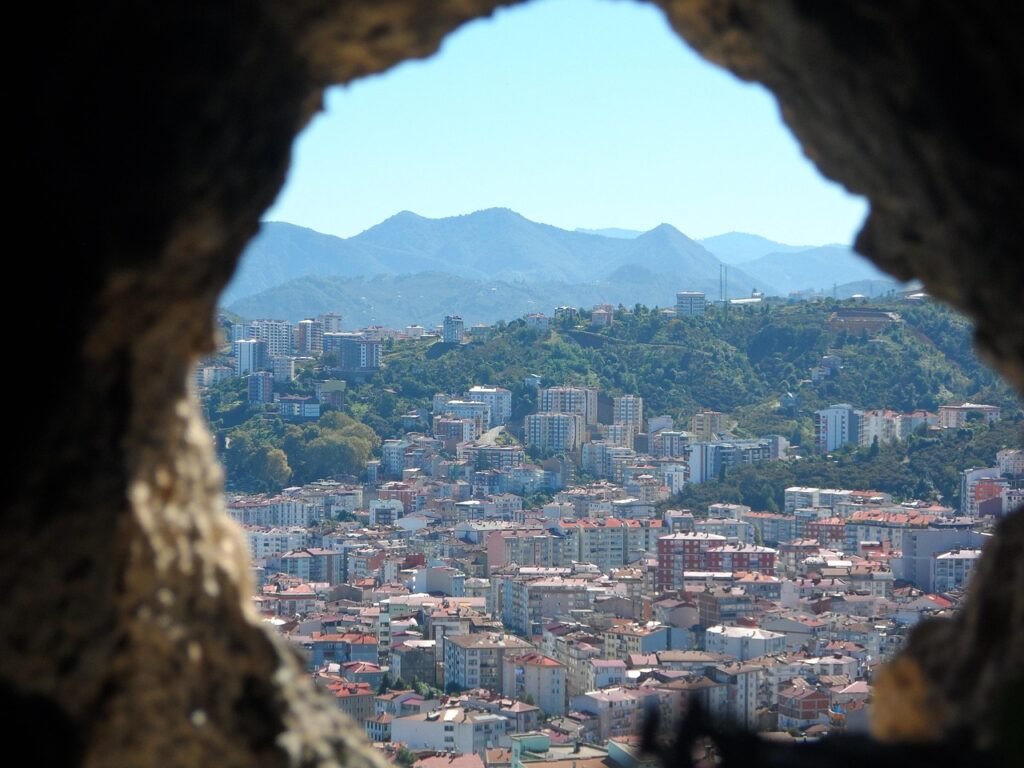
Giresun Castle and the Views
The castle of Giresun crowns the hill at the center of the town, its walls and towers rising from the green slope. The fortress dates back to antiquity, when the town was one of the Greek cities of the Pontic coast, and it was rebuilt by the Byzantines and the Ottomans.
The walk up from the old town takes about half an hour, through gardens and terraces that give widening views of the harbor, the town and the sea. From the upper walls you can see the offshore island, the mountains inland, and, on clear days, the whole curve of the coast.
The castle is the classic Giresun experience: a climb that ends in one of the great coastal panoramas of the Black Sea. Go in the late afternoon, when the light is golden and the harbor below begins to twinkle.
The Old Quarter: Zeytinlik and the Timber Houses
Below the castle, the old quarter of Zeytinlik climbs the hillside in a tangle of lanes lined with Black Sea timber houses. These houses, with their wooden frames, shingled roofs and carved details, are among the finest traditional architecture on the coast.
Some are restored, some are still homes, and a few have been turned into small museums and workshops. Walking the lanes, you will find tea gardens tucked between the houses, views opening suddenly over the sea, and a way of life that has changed slowly.
The quarter is at its best in the morning, when the light is soft and the lanes are quiet. Give yourself an unhurried hour or two, and let the streets choose your route; getting lost here is the point.

Giresun Island and the Harbor
Out in the bay, a short boat ride away, lies Giresun Island, the only inhabited island of the Turkish Black Sea coast. Known in antiquity as Aretias, it carries the ruins of a monastery and the small church of Saint George, and its story is woven into the town’s ancient past.
Boat trips to the island run from the harbor in the summer months, and the crossing gives you the town from the sea, with the castle and the green hills behind it. On the island you can walk the ruins and the shore, and in spring the island is a stopover for migrating birds.
The harbor itself is the everyday heart of Giresun: fishing boats, tea shops, and the ferries and freighters of a working port. Watching the boats come and go, with the castle overhead, is one of the simple pleasures of the town.
The boatmen who run the island trips are part of the town’s life, and a trip with them, with the town receding astern, is the best way to see the whole harbor. Ask about the island’s birds; the boatmen know them all.
The Museum and the Mansions of the Town
Giresun’s museum occupies the old Gogora Church, a nineteenth-century Greek Orthodox building in the center of town, and its collections tell the story of the region from antiquity to the present. The setting, a church with its stone walls and pointed arches, gives the displays an atmosphere no modern building could match.
The exhibits include the archaeology of the Pontic coast, the coins and sculpture of the ancient cities, and the ethnography of the region: the costumes, tools and household objects of the Black Sea.
Nearby, the restored mansion of Hacı Hıseyin and the town’s other historic houses show how the wealthy merchants of Giresun lived in the Ottoman centuries. Together with the museum, they give you the town’s story in a single morning.

Hazelnuts: The Heart of the City
Giresun is the hazelnut capital of Turkey, and the town’s whole economy and culture turn on the small brown nut that grows on the hills behind it. The orchards cover the slopes for miles, and in August and September the harvest dominates everything.
The hazelnut market in the town is the center of the trade, and in season you will see sacks and boxes of nuts everywhere, from the harbor to the markets. The local eating culture follows: hazelnut sweets, hazelnut butter, and hazelnuts in everything from pastries to breakfast.
For the visitor, the essential experience is simple: buy a bag of the fresh nuts, walk along the harbor, and taste the product that built the town. The annual hazelnut festival in autumn celebrates the harvest with markets, music and events along the waterfront.
The orchards are at their most beautiful in the weeks before the harvest, when the rows of trees run green to the skyline. In September the roadsides fill with the drying trays of the crop, and the whole valley smells of the nut.
Food, Tea and the Black Sea Kitchen
The cooking of Giresun is the cooking of the eastern Black Sea: anchovies in every form, the dark green leaves of black cabbage, corn breads and the melted-butter cornmeal dishes of the region. The harbor restaurants grill the day’s fish, and the lokantas serve home-style meals at lunch.
Breakfast here is a feast of cheese, honey, corn bread and, in season, hazelnuts. The tea gardens, scattered through the old quarter and along the shore, are the social heart of the town, and the local tea comes from the gardens of the region.
The essential rule is to eat where the locals eat: the fish restaurants at the harbor, the breakfast places in the old quarter, and the pastry shops that turn out the region’s sweet breads. The food of Giresun is honest, seasonal and deeply satisfying.

Practical Tips for a First Visit
The Black Sea climate means rain can arrive at any time, so pack a light waterproof layer even in summer. The best seasons are late spring and early autumn, when the weather is settled and the countryside is at its greenest.
Wear comfortable shoes for the climb to the castle and the lanes of the old quarter. The town is hilly, and the cobbles and steps are part of the experience, but they demand proper footwear.
Plan two nights if you can. Giresun deserves a full day of its own, and a second day allows a trip to the mountain plateaus behind the coast, where the summer pastures and their festivals are among the great experiences of the region.
The town is small enough that a map is barely necessary, but the hills demand good shoes and the rain demands a layer. Keep the plateaus in mind: the cool of the heights is a short drive away when the coast warms.
Frequently asked questions
How many days should I spend in Giresun?
Two days is the right amount for a first visit: one day for the castle, the old quarter, the museum and the harbor, and a second for a boat trip to the island or an excursion to the mountain plateaus behind the town. Travelers in a hurry can see the essentials in a single busy day.
Is Giresun a good base for exploring the Black Sea coast?
Yes. Giresun sits on the main coastal highway, with regular buses east toward Trabzon and west toward Samsun and Ordu. The town is quieter and cheaper than the bigger coastal cities, and its position makes it an easy base for both the coast and the mountain plateaus inland.
When is the best time to visit Giresun?
Late spring, in May and June, brings green hills and settled weather, and early autumn, in September and October, brings the hazelnut harvest and the town’s hazelnut festival. Summers are mild and pleasant, though rain is always possible; winters are cool and wet, with the plateaus under snow.

All Over Information
The All Over Information editorial team researches and writes practical English-language guides to Turkey. Facts are checked against official and local sources before publication, prices are published as dated ranges rather than quotes, and guides are revised when things change. We accept no sponsored posts, paid placements or paid links.
More guides like this
History and Culture of Giresun
Giresun has been a city of the Black Sea coast for more than two thousand years, and its history is written in…

Top Things to Do in Giresun
Giresun is a small city with an outsized collection of experiences: a castle on a green hill, an island in the bay,…
Day Trip Ideas from Giresun
Giresun sits at the meeting point of two worlds: the Black Sea coast, with its harbors, castles and fishing towns, and the…

Best Local Food in Giresun
The cooking of Giresun is the cooking of the eastern Black Sea, a region that eats with the seasons and treats the…
Where to Stay in Giresun
Giresun is not a big tourist town, but it offers a genuine range of places to sleep, from simple city hotels to…