You do not need to travel to Şanlıurfa to taste its famous kebab, though you should certainly plan that trip too. With good lamb, tail fat, a little patience, and a grill or a very hot oven, you can produce an Urfa kebab at home that honors the tradition. This guide walks you through every step, from the butcher’s choice to the final pour of butter, with honest advice on what can be simplified and what should not be. The recipe works on a charcoal grill, a gas grill, or a hot pan, and every step is explained so that the tradition survives the journey to your kitchen.
What You Need Before You Start
The authentic recipe needs few ingredients, which means each one matters. You will need lamb, preferably from the leg or shoulder, and tail fat from a fat-tailed sheep if you can find it. If tail fat is unavailable, ask your butcher for firm lamb fat from around the kidney.
For seasoning you need fine salt and a mild red pepper, ideally the flaky dried Turkish pepper sold as pul biber in its gentle form. Keep the spice list short; the point of Urfa kebab is that the lamb speaks for itself.
The tools are simple: a sharp knife, a heavy chopping board, a large bowl, and something to cook on. Wide metal skewers are ideal, but you can shape the meat by hand into long patties and grill them directly.
Choosing the Meat and the Fat
Meat quality decides the outcome more than anything else you do. Choose lamb that is fresh and well marbled, and ask your butcher for a cut with a good balance of lean meat and internal fat. The shoulder and the leg are the traditional choices.
The fat is the second decision. Tail fat, the soft white fat of the fat-tailed sheep, melts at a low temperature and gives the kebab its signature moisture and richness. It should be firm, white, and sweet-smelling, chopped into small dice before mixing.
If your butcher cannot source tail fat, use the firmest lamb fat you can find, and be generous with it. A lean kebab is a dry kebab, and the whole technique depends on fat that melts slowly as the meat cooks.

Mincing by Hand
The authentic method minces the meat with a zırh, a heavy curved blade, striking the meat repeatedly until it becomes a fine paste. The motion folds the fibers rather than tearing them, which is why the hand-minced kebab holds together so beautifully.
At home, you can approximate the result in two ways. The first is the knife method: chop the meat and the fat together very finely by hand, which takes time but produces an excellent texture. The second is a coarse mince through a hand-cranked grinder, using the largest plate.
Whatever you choose, avoid over-processing. A food processor turns lamb into a smooth purée, which makes the kebab dense and tough. You want a fine, slightly tacky mince, not a paste that has lost all its texture.
The Seasoning: Salt and Gentle Spice
Now the seasoning, which is where Urfa kebab reveals its gentle character. Add fine salt at about a teaspoon per pound of meat, then a modest amount of mild red pepper flakes. You can also add a pinch of cumin if you like, though purists often skip it.
The trick is restraint. Urfa kebab is the mild sibling of Adana kebab, and the seasoning should frame the lamb rather than dominate it. The butter finish will add richness later, so the raw mixture needs only enough flavor to stand on its own.
Mix the seasoning into the meat with your hands, and taste a small test portion cooked quickly in a pan before you commit. This is what the masters do; they season, test, adjust, and only then shape the skewers.
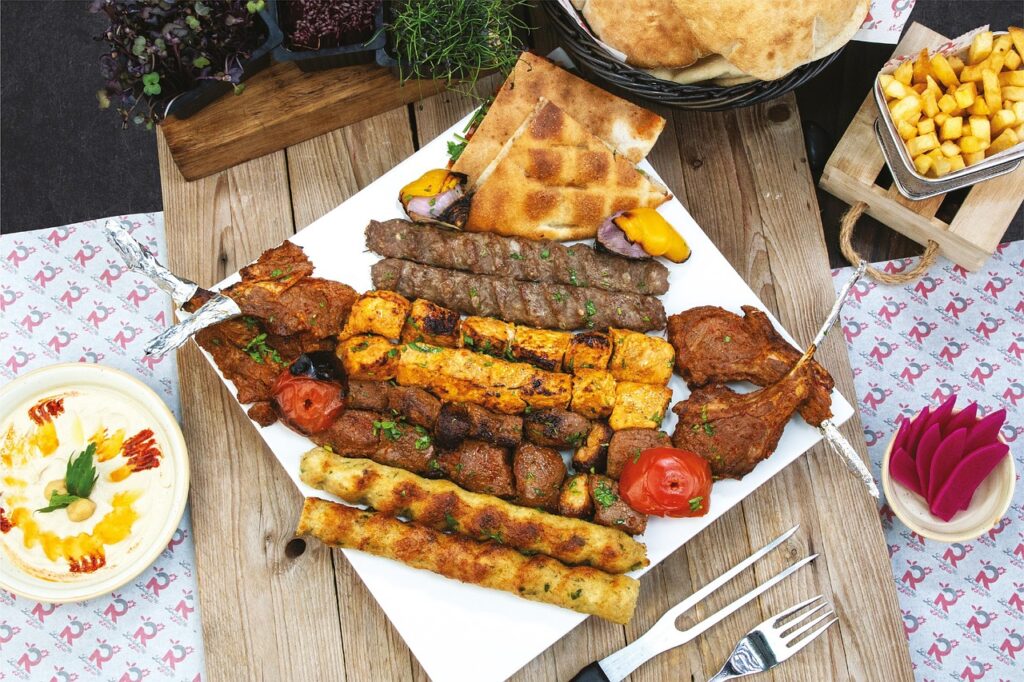
Kneading: The Most Important Step
Kneading is the step that separates a good kebab from a great one. Work the seasoned mince with your hands, folding it, pressing it, and turning it, for at least ten minutes. The goal is to develop the proteins so the mixture becomes sticky and cohesive.
You will feel the change as you work. The crumbly mince gradually turns into a smooth, elastic mass that clings to itself and to your hands. This binding is what allows the kebab to hold its shape on the skewer and to stay juicy through the fire.
When the mixture sticks together firmly and springs back when pressed, it is ready. Cover the bowl and let it rest in the refrigerator for at least an hour; the rest firms the mixture and lets the seasoning settle into the meat.
Shaping the Skewers
The authentic kebab is pressed along the length of a wide, flat skewer, about a finger’s thickness in height and slightly wider than the blade. Wet your hands so the mixture does not stick, then press the meat firmly onto the skewer so it grips the metal.
If you do not have wide skewers, shape the meat into long, flat patties about the size of your palm, like a wide sausage pressed thin. The flat shape matters more than the skewer itself, because it gives the surface area that chars in the fire.
Smooth the surface with wet fingers, sealing any cracks, and make the edges slightly thinner than the middle so the kebab cooks evenly. You can prepare the skewers a few hours ahead and keep them covered in the refrigerator.

The Fire: Charcoal and Alternatives
The traditional fire is charcoal, burned down until the coals glow with a light gray ash. Lay the skewers close above the coals, where the heat is intense but not licking, and you will get the charred surface and smoky flavor that define the dish.
If you are cooking indoors, a cast-iron grill pan or a ridged skillet is the best substitute. Heat it until it smokes, then cook the kebabs quickly over high heat. You will lose some smokiness, but you will keep the char and the juicy interior.
An outdoor gas grill also works. Crank it to its highest setting, and if you have a smoker box or a handful of soaked wood chips, add them for a touch of smoke. The goal is the same everywhere: fierce heat, fast cooking, and a charred, juicy result.
Cooking and Turning
Cook the kebab over the fiercest heat you can manage, and resist the urge to fiddle. The first side needs several minutes undisturbed, until the underside is deeply browned and releases from the grill without sticking. Then turn once, or twice at most.
Urfa kebab cooks quickly because it is minced and thin. Overcooking is the great sin: the interior should be just cooked, still juicy, with the fat rendered into the meat rather than dripping away. When the juices run clear and the surface is charred in patches, it is done.
If you are cooking on a grill pan indoors, work in small batches so the pan stays hot. Keep the cooked skewers loosely covered while you finish the rest, and do not stack them, or the steam will soften the char.
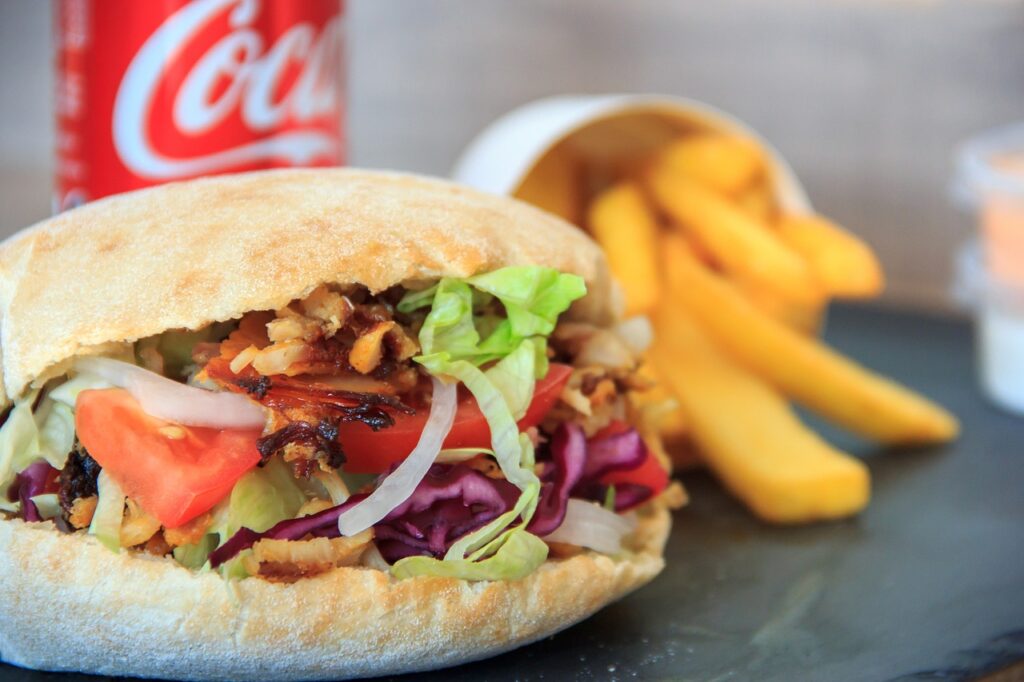
The Butter Finish and the Plate
The signature moment is the butter. Melt good butter in a small pan, then pour it over the hot kebab as soon as it comes off the fire. The butter sizzles on the charred surface and seeps into the meat, giving the kebab its glossy, rich finish.
Serve the kebab on warm flatbread so the juices and the butter soak into it. Add charred tomatoes and green peppers from the same fire, and make the classic onion salad: sliced red onion, a pinch of sumac, parsley, and a squeeze of lemon.
Eat immediately, with your hands, wrapping the kebab in bread with the onion salad. This is how it is eaten in Urfa, and the wrapping, rather than cutting, is part of the pleasure.
Troubleshooting and Serving Suggestions
If the kebab falls apart on the grill, the mixture was not kneaded enough or rested long enough. Next time, knead longer and chill the shaped skewers well before cooking, and press the meat more firmly around the skewer.
If the kebab is dry, the meat was too lean or the fire too low. Increase the fat, and make sure the heat is fierce enough to seal the surface quickly. Dryness is almost always a fat problem, not a cooking problem.
Serve the kebab with the classics: flatbread, charred tomato, onion salad, and a yogurt drink or a cold glass of şalgam if you want the full southeastern experience. Add a bowl of grilled peppers and a simple salad, and the home table will feel remarkably close to Urfa. The meal is meant to be shared, so put everything in the middle of the table and let everyone wrap their own kebabs; the conversation that follows is part of the recipe too.
Frequently asked questions
Can I make Urfa kebab without tail fat?
Yes, with one adjustment. Use the firmest lamb fat you can find, ideally from around the kidney, chopped fine and kneaded into the mince. The fat is essential for moisture, so do not skip it entirely; a lean kebab will dry out over high heat. Some home cooks add a little butter to the mixture as a partial substitute, though purists prefer pure lamb fat.
Do I really need to knead the meat for ten minutes?
Yes, the kneading is the step that makes the dish work. Working the minced meat develops its proteins until the mixture becomes sticky and cohesive, which lets the kebab hold its shape on the skewer and stay juicy in the fire. Skipping or shortening the kneading produces crumbly kebabs that fall apart and cook unevenly.
What if I do not have a charcoal grill?
Use the hottest method you have. A cast-iron grill pan or ridged skillet over high heat gives excellent results, and an outdoor gas grill on its highest setting works well too. You will miss a little of the charcoal smokiness, but the char, the juice, and the butter finish will still deliver the essential Urfa kebab experience.

All Over Information
The All Over Information editorial team researches and writes practical English-language guides to Turkey. Facts are checked against official and local sources before publication, prices are published as dated ranges rather than quotes, and guides are revised when things change. We accept no sponsored posts, paid placements or paid links.
More guides like this

Where to Find the Best Pide in Turkey
Pide is baked in every city of Turkey, but the best versions come from the regions where the craft runs deepest.

Where to Find the Best Turkish Meze Platters in Turkey
The best meze platters in Turkey are found in the cities where the tradition runs deepest, and the search is one of…

Where to Find the Best Kofte in Turkey
The best kofte in Turkey is a moving target, because every province believes it holds the title and has the grills to…
The Ultimate Guide to Turkish Pilav
Pilav is the quiet backbone of the Turkish table. While the kebabs and the mezes get the attention, the bowl of perfectly…

The Ultimate Guide to Balik Ekmek (Fish Sandwich)
Balik ekmek, the Turkish fish sandwich, is the taste of the Bosphorus in its simplest form: a grilled mackerel fillet, a few…

Where to Find the Best Turkish Breakfast (Kahvalti) in Turkey
Every city in Turkey sets a breakfast table, but some tables are famous enough to be destinations.