Every summer, tens of thousands of travelers fly into the Mugla province and never see the city it is named after. They land at Bodrum or Dalaman, race toward the coast, and leave the inland capital to the locals. That is their loss. Mugla city is a quiet, pine-fringed town of whitewashed houses, a proud tobacco heritage, and some of the warmest hospitality in western Turkey. It is the perfect slow start to a coastal holiday, a place to watch the old town wake up over a long meze breakfast before any resort crowds appear.
This guide covers how to get here, where to sleep, what to see, and how to eat like a Mugla local.
Getting to Mugla
Mugla sits inland, roughly halfway between the Aegean and Mediterranean coasts. The nearest airports are Milas-Bodrum and Dalaman, each about an hour and a half away by road, and both are served by frequent domestic flights and seasonal international routes. Buses connect Mugla directly to Izmir, Ankara, Istanbul, and the coastal resorts, so you can arrive from anywhere in the country without changing buses.
Once in the city, most of the old town is walkable and easy to explore on foot. For the countryside, you can rent a car in town or use the regular minibuses that run to the nearby villages. A car is the better choice for day trips, because the best scenery lies in the hills around the city.
Where to Stay in Mugla
Accommodation in Mugla city is more about character than luxury. The most atmospheric option is the old town, where restored Ottoman-era houses with their distinctive overhanging upper floors have become small boutique hotels and guesthouses. Waking up in a cobbled lane and stepping straight into the historic quarter is the experience most visitors come for.
Modern hotels around Cumhuriyet Square and the main boulevards suit travelers who prefer convenience. For a longer stay, consider the village of Ula, a few minutes down the road, or the coastal town of Akyaka, about half an hour away, where the azure waters of Gokova Bay meet the forest. Book ahead in summer, when the city fills with families visiting from the coast.
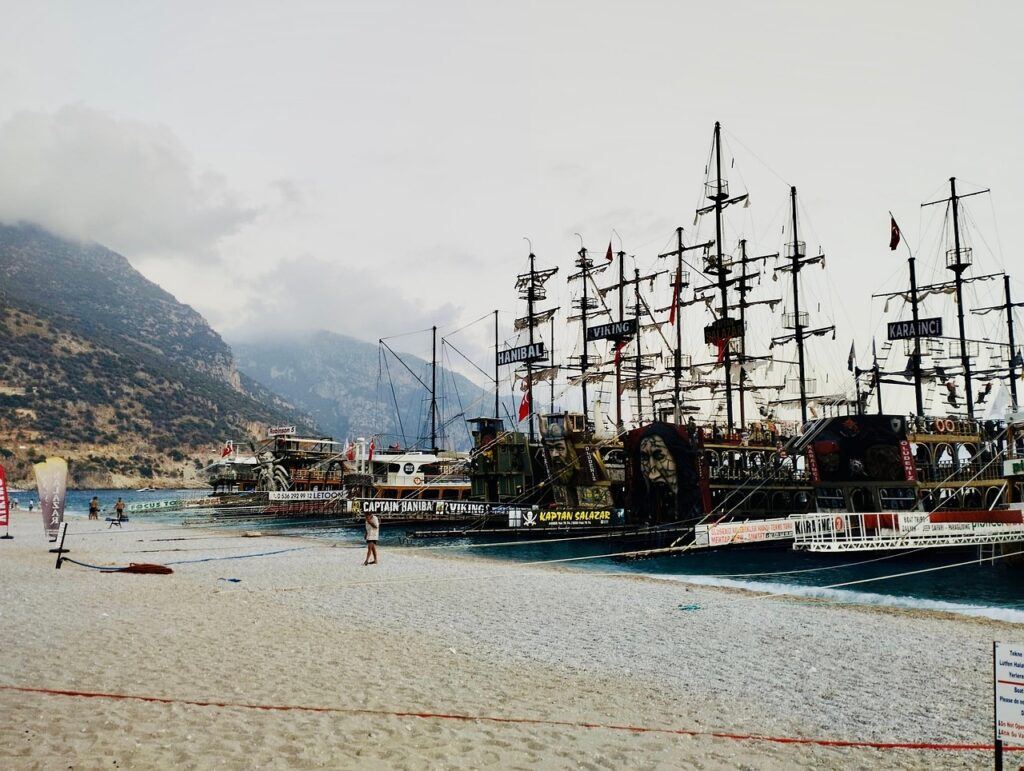
The Old Town’s Whitewashed Houses
The heart of Mugla is its old quarter, a maze of narrow lanes climbing the hillside below the ancient rock tombs. The houses here are the city’s signature: whitewashed walls, red-tiled roofs, and wooden bay windows that lean out over the street, some of them centuries old. Many have been carefully restored, and the effect, especially in the late afternoon light, is like walking through an open-air museum.
Wander the lanes without a map and you will pass courtyards full of pomegranate trees, old fountains still running, and doorways framed with bougainvillea. Several of the restored houses now operate as guesthouses, cafes, and small museums, and their owners are usually delighted to talk about the building’s history. The best time to explore is early morning, when the streets are empty and the light is soft.
The Clock Tower and the Central Square
At the lower edge of the old town stands Mugla’s beloved clock tower, a square stone structure that has marked time in the city center since the late nineteenth century. It anchors the main square, where locals gather for tea, students pass through on their way to lectures, and the daily rhythm of the town plays out around you. The tower is at its most photogenic at dusk, when its lights come on against the darkening hills.
Around the square you will find the city’s modern face: cafes, banks, shops, and the pedestrian street leading toward the Arasta bazaar. This is also the best spot for people-watching, since Mugla is a university city with a lively, youthful energy. Grab a seat at an open-air tea garden, order a cay, and let the town come to you.

Ulu Cami and the Arasta Bazaar
A short walk from the square brings you to Ulu Cami, the city’s grand mosque, whose origins reach back to the fourteenth century, when Mugla was the seat of the Menteşe principality. The building has been restored many times, but the sense of age is unmistakable, and the quiet courtyard offers a cool retreat on hot afternoons. Visitors are welcome outside of prayer times, provided they dress modestly.
Just downhill lies the Arasta, Mugla’s old covered bazaar, a long market street of small shops that has served the town for generations. Here you will find spice sellers, tea and coffee merchants, textile shops, and stalls selling the region’s olive oil, honey, and dried goods. It is a working market rather than a tourist attraction, which is exactly its charm. Browse slowly and you will come away with the best souvenirs in the province.
The Rock Tombs Above the City
Above the old town, cut into the cliff face that overlooks the rooftops, you can see the openings of ancient rock tombs. These burial chambers, carved into the living rock more than two thousand years ago, belonged to the people who lived here before the modern city existed, and they give Mugla one of its most distinctive silhouettes.
The climb up to the tombs is short but steep, and the reward is a panoramic view over the red-tiled roofs, the clock tower, and the pine-covered hills rolling away to the horizon. The area around the tombs is also pleasant for a picnic, with benches and shade. Go in the late afternoon, when the sun lights the cliff face, and you will understand why the ancients chose this spot to rest forever.

The Pine Forests and the Countryside
Mugla is one of the most heavily forested provinces in Turkey, and the city is wrapped in a green belt of pine that defines its character. Just minutes from the center, forest roads lead to picnic areas, viewpoints, and high plateaus where the air is noticeably cooler in summer. The Karabaglar plateau, above the city, is a favorite local escape with its open meadows and traditional plateau houses.
The countryside also hides villages where life has changed little in generations: stone houses, walnut trees, and terraced fields of tobacco, the crop that made this region wealthy. Driving these back roads is one of the great pleasures of a Mugla visit. There is no agenda needed; simply follow a road into the hills, stop where the view is good, and let the silence of the pines do the rest.
Tobacco Farming and Local Life
Tobacco has shaped Mugla more than anything else. For more than a century, the distinctive local leaf, grown on small family plots across the province, was the backbone of the economy, and the city still feels like a tobacco town. In summer the broad leaves are strung up to dry on lines outside houses and barns, and the old warehouses speak to a time when Mugla’s name was known in markets across the world.
The tobacco heritage also shaped the town’s social life, since the harvest brought families and neighbors together in a rhythm that still echoes today. The industry has declined, but the pride remains. Ask about the tobacco days in the tea gardens, and you will likely get a story or two with your glass.
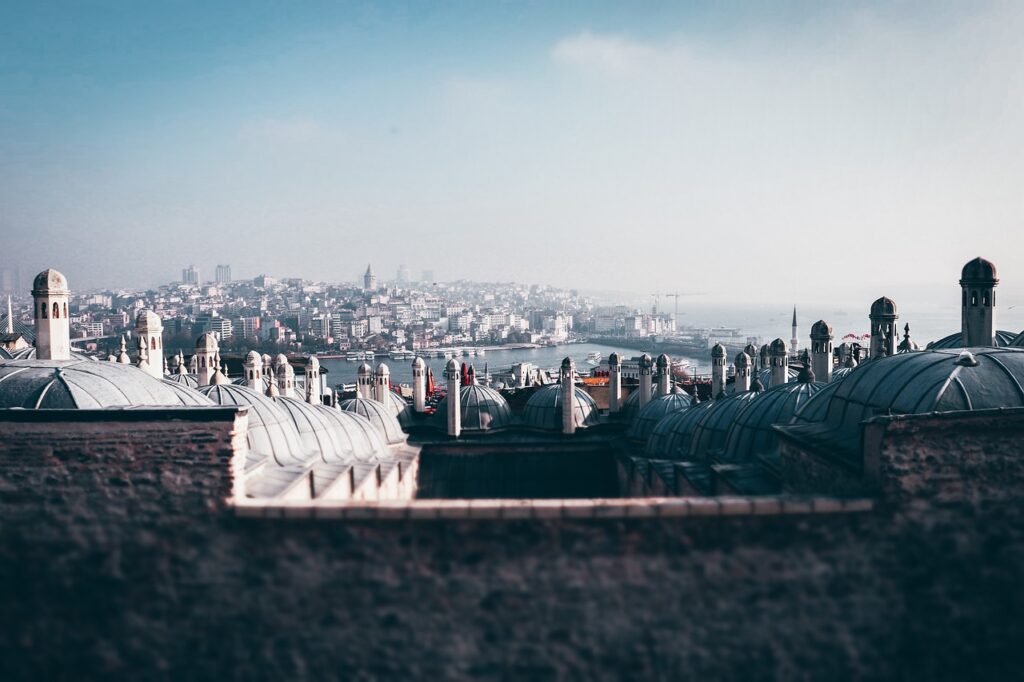
The Mugla Table: Meze and Kabak Çiçeği Dolması
Mugla’s cuisine is the cuisine of the olive grove and the vegetable garden, built around meze. A proper Mugla meze spread might include wild greens dressed with the region’s peppery olive oil, yogurt with herbs and garlic, stuffed vine leaves, and small plates of cheese and walnuts, all made for sharing. The flavors are simple, fresh, and deeply satisfying.
The dish every visitor should try is kabak çiçeği dolması, zucchini flowers stuffed with a fragrant rice filling and cooked in olive oil. Served cool with a squeeze of lemon, it is the taste of a Mugla summer. You will find it on the menus of the lokantas around the old town, especially in the warm months. Pair your meal with ayran or local tea, and finish with whatever fruit is in season.
Day Trips into the Province
Mugla’s greatest gift to the traveler is its location at the crossroads of the province. Bodrum, Marmaris, Fethiye, and Datca are all within reach for a day trip, and each offers a completely different coastline. The turquoise lagoon of Akyaka and the boats of Gokova Bay are barely half an hour away, while the ancient ruins of Kaunos and the famous turtle beach at Dalyan, near Ortaca, are about ninety minutes south.
Two or three nights let you explore the coast in day trips and return each evening to the calm of the old town. If you only have a single day, head for Dalyan and Ortaca, where river, ruins, and beach combine in one unforgettable outing.
Practical Tips for First-Timers
Turkish is the language of daily life, but you will manage fine with English in hotels, museums, and the main restaurants. Carry cash for the bazaar and the small lokantas, where cards are not always accepted. Summer is hot and dry, so bring sun protection and water, while spring and autumn are mild and green.
Dress modestly for the mosque, remove your shoes at the entrance, and avoid visiting during prayer times. The city is safe and easy to navigate, and the locals are famously hospitable, so do not hesitate to ask for directions. Finally, slow down. Mugla is not a place to tick off sights; it is a place to sit, sip tea, and let the pine-scented air do its work.
Frequently asked questions
Is Mugla worth visiting if I am already heading to Bodrum or Marmaris?
Yes, and it makes a perfect complement to the coast. Mugla gives you something the resorts cannot: a real inland town with a historic old quarter, rock tombs, pine forests, and local life untouched by mass tourism. It is also a practical base for exploring the whole province. Even a single afternoon here, wandering the lanes and tasting the meze, adds depth to a coastal holiday.
How much time do I need in Mugla?
One full day lets you see the old town, the clock tower, the Arasta bazaar, and the rock tombs at a relaxed pace. Two days allow you to add a countryside drive into the pine forests or a day trip to the coast. If you want to use Mugla as a base for exploring Bodrum, Marmaris, Fethiye, and Datca, plan at least three nights.
When is the best time to visit Mugla?
Spring, from April to June, is ideal: the hills are green, the wildflowers are out, and the weather is warm without being hot. Autumn, especially September and October, is nearly as pleasant, with the tobacco harvest in full swing and the summer crowds gone. Winters are mild but rainy, and summers are hot and dry, though the city’s altitude makes it cooler than the coast.

All Over Information
The All Over Information editorial team researches and writes practical English-language guides to Turkey. Facts are checked against official and local sources before publication, prices are published as dated ranges rather than quotes, and guides are revised when things change. We accept no sponsored posts, paid placements or paid links.
More guides like this

Day Trip Ideas from Mugla
Mugla's inland position, often seen as a disadvantage, is actually its secret weapon.

Top Things to Do in Mugla
Mugla city rarely makes the coast-bound itinerary, and that is exactly why it rewards the curious traveler.
Best Local Food in Mugla
Mugla's kitchen belongs to the olive grove and the vegetable garden.

History and Culture of Mugla
Mugla has a way of being overlooked by history books even though it has been lived in for thousands of years.
Where to Stay in Mugla
Mugla is not a resort town, and that is precisely why staying here feels so different from a week on the coast.