Eyup is not Istanbul’s most famous food neighborhood, and that is precisely its appeal for the foodie who wants the real thing. The district’s kitchen was built to feed pilgrims, and it still does: kofte grills that have run for generations, lokantas full of home cooking, pastry shops with morning borek, and the old sweet traditions of the bazaar. This guide follows the flavors of Eyup from breakfast to bedtime, telling you what to eat and where the district eats it.
The Flavors of Eyup: An Introduction
Eyup’s food is the food of Istanbul’s working neighborhoods: robust, seasonal, and served without ceremony. The two forces that shape it are the mosque and the water, meaning grilled meats for the pilgrims and fresh fish for the shoreline.
Prices are local, portions are generous, and the cooking is honest. You will find none of the laminated menus and street touts of the tourist districts, and that is the point: the food here is for eating, not for selling.
For the foodie, the strategy is simple. Eat breakfast where the workers eat, lunch where the queues form, tea where the view is, and fish where the boats land. Follow the district’s own appetite and Eyup will feed you superbly.
Breakfast: The Long Table
The Turkish breakfast in Eyup is an event of small plates: white cheese, olives, tomatoes, cucumbers, honey with clotted cream, eggs, and warm bread, with tea that never stops coming. The breakfast houses of the old quarter lay it out slowly, and the meal runs an easy hour.
Menemen, eggs scrambled with tomatoes and peppers in a copper pan, is the morning classic, and the district’s cooks do it properly. Order it with plenty of bread for dipping, and let the tea do its work while you watch the quarter wake up.
For a standing start, the borek shops open early, selling flaky pastries filled with cheese, spinach, or meat by weight. A few slices with tea is the fast version of breakfast, and the pastry here is as good as anywhere in the city.
Simit and the Street
The simit, the sesame bread ring, is the true street food of Eyup, baked fresh in the early morning and carried through the district on wooden boards by vendors. Grab one hot from the tray, still glistening with sesame, and it is a different thing entirely from the stale rings sold elsewhere.
Street carts also offer roasted corn and chestnuts in season, and the square around the mosque fills with their steam on cool days. These are the snacks that pilgrims have bought for centuries, and they cost very little.
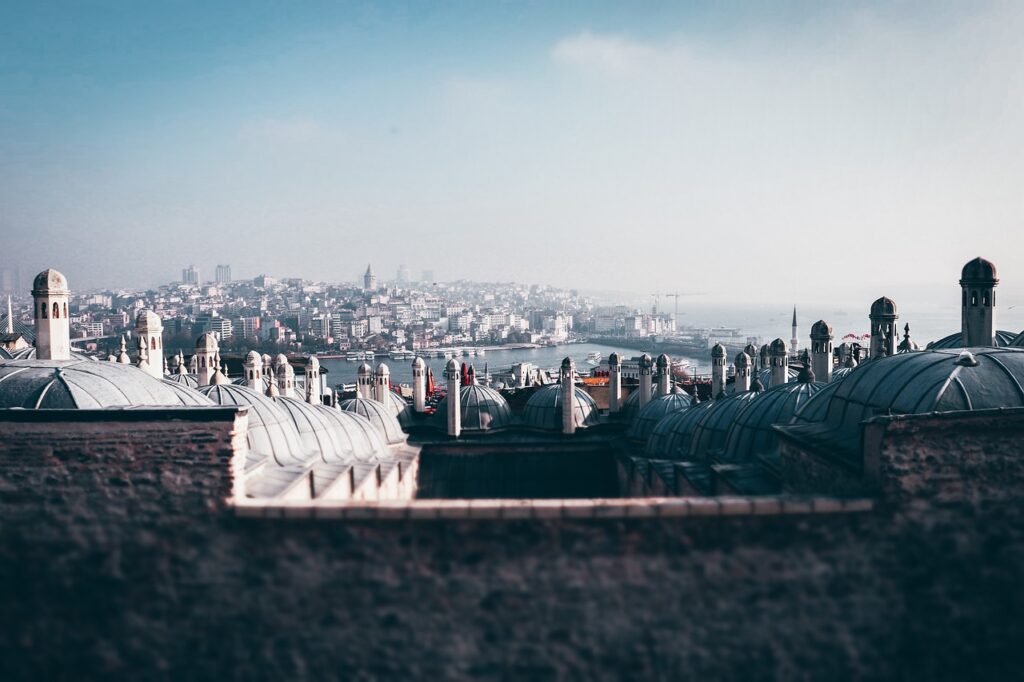
The best simit moment in Eyup is simple: buy a ring, take a tea from a waterside stand, and sit on a bench with the Horn in front of you. It is the cheapest and most authentic meal in the district.
Kofte and the Grill Culture
Kofte, grilled meatballs of minced lamb and beef, is the defining dish of Eyup, and the small restaurants around the mosque have been perfecting it for generations. The meat is seasoned simply, with salt, pepper, and a little spice, and grilled over charcoal.
The perfect kofte is charred outside, juicy inside, and served with grilled pepper, tomato, bread, and pickles. A plate of it, with ayran to cut the richness, is the classic Eyup lunch, and the queues outside the best places are your guide.
Watch the grill work if you can: the turning of the skewers, the flare of the fat, the judgment of the cook. The craft is simple and ancient, and the results are better than most elaborate cuisine.

Lokanta Lunch: Eating with the Season
For the daily home cooking of the district, find a lokanta, where the day’s dishes sit in trays at the counter and you point to what you want. The selection changes with the market: vegetable stews in olive oil, beans, stuffed peppers, rice, and pilafs.
These are the dishes Turkish families eat at home, cooked in the morning and served at lunch, and they are the foodie’s best education in the local kitchen. The olive-oil dishes, eaten cold, are a particular pleasure in the warm months.
Order two or three small portions rather than one big one, take the fresh bread, and finish with a yogurt or a piece of fruit. In winter the stews thicken and the soups arrive, and the lokanta becomes the warmest room in the district. A lokanta lunch in Eyup is simple, seasonal, and completely satisfying.
Fish by the Golden Horn
The waterside of Eyup is the place for fish, and the district’s fish houses make the most of the Horn’s position. The menu follows the seasons: grilled fish in summer, and in the colder months the small Black Sea anchovy, hamsi, in a dozen fried and grilled forms.
The meze tradition is strong here too: the cold spreads of yogurt, eggplant, and beans that arrive before the fish, made for sharing and for drinking raki if that is your style. The quality depends on the day’s catch, so ask what is fresh.
The setting is the real seasoning: tables on the promenade, the ferries passing, the lights of the old city across the water. A fish dinner in Eyup is a meal with the Golden Horn as its main ingredient.

The Sweets of the Bazaar
Eyup’s sweet tradition is the bazaar’s great gift to the foodie. The shops around the mosque sell lokum in a dozen flavors, from rose and lemon to pistachio and pomegranate, softer and more perfumed than the mass-market versions.
Helva, the dense sweet made from sesame, is the more traditional taste, and the best shops press it fresh. Sample generously before you buy; the shopkeepers expect it and enjoy the debate over which flavor wins.
In warm weather, the tamarind sherbet vendors appear, serving the dark, tangy drink that once refreshed pilgrims. It is one of the oldest tastes of Istanbul, and it survives best in Eyup, where the tradition has been kept alive for centuries. The bakers of the quarter also keep the old pastry traditions, and a warm pastry with tea is the winter version of the district’s sweetness.
Tea and Coffee on the Hill
No foodie tour of Eyup is complete without the tea ritual of Pierre Loti Hill. The tea arrives in tulip glasses, strong and black, and the Turkish coffee comes with a glass of water and a piece of lokum, as tradition demands.
The coffee is worth the attention: thick, intense, and served with its grounds settled, it is a different drink from anything called Turkish coffee elsewhere. Drink it slowly, eat the lokum, and let the view do the rest.
The hill is the district’s great sitting place, and the foodie who stops here is following a tradition that the writers and romantics of the nineteenth century began. In winter the cafe is steamy and quiet, and in summer the terrace runs full from morning to dusk, but the tea itself never changes: strong, black, and endless. Tea on the hill is not a refreshment; it is a ceremony.

Friday: The Pilgrim’s Table
Friday is the foodie’s best day in Eyup, because the pilgrimage crowds bring out the district’s full kitchen. The kofte houses run at full tilt, the borek shops sell out, and the tea gardens fill from the morning prayer onward.
It is the day to eat at a long shared table, to taste the dishes that pilgrims have eaten here for centuries, and to feel the district’s appetite at its most alive, with the street vendors of simit and chestnuts doing their best trade of the week. The atmosphere is communal, and the food somehow tastes better in the crowd.
Come late in the afternoon, after the midday prayer rush, and you will find the best of the day’s cooking at its freshest. Friday in Eyup is a feast of faith and flavor together.
How to Eat Like a Foodie in Eyup
The foodie rules of Eyup are the same as the district’s own: trust the queues, eat at the local hours, and ask what is fresh. The best meals are the simplest ones, eaten where the plates are plain and the room is full of people who know the food.
Eat breakfast late, lunch early, and dinner by the water. Take tea on the hill, simit from a cart, and lokum from the bazaar. And finish with the tamarind sherbet, because the old tastes are the ones the district does best.
Eyup is not a place for tasting menus or fusion; it is a place where the cooking of a great city’s neighborhoods is still alive. For the foodie who loves that, it is one of the most rewarding districts in Istanbul.
Frequently asked questions
What should I eat first in Eyup?
Start with breakfast: the full Turkish spread with menemen, or a few slices of fresh borek with tea. Then move to kofte for lunch, the classic dish of the district, followed by lokum and helva from the bazaar and tea on Pierre Loti Hill. Fish by the water makes the perfect dinner.
Where can I find the best kofte in Eyup?
The best kofte is served in the small grill houses around the mosque, and the best of them are easy to spot by the queues at midday. Follow the locals and the smoke from the charcoal grills, and you will eat as well as any pilgrim who has come before you.
What is tamarind sherbet and where do I find it?
Tamarind sherbet is a dark, tangy, sweet-and-sour drink made from tamarind, traditionally served to refresh pilgrims and still made in Eyup today. You will find it with the sweet vendors of the bazaar streets in the warmer months, often served cold from large glass jars.

All Over Information
The All Over Information editorial team researches and writes practical English-language guides to Turkey. Facts are checked against official and local sources before publication, prices are published as dated ranges rather than quotes, and guides are revised when things change. We accept no sponsored posts, paid placements or paid links.
More guides like this
Nightlife Guide to Eyup
Eyup is not Istanbul's nightclub district, and that is exactly the point.

Family-Friendly Activities in Eyup
Eyup is a surprisingly good district for a family trip. It is safe, compact, and full of children's own lives, and the…
48 Hours in Eyup: The Perfect Itinerary
Two days in Eyup is enough to see the pilgrimage heart, climb the hill, explore the cemetery and the old streets, and…
A First-Timer’s Guide to Eyup
Most visitors to Istanbul never make it to Eyup, and that is their loss.

Eyup on a Budget: Money-Saving Travel Tips
Eyup is one of the most budget-friendly corners of Istanbul, and you can see its highlights for almost nothing.

Photography Spots in Eyup You Can’t Miss
Eyup is one of Istanbul's most photogenic districts, and its images are unlike anywhere else in the city.