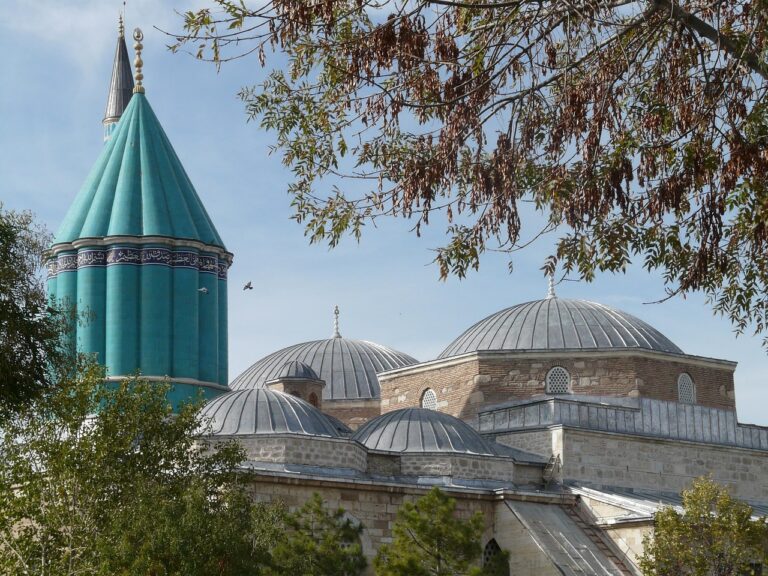
Konya is a city where history is not a museum exhibit but a living presence. The same plain that supported a Neolithic city nine thousand years ago became the capital of the Seljuk Empire, the home of the poet Mevlana, and the spiritual heart of Turkey, and each era has left its layer in the streets, the monuments, and the culture. Understanding those layers is the key to the city: why the dome is turquoise, why the dervishes whirl, and why Konya still thinks of itself as the keeper of a thousand years of faith. This guide traces that story, from the first mud-brick houses to the modern metropolis.
The Deep Past: Catalhoyuk and Antiquity
The history of Konya begins long before the city had a name. Nine thousand years ago, the plain was home to Catalhoyuk, one of the first true cities in human history, where thousands of people lived in mud-brick houses packed together like a honeycomb, entering through the roofs.
The people of Catalhoyuk farmed the same wheat fields that still surround the city, traded obsidian and shells, painted bulls and goddesses on their walls, and buried their dead beneath their floors. The site, now a UNESCO World Heritage Site, rewrites what we thought we knew about the origins of settled life.
When Catalhoyuk was abandoned, other settlements rose on the plain, and the region became a crossroads of empires, from the Hittites to the Phrygians, whose kings and legends still echo in the landscape.
The Roman and Byzantine Centuries
In the centuries before the Seljuks, the region of Konya was part of the Roman and then the Byzantine world. The city that stood here, known as Iconium, was an important provincial center, a stop on the trade routes across the plateau.
Iconium appears in the Christian story: Saint Paul visited the city on his journeys, and the apostle Barnabas with him, and the town became an early center of the faith. The Byzantine centuries left their mark in the churches of the region, including the rock-cut chapels of the Sille valley near the city.
When the Seljuk Turks swept into Anatolia in the 11th century, Iconium, by then a Byzantine city in decline, was ready to fall. Its position at the crossroads of the plain made it the prize that would become the Seljuk capital.

The Seljuk Capital: Konya’s Golden Age
The Seljuks made Konya the capital of their sultanate, and under them the city became one of the great centers of the medieval Islamic world. The sultans built the palaces, mosques, and medreses whose ruins still define the old city: the Alaeddin Mosque on its hill, the Ince Minare, and the Karatay Medrese.
This was a golden age of art and learning. The Seljuk craftsmen covered their buildings in the turquoise and cobalt tiles that are the signature of the era, and the medreses, the theological schools, drew scholars from across the region. Konya’s workshops produced the metalwork, the carpets, and the manuscripts that made the city’s name. The sultans built caravanserais along the trade routes, stone fortresses of hospitality where merchants, pilgrims, and their animals were housed and fed for free, binding the empire together across the vast plain.
The sultanate lasted until the middle of the 13th century, when the Mongol invasions broke its power. But the Seljuk centuries had given Konya its identity, and the city never forgot them.
Mevlana and the Whirling Dervishes
The most important figure in Konya’s history arrived in the 13th century, fleeing the Mongol invasions with his family. Mevlana Celaleddin Rumi, the poet and Sufi master, made Konya his home, taught in its medreses, and wrote the poetry that would make him one of the most loved writers in the world.
His followers founded the Mevlevi order, and their meditation became the sema, the whirling ceremony in which the dervish turns in a slow, hypnotic rotation, the right hand open to heaven, the left turned to the earth. The order’s lodge and the master’s tomb became the heart of the city.
Mevlana’s message, of love, tolerance, and the unity of humanity, transcended the boundaries of religion and nation, and it is the reason Konya is a pilgrimage destination to this day. His death in 1273 is commemorated each December in the festival known as Seb-i Arus, the night of union.

The Ottoman Centuries
After the Seljuks, Konya passed through the hands of the Karamanids, a rival dynasty, before being absorbed into the Ottoman Empire. The city lost its capital status, but it kept its spiritual importance, as the home of Mevlana’s order and a center of provincial life.
The Ottomans built their own monuments in the city, most notably the Aziziye Mosque, rebuilt in the 19th century in a flamboyant baroque style that stands in striking contrast to the austere Seljuk buildings. The caravanserais on the surrounding roads continued the region’s trading traditions.
For centuries, Konya was a quiet, devout provincial city, known less for politics than for faith and craftsmanship. The Ottoman era left the city’s bazaar culture, its cuisine, and its reputation as a place where tradition was kept carefully. The pilgrimage routes to the holy cities of the region passed through Konya, and the caravanserais of the surrounding plain grew rich on the traffic, adding to the city’s sense of itself as a crossroads of faith and trade.
The Republic and Modern Konya
The founding of the Turkish Republic in 1923 brought change to Konya. The Mevlevi lodges were closed with the other Sufi institutions, though the sema survived as a cultural ceremony, and the city began its transformation into a modern provincial capital.
The second half of the 20th century brought rapid growth: the population multiplied, the plain was irrigated, and industry arrived. Konya became one of Turkey’s largest cities, known for its agriculture, its conservatism, and its quiet prosperity.
Today the city of more than two million people is a strange and fascinating mix: a modern metropolis of malls and motorways wrapped around a medieval spiritual capital, where the dome of Mevlana still dominates the skyline and the traditions of a thousand years still shape the daily life. The university city, the industrial hub, and the place of pilgrimage coexist without contradiction, and each of the city’s layers is visible within a single day of walking its streets.

Konya’s Faith and Daily Life
Faith is the atmosphere of Konya, visible in everything from the dress of the streets to the rhythm of the day. The city is one of the most devout in Turkey, and the five daily prayers shape its life: the shops pause, the mosques fill, and the city’s famous conservatism is part of its character.
For the visitor, this is not a barrier but an education. The daily life of Konya, the tea gardens, the family picnics, the quiet evenings, is lived with a seriousness and warmth that many cities have lost, and the hospitality of the people is legendary.
Respecting the city’s faith, dressing modestly, and moving at its pace opens every door. Konya rewards travelers who meet it on its own terms. The city’s welcome is famous across Turkey, and a visitor who shows genuine interest in its traditions will be met with stories, invitations to tea, and a warmth that makes the city one of the most memorable stops in the country.
Culture Today: Music, Food, and Festival
The living culture of Konya is rooted in its history. The sema is performed year-round for visitors and believers, and the December festival brings the city’s spiritual heritage to the world stage, with concerts, exhibitions, and ceremonies drawing pilgrims from every continent.
The city’s food is its other great tradition: the etli ekmek of the wood-fired ovens, the firik pilavı of the plain, and the lokum that Konya has made for centuries. The crafts of the Seljuks live on in the tile workshops and the carpet looms.
Konya’s culture is conservative but not closed. It is a city that knows exactly what it is, and it presents itself with the calm confidence of a place that has been at the center of Turkish life for a thousand years.

The Message of Mevlana: Tolerance
The thread that runs through all of Konya’s history is the message of Mevlana: that love is the path, that humanity is one, and that tolerance is the highest wisdom. His words, written in the 13th century, speak to the 21st century with startling freshness.
“Come, come, whoever you are,” his most famous invitation runs, “wanderer, worshipper, lover of leaving. It does not matter. Ours is not a caravan of despair.” The poem is carved on the museum, and it is the city’s own self-portrait.
For many travelers, this is the true discovery of Konya: not a museum of the past, but a living tradition of welcome. The city that whirled for God eight centuries ago still opens its arms, and its message is the reason millions make the pilgrimage to the plain.
Frequently asked questions
Why is Konya important in Turkish history?
Konya was the capital of the Seljuk Empire, one of the great powers of the medieval Islamic world, and the home of Mevlana Rumi, the Sufi poet and mystic. It remains the spiritual heart of Turkey and a center of the Mevlevi tradition.
What is the Mevlana Festival?
The festival is held each December around the anniversary of Rumi’s death on December 17, known as Seb-i Arus, the “night of union.” It features sema ceremonies, concerts, and exhibitions, and it draws visitors from around the world.
How should visitors behave in Konya’s religious sites?
Dress modestly, with covered shoulders and knees, and women should carry a headscarf for mosque visits. Speak quietly, avoid photography in the most sacred spaces, and be respectful of worshippers. The city’s hospitality rewards visitors who show respect.

All Over Information
The All Over Information editorial team researches and writes practical English-language guides to Turkey. Facts are checked against official and local sources before publication, prices are published as dated ranges rather than quotes, and guides are revised when things change. We accept no sponsored posts, paid placements or paid links.
More guides like this

Best Time of Year to Visit Konya
Choosing when to visit Konya means balancing three things: weather, crowds, and the Mevlana Festival.
Where to Stay in Konya: Neighborhood Guide
Konya is not a city you need to study before booking a hotel, but a few decisions matter.

Nightlife Guide to Konya
Konya does not have a nightlife in the sense that Istanbul or the coastal resorts do, and that is exactly the point.

48 Hours in Konya: The Perfect Itinerary
Two days in Konya is exactly the right amount of time. Long enough to see the great sights, eat the great food,…
A Solo Traveler’s Guide to Konya
Konya is an excellent destination for solo travelers, and in some ways it is better alone than in company.

Konya Airport and Transport Guide
Getting around Konya is easy, and understanding the transport before you arrive saves time and confusion.