Every traveler to Eyup finds the mosque, the tomb, and the cable car, and that is exactly why the rest of the district remains so quiet. Step away from the pilgrimage route and Eyup reveals another world: artisan workshops, forgotten fountains, silent corners of the great cemetery, and hillside views that the crowds never reach. This guide collects the places that most visitors miss, in walking distance of the main sights, waiting to be found.
The Backstreets Behind the Mosque
The lanes directly behind the Eyup Sultan Mosque are among the least visited in the district, yet they hold some of its finest old houses. Wooden Ottoman mansions, some restored and some gently decaying, lean over the cobbles with their bay windows and carved details.
These streets are lived-in, not preserved: children play, tea is drunk on doorsteps, and the daily life of the quarter goes on around you. The contrast with the crowded mosque square, just a hundred meters away, is startling and wonderful.
Walk slowly and look up. The upper floors of the old houses carry the district’s character, with painted eaves, wooden shutters, and the occasional stork nesting on a chimney. This is the Eyup that the tour groups never see, and it costs nothing but time.
The Forgotten Fountains of the Old Quarter
Eyup was once famous for its ornate street fountains, built by sultans and wealthy families so that pilgrims and residents could drink clean water. Many survive, tucked into walls and corners, and most visitors pass them without a second glance.
Seek out the most decorated examples, with their carved marble fronts, calligraphic inscriptions, and little domes. Each one has a story, usually the name of the patron and the date of the gift, carved into the stone above the spout.
The fountains are a quiet lesson in Ottoman charity and civic pride, and the sound of running water in the quiet lanes is part of the old quarter’s charm. They also make wonderful photographs, especially in the low light of late afternoon, when the carving catches the sun and the water still runs in many of them.

The Silent Corners of the Great Cemetery
Everyone sees the cemetery from the cable car, but almost nobody walks its quietest paths. The upper terraces of this vast burial ground hold centuries of Ottoman history in stone, far from the main routes, and they repay the climb.
Here you will find the graves of scholars, soldiers, and statesmen, their headstones topped with turbans, fezzes, and carved flowers, each style marking an era and a rank. The inscriptions are works of calligraphy, and the cypress trees give the place a green, contemplative quiet. The oldest stones, worn by five centuries of weather, tell the district history in stone, and the stillness makes the reading easy.
Come in the late afternoon, when the sun rakes across the stones and the call to prayer drifts up from the mosque below. The views over the Golden Horn from these terraces are as good as any viewpoint in the district, and you will have them almost to yourself.
The Zal Mahmud Pasha Mosque
Tucked into the hillside above the old quarter, the Zal Mahmud Pasha Mosque is a masterpiece that almost nobody visits. Built in the sixteenth century, it is attributed to the great architect Sinan, and its two minarets and handsome stone mass rise above the surrounding houses.
The mosque sits on a terrace reached by a short climb, and the courtyard is peaceful in a way the great mosque below never is. The interior is simple and dignified, with fine tilework around the mihrab and good light falling through the windows.
It is a working neighborhood mosque, so the etiquette of dress and prayer times applies, but the visit is effortless and the architecture repays it. This is the hidden gem of Eyup that architecture lovers most regret missing.

The Workshop Streets of the Artisans
The side streets of Eyup still support a living community of craftsmen, and their workshops are a hidden attraction in their own right. Carpenters, metalworkers, upholsterers, and the makers of prayer beads all work behind open doors.
Stand at a respectful distance and watch: the turning of wood, the shaping of metal, the patient stringing of beads. The workshops are small, the tools are old, and the skills have been passed down for generations. Some craftsmen will show you their work if you ask politely.
These streets are a living museum of trades that are vanishing across the city. Buy something small if the mood takes you, because the objects made here carry a craft and a story that no factory product can match.
The Tomb of the Saint in the Side Street
Tucked into a narrow street near the mosque, a small tomb attracts a steady trickle of visitors who seem to appear from nowhere. This is one of the many minor shrines of Eyup, a district where the presence of holy men and women is written into the very streets.
The tomb is modest, with a tiled facade and a small courtyard, and it is easy to walk past without noticing it. Stop and watch for a few minutes, and you will see the quiet rituals of neighborhood devotion: a prayer, a hand raised, a few quiet words.
These small shrines are the daily faith of Eyup, less grand than the great tomb but no less real. They are also a reminder that the district’s sanctity is everywhere, not only in the famous monument at its center.

The Alibeykoy Stream and the Green Valley
At the northern edge of the district, the Alibeykoy stream runs down through a green valley before joining the Golden Horn, and its banks hold a corner of Eyup that feels far from the city. The water, the willows, and the meadows attract fishermen and families.
Walk the path along the water in the late afternoon and you will see a different Eyup: dogs playing, boys fishing with string, and picnics spread under the trees. The old power station of Silahtagara stands at the stream’s mouth, an industrial monument against the green.
The valley is also the site of Istanbul’s industrial past, and the contrast between the sacred hills and this working watercourse is one of the district’s quiet surprises. It is a peaceful, unfashionable walk that few tourists ever take.
The View from the Walls of the Old Quarter
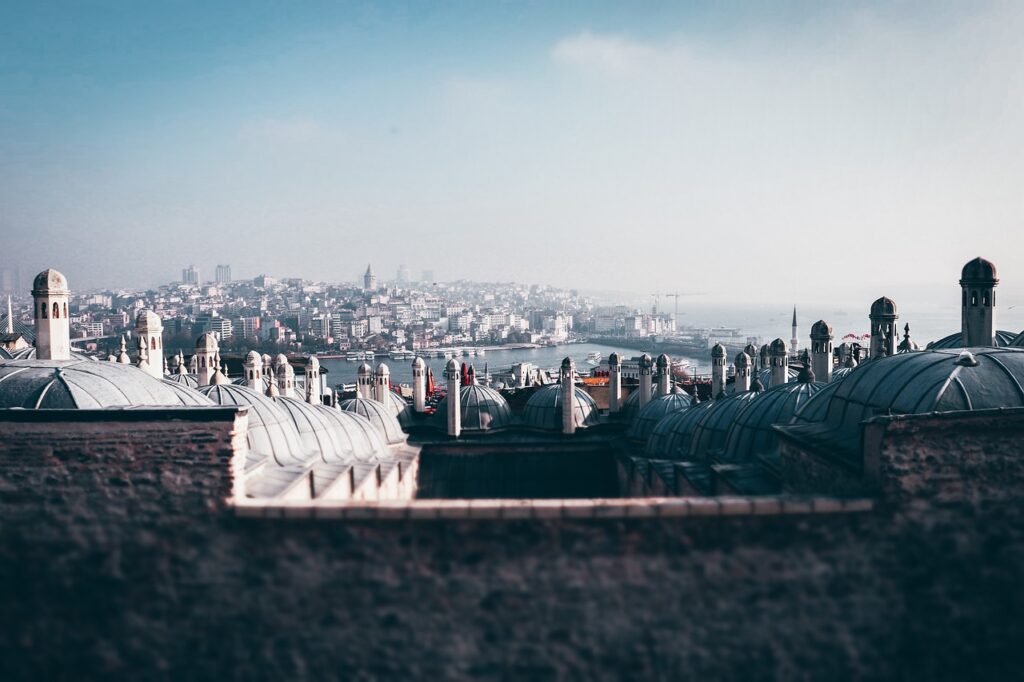
Near the upper edge of the old quarter, the ground rises toward the line of the old city fortifications, and a short scramble brings you to viewpoints that the organized tours never reach. From here the Golden Horn curves away below you in a wide silver arc.
The view takes in the mosque, the cemetery, the ferries, and, on clear days, the distant towers of the old city and the hills of Beyoglu beyond. It is a panorama to match Pierre Loti, without the cafe and the crowds.
These upper paths are where the district’s residents walk their dogs and take their evening air, and joining them feels like being let into a secret. The light at sunset here is extraordinary, and you will likely have it to yourself.
The Feshane and the Old Industrial Shore
On the shore of the Horn, the old Feshane building, once a fez factory of the Ottoman era, stands as a monument to the district’s industrial history. Its long brick facade and clock tower face the water, and its grounds have become a place for events and quiet walks.
The building tells the story of the nineteenth century, when Eyup was a center of manufacture as well as devotion, and its restored halls now host exhibitions and gatherings. Even when nothing is on, the exterior and the waterfront setting repay a look.
The shore here is also a fine place to watch the ferries and the sunset, and the contrast between the industrial past and the sacred present is part of what makes Eyup so particular. Walk the waterfront and let the district’s layers show themselves.
When Nobody Is Watching: Eyup Early in the Morning
The best hidden gem of Eyup is not a place at all but a time. In the first hour after dawn, the district belongs to its own people: shopkeepers hosing their pavements, bakers loading bread, old men opening the tea gardens, and the mosque courtyard empty and luminous.
This is the moment to walk the old streets, watch the light touch the wooden houses, and hear the city wake up slowly. The crowds are hours away, and the district feels like a village that happens to be attached to Istanbul.
The early morning costs you an hour of sleep and gives you the district at its truest. By the time the pilgrimage buses arrive, you will have seen the Eyup that the day visitors never do, and it will be the part you remember.
Frequently asked questions
What are the best hidden places in Eyup?
The backstreets behind the mosque, the forgotten fountains, the upper terraces of the great cemetery, and the Zal Mahmud Pasha Mosque are the finest hidden sights. The artisan workshop streets, the Alibeykoy stream valley, and the viewpoints near the old walls are quieter still and just as rewarding.
Are the hidden gems of Eyup free to visit?
Yes. Almost all of them, including the Zal Mahmud Pasha Mosque, the fountains, the cemetery terraces, and the waterside walks, are completely free. The only costs you might incur are a simit or a tea along the way, and the views cost nothing at all.
How do I find these places without a tour?
Eyup is compact, so most of the hidden gems are a short walk from the mosque. Head uphill into the backstreets, follow the cemetery paths to the upper terraces, and walk the waterfront toward Silahtagara. A good map and a willingness to wander will find the rest.

All Over Information
The All Over Information editorial team researches and writes practical English-language guides to Turkey. Facts are checked against official and local sources before publication, prices are published as dated ranges rather than quotes, and guides are revised when things change. We accept no sponsored posts, paid placements or paid links.
More guides like this
Nightlife Guide to Eyup
Eyup is not Istanbul's nightclub district, and that is exactly the point.

Family-Friendly Activities in Eyup
Eyup is a surprisingly good district for a family trip. It is safe, compact, and full of children's own lives, and the…
A First-Timer’s Guide to Eyup
Most visitors to Istanbul never make it to Eyup, and that is their loss.

Photography Spots in Eyup You Can’t Miss
Eyup is one of Istanbul's most photogenic districts, and its images are unlike anywhere else in the city.

History and Culture of Eyup
Eyup is not merely a district of Istanbul; it is one of the most important sacred sites in the Muslim world, and…

Eyup on a Budget: Money-Saving Travel Tips
Eyup is one of the most budget-friendly corners of Istanbul, and you can see its highlights for almost nothing.