Ayvalik in summer is the Aegean at its most generous. The town sits on the northwest coast of Turkey, wrapped around a deep bay dotted with islands, and when the season arrives it settles into a rhythm of long beach days, slow seafood dinners, and evening walks along the waterfront. The old Greek stone houses glow in the afternoon light, olive groves run down to the sea, and Cunda island just off the coast adds its own layer of charm. This guide walks you through the beaches, the island, the food, and the practical details that make an Ayvalik summer memorable from the first swim to the last glass of rakı.
Why Ayvalik Works in Summer
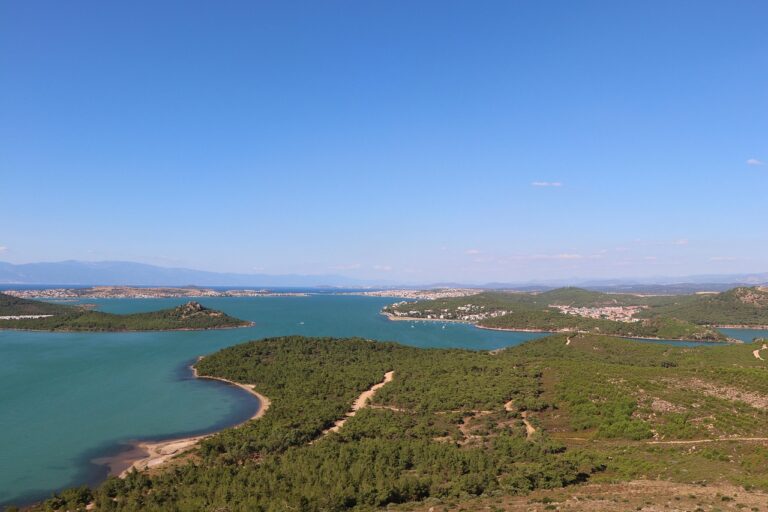
The town is built on the slopes above a large, sheltered bay studded with islands that break the sea into calm stretches of water. Instead of one long beach strip, you get beaches, coves, and island shores that rarely feel crowded even at the height of August.
The summer climate is warm but rarely oppressive. A steady afternoon breeze from the sea, the meltem, keeps the air moving, so the hottest hours are more bearable than the still heat farther south.
The other great advantage is variety. In a single day you can swim in the morning, wander the old quarter in the shade, cross to Cunda for lunch, and finish with a sunset walk along the waterfront.
The Beaches of the Bay
The main sandy beaches lie outside the town center, and each has its own character. Sarimsakli, stretching along the coast to the southwest, is the classic long sandy beach with shallow water, where most beach-focused visitors set up for the day. Umbrellas and simple seaside cafes line the shore, and the water stays warm and calm through the summer.
Altinova, on the other side of the bay, offers another long stretch of sand with a quieter, residential feel. It is a favorite among local families, and its shallow gradient suits children. The bay here faces the islands, so the swimming is protected and the views across the water are part of the pleasure.
Around Cunda and the smaller islands, the beaches are smaller and often pebbly, but the water is spectacularly clear, and small coves between rocky headlands reward a short walk or a boat ride. In town, the shore is more promenade than beach, but small bathing spots let you cool off without leaving the center.

Cunda Island: The Summer Heart of the Bay
Cunda, officially Alibey island, sits just off the mainland and is connected by a bridge, so it takes only minutes to reach. It is the summer heart of Ayvalik. The old town climbs a hillside above a small harbor, its narrow streets lined with restored Greek stone houses, colorful shutters, and bougainvillea tumbling over the walls.
The harbor is the social center. Boats bob at the quay, tables spill out of the taverns onto the waterfront, and the evening fills with the smell of grilled fish and the clink of rakı glasses. The island’s restaurants are famous throughout the region for seafood and meze, and a long dinner here is one of the essential Ayvalik experiences.
Beyond the harbor, Cunda has quiet corners. A walk up the hill passes old churches, including the restored Taksiyarhis church with its painted interior, and leads out toward the windmills on the ridge.
Swimming and Boating Among the Islands
The classic way to experience the islands is by boat. Day trips leave regularly in summer, threading between the islets, stopping at beaches reachable only from the water, and dropping anchor in quiet coves where the water is clear to the sandy bottom. The pace is deliberately slow, and that is the point.
For the independent traveler, kayaks and small rental boats offer another way to explore. The inner bay is sheltered enough for paddling in most conditions, and the islands are close enough that even a short trip can include two or three swimming stops.
Back on shore, the morning water is calmest and clearest. The daily rhythm many locals follow is a morning swim, a long lunch, a rest through the hottest hours, and a late-afternoon return to the water. Adapt to that rhythm, and summer in Ayvalik feels less like a schedule and more like a way of life.

The Old Town and Its Greek Houses
Ayvalik’s old quarter is one of the most distinctive neighborhoods on the Turkish Aegean. Built largely in the nineteenth century by the town’s Greek community, it is a maze of narrow lanes, stone-paved streets, and grand houses with painted facades, arched doorways, and shuttered windows. Many of the mansions have been restored.
The houses are the town’s signature. Some are open to visitors or have become guesthouses, revealing high ceilings, carved woodwork, and courtyards planted with lemon and jasmine. The churches of the old community, built in the same honey-colored stone, stand in various states of restoration, their domes rising above the rooftops.
The story behind the architecture adds depth. Ayvalik was a predominantly Greek town until the population exchange of 1923, when the communities of Greece and Turkey were moved between the countries. Knowing this history makes the quiet streets far more evocative.
Olive Oil Country
Ayvalik lives and breathes olive oil. The hills around the town are covered with olive groves, many of them centuries old, In summer the trees carry their green fruit, and the landscape smells of the dry, herb-scented scrub between the groves. For visitors, this culture translates into some of the best food shopping on the coast.
Local olive oil is green, peppery, and intensely fruity. Many shops let you sample before you buy.
The other great local product is olive oil soap, made the traditional way and sold in fragrant stacks in the old town shops. It makes a light, practical gift. In summer the presses are quiet, but the groves themselves are beautiful, and a walk through the olive country, with the bay glittering below, is one of the simplest pleasures Ayvalik offers.

Summer Seafood and the Tavern Table
Summer in Ayvalik is a season of long meals. The seafood is the headline: fish comes in daily with the boats, and the taverns of town and Cunda grill it simply over charcoal with olive oil, lemon, and salt. The catch changes with the day, and the honest way to order is to ask what is fresh and let the kitchen decide.
The meze culture is just as important. A proper table starts with a spread of small plates: eggplant salads, stuffed vine leaves, white beans in olive oil, fried calamari, and grilled small fish. Bread, plenty of it, and a cold drink complete the picture.
Cunda is where this culture is most concentrated, but the mainland waterfront fills every evening in summer too. Follow the crowd, order meze first, and save room for what the sea brought in that morning. Summer dining here is not a pause between activities; it is the activity itself.
Getting Around in Summer
Ayvalik is compact, and much of it is best covered on foot. The old town, the waterfront, and the ferry pier are within easy walking distance, and a stroll is often faster than driving. The flat seafront promenade is the town’s main artery, and in the evening it becomes a moving parade of walkers and families.
For the beaches and Cunda, minibuses run frequently in summer from the town center to Sarimsakli and across the bridge to the island. They are cheap, reliable, and far easier than parking, which becomes genuinely difficult in summer. If you have a car, park once and walk; the lanes are narrow and the crowds make driving a chore.
Cycling is growing as a summer option, and the flat route to the beaches and the bridge makes it pleasant. For most visitors, a combination of feet, minibus, and an occasional taxi is all you need.

Where to Stay for the Summer Season
Where you base yourself shapes your summer. Staying in the old town puts you among the stone houses and lanes, within walking distance of the waterfront, Many restored mansions operate as guesthouses, and breakfast in a shaded courtyard is a fine way to start a beach day.
Staying on the seafront gives you sea views and the evening promenade on your doorstep. It is livelier and noisier, but the location is unbeatable for short stays. Families often prefer the long beaches, where the sand is a short walk away.
Cunda offers a third world entirely: island pace, harbor-view dinners, and the feeling of being on holiday from the mainland even though the bridge is minutes away. It is the most atmospheric choice for the tavern scene. Summer demand is high, so book well ahead.
Summer Practicalities
A few habits make the Ayvalik summer far more comfortable. The sun is intense, so sun protection is not optional: a hat, sunglasses, and sunscreen will save you from a ruined beach holiday. Water is equally important, as the dry heat and the sea pull fluids out of you faster than you expect.
Timing is everything. The midday hours are for shade, lunch, and rest; the mornings and late afternoons are for the beach and the town. Shops and markets follow this rhythm too, closing for a long midday break and reopening in the cooler evening.
Finally, book ahead. Summer is peak season, and ferries, popular restaurants, and the best guesthouses fill up well in advance. A little planning at home means you can arrive, drop your bags, and fall straight into the Ayvalik rhythm: morning swim, long lunch, evening stroll, and a harbor-side table with the breeze coming off the bay.
Frequently asked questions
How many days should I spend in Ayvalik in summer?
A minimum of three full days works well: one for the beaches, one for Cunda and the old town, and one for a boat trip among the islands. With four or five days you can add the quieter coves and still keep the pace relaxed. Anything less than three days means sacrificing one of the main experiences.
Is Ayvalik very crowded in August?
Ayvalik is popular in August, when Turkish holidaymakers arrive for the school holidays, but the town never feels as wall-to-wall as the big Mediterranean resorts. The bay’s many beaches and islands spread the crowds out. If you want the lightest crowds, come in June or early September, when the water is still warm.
Is the sea warm enough to swim in summer?
Yes. By June the sea is already comfortable, and in July and August the water of the bay is genuinely warm, often matching the evening air temperature. The sheltered bay warms earlier than the open coast, so the swimming season is long, typically running from late May through early October.

All Over Information
The All Over Information editorial team researches and writes practical English-language guides to Turkey. Facts are checked against official and local sources before publication, prices are published as dated ranges rather than quotes, and guides are revised when things change. We accept no sponsored posts, paid placements or paid links.
More guides like this

Best Local Restaurants in Ayvalik
The dining of Ayvalık is the celebrated table of the region, and the town's cooking runs on the olive oil and the…

History and Culture of Ayvalik
Ayvalik is a town whose history you can read in its streets.

Nightlife Guide to Ayvalik
Ayvalik is not a town that parties until dawn, and that is precisely the point.

Shopping Guide: What to Buy in Ayvalik
Ayvalik is one of the best shopping towns on the Turkish Aegean, not for big malls or boutiques, but because it sits…
A Solo Traveler’s Guide to Ayvalik
Ayvalik is one of the easiest towns on the Turkish Aegean to travel alone.

Hidden Gems of Ayvalik Most Tourists Miss
Ayvalık is the town that the day-trippers know, and even within the olive-oil town the hidden corners reward the explorer.