Turkish hospitality is famous, but for many foreign visitors it comes as a genuine surprise. The tea that appears in shops, the insistence that you eat more, the dinner invitations from people you just met: all of this can be disorienting if you come from a culture where strangers are kept at a friendly distance. This guide explains what the hospitality looks like in practice and how you can respond with confidence.
The First Things You Will Notice
The moment you arrive, small signs of hospitality surround you. The shopkeeper who greets you like an old friend, the person who walks with you to make sure you find your way, the endless offers of tea: these are not attempts to trap you. They are the surface of a culture in which welcoming others is a reflex.
Hospitality is not reserved for formal guests. It happens on buses, where people help with luggage, and in the street, where asking for directions can produce a volunteer escort. A human interaction in Turkey rarely ends at the bare minimum.
The adjustment is mostly mental. You are not being singled out or tested: this is simply how the country treats people. Accept the kindness, match it with your own politeness, and the Turks you meet will respond with even more generosity.
Why Turkish People Are So Welcoming
Understanding the why makes the experience easier. Turkish hospitality, misafirperverlik, is rooted in religion, history, and social codes centuries old. In Islamic tradition, the guest is honored as a gift from God, and historically, Anatolia was a crossroads where welcoming strangers was a practical necessity that became a virtue.
These roots mean that hospitality is not a performance for tourists. A person who invites you for tea is expressing values that run deep, and the offer often costs real time and effort. This is why refusing can feel hurtful: the refusal is a rejection of the relationship, not just of the tea.
The good news is that these values make it easy to connect. Turks are practiced hosts who genuinely enjoy giving. Accept their welcome, and you will be repaid with an experience of the country that no guidebook can provide.

The Tea Ritual Explained
Turkish tea, çay, is the engine of hospitality. It is served in a small tulip-shaped glass and appears everywhere: homes, shops, offices, even construction sites. When someone offers you tea, they are saying that you are welcome, and the offer is almost never a prelude to a hard sell.
The ritual has etiquette worth learning. To accept, say evet, lütfen, yes please; say şekersiz for no sugar or şekerli for sugar. Sip slowly and use the time to talk. The tea signals that there is no hurry, and rushing through it would miss the point.
You can decline tea politely, but it is easier to accept. A simple teşekkürler, hayır is enough if you must refuse. Try to accept when you can, because each glass is an invitation into the culture.
How to Accept an Invitation
Sooner or later, you will be invited somewhere: a meal, a visit, perhaps a day out. The invitation may come from a shopkeeper you met ten minutes ago or a family in a village, and you may worry about the motives. In most cases it is genuine, and the culture wants you to say yes.
When you accept, you enter a contract of politeness. Arrive on time or slightly late, bring a small gift, praise the food, and thank your hosts sincerely. If you cannot accept, decline clearly and with thanks, and never promise to come if you will not.
The deeper point is that invitations are how you move from tourist to guest. Turkish people love to share their country, tables, and families, and the invitation is the door. Accepting one may feel intimidating, but it is the best way to see the real Turkey.
The Gift of Food and Drink
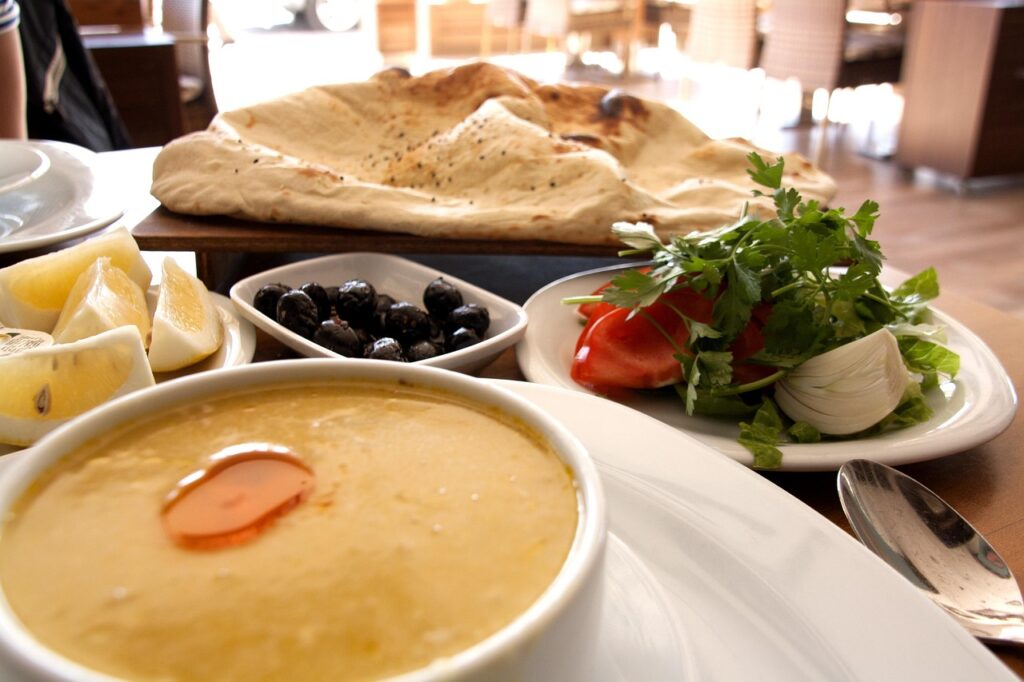
In Turkish hospitality, food and drink are love made visible. A guest is fed, pressed to eat more, and sent home with food if there is any chance of hunger on the road. The table holds far more than the household would eat, because the abundance is the point: nothing has been spared for the guest.
The pressure to eat can feel intense, but the rules are simple. Take a little of everything and accept a second serving at least once. If you truly cannot continue, say the food was wonderful and that you are full. The dance of insistence and refusal is part of the tradition, and both sides know the steps.
Your role includes eating with visible pleasure. Compliments on the cooking, such as çok lezzetli, very delicious, are the highest currency of the table. The meal is a conversation conducted in food, and your enjoyment is the reply the host is waiting for.
Hospitality in Shops and Businesses
Hospitality follows you into the commercial world, and it can confuse visitors who expect pure transaction. In a shop, you will be greeted warmly, invited to look without pressure, and offered tea. The relationship matters as much as the sale: this is commerce in the Turkish style.
The etiquette is straightforward. Accept the tea, ask questions freely, and never feel obliged to buy because you accepted hospitality. When bargaining, treat it as conversation rather than combat. If you buy nothing, thank the shopkeeper and leave warmly; you will have made a friend.
There is a practical bonus. A traveler who treats the marketplace with respect may find better service, fairer prices, and genuine help with directions and recommendations. The hospitality of the shop is not a trick: it is the culture’s way of saying that business is built on relationships.

The Rules of Refusal
No visitor can accept everything, and Turkish culture has graceful ways of declining. The key is to refuse without rejecting the relationship. For tea you have just had, say you are fine with a smile; for food, praise the table and explain that you are full. The words matter less than the tone.
Some refusals carry more weight. If you decline in a way that suggests the host is not good enough, the offense is real, and leaving immediately after eating without conversation may make the host feel used. Your politeness should be consistent, not just at the moment of the offer.
Learning to refuse well is a practical skill. It lets you protect your time without damaging the warmth around you, and it shows that you understand the culture deeply enough to handle its rituals. Your careful grace will often deepen the friendship rather than end it.
Hospitality Outside the Home
Turkish hospitality extends beyond houses and shops. In restaurants, staff may treat you with personal warmth, and in the street, strangers help with directions, bags, and tickets. In public transport, kindness flows between passengers as a matter of course.
The hospitality follows you on the road. Drivers stop to help with breakdowns, and the tea culture accompanies you into mountain villages where the welcome is the same as in Istanbul, only slower and deeper. The tradition will meet you wherever you travel.
For you, this means the whole country is your host. The kindness is not organized for tourists: it is the culture itself. Be a good guest of the country: smile, learn a few words, respect local customs, and the country will respond with the full force of its hospitality.
Common Misunderstandings
Several misunderstandings can spoil the experience. The first is thinking the warmth is a prelude to a scam: in tourist areas there are hustlers, but genuine hospitality costs the host something and expects nothing in return. The second is thinking you must repay hospitality immediately, when gratitude is the payment expected.
The third misunderstanding is about refusal. Many visitors fear offense and leave resentful, but Turkish culture has room for polite refusal. The fourth is believing hospitality is only for special guests: it is the default mode of social life, extended to anyone who crosses the threshold.
Clearing these misunderstandings changes your experience. You can relax into the warmth, accept what delights you, decline what you cannot manage, and trust that the relationship survives both. Turkish hospitality will meet you halfway if you meet it openly.
How to Be a Good Guest
Being a good guest in Turkey is simpler than you think. Learn a handful of words: merhaba for hello, teşekkür ederim for thank you, çok güzel for very beautiful, afiyet olsun for enjoy your meal. Use them, because effort is rewarded, and your hosts will love teaching you about their country.
Match the warmth you receive. If a shopkeeper offers tea, offer conversation in return; if a family feeds you, bring sweets or flowers when you visit again. Your small gestures will be repaid many times over, often with friendships that outlast your trip.
Finally, carry the lesson home. The tradition of treating a stranger as a guest is a gift you can take with you, and practicing it in your own life is the deepest form of thanks. You will leave Turkey with a way of being as well as memories.
Frequently asked questions
Do I have to accept every offer of tea or food?
No, but accepting at least once is polite. If you must refuse, do it warmly with a smile and a brief thanks. A polite no is fully acceptable, and hosts would rather see you comfortable than accept out of obligation.
How do I know if an invitation is genuine?
In the vast majority of cases, invitations in Turkey are sincere. The culture treats guests as a blessing, and hospitality usually costs the host time and effort. Use normal caution in tourist zones, but trust the warmth you feel.
What should I bring when visiting a Turkish home?
A small gift is appreciated: sweets, pastries, flowers, or something from your own country. Avoid alcohol unless you know your hosts well. The gift is a gesture of respect, and a heartfelt thank you matters more than the item itself.

All Over Information
The All Over Information editorial team researches and writes practical English-language guides to Turkey. Facts are checked against official and local sources before publication, prices are published as dated ranges rather than quotes, and guides are revised when things change. We accept no sponsored posts, paid placements or paid links.
More guides like this

A Deep Dive into the Concept of Misafirperverlik (hospitality)
Misafirperverlik is the Turkish word for hospitality, but it is also a key to the whole culture.

Understanding Modern Turkish Pop Culture
Modern Turkish pop culture is everywhere, even if you do not realize it: television dramas that air on six continents, pop songs…

Turkish Football Clubs and Their Rivalries
Football is the great passion of Turkey, and its rivalries are among the most intense in the world. The clubs of Istanbul…

Winter Sports in Uludag and Palandoken
When winter arrives in Turkey, the country's two most famous ski mountains take center stage: Uludag, the classic resort above Bursa, and…

Turkish Football Fan Culture Explained for Foreigners
If you are planning to experience football in Turkey, you are about to discover something far more intense than a typical match…

Understanding Turkish Coffee Fortune Telling
At the end of a meal in Turkey, a small cup of strong coffee may arrive with an offer that surprises many…