Bebek’s position on the European shore of the Bosphorus makes it one of the more accessible villages in Istanbul, and the journey there — by ferry, bus, taxi, or private car — is among the most scenic in the city. Two international airports serve the metropolis, and a network of ferries, buses, and taxis connects them to the village. This guide covers every practical route: from the airports, from the main districts, and within the neighborhood, with the tips that make the journeys smooth.
From Istanbul Airport (IST)
Istanbul Airport, the city’s main international hub, sits far to the northwest on the European side. The most reliable route to Bebek combines the airport shuttle bus to Beşiktaş with a short taxi or bus ride south along the shore — the whole journey takes about an hour in normal traffic, and the shuttle is a fraction of the taxi fare. A direct taxi takes forty to fifty minutes and costs considerably more, but it is the sensible choice with heavy luggage or a late arrival. The ride-hailing apps work from the airport and show the fare in advance, which removes the negotiation and the guesswork. For most travelers, the shuttle-and-taxi combination is the best balance of cost and reliability.
From Sabiha Gökçen Airport (SAW)
Sabiha Gökçen, on the Asian side, is a longer journey but a more scenic one. The fastest route combines the airport shuttle to Kadıköy with a ferry across the Bosphorus — the crossing from the Asian shore lands you at the Bebek pier, minutes from the square, and the ferry ride is a highlight of the trip. Allow ninety minutes to two hours for the whole journey, and time the connection so you do not wait long at Kadıköy. A taxi over the bridge is faster in light traffic but unpredictable at peak hours, and the bridge toll is added to the fare. For most travelers, the bus-and-ferry route is the best choice: cheaper, reliable, and far more beautiful.
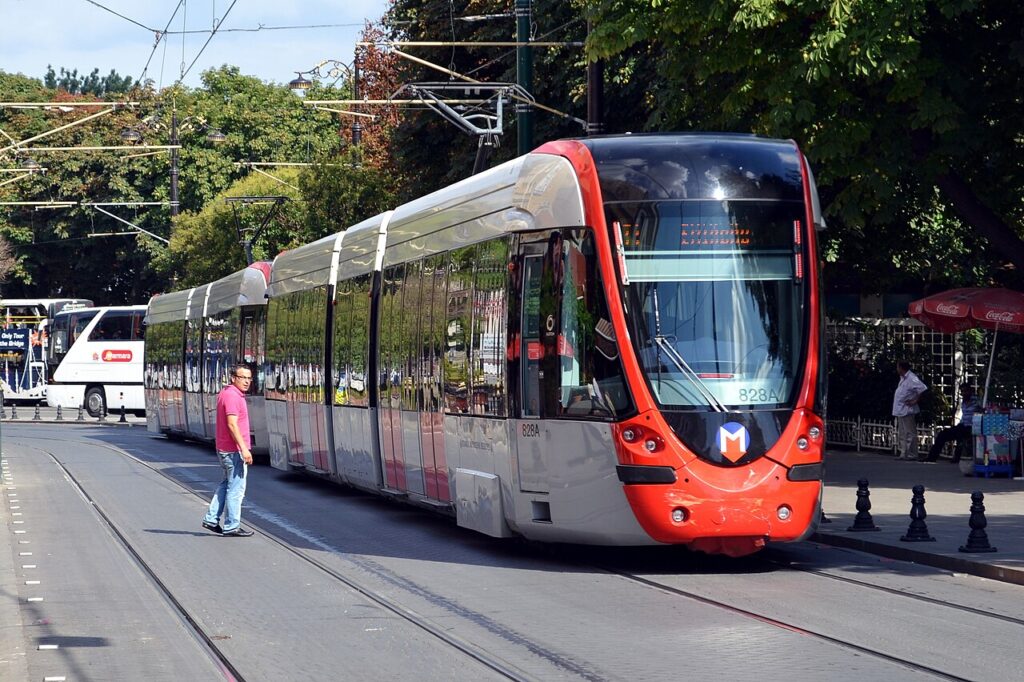
By Ferry: The Water Route
The ferry is the way Bebek is meant to be reached, and the village’s pier sits right on the promenade. The ferries connect Bebek with Beşiktaş to the south, with the Asian shore at Üsküdar and Kadıköy, and with the villages of the northern Bosphorus. The crossings take twenty to thirty minutes, the decks are open to the wind and the spray, and the views — the fortress, the bridges, the villages of both shores — make the commute a pleasure. An Istanbulkart covers the ferries, and the same card works on every bus, tram, and metro in the city. Check the timetable the evening before; the frequencies vary by route and season, and the last crossings run around midnight.
From the City Center
The city center connects to Bebek through the same network. From Taksim, the taxi takes about fifteen minutes in light traffic, or the funicular down to Kabataş followed by a short taxi or bus along the shore. From the old city, the tram to Kabataş and the ferry or bus onward is the reliable route; the journey takes about forty minutes. The buses from Taksim and Beşiktaş run frequently, and the shore road is the spine of the bus network. On fine days, the most pleasant approach is the promenade walk from Beşiktaş — flat, scenic, and about half an hour — the way the residents arrive on their evening strolls.

Getting Around the Village
Bebek is small enough to explore entirely on foot, and its attractions are all within easy walking distance of the square. The promenade, the park, the cafés, and the ferry pier are the village’s core; the hills behind are steep but rewarding, and the walk to Rumeli Hisarı and Arnavutköy runs flat along the shore. Taxis are available on the main roads, and the ride-hailing apps work throughout the neighborhood. For the wider city, the ferry pier and the bus stops connect to every district, and the Istanbulkart is the single key to the whole network. The village rewards walking, and the transport is there when the legs give out.
The Practical Tips
A few habits make the journeys smooth. Carry an Istanbulkart at all times — it is the key to the entire public transport network, and the machines at the ferry piers and the bus stops sell and top up the cards. Confirm the fare before taking a taxi, or use a ride-hailing app to avoid the negotiation. Allow extra time for the airport journeys — Istanbul traffic is unpredictable, and the shore roads jam at peak hours. And for the return, check the last ferry time before you set out, so the evening crossing does not become a late taxi ride. With a little planning, the village’s connections are part of the pleasure.

The Accessibility Notes
Bebek’s compactness helps travelers with limited mobility, and the key routes are accessible. The promenade is flat and smooth, the ferry pier is step-free on the main lines, and the square and the park are level. The hills and the back streets are the difficulty, so plan the accessible route along the shore. The hotels vary — the older buildings have steps, so ask about the lift and the step-free access when booking. The taxis and the ride-hailing cars are the most reliable transport, and the drivers assist with the wheelchairs and the walkers. With a little planning, the essentials of the village — the promenade, the park, the ferry, the cafés — are all reachable, and the Bosphorus views are accessible to everyone.
The Late-Night Returns
The late returns to Bebek need a little planning, because the ferries stop around midnight. The buses continue along the shore into the small hours, and the taxis and the ride-hailing cars run all night. The practical strategy is to check the last ferry before the evening out, and to plan the return by bus or taxi if the night runs late. The ride-hailing apps work reliably at all hours and show the fare in advance, and the drivers know the village well. The night returns are safe and straightforward — the village is well lit and well traveled — and the late walk from the taxi to the hotel, with the water in the dark, is one of the small pleasures of the Bebek stay.
A final note on the transport: the network of Istanbul is the key to the city, and the traveler based in Bebek holds it in the Istanbulkart. The ferries, the buses, and the trams connect the village to every district, and the apps make the planning easy. Allow the buffers, check the last services, and let the Bosphorus commute be the daily pleasure it was always meant to be.

The Alternative Routes
The alternatives to the standard routes round out the transport picture. The minibuses — the dolmuş — run the shore routes cheaply and quickly, filling as they go; they are the local secret, and they connect the village to the surrounding districts. The metro lines of the wider city link to the bus and ferry network, extending the reach without the traffic. The cycling along the shore is the active option, with the bike lanes on the main routes and the rental stations nearby. And the walking is the final alternative: the promenade from Beşiktaş, the shore route north, the streets of the hills — the village is small enough that the feet cover what the transport cannot. The alternatives give the traveler the flexibility, and the village rewards the variety.
The transport of Bebek, in the end, is the village’s welcome mat: the ferry that brings you, the bus that delivers you, the taxi that sees you home, the walk that shows you the shore. Each arrival is an introduction, each departure a farewell, and the journeys themselves are part of the visit. Travel well, and the village receives you well — the Bosphorus commute is the first and the last pleasure of the stay.
The Takeaway
Bebek is well connected by every mode of transport Istanbul offers, and the ferry makes the journey part of the experience. Choose the shuttle for the budget, the taxi for the luggage, and the ferry for the beauty — and once you arrive, leave the transport behind. The village is built for walking, and the promenade, the park, and the hills are the best way to see it, with the water as the constant companion.
Frequently asked questions
How do I get from Istanbul Airport to Bebek?
Take the shuttle bus to Beşiktaş, then a short taxi or bus to the village; or take a direct taxi, about forty to fifty minutes.
Which airport is easier for Bebek?
Istanbul Airport (IST) is closer, but Sabiha Gökçen (SAW) with the ferry connection can be similar in time — and the crossing is beautiful.
Does the ferry serve Bebek?
Yes — the village has its own pier on the promenade, with ferries to Beşiktaş, the Asian shore, and the northern Bosphorus villages.
Is the Istanbulkart useful in Bebek?
Essential — it covers the ferries, buses, trams, and metro, and it is cheaper per ride than single tickets.

All Over Information
The All Over Information editorial team researches and writes practical English-language guides to Turkey. Facts are checked against official and local sources before publication, prices are published as dated ranges rather than quotes, and guides are revised when things change. We accept no sponsored posts, paid placements or paid links.
More guides like this
Best Time of Year to Visit Bebek
Bebek is a village of seasons, and each one gives the Bosphorus a different character.

Photography Spots in Bebek You Can’t Miss
Bebek is a photographer's village in the truest sense: the whole shore is a composition, and the light over the Bosphorus does…

Top 10 Things to Do in Bebek
Bebek is the Bosphorus village where Istanbul comes to breathe — the crescent of cafés along the shore, the green park at…
The Best Day Trips from Bebek
Bebek sits at the center of the Bosphorus, and the whole strait is its backyard.
Shopping Guide: What to Buy in Bebek
Bebek is not a shopping district in the Grand Bazaar sense — there are no carpets and no haggling — but it…