Walking into a Turkish carpet shop for the first time can be overwhelming: carpets stacked to the ceiling, tea arriving before you sit, and a thousand patterns competing for your attention. This guide is written for that moment. It explains the basics of Turkish carpet weaving clearly, so you can recognize quality, understand the patterns, enjoy the visit, and decide with confidence whether to take a carpet home.
Why Carpets Matter in Turkey
Carpets are not just floor coverings in Turkey; they are a national craft, a family inheritance, and a living tradition. For over a thousand years, Anatolian weavers have tied knots by hand, and the carpet has been woven into the country’s economy, its homes, and its identity.
The carpet carries practical and symbolic roles together. In the home it is the floor of daily life, where families eat, sleep, and gather. In the wider culture it is a gift, a dowry, and a work of art, and the finest examples sit in the great museums of the world.
Understanding this context transforms a visit to any carpet shop. The seller is not just moving merchandise; they are presenting a craft with deep roots. The more you understand the tradition, the richer the encounter, and the better your decision.
The Two Basic Types: Carpets and Kilims
The first distinction to learn is between the carpet and the kilim. A carpet, “hali,” has a pile: the surface is covered with thousands of small knots of wool that create a raised, soft texture. This is the classic woven rug that most people picture.
A kilim, on the other hand, is flat-woven. It has no pile; the design is created by the interweaving of the warp and weft threads themselves. Kilims are lighter, thinner, and often less expensive, and they are a tradition in their own right, with their own regional styles.
Both are beautiful and both are Turkish. The choice between them is a matter of taste, use, and budget. A carpet gives warmth and softness underfoot; a kilim gives a flat, graphic look and is easy to roll and carry.

The Hand-Knotted Difference
The single most important fact for a buyer: Turkish carpets are traditionally hand-knotted, and the hand knot is the mark of the real thing. The weaver ties each knot around the warp threads with a small tool, cuts the wool, and moves to the next knot, one by one.
The Turkish knot, the style used across Anatolia, is symmetrical and sturdy. It gives the carpet its firmness and its crisp, geometric patterns. The density of the knots, the fineness of the weave, is one of the main measures of quality and price.
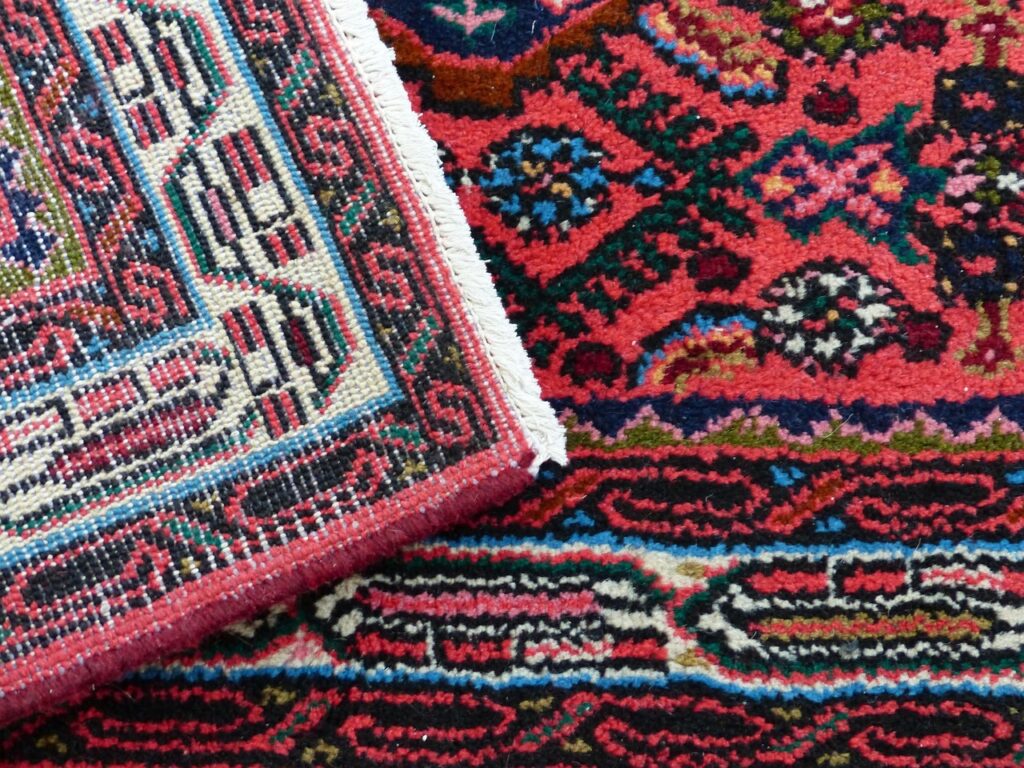
Check the back of any carpet to see the difference. A hand-knotted carpet shows its knots in neat rows, with the pattern visible in reverse. A machine-made carpet has a uniform, often fuzzy back with no visible knot structure. That single check separates the tradition from the imitation.
What the Patterns Mean
Turkish carpet patterns are a language passed down by generations of weavers. Each motif has a name and a meaning, and reading them turns a carpet into a story. The ram’s horn, curling like a mountain ram, stands for strength and power.
The elibelinde, a stylized woman with hands on her hips, is one of the oldest fertility symbols in the tradition. The scorpion protects against stings, the snake ward against evil, and the nazar, the evil eye motif, shields the carpet’s owner from envy. Even the water motif, a wavy line, carries its own blessing.
The layout speaks too. The border frames and protects the central field, the medallion anchors the design, and the corner pieces balance it. A carpet’s pattern tells you its region, its age, and the wishes of the weaver who tied its knots.
The Colors and What They Tell You
The traditional colors of Turkish carpets come from nature. Madder root gives red, weld gives yellow, indigo gives blue, and walnut husk gives brown. Each village and region developed its own dye recipes, and the palette is one of the carpet’s signatures.
Natural dyes produce colors with depth and gentle variation, and they age gracefully, softening without losing richness. Synthetic dyes, used since the twentieth century, are cheaper and brighter but often harsher, though modern synthetic dyes have improved greatly.
You can train your eye. Hold a carpet in good light and look at the reds and blues: are they deep and varied, or flat and uniform? The natural palette is one of the quiet signs of a traditional carpet, and asking about the dyes is a question every good seller enjoys.
Where Carpets Come From: Regions and Styles
Turkey’s carpet regions each have a recognizable voice. The designs of Hereke, near Istanbul, are the finest product of Ottoman court weaving, with extremely fine knots and elegant, palace-style patterns. These are the masterpieces of the tradition.
The Ushak region, in western Anatolia, has produced carpets for export since the sixteenth century, and its large medallion designs are among the most famous in the world. The village traditions of central and eastern Anatolia continue the tribal patterns with their bold geometry and folk motifs.
Knowing the regions helps you listen to the story of a carpet. When a seller says a carpet is from a particular area, you can connect the pattern to the place: the fine court designs of Hereke, the bold medallions of Ushak, the geometric tribal fields of the villages.

Visiting a Carpet Workshop
If you want to see the tradition alive, visit a carpet workshop. In the carpet towns and villages of Anatolia, and in the artisan districts of the cities, you can watch weavers at the loom, tying knot after knot, row after row, on frames that have not changed in centuries.
The visit is a revelation. The rhythm of the work, the concentration of the weavers, and the slow growth of the pattern make the price of a fine carpet suddenly understandable. Many workshops welcome visitors and explain each stage of the process.
Bring your questions. Ask about the wool, the dyes, the knot density, and how long the carpet has taken. The weavers and their families are proud of their craft, and a genuine interest is always rewarded with a warmer welcome and a better conversation.
The Tea Ritual of the Carpet Shop
Buying a carpet in Turkey includes a ceremony that is half its charm: the tea. The moment you pause at a carpet shop, you will be seated, and tea will arrive. The carpets are then rolled out one by one, each with its story.
The tea ritual is hospitality, but it is also method. The tea slows the encounter, gives both sides time to talk, and turns a transaction into a relationship. The seller learns what you like, and you learn the carpet’s story, all over the glass.
Enjoy it. The leisurely pace is not a trap; it is the Turkish way of doing business. Even if you buy nothing, the tea and the stories are a genuine gift. And if you do buy, the carpet will always carry the memory of the afternoon it was chosen.

How to Judge Quality as a Beginner
You do not need to be an expert to judge a carpet, just methodical. Turn it over and check the back: visible knots in neat rows mean hand-knotting. Run your hand across the pile: good wool feels springy and soft, not harsh or brittle.
Check the edges and ends. A well-finished carpet has neat selvedges and a proper fringe, signs of care in the making. Ask about the knot density, the higher the count, the finer the carpet, and about the dyes, natural or synthetic.
Finally, trust your eye. A carpet with a balanced design, harmonious colors, and no obvious mistakes speaks of a skilled weaver. Quality is the sum of these small checks, and once you have done them a few times, the judgment becomes instinct.
Buying, Shipping, and Caring for Your Carpet
If a carpet has won your heart, the practicalities are simple. Agree on a price that feels fair, and understand that some negotiation is part of the tradition. Most sellers will arrange packing and shipping to your home country, and the service is standard.
When your carpet arrives home, treat it kindly. Lay it flat, away from direct sunlight that will fade the colors, and vacuum it gently. Rotate it occasionally so the wear is even, and have it professionally cleaned every few years.
The care is a small price for a piece of tradition. A good Turkish carpet, properly kept, will serve your home for decades and gain character as it ages. The colors soften, the wool settles, and the story of the afternoon in the carpet shop grows richer every year.
Frequently asked questions
How much should I expect to pay for a carpet?
Prices vary enormously with size, knot density, material, and age, from modest sums for small kilims to serious investments for large, fine hand-knotted carpets. The best approach is to compare several shops, examine the quality yourself, and negotiate politely. A fair price reflects the months or years of hand labor in the carpet.
Is it safe to buy a carpet in Turkey as a tourist?
Yes, if you buy with knowledge. Deal with established shops and workshops, inspect the back for hand knots, ask about materials and dyes, and get a receipt describing the carpet. Most sellers are honest and proud of their craft, and the documented purchase protects you in case of any issue with shipping.
What is the difference between a carpet and a kilim?
A carpet, “hali,” has a soft pile of thousands of hand-tied knots, while a kilim is flat-woven with no pile. Kilims are lighter, thinner, and generally less expensive, with graphic patterns created by the weaving itself. Both are traditional Turkish crafts with their own regional styles.

All Over Information
The All Over Information editorial team researches and writes practical English-language guides to Turkey. Facts are checked against official and local sources before publication, prices are published as dated ranges rather than quotes, and guides are revised when things change. We accept no sponsored posts, paid placements or paid links.
More guides like this

Understanding the Roman Anatolia: A Beginner’s Guide
Anatolia, the peninsula that is now Turkey, was one of the most important regions of the Roman Empire, and its Roman centuries…

Understanding the Turkish Television Drama (dizi) Phenomenon
If you have not heard of the Turkish dizi, you soon will.

Understanding the Ottoman Conquest of Constantinople: A Beginner’s Guide
In 1453, an Ottoman army did something that had not been done for a thousand years: it captured Constantinople, the greatest city…

Gift-Giving Customs in Turkish Culture
Gift-giving in Turkey is a heartfelt ritual, and understanding it deepens every friendship you make here.

The Street Art and Graffiti Scene in Istanbul
Istanbul is a city that wears its history in layers, and in recent years it has added a new one: paint.

Attending a Turkish Football Match: What to Expect
A Turkish football match is one of the most intense sporting experiences in the world, and attending one as a visitor is…