The Suleymaniye Mosque is one of the quietest of Istanbul‘s great monuments, but that does not mean it is never busy. Tour groups, Friday congregations, and cruise passengers all pass through, and the mosque closes for the five daily prayers, which interrupts visits. With a little planning you can almost always find the great dome nearly to yourself. The secrets are the same as for any working mosque in Istanbul: know the prayer times, go early, and choose the right season. This guide shows you exactly when to go.
Why Suleymaniye Is Easier Than the Blue Mosque
The first thing to know is that the crowd problem at the Suleymaniye is small compared with the Blue Mosque, a short walk away. The Suleymaniye sits on a hill, requires a climb, and attracts fewer organized tours, so the queues are short and the interior rarely feels packed. On an ordinary weekday you can expect a steady flow of visitors rather than a crush.
That makes the Suleymaniye an easy mosque to visit well. The remaining challenges are the prayer closures, which can catch you out, and the summer crowds, which bring everyone up the hill at once. Solve those two, and you will have one of the most peaceful grand-mosque experiences in the world, often sharing the hall with just a handful of worshippers.
Prayer Times and Closures
Like every working mosque, the Suleymaniye closes to visitors for the five daily prayers. The building shuts about half an hour before each prayer and reopens roughly an hour later, and the midday prayer on Friday brings the longest closure of the week. Since prayer times shift with the seasons, the pattern moves through the day across the year.
The practical rule is simple: check the day’s prayer schedule before you plan your visit, and arrive either in the open window between prayers or shortly after the reopening. The mosque also posts the times at the entrance, so if you are caught by a closure you can simply wait, visit the terrace and the tombs, and return when the doors open again.

The Early Morning Window
The best time to visit the Suleymaniye is the early morning, between opening and mid-morning. The first tour groups rarely arrive before ten, and the morning prayer wave has passed, so the interior is often almost empty. The light is also at its best in the morning, streaming through the dome’s windows and filling the hall with the golden clarity that Sinan designed for.
An early visit has another advantage: the walk up the hill is still cool, and the neighborhood is waking quietly around you. You can climb through the old streets, arrive at the courtyard with the day’s first light on the minarets, and be inside the prayer hall while the rest of the city is still getting going. For photographers, these are the hours that reward effort.
Midday: The Quiet Hour
Midday at the Suleymaniye is surprisingly manageable. The mosque is busier than in the morning, with tour groups making their way up the hill, but the crowds remain small by Istanbul standards. The main complication is the midday prayer closure, which can fall anywhere between noon and two, so you may find the doors shut for part of the middle of the day.
If your schedule forces a midday visit, plan around the prayer. Arrive before the closure, see the interior, then use the closure to visit the terrace, the tombs, and the courtyard, which remain accessible, and return for a second look when the doors open. The mosque is small enough that even a broken visit can be complete.
Afternoon and Golden Hour
The afternoon brings the tour buses, and it is the busiest time of day at the Suleymaniye. Between about two and five in the afternoon, the interior has a steady stream of visitors, though still nothing like the Blue Mosque’s crowds. If you have flexibility, this is the window to avoid, or to use for the exterior and the views rather than the prayer hall.
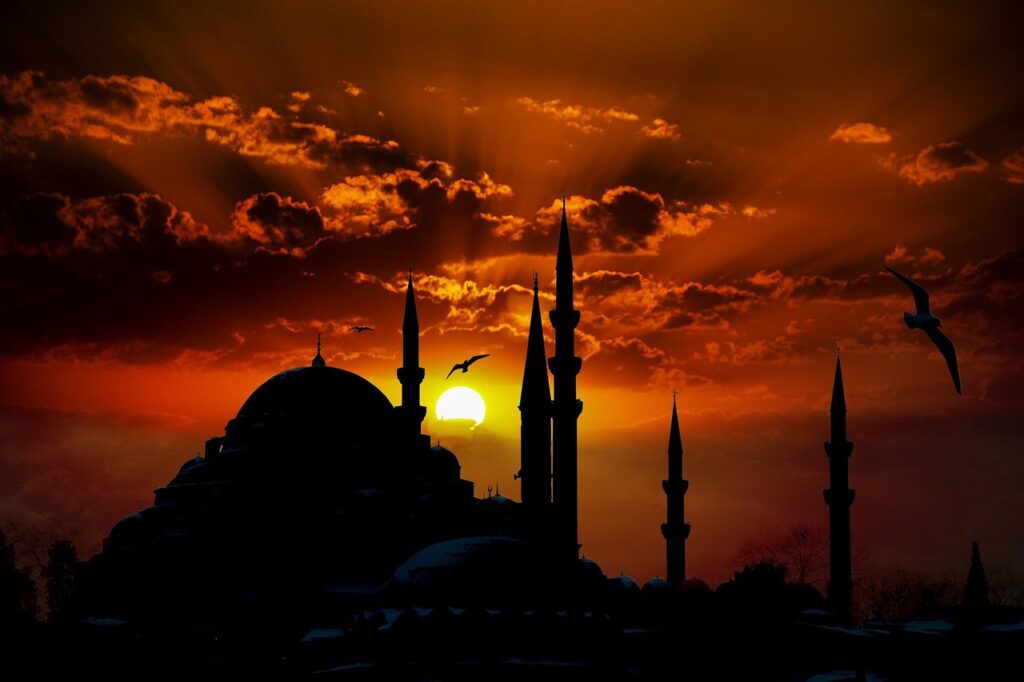
The golden hour at the end of the day is a separate matter. As the sun drops toward the Golden Horn, the terrace fills with people watching the sunset, and the light on the minarets is spectacular. The mosque itself may close for the evening prayer, but the spectacle from the terrace, free and open to all, is one of the best reasons to be on the hill at dusk.
The Friday Factor
Friday is the one day when the Suleymaniye genuinely gets crowded. The midday prayer is the big congregation of the week, and the mosque and its courtyard fill with worshippers from across the district. The closure around that prayer is the longest of the week, and after it reopens, the area stays busier than usual for the afternoon.
The rest of Friday is fine. The early morning is as quiet as any other day, and the late afternoon returns to normal. If you are in Istanbul on a Friday, simply plan the visit for the morning or the late afternoon, and treat the midday hours as a time to explore the surrounding neighborhood and the views.

Weekly and Cruise Rhythms
The Suleymaniye follows the same weekly and seasonal rhythms as the rest of Istanbul. Weekends bring local visitors and more tour groups; weekdays are generally calmer, and the quietest days are usually midweek. The mosque is busiest in the summer months, when every day brings cruise passengers and organized tours up the hill.
Cruise schedules matter less here than at the Blue Mosque, because the ships tend to drop their passengers in the flat center of Sultanahmet. Still, on days when several large ships are in port, the whole old city swells, and the Suleymaniye feels it. If you can, check the cruise calendar for the week, and choose a day with fewer ships for your visit.
Spring and Autumn
The shoulder seasons of April, May, September, and October are the best times of year for the Suleymaniye. The weather is mild, the light is lovely, and the crowds are well below the summer peak. The terrace views over the Golden Horn are at their best in these months, with clear air and long evenings, and the walk up the hill is comfortable.
Spring adds the city’s famous tulips, which fill the parks and squares of Istanbul in April, and autumn adds the golden light that photographers chase. If you are planning a trip to Istanbul and want the Suleymaniye at its most beautiful and least crowded, these four months are the sweet spot, with late September and October perhaps the best of all.

Summer and Winter
Summer at the Suleymaniye means crowds and heat. The days are long and the prayer closures are compressed, which is convenient, but the hill is hot, the interior is busier, and the terrace fills early with sunset watchers. If you visit in summer, go in the first hours of the morning or join the evening crowd for the view, and accept that the middle of the day will be shared.
Winter is the mirror image. The crowds shrink dramatically, and on a weekday you can have the prayer hall almost entirely to yourself, with the low winter sun raking across the carpets. The trade-offs are the cold, the short days, and prayer closures that eat more of the daylight. For travelers who value solitude over warmth, a winter morning at the Suleymaniye is unforgettable.
Timing for the Terrace View
The terrace below the mosque is worth planning around, because the view changes character through the day. In the morning the light falls on the old city and the Bosphorus glitters; at midday the colors flatten; and in the last hour before sunset the Golden Horn turns gold and the skyline silhouettes against the sky. The sunset hour is the classic time, and it brings the terrace’s biggest crowds.
If you want the view without the crowd, try the early morning or the hour just after dawn, when the light is fresh and the terrace is nearly empty. The view is equally fine in the quiet of a winter evening, when the city lights come on across the water. However you time it, leave the terrace for last, and let the panorama be the final image of your visit.
Combining the Visit with the Neighborhood
Because the Suleymaniye sits at the top of a hill, most visits are combined with the climb, and that is an opportunity as well as an effort. The streets between Eminönü and the mosque are full of bookshops, tea gardens, and timber houses, and the restored madrasa courtyards around the mosque now hold cafes and workshops. The neighborhood rewards slow movement, and timing your visit to leave room for it makes the whole morning better.
A sensible pattern is to arrive early, visit the mosque while the light is fresh, then descend through the district, stopping for tea with a view over the Golden Horn, and finish at the Spice Bazaar and the waterfront below. If you are caught by a prayer closure, the neighborhood absorbs the wait beautifully. The Suleymaniye is the rare great monument that is best visited slowly, with the city around it as part of the experience.
Frequently asked questions
How busy does the Suleymaniye Mosque get?
Far less busy than the Blue Mosque. The climb up the hill discourages the largest tour groups, and on ordinary weekdays the interior is calm. The busiest moments are the Friday midday prayer and summer afternoons, but even then the queues are short compared with the city’s headline monuments.
Can you visit the Suleymaniye during prayer times?
No, the prayer hall closes to visitors for the five daily prayers and reopens about an hour after each prayer begins. The courtyard, the terrace, and the tomb garden remain accessible while you wait. The longest closure is around the midday prayer on Friday.
What is the single best time to visit?
Early morning, between opening and about ten o’clock, on a weekday in spring or autumn. The light is at its best, the interior is nearly empty, and the walk up the hill is still cool. This combination of light, quiet, and comfortable weather is the Suleymaniye at its finest.

All Over Information
The All Over Information editorial team researches and writes practical English-language guides to Turkey. Facts are checked against official and local sources before publication, prices are published as dated ranges rather than quotes, and guides are revised when things change. We accept no sponsored posts, paid placements or paid links.
More guides like this

Blue Mosque Through the Centuries
The Blue Mosque has shaped the Istanbul skyline since the early seventeenth century, its six minarets rising over Sultanahmet Square directly opposite…

Visiting Dolmabahce Palace: Tickets, Hours, and Tips
Planning a visit to Dolmabahce Palace takes a little more thought than most Istanbul sights, because the palace runs on guided tours,…

Why Blue Mosque Should Be on Your Turkey Bucket List
Every Istanbul itinerary includes the Blue Mosque, and the clichés are all true.

Best Time to Visit Galata Tower to Avoid Crowds
Galata Tower has a crowd problem, and it is entirely of its own making: one small elevator, one narrow gallery, and millions…
Istanbul’s Best Rooftop Bars and Views
Istanbul is a city that rewards height. From a rooftop, the chaos of the streets resolves into order: the minarets and domes…
Visiting Basilica Cistern: Tickets, Hours, and Tips
Descending into the Basilica Cistern is one of the most atmospheric experiences Istanbul offers, a step from the noise of the streets…