Planning a visit to Dolmabahce Palace takes a little more thought than most Istanbul sights, because the palace runs on guided tours, timed entries, and a few rules that catch visitors by surprise. It is also one of the most rewarding museums in the city, with interiors that rival any palace in Europe. This guide walks you through the practical side: how to get there, how tickets work, when to arrive, and how to make the guided tour enjoyable rather than stressful. Read it before you go, and the palace will open up to you smoothly.
Getting to Dolmabahce Palace
The palace sits on the European shore of the Bosphorus in Besiktas, north of the old city. The easiest route from Sultanahmet is the T1 tram to Kabatas, followed by a short walk along the waterfront toward the palace gates. You will pass the monumental clock tower at the entrance, which makes an excellent meeting point.
From other parts of the city, the ferries are a pleasant option. Boats from the Asian side arrive at Besiktas or Kabatas, both within easy walking distance of the palace. Taxis and ride-hailing services also work well, though traffic along the coast can be slow during peak hours.
Give yourself time for the final approach. The palace grounds stretch for hundreds of meters along the water, and the visitor entrance is at the Selamlık gate, marked clearly by the clock tower that has stood there since the nineteenth century.
Tickets and Entry Arrangements
Tickets are sold at the palace entrance, and the palace administration also sells them online in advance, which is strongly recommended in the busy season. Note that Dolmabahce is managed by the national palaces administration, and its ticket is generally separate from the city’s general museum passes.
There are different tickets for the state apartments, known as the Selamlık, and for the harem wing. Many visitors want to see both, and combining them gives the fullest picture of the palace, so check the options before you join the queue.
The price varies with the sections you choose and with the guided tour arrangements, and there are reduced rates for students and children. Whatever you buy, keep your ticket with you, because it is checked again when you enter the harem later in the visit.
Opening Hours and the Rhythm of the Day
The palace is generally open every day except Monday, and opening hours follow a morning and afternoon session in the low season, with a continuous schedule in the summer months. The exact hours shift through the year, so check the official calendar before your visit.
The critical piece of information is the entry system. Visitors are admitted in timed groups, and once the day’s quota is filled, the box office stops selling. In high season, tickets for popular times can sell out by mid-morning, which is why booking ahead matters.
Arriving at the opening hour gives you the best of both worlds: the smallest queues and the soft morning light on the Bosphorus. Plan to spend at least two hours inside if you are seeing both the Selamlık and the harem.`n`nPublic holidays and religious festivals change the picture. On national holidays the palace can be unexpectedly crowded, while during the main religious festivals the site may close for part of the day. If your dates coincide with either, build flexibility into your plan and check the schedule again a few days before you go.
The Guided Tour: How It Works
Dolmabahce is not a wander-as-you-like museum. Visitors move through the palace in guided groups, and the tour proceeds at a steady pace through the state apartments. The guides work in several languages, with English tours running regularly through the day.
You join a group at the entrance, and the route takes you through the reception halls, the ceremony rooms, the sultan’s study, and the great hall, with commentary on the furnishings, the history, and the building itself. The pace is brisk, so it is worth reading a little about the palace beforehand to get the most out of it.
There is no official photography inside the interiors, so this is a visit for your eyes rather than your camera. Resist the urge to fall behind your group; the doors between rooms are locked after each group passes through.

The Selamlık: The State Apartments
The Selamlık is the public half of the palace, where the sultan received officials, ambassadors, and visiting dignitaries. It is the first part of the building you tour, and it contains the palace’s most spectacular spaces, including the grand ceremonial hall with its enormous crystal chandelier.
The route passes through a sequence of reception rooms, each more ornate than the last, with painted ceilings, gilded mouldings, and furniture arranged for Ottoman ceremony. The views from the windows over the Bosphorus are a highlight in themselves.
At the far end stands the throne hall, a vast double-height space crowned by a dome, used for state ceremonies and for receiving dignitaries. It is the single most impressive room in the palace, and it is where the tour usually pauses longest.
The Harem: A Second Ticket, A Second World
The harem is the private wing of the palace, where the sultan’s mother, his wives, and his children lived under strict etiquette. It is a separate section with its own ticket, and it feels entirely different from the ceremonial Selamlık: smaller rooms, intimate courtyards, and a quieter atmosphere.
The tour through the harem passes the private apartments of the sultan, the quarters of the queen mothers, and the rooms of the princes and princesses. The decoration is still lavish, but it is scaled to daily life rather than to ceremony, and the contrast is fascinating.
This section also includes the bedroom where Atatürk died in 1938, preserved with its clock stopped at 9:05. For many visitors this is the emotional heart of the palace, and the guides give the story the weight it deserves.

What to Wear and What to Expect Inside
There is no strict dress code at the palace, but comfortable shoes are essential, because the tour covers long corridors, staircases, and miles of marble flooring. Layers are wise too, since the palace can feel cool in winter and crowded in summer.
Security operates as it does at major museums: bags are screened at the entrance, and large luggage is not allowed inside. Travel light, and leave tripods, selfie sticks, and bulky camera gear behind, because none of it is permitted in the rooms.
A few courtesies will make the visit smoother. Speak quietly in the groups, keep children close, and remember that this is a national shrine as well as a museum, especially in the rooms associated with Atatürk.
Photography and the Rules of the Museum
The rule to know in advance is simple: photography is not permitted inside the palace interiors. The ban protects the fragile gilded surfaces, the paintings, and the historic furnishings, and it applies to phones as well as cameras. You will have to rely on your memory, and on the views from outside.
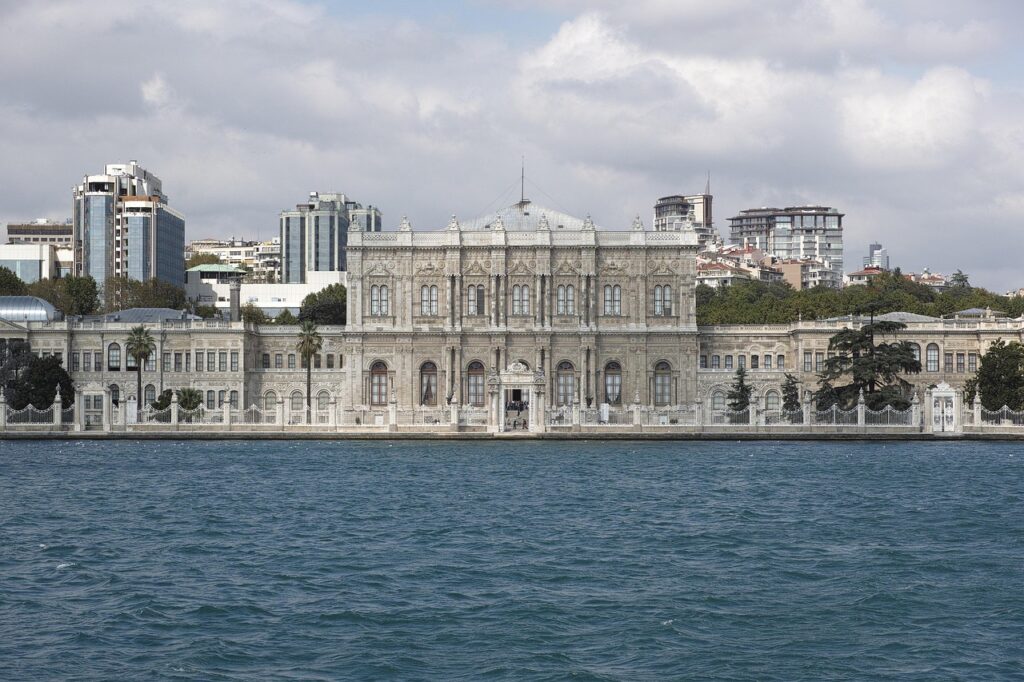
The grounds are a different story. The gardens, the waterfront facade, the clock tower, and the gates are all freely photographable, and they give you plenty of beautiful material. The long marble facade along the Bosphorus is one of the classic shots of Istanbul.
Plan your photographs for the exterior, and consider a Bosphorus boat trip after the palace for the view from the water. From the strait, the whole palace opens up in its setting, and it is the perspective most visitors treasure.

Visiting with Children or Limited Mobility
Dolmabahce can be challenging with young children, because the guided tours move at a set pace and there is little room for exploring. Older children who enjoy history and grand interiors tend to do well, while younger ones may find the pace long, so plan a reward visit afterward.
Mobility is a real consideration. The palace involves long walking distances and numerous staircases, and the historic interiors are not fully accessible to wheelchairs. Contact the palace in advance to understand exactly which sections you can visit and what assistance is available.
The gardens and the waterfront promenade are level and open to everyone, and the views from the grounds are outstanding. For travelers with limited mobility, a combined approach often works best: a partial interior tour plus generous time outside.
Pairing the Palace with the Neighborhood
Dolmabahce sits in one of Istanbul’s liveliest districts, and a good visit pairs the palace with the life around it. The Besiktas waterfront, a short walk away, is lined with ferries, cafes, and market streets, perfect for lunch after your tour.
The palace’s own mosque, the Dolmabahce Mosque, stands beside the water nearby, and the walk between them takes you past the clock tower and along the shore. For a different perspective, take a ferry from Besiktas across the strait and look back at the palace from the water.
On the other side, the neighborhood of Kabatas connects you back to the tram and the old city. With the palace in the morning and the waterfront in the afternoon, the day feels complete without ever leaving the Bosphorus shore.
Frequently asked questions
Is Dolmabahce Palace open every day?
The palace is open every day except Monday, with opening hours that change by season and a timed-entry system. Because the guided tours are limited, it is wise to buy tickets in advance, especially in summer, when popular entry times sell out early in the day. Monday closures also concentrate visitors on other mornings, so book the earliest slot you can.
Can you take photos inside Dolmabahce Palace?
No. Photography is not allowed inside the palace interiors, including the ceremonial hall, the harem, and the room where Atatürk died. You can photograph freely in the gardens, the courtyard, and the waterfront exterior, and many visitors save their camera time for outside.
Do you need a separate ticket for the harem?
Yes. The harem wing is ticketed separately from the state apartments, or Selamlık. Many visitors purchase both, since the harem contains the private rooms of the royal family and the preserved bedroom where Atatürk died, and it offers a completely different atmosphere from the ceremonial halls.

All Over Information
The All Over Information editorial team researches and writes practical English-language guides to Turkey. Facts are checked against official and local sources before publication, prices are published as dated ranges rather than quotes, and guides are revised when things change. We accept no sponsored posts, paid placements or paid links.
More guides like this

Visiting Grand Bazaar: Tickets, Hours, and Tips
The Grand Bazaar is one of the great experiences of Istanbul, and it is also one of the most confusing places for…

Why Hagia Sophia Should Be on Your Turkey Bucket List
Every travel list for Turkey includes Hagia Sophia, and the lists are right. This is not a monument you visit to tick…

The Architecture of Ishak Pasha Palace Explained
The Ishak Pasha Palace is often called the most beautiful palace in eastern Turkey, and its architecture is the reason.

Why Aspendos Theatre Should Be on Your Turkey Bucket List
Every country has its must-see ruins, but few ruins anywhere in the world do what the theatre of Aspendos does: they make…

Selimiye Mosque Through the Centuries
The Selimiye Mosque has dominated Edirne since the year 1575, when the architect Mimar Sinan completed the building he would call his…
The Complete History of Spice Bazaar
At the waterfront of Eminönü, where the ferries dock and the seagulls wheel above the fishing boats, stands one of the most…