Gender roles in Turkey are a common source of confusion for foreign visitors. Depending on where you go, you may see women in headscarves or miniskirts, men kissing each other in greeting or refusing to shake a woman’s hand. The variety can seem contradictory. This guide explains the reality behind the contrasts: how Turkish men and women interact, what the rules are, and how you can move through the country with confidence and respect.
First Impressions
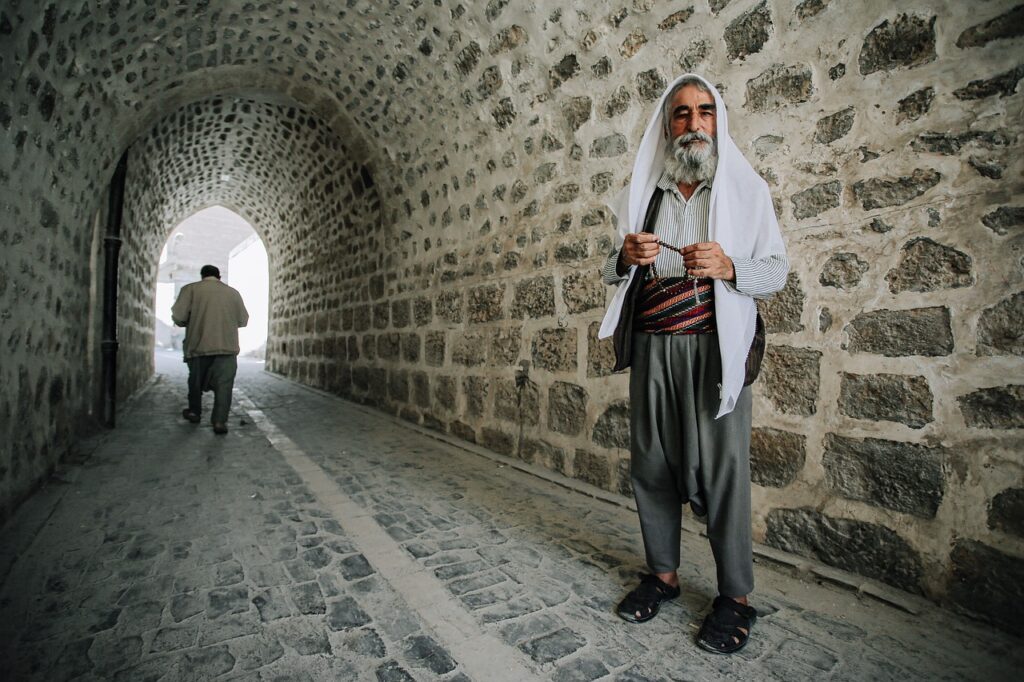
Your first impressions of gender in Turkey will depend on where you land. In Istanbul‘s modern districts, you will see a society that looks much like Western Europe: men and women working together, dating openly, and dressing freely. In conservative neighborhoods and the countryside, the picture changes: women in modest dress, separate social spaces, and more formal relations between the sexes.
The contrast is not a mask. Both realities exist, and both are Turkish. The country spans the two worlds, and its gender culture is a spectrum rather than a single rule. Your experience will depend on where you go and who you meet.
The practical lesson is to observe before you act. Watch how local men and women interact, and follow the pattern. The visitor who adapts to the local rhythm will be comfortable in both worlds, and the adaptability itself will be appreciated.
The Official Picture
The official framework of gender in Turkey is one of equality. Turkish law gives women equal rights in education, work, and politics, and women vote, stand for office, and hold high positions. The legal equality is a legacy of the republic, and it remains the foundation of the country’s gender culture.
The official picture includes real achievements. Turkey has had a female prime minister, female ministers, judges, and diplomats, and women lead companies, hospitals, and universities. The legal and institutional framework supports women’s participation in every field.
But the official picture has limits. The laws are not always enforced, the courts do not always protect women, and the social reality lags behind the legal one. Understanding the gap between the official framework and the lived experience is essential to understanding gender in Turkey.

Public Life and the Workplace
In Turkish public life, men and women mix far more than outsiders often expect. They work together, study together, and share public space in the cities. The workplace is a normal arena of mixed-gender interaction, and professional women are respected and common.
The interaction has its own codes. In formal settings, the handshake is standard, and gender rarely changes it. In more traditional settings, a man may wait for a woman to offer her hand, and some conservative men will not shake hands with women at all. The codes are regional and generational, and they are not hostile: they are simply different.
For visitors, the workplace and public space are where you will have the most contact with Turkish men and women. Treat colleagues and contacts with professional courtesy, follow the local greeting pattern, and you will find the interaction easy. The public world of Turkey is open to everyone.
The Domestic Sphere
The domestic sphere is where traditional gender roles are strongest in Turkey. The home is traditionally the woman’s domain, and the man’s domain is the outside world. The division is expressed in daily life: the woman cooks and manages, the man represents the family outside and handles finances.
The domestic roles are changing, but slowly. Working women expect help at home, and young couples share more equally. Yet the expectation that the woman manages the household persists, and many Turkish women carry the double burden of work and home.
For the visitor, the domestic sphere is usually visible only through invitations. If you are welcomed into a Turkish home, you will see the roles in action: the women in the kitchen, the men in the living room, the children moving between them. The pattern is warm, not cold, and it is the family at its most traditional.
How Men and Women Interact
The interaction between men and women in Turkey follows codes that visitors should learn. In public, the interaction is warm but measured: people greet, talk, and laugh, but the physical distance is greater than in Western Europe, and public displays of affection between couples are rare outside the cities.
The codes of greeting matter. Between friends of the same sex, the greeting is warm, often with a kiss on both cheeks or an embrace. Between men and women who do not know each other, the greeting is more formal, and the handshake is offered by the woman first. The visitor who follows the pattern will avoid awkwardness.
For foreign visitors, the codes are forgiving. Turks understand that visitors come from different cultures, and they will not be offended by small mistakes. A smile, a greeting, and a respectful attitude will carry you through every interaction, and the warmth of the culture will do the rest.
Religion’s Role
Religion shapes gender roles in Turkey for a large part of the population, and visitors should understand its place. Conservative religious communities follow traditional gender expectations: modest dress for women, a family-centered life, and separation of the sexes in some settings. The practices are expressions of faith, and they are respected by the wider society.
But religion’s role is not uniform. Many religious women are educated and employed, and the religious community includes every shade of practice. The headscarf, once banned in public institutions, is now common, and its meaning ranges from personal faith to political statement. Religion and gender in Turkey resist simple descriptions.
For visitors, the respectful approach is to accept the diversity. Do not assume that a covered woman is oppressed or that a bareheaded one is secular. Ask nothing about dress, treat every person as an individual, and the complexity of Turkish religious life will reveal itself in its own time.

Regional Contrasts
The regional contrast in Turkish gender roles is one of the strongest in the world within a single country. The Aegean and Mediterranean coasts, with their tourism and trade, are the most liberal, with women in every role and relaxed social codes. The southeast, with its traditional and religious culture, is the most conservative, and women’s public lives are more restricted.
The contrast shapes daily experience. A female tourist sunbathing on the Aegean coast and a woman in a southeastern village live under different social codes, and both are Turkish. The traveler who moves between the regions is moving between two gender cultures.
The lesson for visitors is to adjust expectations by region. In the liberal west, behave as you would in Europe. In the conservative east, dress modestly and respect the local codes. The adjustment is easy, and it makes travel through the country both smoother and richer.
The Generation Gap
The generation gap in Turkish gender attitudes is wide and visible. Older generations, raised in traditional households, hold the classic roles: the man provides, the woman manages the home. Younger generations, educated in the cities and connected to the world, expect equality and choice. The gap can divide families.
The gap is lived daily. A grandmother who married at seventeen and a granddaughter who studies abroad represent two worlds, and the family is the place where the two worlds negotiate. The negotiation is often warm, sometimes tense, and always real.
For the visitor, the generation gap explains many surprises. The young woman who travels alone and the elderly man who expects deference are part of the same family. Understanding that the generations live by different codes helps you read the interactions you will witness.
Practical Advice for Visitors
Practical advice for visitors on gender in Turkey is simple and easy to follow. Dress modestly when visiting mosques and conservative areas, covering shoulders and knees. In the cities and resorts, dress as you would at home. The golden rule is to respect the local setting.
Interactions are easy if you follow the basic codes. Greet people warmly, let women initiate handshakes in formal settings, and be respectful in all interactions. If you are a woman traveling alone, you will be treated with courtesy, though you should expect attention in traditional areas and respond calmly.
The deeper advice is to enjoy the variety. Turkey offers the chance to see gender roles in every stage of transition, from the most traditional to the most modern. Approach the variety with curiosity, and the country will teach you more about gender than any book.
Looking Forward
Gender roles in Turkey are moving, and the direction is clear. Education, urbanization, and global connection are pushing the society toward greater equality, and the young generation is the engine of the change. The movement is uneven and contested, but it is real.
The future will not be a copy of the West. Turkish women are defining their own path, combining careers, faith, and family in ways that are distinctly Turkish. The men are being asked to change alongside them, and the negotiation is reshaping the family, the workplace, and the society.
For you, the visitor, the transition is part of the experience of Turkey. You will see the past and the future of gender in the same streets, and the tension is part of the country’s energy. Watch it, respect it, and you will understand why gender in Turkey is one of the most fascinating stories in the modern world.
Frequently asked questions
Is it safe for female tourists to travel alone in Turkey?
Yes. Turkey welcomes solo female travelers, and the cities are safe and accommodating. In traditional areas, women may receive more attention, but modest dress and calm responses keep interactions comfortable. Basic precautions apply as in any country.
How should I greet Turkish men and women?
Greet people warmly with a smile. In formal settings, wait for a woman to offer her hand before shaking it. Between friends, greetings are warm and may include cheek kisses. Small mistakes are forgiven, and a respectful attitude covers everything.
Do I need to cover up in Turkey?
Only in specific settings. In mosques, cover your head, shoulders, and knees. In conservative and rural areas, modest dress is expected and respected. In the cities and resorts, dress as you would at home.

All Over Information
The All Over Information editorial team researches and writes practical English-language guides to Turkey. Facts are checked against official and local sources before publication, prices are published as dated ranges rather than quotes, and guides are revised when things change. We accept no sponsored posts, paid placements or paid links.
More guides like this
Traditional Instruments in Turkish Folk Music
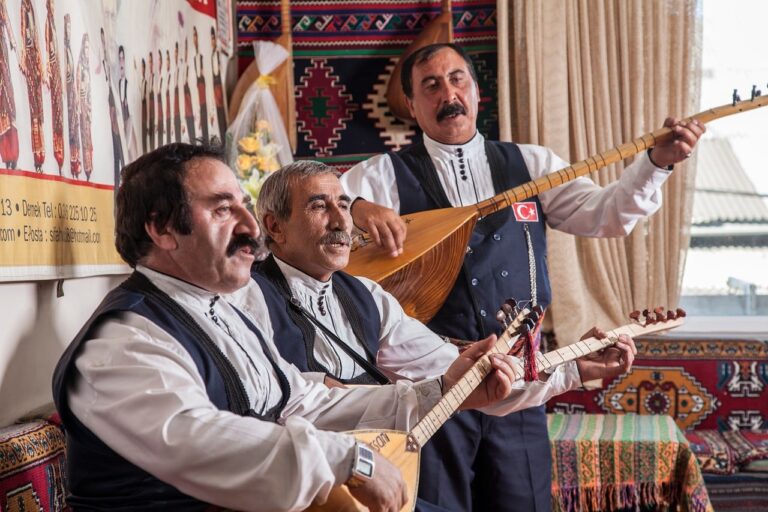
The instruments of Turkish folk music carry the sound of the land itself.

Turkish Hospitality Culture Explained for Foreigners
Turkish hospitality is famous, but for many foreign visitors it comes as a genuine surprise.

Traditional Turkish Barbershops and Their Rituals
Step into a traditional Turkish barbershop, and you enter a world of warm towels, flickering flames, and rituals that have been refined…

A Deep Dive into Gift-Giving Customs in Turkey
Gift-giving in Turkey looks simple on the surface and reveals layer after layer the longer you look.

A Visit to a Traditional Turkish Barber Shop: What to Expect
A visit to a traditional Turkish barber shop, known as a berber, is often described as one of the more memorable everyday…

Turkey’s Earthquake Risk: What Residents and Visitors Should Know
Turkey is one of the most earthquake-prone countries on earth.