Central Anatolia spreads across a high plateau where the country’s capital, its most famous landscape, and its deepest history all live within a few hours of each other. The region’s towns could hardly be more different: the cave-carved villages of Cappadocia, the spiritual city of Konya, the modern capital Ankara, and the pottery town of Avanos each offer a distinct version of the plateau. Choosing where to stay shapes your whole trip, since the towns are the gateways to the landscapes around them. This guide compares the best bases so you can match each place to what you most want from your journey.
How to Choose Your Central Anatolia Base
The first decision of any Central Anatolia trip is where to sleep, because the region’s highlights are spread over a wide area and each town offers different access. Cappadocia is the anchor for most travelers, and the cluster of towns at its heart holds the region’s most atmospheric accommodation.
Konya and Ankara are big cities with their own cultural weight, best visited for one or two days each rather than used as bases. The smaller towns of the plateau, from Avanos to Aksaray, work for travelers who want quieter days and local character.
The practical pattern most visitors follow is simple: spend the majority of nights in the Cappadocia towns, then add a night in Konya and a night in Ankara as you move through the region. Add a rural guesthouse if you want to slow down and feel the plateau at its most authentic.
Goreme: Gateway to Cappadocia
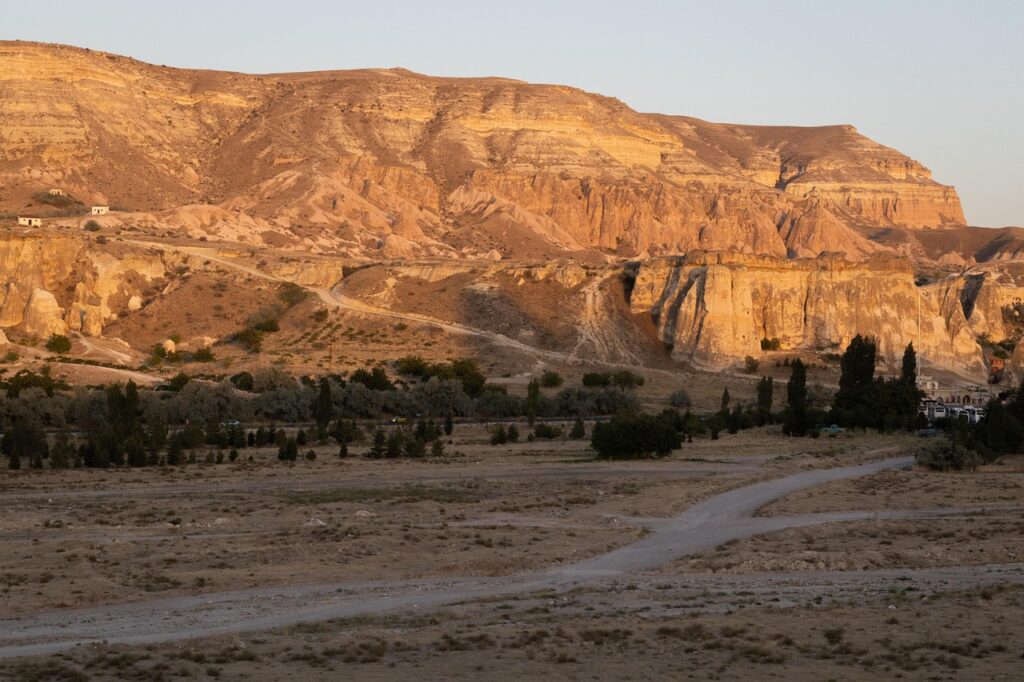
Goreme sits at the center of the Cappadocia landscape, surrounded by the fairy chimneys and rock valleys that define the region, and it is the natural first choice for most visitors. The town itself is a small, walkable web of stone houses, restaurants, and carpet shops built against the hillside.
Its great advantage is access. The Goreme Open-Air Museum is a short walk away, the balloon launch sites are on the doorstep, and the valleys of Rose, Pigeon, and Love open directly from the town edges. Everything you came to Cappadocia for starts here.
The trade-off is that Goreme is also the busiest and most tourist-oriented town of the region. Restaurants and shops cater squarely to visitors. It is lively, convenient, and endlessly photogenic, and for most first-timers it remains the best base in Cappadocia.

Urgup: Elegant Hills and Cave Hotels
Urgup, a short drive from Goreme, is Cappadocia’s more refined town, built around a hillside of grand old stone houses and famous cave hotels. It has a settled, prosperous character, with wine houses, boutique shops, and some of the most beautiful accommodation in the region.
The town’s setting is superb: the surrounding hills are riddled with cave dwellings, and viewpoints along the ridge give sweeping views over the fairy chimney landscape. Urgup is also the natural center of the region’s winemaking, with a long tradition of local viticulture.
Choose Urgup if you prefer elegance and calm over convenience. You will need transport to reach the main valley walks, but you will wake in a stone room, eat in stylish restaurants, and experience Cappadocia with a little more polish.
Avanos: The Potters’ Town
Avanos sits on the banks of the Kizilirmak, the Red River that gives the region its name and whose clay made this the pottery capital of Anatolia for thousands of years. The town’s workshops still turn out red clay pots, plates, and tiles using techniques unchanged since Hittite times.
Watching a potter at the wheel is one of the town’s simplest pleasures, and many workshops happily demonstrate their craft. The riverside promenade, the old stone bridges, and the town’s unhurried pace make Avanos the most relaxed base in Cappadocia.
It is a short drive from the valley walks of Goreme and Urgup, so staying here costs you little convenience and gains you authenticity. Families particularly enjoy the pottery lessons, and the evening riverbank is the pleasantest place in the region to watch the sun go down.
Konya: The City of Rumi
Konya is the spiritual capital of Central Anatolia, a large, devout, and deeply traditional city whose identity is bound to the thirteenth-century mystic Rumi and the Mevlevi order of Whirling Dervishes. Its centerpiece is the Mevlana Museum, where Rumi’s tomb sits beneath a turquoise-tiled dome.
The city is a treasury of Seljuk architecture, with the great Alaeddin Mosque on its ancient mound, the Ince Minare medrese with its intricate brickwork, and caravanserais that once served the Silk Road. Konya’s museum of wooden and stone artifacts is among the best in the country.
Konya is conservative, so dress modestly and move with respect, and the reward is a city of deep hospitality and remarkable food. The December ceremonies marking Rumi’s anniversary draw pilgrims from around the world. One or two days in Konya adds a spiritual dimension that no other Anatolian city can offer.
Ankara: The Modern Capital
Ankara became the capital of modern Turkey in the 1920s, a deliberate choice that turned a provincial town into the seat of the republic. Today it is a sprawling, workaday city with wide boulevards, government buildings, and a serious museum culture that most travelers underestimate.
The essential stops are Anitkabir, the monumental mausoleum of the republic’s founder, and the Museum of Anatolian Civilizations, which tells the story of the plateau from the Stone Age to the classical world with some of the finest artifacts in existence. The old citadel quarter preserves an older, more human Ankara.
Ankara is best treated as a one- or two-day stop rather than a base, and it makes a sensible introduction to the region’s history before you head into the countryside. It is also the easiest arrival point, with high-speed rail and flights linking it to Istanbul and the rest of Turkey.

Nevsehir and the Valley Towns
Nevsehir is the provincial capital of the Cappadocia area and the name on the airport that serves the region, but the city itself is a modern market town with little to hold the traveler. Its importance is practical: buses, flights, and car hire all connect here.
The valley towns around it are where the character lies. Small settlements like Cavusin, with its abandoned cave village, and the wine village of Kizilcukur sit between the main towns and offer quieter versions of the same landscape. Their paths lead into the best walking valleys.
For travelers who want to avoid tourist crowds entirely, these villages offer simple guesthouses and a slower pace. Combine them with the main towns and you get both convenience and calm in one itinerary.
Aksaray and the Caravanserai Route
Aksaray guards the western entrance to Cappadocia and the historic trade route that crossed the plateau. The town is modest, but its surroundings hold some of the region’s most impressive monuments, including the great Sultanhani caravanserai, a vast stone fortress where Silk Road caravans once sheltered.
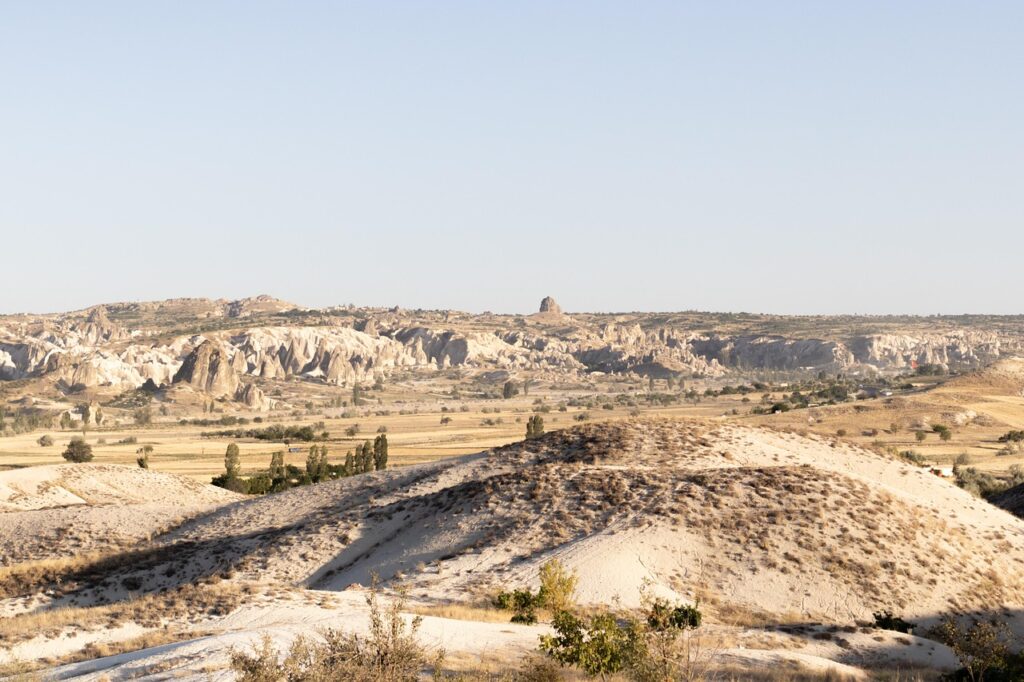
The land around Aksaray is wilder than the Cappadocia heartland: volcanic cones, the great salt lake nearby, and the underground city of Derinkuyu within easy reach. The volcanic peak of Hasan Dagi dominates the horizon, sacred in antiquity and striking today.
Travelers rarely stay in Aksaray itself, but it rewards a half-day stop on the route between Cappadocia and Konya. The caravanserais of the plateau are among the most atmospheric buildings in Turkey, and this is the easiest place to see them.
Sivas and the Eastern Plateau
Sivas, on the eastern edge of the region, is a city of Seljuk splendor and republican history. Its great thirteenth-century buildings, including the Gok Medrese with its turquoise-tiled facade, are among the finest medieval architecture in Anatolia, and the city played a key role in the founding of modern Turkey.
The surrounding plateau is high, cold, and dramatic, with wide valleys and a frontier feel. Sivas makes a good stop for travelers crossing the region by road or rail, and its bazaar and teahouses offer an authentic slice of provincial life.
For most visitors, Sivas is a detour rather than a destination, but it rewards those who make it. The combination of Seljuk monuments, mountain scenery, and genuine local character makes it one of the region’s more memorable stops.
Building Your Own Itinerary
The ideal Central Anatolia route connects the region’s three faces: Cappadocia’s landscapes, Konya’s spirituality, and Ankara’s history. A common pattern starts in Ankara, takes the high-speed train to Konya, and finishes with several days in Cappadocia before flying out from the regional airport.
Add flexibility where it suits you. The pottery town of Avanos, the wine country around Urgup, and the rural villages all reward extra nights. Travelers who love history can loop north to the Hittite capital of Hattusa, and those who love emptiness can follow the roads across the salt lake.
Whatever your mix, keep travel times modest and let the plateau’s pace set your rhythm. Central Anatolia’s towns are not sightseeing checklists; they are places to live in for a few days, and the best trips are built slowly.
Frequently asked questions
Which town is the best base for Cappadocia?
Goreme is the best all-round base: walkable, central, and surrounded by the valleys and balloon sites you came to see. Urgup offers more elegance and quieter evenings, and Avanos wins for family-friendly calm. All three sit within a short drive of each other, so the choice mostly comes down to atmosphere.
Is Ankara worth visiting on a Central Anatolia trip?
Yes, if you value museums and history. The Museum of Anatolian Civilizations is one of the best archaeology museums in the world, and Anitkabir is a moving and impressive monument. One or two days is enough, and the city works well as an arrival or departure point thanks to its rail and air links.
Which Central Anatolian town is best for a quiet, authentic stay?
Avanos, or a village guesthouse in the Cappadocia valleys, offers the most authentic pace. The pottery town has genuine local life without losing access to the region’s highlights. For a more rural version, the small valley villages around Goreme and Urgup give you simple rooms and empty trails.

All Over Information
The All Over Information editorial team researches and writes practical English-language guides to Turkey. Facts are checked against official and local sources before publication, prices are published as dated ranges rather than quotes, and guides are revised when things change. We accept no sponsored posts, paid placements or paid links.
More guides like this
Hidden Gems of the Central Anatolia Region
Cappadocia's balloons and fairy chimneys draw the crowds, but the Central Anatolian plateau is far bigger than the famous valleys, and most…

Hidden Gems of the Eastern Anatolia Region
Eastern Anatolia is the least visited part of Turkey, so in a sense the whole region is a hidden gem.

Climate and Best Time to Visit the Southeastern Anatolia Region
Southeastern Anatolia is the warmest corner of Turkey, a land of golden plains and stone cities where the summers are fierce and…

Exploring the Eastern Anatolia Region: A Complete Travel Guide
Eastern Anatolia is Turkey at its most immense: a high, cold, volcanic plateau where mountains rise above four thousand meters, where Lake…
Climate and Best Time to Visit the Eastern Anatolia Region
Eastern Anatolia has the most extreme climate in Turkey: a high plateau where winter is long and severe, summer is short and…

Climate and Best Time to Visit the Marmara Region
The Marmara Region has a transitional climate, sitting where the Mediterranean, the Black Sea, and the continental interior meet.