Uskudar is a photographer’s district, and it offers a rare combination: one of the most famous buildings in the strait, a waterfront of grand mosques, a hilltop panorama that ranks among the great views of the world, and the daily drama of the Bosphorus as the constant subject. It is also one of the least crowded photographic grounds in Istanbul — the shots are there, and so is the space to take them. This guide maps the essential photography spots of Uskudar, from the classic panoramas to the details that reward a second look.
The Maiden’s Tower: The Icon in Every Light
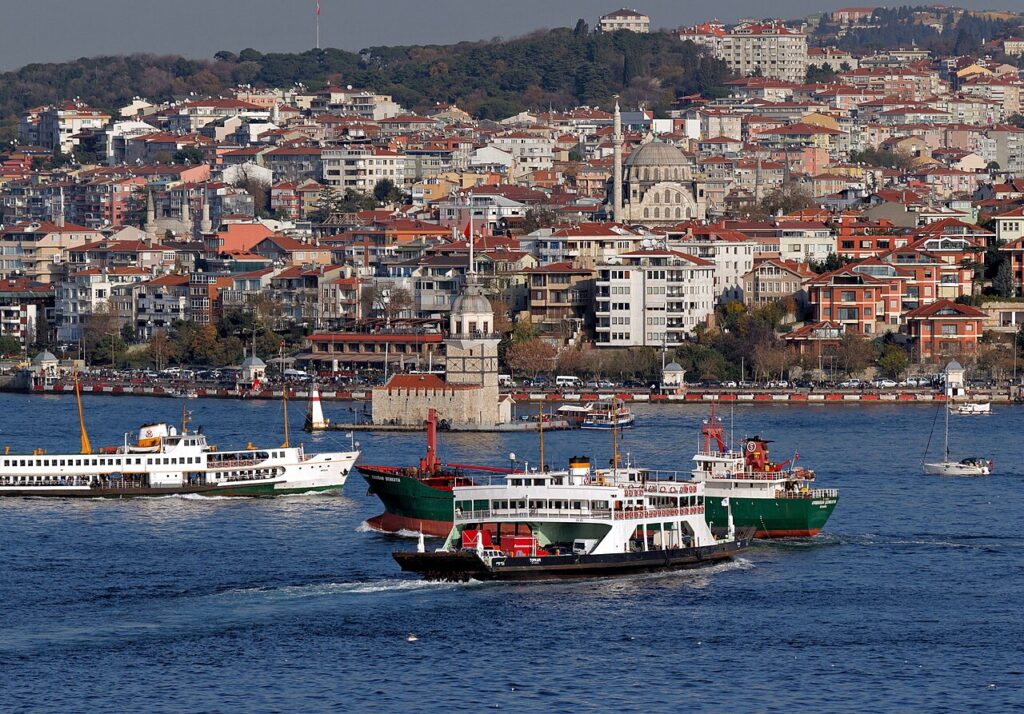
The tower in the strait is the district’s great subject, and it photographs in every light. The classic frames are the ones from the Uskudar waterfront: the tower against the water, the European shore behind it, the ferries crossing the frame. The golden hours are the magic ones — the sunrise behind the tower, the sunset catching its stone — and the night version, the tower lit over the dark water with the city lights beyond, is the hidden prize. The boats to the tower give the close-ups and the water-level angles; the ferry crossings give the distance shots with the tower and the old city together. The tower is the icon that never tires the photographer, and the waterfront is the gallery.
The Waterfront Mosques: The Ottoman Skyline
The chain of grand mosques along the Uskudar shore is one of the great architectural photographic walks in Istanbul. The Şemsi Paşa Mosque at the water’s edge, the Mihrimah Sultan, the Yeni Valide — the domes and the minarets run one after another along the shore, the Ottoman waterfront mosque tradition at its fullest expression. The morning light is the good one for the waterfront facades; the late light gives the silhouettes against the water; and the ferry approaches give the skyline shots, the minarets lining up against the European shore. The details reward the close look — the calligraphy, the fountains, the courtyards, the marble. The mosque walk is the district’s architectural portfolio.
Çamlıca Hill: The Great Panorama
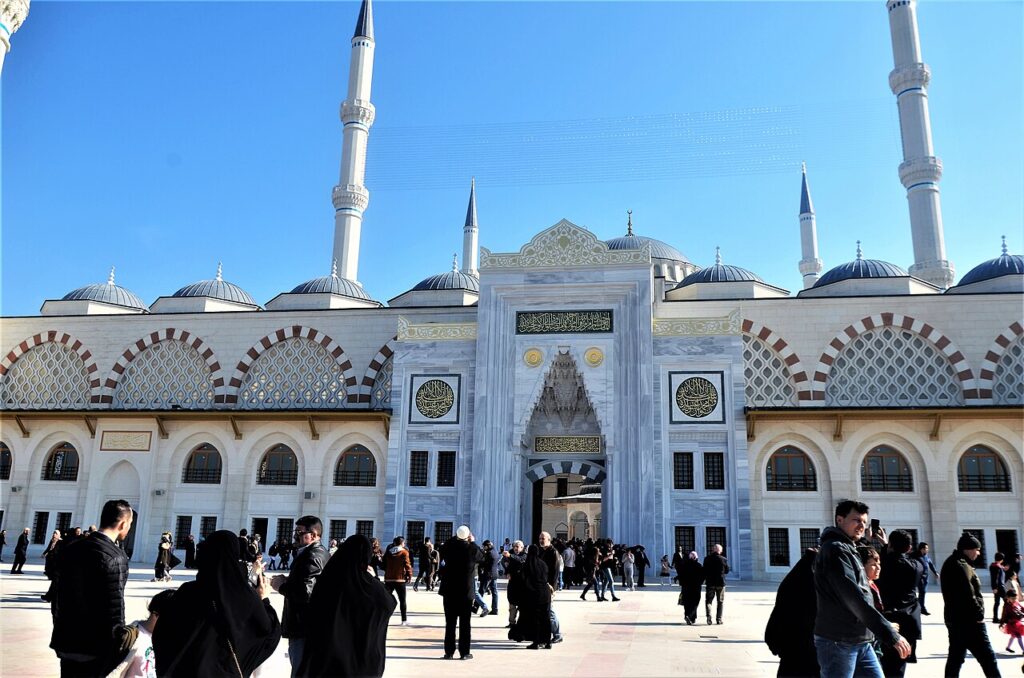
The summit of Çamlıca is one of the great viewpoints in the world, and the photography is the panorama: both sides of the Bosphorus, both bridges, the whole sweep of the city laid out below. The modern Çamlıca Mosque, the largest mosque in Turkey, fills the foreground with its own scale, and the parkland around it gives the framing. The sunset is the magic hour — the city lighting up below, the strait catching the last light, the bridges stringing their lights across the water — and the night version, the whole metropolis glittering from the summit, is the long-exposure prize. Bring the telephoto for the details of the city and the tripod for the night; the summit rewards both.
The Waterfront Promenade: The Daily Life
The promenade along the shore is the district’s street-photography ground: the fishermen on the seawall with their rods, the ferries docking and departing, the commuters and the families, the teahouses with their tulip glasses, the cats of the waterfront, the boats at the piers. The light is the coastal light — soft in the morning, golden in the evening, dramatic in the winter — and the life is the daily life of the district, the subject that the tourist quarters have lost. The photography here is the photography of the working shore: the hawsers and the hulls, the gulls and the lines, the faces of the district. It is the version of Uskudar that the postcards do not show.

The Hills and the Neighborhoods
The hills behind the waterfront hold the district’s other views: the elevated angles back down over the strait, the rooftops, the tower in the water below. The streets of the hillside neighborhoods — the historic houses, the courtyards, the small mosques — are the detail photography: the wood and the stone, the laundry lines, the village life of the Asian shore. The cemeteries of the hills, with their cypress trees and their views, are the atmospheric layer — the silent lanes, the centuries of stones, the elevated perspectives over the water. The hills are the district’s hidden photographic ground, and the walks are the itinerary.
The Villages North: Kuzguncuk and the Shore
The coast north of Uskudar extends the district’s photographic map. Kuzguncuk is the color story: the pastel wooden houses, the waterfront promenade, the synagogue and the church and the mosque within steps of each other, the tea gardens on the water, the artists’ studios with their works in the windows. The ferry ride north gives the water-level frames — the village houses sliding past, the green hills, the light on the water. The villages photograph best in the long summer evenings and the golden autumn light, and the walk along the shore between them is the district’s hidden photographic itinerary.

The Details and the Night
The last photography of Uskudar is the photography of details, and the district is full of them: the calligraphy and the fountains of the mosques, the tulip glasses and the backgammon boards of the teahouses, the market stalls and their produce, the cats of the waterfront, the hawsers and the buoys of the piers, the ferries’ wakes. And then there is the night: after the crowds go home, the waterfront turns dark and reflective — the tower lit in the strait, the European shore sparkling across the water, the ferries as light trails, the reflection of the city in the dark strait. The night photography of Uskudar is the district’s last secret, and the one its photographers keep for themselves.
The Photography Day, Planned
Sunrise, if you can manage it: the waterfront empty, the tower in the low light, the fishermen on the seawall. Morning: the mosque walk in the good light, the details of the courtyards. Midday: the market streets, the daily life. Late afternoon: the bus up to Çamlıca for the sunset panorama. Night: the waterfront — the tower lit, the ferries as light trails, the long exposures. The camera kit is simple — a mid-range zoom covers the day, a telephoto for the city from the summit, a tripod for the night — and the district provides the rest. Uskudar does not need a map of viewpoints; it needs to be walked, with the camera ready, and the shots will find themselves.
The Photography Calendar
The district’s light changes with the season, and the calendar is part of the craft. The spring brings the soft, even light and the green of the hills; the summer brings the long golden evenings and the late sunsets; the autumn brings the low, warm light and the clarity of the air — many photographers’ favorite season for the strait; and the winter brings the drama — the squalls, the steel-blue water, the rare snow on the tower. The time of day matters as much as the season: the sunrise for the empty waterfront, the golden hours for the tower and the mosques, the night for the lights and the long exposures. The photographer who returns in more than one season collects the district’s different faces — the green of the spring, the gold of the autumn, the drama of the winter, the light of the summer — and every one of them is worth the trip.
Frequently asked questions
What is the best time for the tower shots?
The golden hours — the sunrise behind the tower and the sunset catching its stone — with the night version as the hidden prize.
Do I need a tripod?
For the night shots — the tower, the bridges, the city from the summit — yes. Everything else is hand-holdable in the district’s forgiving light.
Can I photograph the mosques freely?
The exteriors and the courtyards, yes; the interiors are working places of worship, with the quiet respect the setting requires — no flash, modest dress.
Where is the best elevated view?
The summit of Çamlıca — the panorama over both sides of the Bosphorus is one of the great views of the world.
Is Uskudar good for night photography?
Excellent — the tower lit in the strait, the European shore across the water, and the ferries as light trails, all from the safe, quiet waterfront.
What lens should I bring?
A mid-range zoom covers the day; a telephoto reaches the city from the summit and the details of the tower and the mosques; and a tripod is the tool for the night shots.
What is the quietest time for people-free shots?
The weekday mornings — the waterfront empties, the light is low and long, and the fishermen on the seawall give you the classic frames without the crowds.
Are the villages worth the ferry for photography?
Yes — Kuzguncuk’s pastel houses, its waterfront, and its three houses of worship are a color story, and the ferry ride north gives the water-level frames that the shore cannot.

All Over Information
The All Over Information editorial team researches and writes practical English-language guides to Turkey. Facts are checked against official and local sources before publication, prices are published as dated ranges rather than quotes, and guides are revised when things change. We accept no sponsored posts, paid placements or paid links.
More guides like this

Best Time of Year to Visit Uskudar
Every season in Uskudar has its own character, and the honest truth about the district's climate is that it has no bad…

A Foodie’s Guide to Uskudar
Uskudar is the district where Istanbul's food traditions are at their most intact — the working Asian shore where the teahouse, the…

Uskudar Airport and Transport Guide
Uskudar is one of the best-connected districts in Istanbul — the Asian gateway of the city, where the ferries, the Marmaray rail…

A Solo Traveler’s Guide to Uskudar
Uskudar is the district that solo travelers discover and then keep to themselves.

Uskudar in Winter: What to Expect
Uskudar in winter is the district's true character revealed.

Shopping Guide: What to Buy in Uskudar
Shopping in Uskudar is the local version of the Istanbul shopping experience — and the better one for the traveler who wants…