Gozleme belongs to a worldwide family of stuffed flatbreads, and nearly every cuisine has one: the quesadilla of Mexico, the paratha of India, the piadina of Italy, the crepe of France. Yet gozleme is unmistakably itself, and the differences go far beyond the filling. The dough, the griddle, the cooking rhythm, and the place of the dish in daily life all set gozleme apart. This guide compares gozleme with its international cousins and explains the details that make it uniquely Turkish.
What Exactly Is Gozleme
At its simplest, gozleme is a sheet of hand-rolled dough, filled on one half, folded over, and cooked on a domed iron griddle called a sac. The dough is made from flour, water, salt, and often a little yogurt, and it is rolled thin enough to become translucent. The filling is spread in a thin layer, and the finished flatbread is cooked until the outside blisters and browns.
The defining features are the extreme thinness of the dough, the high-heat griddle cooking, and the buttery finish. The result is crisp, tender, and light, with a texture that is quite different from the bready stuffed flatbreads of other cuisines.
The word gozleme itself points to the pocket of filling, visible through the dough in small compartments that give the dish its name, from the Turkish goz, meaning eye.
Gozleme vs. Quesadilla
The quesadilla is the closest cousin in spirit: a filled tortilla cooked until the cheese melts. But the differences are instructive. The quesadilla uses a corn or wheat tortilla, which is thin but not stretchy, and it is cooked dry or in a pan, often with just a fold.
The tortilla is not rolled by the cook; it comes ready-made. Gozleme, by contrast, is built from dough, rolled by hand at the moment of cooking. That handmade element changes everything: the texture is softer, the edges are thinner, and the dough absorbs the filling differently.
The fillings differ too. Where quesadillas lean on melted cheese, gozleme is as likely to hold spinach, potato, or spiced meat, and it is finished with a brush of butter rather than served with salsa and sour cream. The quesadilla also plays a different role in its home country, served as a snack with dips, while gozleme is a complete breakfast or lunch, offered to guests as a gesture of hospitality. That role, as food of welcome, is part of what makes the Turkish flatbread feel different in the eating.

Gozleme vs. Indian Paratha
The paratha of India is another folded flatbread cooked on a griddle, and the comparison is a rich one. The paratha is usually cooked with ghee or oil, and it often gets its layers through repeated folding, producing a flaky interior.
Gozleme, in contrast, is a single sheet. Its texture comes not from layering but from the thinness of the dough and the violence of the heat. The paratha is typically eaten with a meal, dipped into curries, while gozleme is a complete food in itself, holding its filling like a sandwich. The paratha is also brushed with ghee at every fold, while gozleme receives its butter only at the end, as a finishing gloss rather than a cooking fat, which keeps the dough noticeably lighter.
Both are griddle foods, and both reward a skilled hand, but the gozleme’s paper-thin dough and its folded, sealed edges give it a character all its own.
Gozleme vs. Italian Piadina
The piadina of Romagna is a flatbread that comes closest to gozleme in appearance: a thin round griddled on iron and folded around a filling. Like gozleme, it is street food, made to order and eaten hot.
But the dough is different. The piadina is made with lard or olive oil and a leavening agent, giving it a slightly puffier, more bready texture. It is also not rolled as thin as gozleme, and it is usually folded around a cold filling of cured meats and cheeses rather than cooked with a filling inside.
Gozleme carries its filling inside the dough and cooks them together, so the filling and the bread become one. The piadina remains bread-plus-filling, two elements that meet only at the fold.

Gozleme vs. the French Crepe
The crepe is the thinnest member of the flatbread family, and in texture it resembles rolled gozleme dough. Both are made from a simple batter or dough, both are cooked on a flat surface, and both can hold sweet or savory fillings.
The crepe, however, is a batter poured onto the pan, while gozleme is a rolled sheet of dough. The crepe is cooked once, quickly, and folded around its filling without further cooking. Gozleme is cooked after filling, so the dough browns on both sides with the filling sealed inside.
The crepe is also usually served as a single portion with a fork; gozleme is cut into slices and shared, like a bread. The difference in eating style is as revealing as the difference in technique.
Gozleme vs. the Chinese Scallion Pancake
The scallion pancake of China is another griddled, folded flatbread, and it shares gozleme’s love of a hot iron. The scallion pancake is laminated, rolled with oil and scallions into many layers, and fried until crisp.
The result is flaky and chewy, closer to a paratha than to gozleme. The scallion pancake is typically eaten on its own, cut into wedges, with a dipping sauce, rather than stuffed with a substantial filling.
Gozleme’s filling is the point of the dish; the dough is the vehicle. In the scallion pancake, the dough itself, with its layers of oil and scallion, is the star.

Gozleme vs. Georgian Khachapuri
The khachapuri of Georgia is a filled bread with a long history and a deep regional pride, and the comparison with gozleme is fascinating. Both are filled with cheese, both are baked or griddled, and both are central to their national identities.
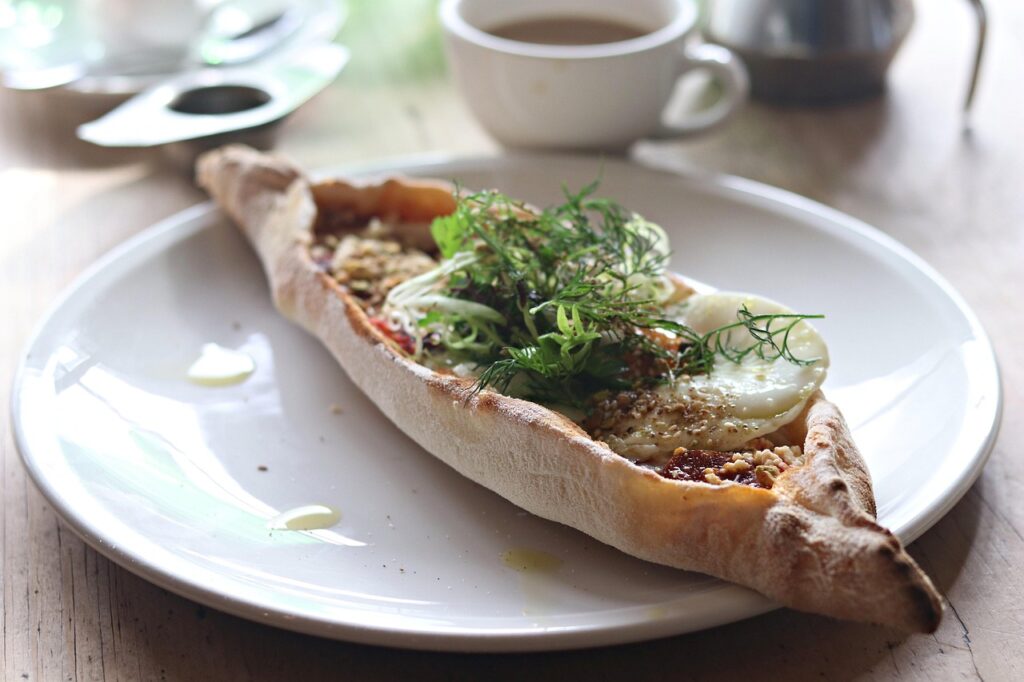
But khachapuri is a leavened, bready creation, often shaped like a boat with an egg baked into the center. It is a substantial, architectural food. Gozleme is thin, quick, and rustic, cooked in minutes rather than risen for hours.
The two dishes also occupy different places in the meal: khachapuri is a main event, while gozleme is an anytime food, equally at home at breakfast and at the beach.
What Makes the Dough Turkish
The Turkish dough is the quiet hero of gozleme. Made from plain flour, warm water, salt, and a little yogurt, it is rested long enough to relax the gluten, then rolled to near transparency. The yogurt is the traditional touch, giving the dough pliability and a faint tang.
The resting time is essential. A well-rested Turkish dough rolls thin without tearing, and that thinness is what distinguishes gozleme from every thicker flatbread in the world. International versions rarely achieve the same paper-thin quality.
The cooking also matters. The sac griddle, heated over wood or gas until it is fiercely hot, blisters the dough in a way that a frying pan cannot quite replicate. The high heat and the thin dough work together.
The Role of the Sac Griddle
The sac is the tool that defines gozleme. This domed iron plate has been used in Anatolia for centuries, and it is the same griddle that cooks the region’s other flatbreads. Its shape concentrates heat at the center, which suits the quick cooking of thin dough.
International flatbreads are cooked on a variety of surfaces: the comal of Mexico, the tawa of India, the plancha of Spain. Each tool shapes its bread, and the sac shapes gozleme: thin, blistered, and cooked in two or three minutes flat.
The sac also creates the social theater of gozleme. Because the cooking is fast and visible, it is usually done in front of the customer, and that performance is part of the dish’s charm.
What Makes It Turkish
Bring the elements together, and the Turkishness of gozleme becomes clear. The dough is handmade and paper-thin, the griddle is the ancestral sac, the filling is seasonal and regional, and the finish is a brush of butter. No other stuffed flatbread combines all of these.
The culture completes the picture. Gozleme is eaten at breakfast and at the beach, made by grandmothers and by market cooks, shared from a single plate with tea. It is a food of hospitality, offered to guests and travelers for centuries. It is also a food that resists standardization; each region, each cook, and each grandmother adds a personal touch, and no two griddles produce quite the same result. That handmade individuality is the opposite of the factory flatbread, and it is exactly what travelers fall in love with.
When you compare gozleme with its international cousins, the differences in technique are real, but the cultural differences are deeper. Gozleme is not just a flatbread; it is a piece of Turkish life, folded into a pocket of dough.
Frequently asked questions
Is gozleme the same as a quesadilla or paratha?
No, though all three are stuffed flatbreads. Gozleme is distinguished by its hand-rolled, paper-thin dough, its high-heat cooking on a domed sac griddle, and its butter finish. Quesadillas use ready-made tortillas, and parathas are laminated and flaky. The gozleme dough is also filled before cooking, so the filling and the bread cook together into one piece.
What gives gozleme its unique texture?
The texture comes from the combination of thin, rested dough and fierce griddle heat. The dough is rolled almost transparently thin, then cooked quickly on a hot iron, which blisters the outside while keeping the inside tender. A brush of butter after cooking adds gloss and flavor. No rising time is involved, which keeps the flatbread light.
Can I make gozleme without a sac griddle?
Yes. A heavy-based frying pan or crepe pan works well as a substitute, though the results differ slightly. The sac’s domed shape concentrates heat and creates a distinctive blistering pattern. Use high heat, cook the gozleme in just two or three minutes per side, and you will come close to the authentic texture.

All Over Information
The All Over Information editorial team researches and writes practical English-language guides to Turkey. Facts are checked against official and local sources before publication, prices are published as dated ranges rather than quotes, and guides are revised when things change. We accept no sponsored posts, paid placements or paid links.
More guides like this

Baklava: A Taste of Turkish Culture
Baklava is more than a dessert in Turkey; it is a language of celebration, hospitality, and pride.
Turkish Coffee: A Taste of Turkish Culture
No single food or drink carries the weight of Turkish culture like a cup of Turkish coffee.

Balik Ekmek (Fish Sandwich) Vs. International Variations: What Makes It Turkish
Fish sandwiches exist all over the world, from the battered fish and chips of Britain to the fish tacos of Mexico, and…

Turkey’s Best Cities for Foodies
Turkey is a country of regional cuisines, and each city tells its own culinary story. While the country as a whole is…

A Vegan and Vegetarian Guide to Turkish Food
Turkey is a far better destination for plant-based eaters than most visitors expect.

Menemen: A Taste of Turkish Culture
Menemen is the dish that greets a Turkish morning, a humble scramble of eggs, tomatoes, and peppers that has become a symbol…