Gozleme is one of the oldest foods still eaten in Turkey, a flatbread whose history reaches back to the nomadic past of the Anatolian plateau. Long before restaurants and beach stalls, gozleme was the bread of travelers: made by hand, filled with whatever was at hand, and cooked on a hot iron plate over an open fire. Understanding its history means understanding how a simple piece of dough became one of the most beloved foods of the Turkish table. This is the story of gozleme, from the camps of nomads to the griddles of the modern street.
The Nomadic Roots
The ancestors of gozleme were the flatbreads of the Turkic peoples of Central Asia, who carried flour, water, and salt across the steppes and cooked their bread on heated stones and iron plates. The word gozleme itself is linked to the Turkish word goz, meaning eye or compartment, a reference to the pocket formed when the dough is folded over the filling.
When the Turkic tribes migrated westward, they brought these cooking techniques with them. The sac, the domed iron griddle that defines gozleme cooking, is a direct descendant of the mobile cookware of the steppe. It was light enough to carry and could be set up anywhere, which made it perfect for a life on the move.
In Anatolia, these Central Asian traditions met the agricultural plenty of the plateau: wheat, cheese, greens, and later, the vegetables and herbs of the Mediterranean. The meeting of the two worlds created gozleme as we know it.
The Sac Griddle
The sac is the soul of gozleme. This round, slightly domed iron plate is set over a fire, and it is the same tool that bakes the thin flatbreads of village Anatolia. Its design is ancient, but it remains essentially unchanged: a single piece of iron, heated until a drop of water dances on its surface.
Cooking on the sac requires skill. The heat must be high enough to blister the dough but not so high that it burns, and the cook must flip the flatbread at exactly the right moment. Generations of Turkish cooks have passed down this timing, and the rhythm of the sac is learned by hand, not by book.
The sac also shaped the gozleme itself. Because the plate is round and has no sides, the dough must be rolled thin and cooked fast, which is exactly the character of gozleme: crisp outside, tender inside, and never heavy.

From Nomad Camp to Village Kitchen
As the Turkic peoples settled into village life, gozleme moved from the campfire to the home kitchen. In the villages of Anatolia, gozleme became the food of women’s hands, made for breakfast, for guests, and for the workers of the fields. It was a practical food: cheap, filling, and made entirely from local ingredients.
The filling changed with the seasons and the region. In spring, the first greens of the fields went into the gozleme; in summer, the young cheeses and herbs; in winter, the potatoes and the preserved meats. This seasonal rhythm is still visible in the regional gozleme of Turkey today.
In the village world, gozleme was also a social food. Making it was a shared task, with one woman rolling the dough and another tending the griddle, and it was the standard offering to visitors, since it could be made quickly from stores that were always on hand.
Gozleme in the Ottoman Era
During the Ottoman centuries, the flatbread tradition continued to evolve. The imperial kitchens of the palace developed elaborate breads and pastries, but gozleme remained a food of the people, made in the homes and the villages of the empire.
Travelers’ accounts from the Ottoman period describe the flatbreads of Anatolia with curiosity, noting how quickly they were made and how satisfying they were. The filling of the day, often cheese or minced meat, was enclosed in a thin dough and cooked on iron, a technique that impressed European visitors.
In the cities, gozleme found a place in the marketplaces, where cooks set up their sac griddles between the stalls. The street food culture of the Ottoman cities was rich, and gozleme was one of its most popular offerings.

The Word Itself
The name gozleme is revealing. It is derived from goz, the Turkish word for eye or cell, and the most common explanation points to the small compartments of filling visible through the thin dough. Some scholars connect it to the folded shape of the cooked flatbread, which resembles an eyelid or a pocket.
The word appears in Turkish dictionaries from the Ottoman period, confirming that the dish and its name have been stable for centuries. Unlike some foods whose names have changed with fashion, gozleme has kept its identity intact.
The persistence of the name matters. It suggests that gozleme has been recognized as a distinct dish, with a distinct technique, for as long as anyone has written about Turkish food.
The Rise of the Street Food Era
The modern history of gozleme begins with the tourism boom of the second half of the twentieth century. As the Aegean and Mediterranean coasts developed resorts, gozleme was there to meet the new visitors, and it proved to be the perfect tourist food: cheap, visible, theatrical, and delicious.
The gozleme stands of the beaches made the dish famous. Tourists watched the dough being rolled, the filling spread, and the flatbread flipped on the griddle, and they queued for the results. The cooking itself became part of the entertainment.
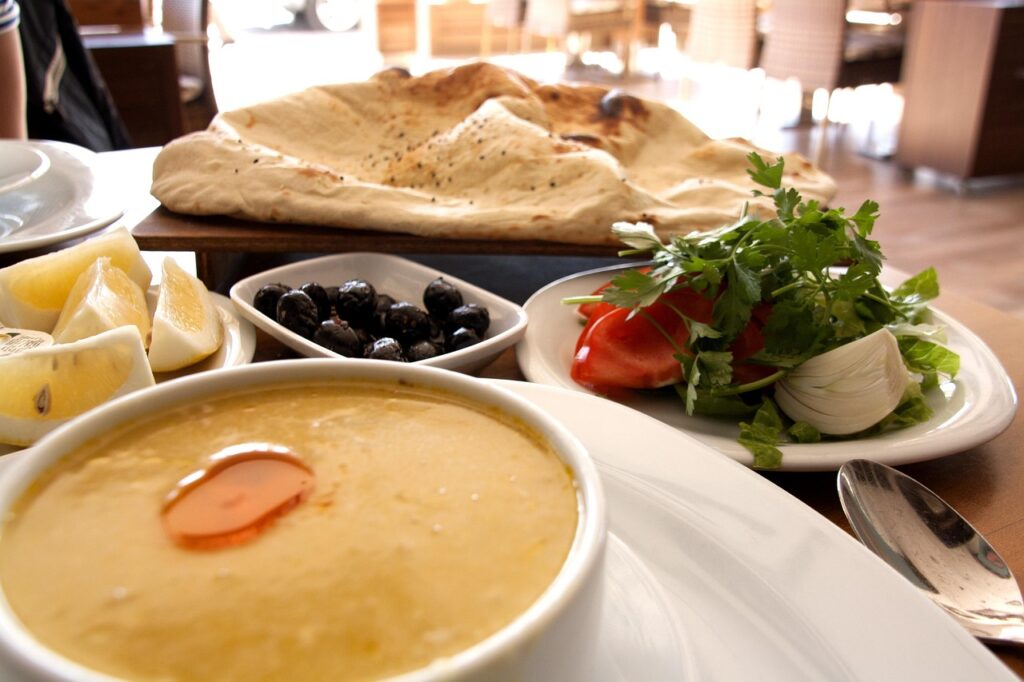
At the same time, gozleme moved into the restaurants. The traditional Turkish breakfast, with its long table of small plates, adopted gozleme as a centerpiece, and the flatbread became a symbol of the generous hospitality of the Turkish table.
Regional Evolution
As gozleme spread, it adapted to every region it touched. On the Aegean coast, the fillings turned green with spinach, chard, and wild herbs. In the Black Sea region, the anchovy gozleme became a winter specialty. In the southeast, the spiced fillings of Gaziantep brought heat and smokiness to the dough.
Each regional version tells a story about its place. The Aegean gozleme is light, herbal, and summery; the Black Sea version is bold and salty; the southeastern version is rich and spiced. Together they show how a simple technique can absorb the character of an entire country.
This regional diversity is part of what makes gozleme so fascinating to food historians. It is a single dish with a thousand local faces.
Gozleme and the Village Women
No history of gozleme would be complete without the women who made it. For centuries, gozleme was the food of the village kitchen, and its survival is owed to generations of women who rolled, filled, and cooked the flatbread without ever being paid for it.
With the rise of tourism, many of these same women found a new role. Village breakfast programs and women’s cooperatives began offering authentic gozleme to visitors, turning a private skill into a public craft. Today, some of the best gozleme in Turkey is made by village women who learned from their mothers and grandmothers.
This is one of the great success stories of Turkish food: a tradition that was in danger of fading found a new life, and the women who carried it became its most celebrated practitioners.

The Modern Revival
In recent decades, gozleme has enjoyed a revival beyond the beach stalls. Food writers have rediscovered it, chefs have put it on refined menus, and Turkish communities abroad have carried it around the world. The flatbread of the nomads has become a global ambassador for Turkish cuisine.
The revival has also brought experiments. Sweet gozleme filled with chocolate or fruit, gluten-free versions, and fusion fillings appear on modern menus, though the classics remain the favorites.
At the same time, the traditional methods have been preserved. The sac griddle, the hand-rolled dough, and the wood fire are still the standard in the villages, and the craft is being passed on to a new generation.
Why Gozleme Endures
Gozleme endures because it is simple, honest food that anyone can love. It needs few ingredients, it is cooked in minutes, and it tastes of the fire and the earth. It is also a food of connection, made by hand for the people at the table.
Its history is a history of movement: from the steppes of Central Asia to the villages of Anatolia, from the Ottoman markets to the modern beach, from the village kitchen to the world. Every gozleme carries that journey inside its thin, golden crust.
When you eat gozleme in Turkey today, you are eating a dish that has fed travelers, villagers, and city dwellers for centuries. Few foods can claim such an unbroken story.
Frequently asked questions
How old is gozleme?
The flatbread tradition behind gozleme reaches back to the Turkic peoples of Central Asia, who cooked bread on iron plates and heated stones long before the migrations that brought them to Anatolia. The dish in its recognizably Turkish form, with its folded dough and griddled cooking, has been documented for centuries, and the word gozleme appears in Ottoman-era dictionaries.
Why is gozleme cooked on a domed griddle?
The sac griddle is a descendant of the mobile cookware of the steppe nomads, designed to be light and portable. Its domed, rimless shape heats quickly and evenly, which suits the thin dough of gozleme perfectly. The design has survived essentially unchanged for centuries because it works; the high, even heat produces the blistered, golden crust that defines the dish.
How did gozleme become popular outside the villages?
The tourism boom of the twentieth century brought gozleme to the world’s attention. Beach stalls on the Mediterranean and Aegean coasts cooked it in full view of visitors, and its theatrical preparation made it a favorite. Village breakfast programs and women’s cooperatives later turned the tradition into a celebrated craft, and Turkish communities abroad carried gozleme across the globe.

All Over Information
The All Over Information editorial team researches and writes practical English-language guides to Turkey. Facts are checked against official and local sources before publication, prices are published as dated ranges rather than quotes, and guides are revised when things change. We accept no sponsored posts, paid placements or paid links.
More guides like this

Turkish Soups (Corba) Vs. International Variations: What Makes It Turkish
Every culture on earth has a soup, yet Turkish corba feels unmistakably itself.

The History Behind Turkish Ice Cream (Dondurma)
Turkish ice cream is one of the oldest frozen desserts in the world, and its history reaches back into the mountains of…
Hunkar Begendi Vs. International Variations: What Makes It Turkish
Hunkar begendi belongs to a grand international family of baked and sauced eggplant dishes, from the moussaka of Greece and the Balkans…
Testi Kebab (Pottery Kebab): A Taste of Turkish Culture
Most Turkish dishes arrive at the table quietly. Testi kebab does not. It arrives inside a sealed clay pot, and the first…

Stuffed Grape Leaves (Dolma) Vs. International Variations: What Makes It Turkish
The stuffed grape leaf belongs to a wide international family: the Balkans, the Middle East, the Caucasus, and the Mediterranean all roll…

How Turkish Cuisine Varies by Region
Ask a Turk about the national cuisine, and you will get a gentle correction: there is no single Turkish food, but seven…