Eastern Anatolia is the least visited part of Turkey, so in a sense the whole region is a hidden gem. But even within this vast, quiet land, some places stand out for the traveler willing to go beyond the familiar circuit of Lake Van, Ani, and the great mountain. Here you will find churches in valleys no guidebook maps, lakes where you are the only visitor, villages where the welcome is astonishing, and landscapes that feel untouched. This guide collects the region’s quieter treasures, the places where the deep history and the fierce beauty of the east are felt most directly.
The East Beyond the Famous Sights
The famous Eastern Anatolia is a short list: the lake, the ruined city of Ani, the mountain, and the citadel of Van. Beyond that list lies a region the size of a small country, crossed by few travelers and holding a thousand places that never reach the itineraries.
The valley roads between the main towns are the region’s secret. They climb through pastoral landscapes, past villages of stone and mud brick, and arrive at monasteries, springs, and viewpoints that the guidebooks simply do not mention.
The region rewards the same qualities it demands: time, patience, and comfort with distance. Travelers who accept those terms find themselves with places that feel discovered rather than visited, and that is a rare thing in the modern travel world. For the curious, it is precisely this sense of discovery that makes the east so compelling.
Hidden Churches and Monasteries
The medieval Christian heritage of the region is far richer than the few famous monuments suggest. Across the valleys and mountains, churches and monasteries of the Armenian and Georgian traditions stand in settings of extraordinary beauty.
Some are restored and visited by specialists; others are ruins half-lost in grass, with carved stonework still beautiful after centuries. The most rewarding are often the ones that require a walk or a rough road, because their silence is intact.
The sense of discovery at these places is powerful. Standing in a church that no one has cleaned for a century, with the mountains beyond the door, is one of the great experiences the region offers, and it requires only a map, a car, and a little nerve. Local villagers can usually point you toward the most rewarding buildings.
The Lake’s Quiet Shores
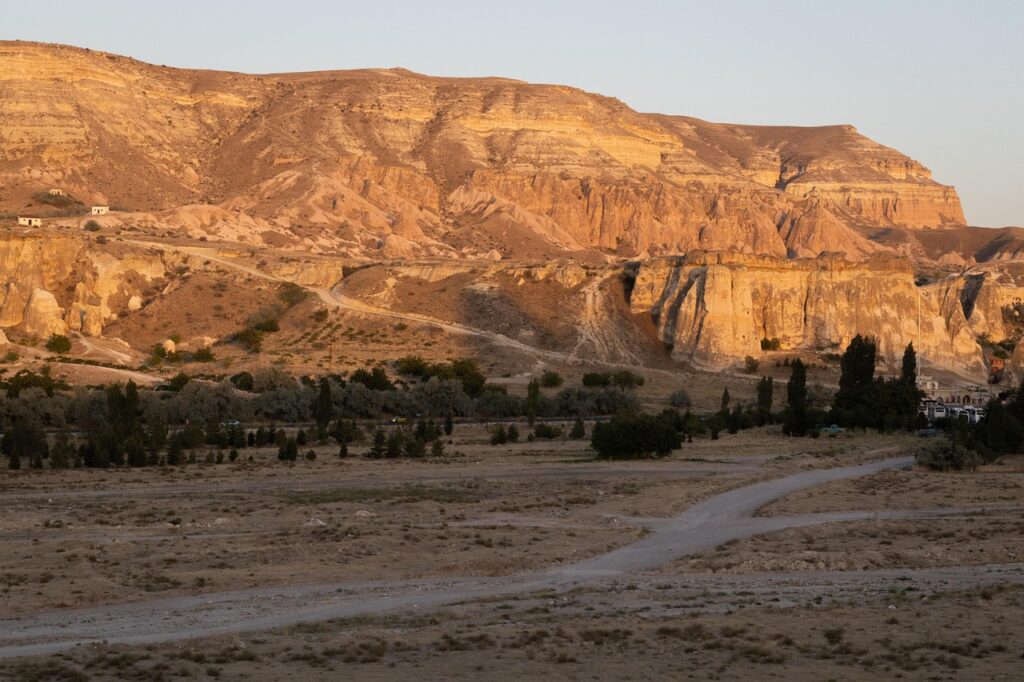
Lake Van is famous, but its famous sights are concentrated in a few places, and the rest of its enormous shoreline is almost empty. The long beaches of the north, the reedy bays of the south, and the islands beyond the main one offer solitude that is rare anywhere in Turkey.
The shore towns and villages have their own life, from fishing harbors to hot springs that rise beside the water. Some of the lake’s best beaches are simply stretches of sand where the road passes close, with no facilities and no crowds.
The lake is also a place of simple pleasures: swimming in the buoyant soda water, watching the light change over the water, and eating fresh fish in a village restaurant. The quiet shores are the lake as the locals know it, and they ask only for a willingness to wander.
Mountain Valleys and Pastoral Life
The mountain valleys of the east are the region’s pastoral heart, where shepherds move their flocks with the seasons and the villages live by the calendar of grass and snow. This is the traditional life of the plateau, still very much alive.
A drive through these valleys is a journey through a working landscape: herds on the move, hay being cut and stacked, and tea houses where the conversation turns on the weather and the flocks. The hospitality in the villages is genuine and open.
Staying in the mountains, even for a night, is the way to feel the region’s rhythm. The guesthouses are simple, the food is built from the valley’s produce, and the mornings, with the herds moving out and the mist clearing, are unforgettable.

The Border Country
The far east of the region is border country, where Turkey meets Iran, Armenia, and the former Soviet republics, and the landscape carries a frontier charge that no other part of the country matches. The roads are quiet, the customs posts are busy, and the horizon is full of mountains.
The border landscapes are magnificent: the plain beneath Ararat, the river gorges, and the high passes where the roads of empires once ran. The small towns here are practical places, and the people are used to a harder life than most of Turkey knows.
Traveling the border country is safe and legal for visitors, with the usual frontier formalities observed, and it is one of the most atmospheric drives in the region. The sense of standing at the edge of things is addictive.
Ancient Sites Off the Map
Beyond the citadel of Van and the ruins of Ani, the region holds ancient sites that see almost no visitors. Urartian fortresses crown many of the region’s hills, their cyclopean walls still standing after nearly three thousand years.
The Urartians, who ruled this plateau in the first millennium before Christ, built their strongholds on the most dramatic sites, and the ruins reward the climb. Their inscriptions, carved into the living rock, can still be read in places.
Other periods have left their own traces: medieval castles, Seljuk caravanserais, and the remains of the many peoples who passed through. The east is an open-air museum of the plateau’s long history, and most of its galleries are empty.

Hot Springs and Natural Wonders
The region’s volcanic geology has gifted it with hot springs, and many of them are still undeveloped, with pools fed directly from the earth in settings of raw beauty. Soaking in warm water while the snow falls or the mountains tower above is one of the region’s great pleasures.
The natural wonders extend to canyons, waterfalls, and rock formations, and the volcanic cones that dot the plateau are landscapes of another world. The region’s geology is dramatic, and it shows at every turn.
Some of the springs have simple bathhouses, and others are completely wild, with a pool of warm water gathered in the rocks. Locals will point you to their favorites, and a soak in a mountain spring, with snow on the peaks overhead, is the perfect end to a day of driving.
Local Food and Markets
The food of the eastern plateau is built for a hard climate: hearty, honest, and full of flavor. The cities each have their famous dishes, and the countryside has its own repertoire of dairy, honey, grains, and lamb, prepared with care and generosity.
The markets of the region are among the most authentic in Turkey, serving farmers, herders, and townspeople rather than tourists. The cheeses, the bread, the dried fruits, and the honey are the real thing, and the prices are local.
Eating here is a social act. Breakfast in Van is a ceremony, tea in a mountain village is an institution, and the invitation to share a meal is the region’s most common kindness. Travelers who eat with the locals eat the best food in Turkey.

Villages and Hospitality
The villages of Eastern Anatolia are the region’s true hidden gems, and their people are its greatest treasure. This is a part of Turkey where hospitality is not a service but a reflex, and visitors are welcomed with a warmth that can be overwhelming.
The villages themselves are places of strong character: stone houses, mosque and tea house at the center, and life organized around the seasons and the flocks, from the spring lambing to the autumn harvest. The pace is slow, the conversation is genuine, and the sense of community is intact.
The best way to experience this world is simply to stop: take tea, ask questions, accept the invitations. Travelers who do are repaid with the most memorable days of their journey, and with friendships that last.
How to Discover Your Own Gems
The hidden Eastern Anatolia is discovered by method as much as by luck. The region’s secrets sit off the main roads, and the traveler who studies a map, follows the valley roads, and allows for slow progress will find places that no itinerary contains.
Ask everywhere. The people of the region know every spring, every ruin, every viewpoint within a day’s walk, and they are generous with their knowledge. A question about the road ahead often produces a detour that becomes the day’s highlight.
Finally, give the region more time than seems sensible, and return when you can. The east reveals itself in layers, and the traveler who has seen it once will find reasons to come back. It is the most rewarding region in Turkey to explore slowly.
Frequently asked questions
Are Eastern Anatolia’s hidden gems hard to reach?
Many require effort: a few hours of driving, a rough road, or a walk to the site itself. The reward is that the effort filters out nearly everyone else. A car is essential, and the roads are generally good outside winter. Allow generous time, and the region opens up.
What is the most underrated sight in Eastern Anatolia?
The Urartian fortresses scattered across the plateau are the strongest candidates. Their massive walls crown some of the most dramatic hills in Turkey, they see almost no visitors, and they connect you to a history far older than the classical ruins most travelers know. The citadel of Van is the easiest, but the remote ones are the most memorable.
Is it safe to travel to the border areas?
Yes, for normal travelers. The border regions are peaceful and the people are welcoming, and the only formalities are the usual ones at crossing points. Keep to main roads in remote areas, travel in daylight, and inform someone of very remote plans, and the border country is safe and rewarding.

All Over Information
The All Over Information editorial team researches and writes practical English-language guides to Turkey. Facts are checked against official and local sources before publication, prices are published as dated ranges rather than quotes, and guides are revised when things change. We accept no sponsored posts, paid placements or paid links.
More guides like this

Best Cities and Towns in the Eastern Anatolia Region
Eastern Anatolia is Turkey's largest region, and its cities and towns are far apart, so choosing your bases well is the key…

Best Cities and Towns in the Central Anatolia Region
Central Anatolia spreads across a high plateau where the country's capital, its most famous landscape, and its deepest history all live within…
Climate and Best Time to Visit the Aegean Region
The Aegean Region of Turkey enjoys one of the Mediterranean's most pleasant climates: long, dry summers, mild winters, and two beautiful shoulder…
Hidden Gems of the Central Anatolia Region
Cappadocia's balloons and fairy chimneys draw the crowds, but the Central Anatolian plateau is far bigger than the famous valleys, and most…

Exploring the Black Sea Region: A Complete Travel Guide
The Black Sea region of Turkey is the country's greenest corner, a narrow coastal strip backed by steep mountains that catch the…

Hidden Gems of the Mediterranean Region
The Mediterranean coast of Turkey is one of the most visited stretches of shoreline in the country, yet most travelers never leave…