Dalyan looks like a place that time forgot, but its history is long and layered. Behind the reed beds lie the ruins of an ancient city that traded across the Mediterranean, carved into the cliff above the river are tombs built for kings, and wrapped around all of it is a living culture of boatmen, farmers, and fishermen who have worked this delta for generations.
This guide tells the story of Dalyan, from the rise of Kaunos to the conservation battles that saved the turtles, and the traditions that still shape the town today.
The Story of Kaunos
The history of Dalyan begins with Kaunos, an ancient city that grew up at the mouth of the river where the delta meets the sea. Founded more than two and a half thousand years ago, Kaunos became a prosperous trading port, moving goods between the Mediterranean and the interior of Anatolia, and its citizens grew rich on the trade.
The city was independent and proud, with its own coinage, its own gods, and its own quarrels with its neighbors. It built temples, a theater, and public buildings that speak of a confident urban life, and its harbor, now silted into the reed beds, once hosted the ships of the ancient world.
The story of Kaunos is written in its ruins, which spread across the hill behind the modern river. Walking them today, you are walking through a city that lived, traded, and fell, and the delta that now looks so wild was once a working waterfront.
The Rock Tombs of the Rulers
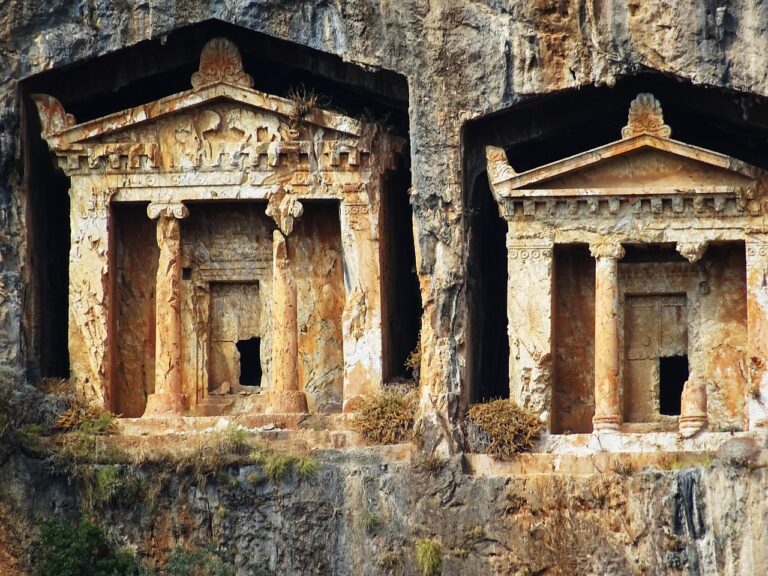
The rock tombs of Kaunos are the most visible monument of the ancient city, and they are its greatest mystery. Carved high into the cliff above the river, the tombs imitate the facades of temples, with columns, pediments, and carved doors that lead nowhere, and they were built for the rulers of the city.
The cliff was chosen deliberately. The tombs face the river, dominating the view of every arrival, and the message was simple: the dead kings still watched over the city and its trade. The carving, done by hand on the cliff face, is a feat that still impresses engineers today.
The tombs date from around the fourth century before Christ, and their style reflects the wider world of the region, mixing Greek and local traditions. They are the image of Dalyan, the photograph on every postcard, and the oldest story in the town.
A City That Outlived Its Harbor
Kaunos was a city built on its harbor, and when the harbor died, the city followed. Over the centuries, the river carried silt down from the mountains and slowly filled the bay, pushing the sea farther away and leaving the port high and dry among the reeds.
The decline was gradual. The city adapted, moving its port and its trade, but each century brought the sea farther away, and the prosperity of the coastal city drained into the marsh. By the time the region’s rulers changed, Kaunos was a shadow of its former self, and eventually it was abandoned.
The silt that killed the city preserved its memory. The same reeds that swallowed the harbor kept the ruins from the builders of later ages, and the delta that looks untouched is actually a landscape shaped by one of history’s great slow disasters.
From Ruins to River Town
The modern story of Dalyan begins in the years when the delta was still an isolated backwater. The settlement that grew up on the riverbank was a village of farmers, fishermen, and boatmen, living off the delta’s rich waters and the fertile land around it, and for a long time the ancient ruins were simply part of the landscape.
The town’s name comes from the fishing weirs, the wooden traps that the locals built across the river, and the word dalyan is still used for them today. The weirs worked the channel for fish, and the delta’s lagoons became a source of salt, another old trade of the coast.
Dalyan remained a quiet village until the twentieth century, when the road and the first visitors arrived. The ruins, the beach, and the turtles turned the village into a destination, and the delta people found a new trade: hospitality.

The Delta People and Their Ways
The people of the delta have always lived by the rhythm of the water. The families along the river know the channels the way others know streets, and the skills of the delta, reading the water, handling the boats, and working the weirs, have been passed down through generations.
The culture is one of patient work. The farmers grow the citrus and pomegranates that thrive in the valley, the fishermen work the lagoons, and the boatmen, now carrying visitors, carry on the old craft of the river. The work has changed, but the relationship with the delta has not.
The local identity is quietly proud. The delta people are used to visitors now, but they remain rooted in their place, and the festivals, the food, and the daily life of the town still follow the old calendar of the seasons and the water.
The River Economy
The river has always been the economy of Dalyan. In the old days the weirs and the lagoons produced fish and salt, traded down the coast, and the reed beds supplied the materials for building and weaving. The delta was a productive landscape, not a wild one.
The modern river economy is tourism, and it is built on the same assets: the boats, the beach, and the beauty of the delta. The boatmen of Dalyan, once fishermen, now run the river trips that carry the town’s visitors, and the guesthouses and restaurants along the bank are the new harvest of the water.
The change has been rapid, but the river remains the boss. The town’s life still runs to the boats, and the season still comes and goes with the light and the weather, the same way it did when the delta’s wealth was fish and salt.

The Turtles and the Conservation Story
The loggerhead sea turtles gave Dalyan its modern identity, and their story is the town’s most dramatic chapter. When the development of the coast threatened the nesting beach at Iztuzu in the 1980s, a campaign to save the beach made Dalyan famous and changed the course of the town’s future.
The fight was won, and the beach was protected. The conservation teams that monitor the nests became part of Dalyan’s life, and the town learned to build its tourism around the turtles rather than against them. The result is a beach that is wild, protected, and full of visitors who understand why.
The conservation story is ongoing. Every summer the nests are watched, the hatchlings are counted, and the rules are enforced, and the turtles keep coming back. The turtles are now the town’s symbol, and their protection is part of what makes Dalyan special.
Festivals and Local Traditions
Dalyan’s calendar is shaped by the seasons and the water. The summer brings the long season of visitors, with the town’s restaurants and boats at their fullest, while the quieter months belong to the locals and their own rhythms. The seasons of the delta, the nesting, the harvest, and the rains, still set the pace.
The local traditions are the food, the boats, and the everyday crafts. The market day, the fishing weirs, and the preparation of the region’s dishes are the living culture, and the celebrations that mark the year are warm and family-centered.
The modern tradition of the town is the evening promenade, when everyone comes out to walk the riverfront. It is not an old custom, but it is a real one, and it shows how the delta people have made the new life of the town their own.

Food and Craft Heritage
The food of the Dalyan region is the culture you can taste. The river and the sea give the fish that appear on every menu, the valley grows the citrus and the olives, and the hills provide the herbs and honey that season the local cooking. The cuisine is simple, fresh, and rooted in the delta.
The crafts follow the same logic. The kilims woven in the region, the ceramics painted in the coastal tradition, and the woven goods of the delta are all products of the local landscape and its history. What the shops sell is the heritage made visible.
For the visitor, the culture of Dalyan is best experienced through its food and its making: the fish dinner by the river, the market stall, and the craft shop with its looms and wheels. The history is in the stones, but the living culture is in the hands.
Dalyan in the Modern Age
Modern Dalyan is the result of an unusual bargain. The town chose to develop slowly, protecting the beach and the delta that made it famous, and the choice has paid off in a tourism that feels gentler and more authentic than the big resorts along the coast.
The town today is a mix of the old and the new: the boatmen and the weirs alongside the guesthouses and the cafes, the ancient ruins alongside the modern promenade. The balance is not accidental; it is the product of the conservation battles and the careful choices of the delta people.
The future of Dalyan is tied to its own protection. The delta, the beach, and the ruins are the town’s capital, and the community knows it. The town that saved the turtles is learning to protect the rest of its inheritance, and the visitors who love Dalyan are part of that story.
Frequently asked questions
How old are the rock tombs of Kaunos?
The rock tombs date from around the fourth century before Christ, making them more than two thousand years old. They were carved for the rulers of the ancient city of Kaunos, and their temple-style facades were designed to face the river and dominate the view of the city.
Why did the ancient city of Kaunos decline?
The city was built around its harbor, and the river gradually filled the bay with silt, pushing the sea farther away. Over centuries the port became unusable, trade declined, and the city was eventually abandoned, leaving the ruins that we see today in the reed beds.
What is the cultural significance of the mud baths?
The mud baths sit on natural thermal springs that have been used for bathing for centuries. The mineral-rich mud and warm water were valued for their health benefits, and the baths remain a living tradition that every visitor to Dalyan takes part in.

All Over Information
The All Over Information editorial team researches and writes practical English-language guides to Turkey. Facts are checked against official and local sources before publication, prices are published as dated ranges rather than quotes, and guides are revised when things change. We accept no sponsored posts, paid placements or paid links.
More guides like this
Top 10 Things to Do in Dalyan
Dalyan packs an extraordinary amount into a small area, and the list of things to do could run far beyond ten.
A First-Timer’s Guide to Dalyan
Dalyan is one of the most beautiful corners of the Turkish coast, and it feels like nothing else in the country.

Best Local Restaurants in Dalyan
The dining in Dalyan is one of the pleasures of the town, and the riverside setting makes every meal feel like an…

A Solo Traveler’s Guide to Dalyan
Dalyan is one of the easiest places in Turkey to travel alone.
Photography Spots in Dalyan You Can’t Miss
Dalyan is a photographer's town in the way few places are: the light is soft, the water is reflective, and the main…

Shopping Guide: What to Buy in Dalyan
Shopping in Dalyan is a slow, sociable affair rather than a mall experience.