Side is the ancient city that never died, and the history of the town runs through its streets to this day. The ruins of the Roman era stand among the modern shops, and the theater, the temple, and the colonnaded streets are the living part of the town. This guide explores the history and the culture of Side, from the ancient founding to the modern holiday town.
The Founding of Side
The history of Side begins in the ancient world, when the Greek settlers founded the city on the peninsula. The name of Side — meaning the pomegranate in the old Anatolian language — points to the region’s ancient roots, and the settlers from the Aegean established the city as the trading port on the Mediterranean coast; the city grew rich on the trade of the region, and its harbor made it the gateway of the coast. The ancient city occupied the whole peninsula, and the ruins of the founding era lie beneath the later layers.
The Hellenistic Era
The Hellenistic era brought the prosperity and the culture to Side, and the city flourished under the successors of Alexander. The city’s oracle and its mint made it the important one of the region; the theater, the temples, and the public buildings rose in the Hellenistic period; and the city’s independence and its wealth grew through the era. The Hellenistic Side was the cultured, the wealthy city, and the foundations of the later grandeur were laid in these centuries.
The Roman Era
The Roman era was the golden age of Side, and the city reached its peak under the Roman rule. The Romans made Side the important port and the trading center of the region, and the city’s wealth is written in the ruins: the great theater, one of the best-preserved of the ancient world, the Temple of Apollo and the Temple of Athena by the harbor, the colonnaded street with its water channel, the agora, the baths, and the aqueduct. The Roman Side was the grand, the prosperous city, and the ruins of the era dominate the town to this day.

The Temple of Apollo
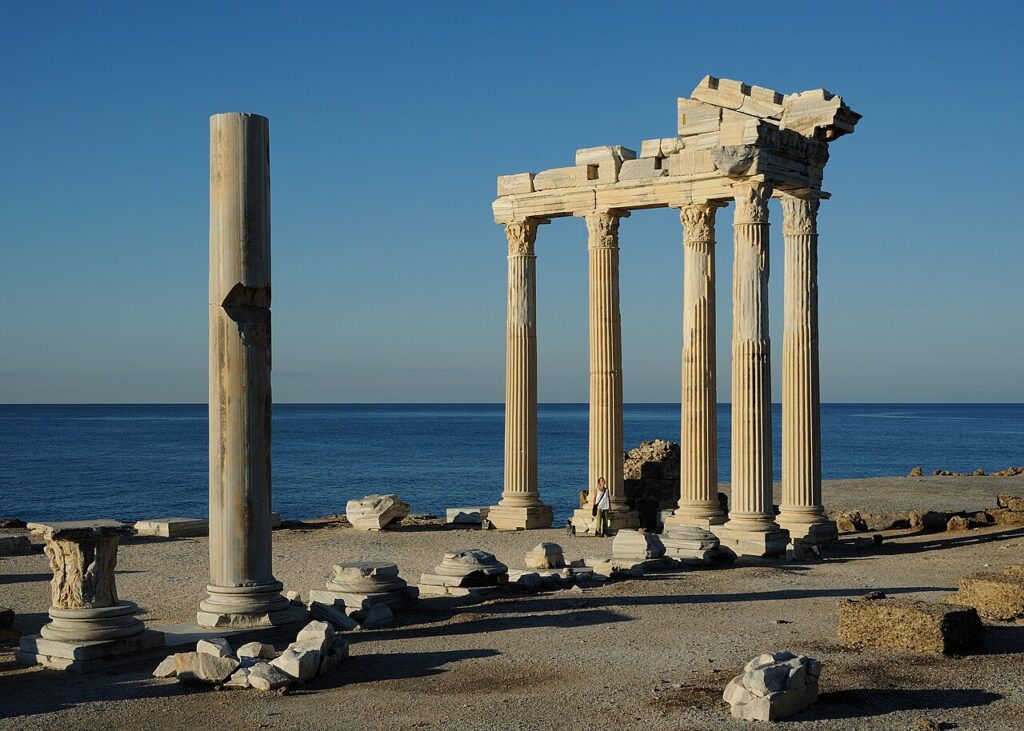
The Temple of Apollo is the icon of Side, and its history is the sacred one of the ancient city. The temple stood by the harbor, dedicated to Apollo and Athena, the patrons of the city; the oracle of Apollo made the temple the important one of the region; and the columns of the temple still rise above the water, the symbol of the ancient city. The temple is the most photographed monument of Side, and the sunset at the temple connects the modern visitor with the ancient worship.
The Byzantine and the Medieval Eras
The Byzantine era brought the change to Side, and the ancient city became the Christian one. The churches replaced the temples, and the bishopric of Side was the important one of the region; the city walls were rebuilt against the new threats, and the harbor kept the trade moving; and the medieval centuries brought the decline, as the harbor silted and the raids increased. The Byzantine and the medieval layers of Side lie beneath the town, and the ruins of the eras survive in the walls and the churches.
The Decline and the Abandonment
The later centuries brought the decline of Side, and the ancient city faded into the small village. The silting harbor and the changing trade routes reduced the city to the village; the earthquakes and the raids damaged the ancient buildings; and the population shrank as the centuries passed. By the modern era, Side was the small village among the ruins, and the great theater and the temples stood as the ghosts of the ancient city. The decline was the long one, and the ancient grandeur became the ruins.

The Modern Rediscovery
The twentieth century brought the rediscovery of Side, and the village became the archaeological site and then the holiday town. The excavations revealed the theater, the temples, and the streets of the ancient city; the visitors came to see the ruins, and the tourism grew around them; and the modern town rose among the ancient stones, with the shops, the hotels, and the restaurants filling the peninsula. The transformation of Side from the ruined village to the holiday town is the remarkable one, and the ancient city is the living part of the modern life.
The Museum of Side
The museum of Side, housed in the ancient baths, preserves the finds of the region, and it tells the story of the ancient city. The statues, the sarcophagi, the coins, and the inscriptions of the Roman era fill the galleries; the setting in the ancient bath building gives the atmosphere; and the museum gives the context for the ruins that fill the town. The museum is the window into the ancient Side, and the visit enriches the wandering among the ruins.
The Culture of the Town
The culture of Side blends the Turkish and the Mediterranean traditions, and the daily life of the town shows the mix. The çay and the Turkish coffee mark the social life, and the tea houses and the cafés are the centers of the conversation; the food of the town is the Mediterranean-Turkish one, with the meze, the fish, and the breakfasts of the region; and the hospitality is the warm one. The culture of the town is the relaxed one, and the ancient stones are the constant backdrop of the modern life.
The Heritage of the Region
The heritage of the region extends beyond the town, and the ancient world surrounds Side. The cities of Perge and Aspendos, with their theaters and their stadiums, lie within the short drives; the Roman aqueducts and the roads cross the countryside; and the region’s museums hold the treasures of the ancient world. The heritage of the region is the deep one, and the visitor to Side steps into the landscape of the Roman era.
The Festivals and the Traditions
The festivals and the traditions of the region give the color to the year. The Aspendos theater hosts the opera and the ballet performances through the summer, and the shows in the ancient theater are the special experiences; the local festivals celebrate the harvests and the seasons; and the religious holidays of the Turkish calendar mark the year. The visitor who arrives during the festivals sees the culture in the celebration, and the events of the region are the welcoming ones.
The Architecture of the Modern TownnnThe architecture of the modern Side reflects the history of the town, and the building styles layer through the centuries. The stone houses of the Ottoman era, with their courtyards and their wooden details, survive in the old town; the modern buildings of the holiday era rise around the peninsula, with the hotels and the restaurants; and the ancient ruins stand among both, the constant of the town’s skyline. The architecture of the town tells the story of the place, and the layers of the building styles give the texture. The visitor who looks at the buildings sees the history of Side written in the stone.n

The Daily Life of the Modern TownnnThe daily life of the modern Side runs among the ancient stones, and the rhythms of the town follow the seasons. The morning brings the coffee to the cafés, the deliveries to the shops, and the first visitors to the ruins; the midday brings the heat, the shade, and the siesta; and the evening brings the crowds, the dinners, and the lanterns to the lanes. The modern town lives its life with the ancient city as the backdrop, and the mix of the old and the new is the character of the place. The visitor who watches the daily life sees the town as it is, and the ancient and the modern Side coexist in the everyday.n
The Takeaway
The history and the culture of Side run through its streets, and the ancient city is the living part of the modern town. The Roman theater, the Temple of Apollo, the colonnaded streets, and the museum preserve the grandeur of the ancient era, and the modern town grew up among the ruins. The visitor to Side walks the ancient streets, and the history of the town is the constant companion of the holiday.
Frequently asked questions
What is the history of Side?
Side was the ancient Greek and Roman port city, founded on the peninsula and reaching its peak under the Romans; the ruins of the era now fill the modern town.
What are the main ancient sites in Side?
The Roman theater, the Temple of Apollo, the colonnaded street, the agora, the baths, and the museum.
How old is Side?
The city was founded in the ancient era, over two thousand years ago, and it flourished through the Hellenistic and the Roman periods.
What is the Temple of Apollo?
The ancient temple by the harbor, dedicated to Apollo and Athena, the patrons of the city; its columns still rise above the water.
Is the Side Museum worth visiting?
Yes — the museum, housed in the ancient baths, holds the statues and the finds of the region.

All Over Information
The All Over Information editorial team researches and writes practical English-language guides to Turkey. Facts are checked against official and local sources before publication, prices are published as dated ranges rather than quotes, and guides are revised when things change. We accept no sponsored posts, paid placements or paid links.
More guides like this

Family-Friendly Activities in Side
Side suits the family holiday beautifully, and the town offers the long sandy beaches, the shallow water, the ancient ruins that children…

A Solo Traveler’s Guide to Side
Side is the safe, the walkable, the compact town that suits the solo traveler beautifully, and the ancient city by the sea…

Side in Winter: What to Expect
Side in winter is the ancient town at its quietest, and the visitors who brave the off-season find the ruins without the…
A First-Timer’s Guide to Side
Side is the ancient city on the Mediterranean coast of the Antalya region, and it surprises the first-time visitor with the ruins…
Shopping Guide: What to Buy in Side
The shopping of Side is the charming, the atmospheric one, and the lanes of the old town hide the shops full of…

Top 10 Things to Do in Side
Side packs the ancient history and the beach holiday into the one small peninsula, and the top ten activities of the town…