Side is the photographer’s town, and the ancient ruins by the sea give the images that no other resort offers. The Temple of Apollo, the Roman theater, the colonnaded streets, the long beaches, and the dramatic light of the coast make the endless material. This guide covers the photography spots of Side that you can’t miss, with the practical notes for the best light and the best angles.
The Temple of Apollo at Sunset
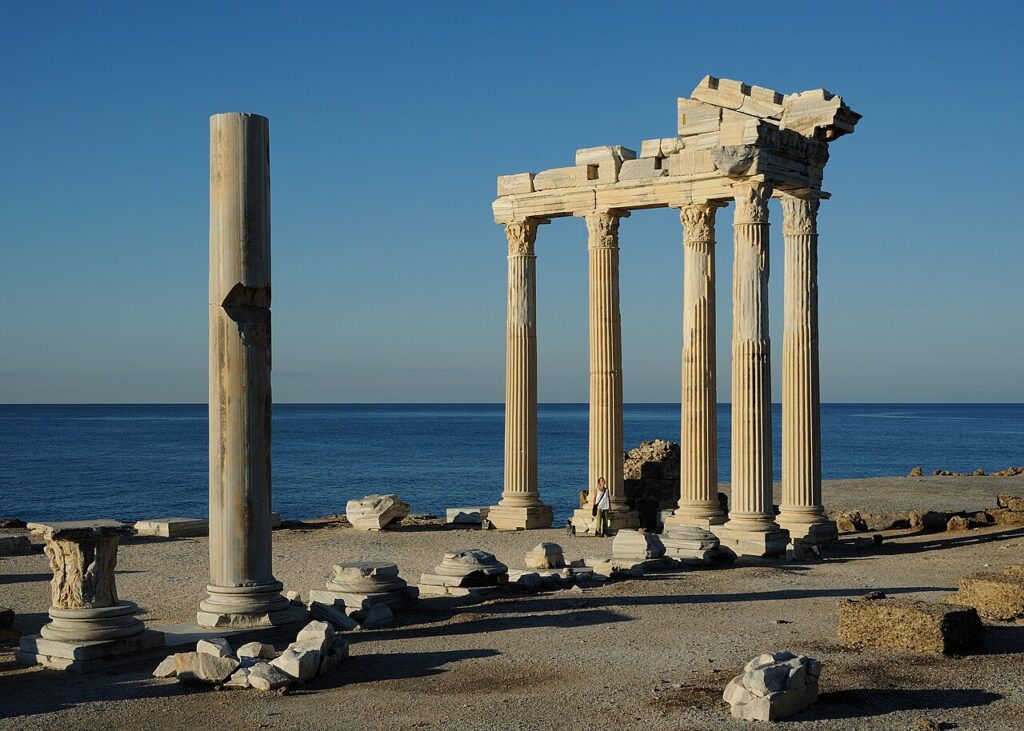
The Temple of Apollo at the sunset is the defining image of Side, and it is the first photograph the visitor takes. The columns of the temple rise above the harbor, and the sun drops behind them into the sea in the display of the gold and the pink; the light catches the marble, and the boats and the water fill the foreground; and the moment is the photographed one of the region. The temple at the sunset is the essential Side photograph, and the wide angle captures the columns against the sky.
The practical note: the sunset times change through the year, and the arrival comes ahead for the good spot; the water’s edge gives the reflections, and the low angle frames the columns against the sky; and the blue hour after the sunset gives the lights of the temple and the harbor.
The Roman Theater
The Roman theater of Side gives the dramatic photographs, and the great stone bowl of the seats is the subject. The tiers of the seats curve against the sky, and the stage building and the passages give the depth; the views from the top rows look over the town to the sea; and the scale of the structure fills the frame. The theater photographs well from every angle, and the morning and the evening light bring out the textures of the stone.
The practical note: the theater is the busy one, and the early morning gives the empty rows; the wide shot from the top captures the sweep of the seats; and the detail shots — the carvings, the passages, the worn stones — give the texture.

The Colonnaded Street and the Ancient Gates
The colonnaded street of Side gives the photographs of the ancient daily life, and the columns line the way through the town. The columns march along the street, with the mountains of the region in the distance; the ancient gate and the city walls frame the views; and the mix of the ancient stones and the modern town gives the unique frames. The colonnaded street is the atmospheric one, and the morning light and the evening light bring out the columns.
The practical note: the street is the pedestrian one, and the early morning gives the empty frames; the long shot down the columns gives the perspective; and the details — the capitals, the bases, the inscriptions — reward the macro lens.
The Harbor and the Boats
The harbor of Side photographs beautifully, and the boats and the water give the maritime frames. The fishing boats and the gulets bob at the moorings, with the Temple of Apollo rising behind; the reflections on the water double the scenes; and the morning light and the blue hour give the different moods. The harbor is the working and the photogenic one, and the frames change with the light.
The practical note: the early morning gives the working harbor and the soft light; the blue hour gives the reflections and the lights; and the low angle at the water’s edge gives the best compositions.

The Beaches at the Golden Hours
The beaches of Side give the landscape photographs, and the long stretches of the sand photograph beautifully at the golden hours. The east beach at the sunrise gives the soft light and the empty sand; the west beach at the sunset gives the golden water and the long shadows; and the umbrellas, the boats, and the figures give the scale and the interest. The beach photography of Side is the simple, the beautiful one, and the light of the coast does the work.
The practical note: the sunrise and the sunset give the best light, and the beaches are the empty ones at those hours; the low angle gives the textures of the sand and the water; and the long exposure smooths the sea for the dreamy frames.
The Museum and the Statues
The Side Museum, housed in the ancient baths, gives the photographs of the ancient art, and the statues and the finds fill the galleries. The marble statues of the Roman era — the gods, the emperors, the athletes — photograph beautifully in the soft light of the museum; the sarcophagi and the reliefs give the detail shots; and the setting in the ancient bath building adds the atmosphere. The museum photography is the different one from the open ruins, and the pieces of the ancient world reward the camera.
The practical note: the museum light is the soft one, and the flash is the off one; the details — the faces, the drapery, the carvings — make the best frames; and the quieter hours of the museum give the cleaner shots.
The Old-Town Lanes
The lanes of the old town give the photographs of the modern Side among the ancient stones, and the scenes are the colorful ones. The shops with the lanterns, the restaurants with the strings of the lights, the cats on the ancient walls, and the crowds of the evening give the candid frames; the bougainvillea and the flowers add the color; and the ancient stones rise among the modern life. The old-town photography is the walking photography, and the lanes give the variety.
The practical note: the evening gives the lanterns and the lights, and the blue hour adds the sky; the candid shots of the life — the shopkeepers, the diners, the cats — give the human interest; and the vertical compositions suit the narrow lanes.
The Aqueduct Outside the Town
The aqueduct of Side, just outside the town, gives the photographs of the Roman engineering, and the arches are the impressive subjects. The arches of the aqueduct stride across the landscape, and the fields and the mountains frame them; the structure is the massive one, and the scale shows against the surroundings; and the photography of the arches against the sky is the good one. The aqueduct is the hidden photography spot of the Side area, and the short stop rewards the camera.

The Region Beyond Side
The region around Side gives the landscape photographs, and the day trips reward the camera. The Manavgat Waterfalls give the long-exposure shots of the cascading water; the ancient city of Perge gives the colonnaded street and the stadium; and the Aspendos theater gives the great curved bowl of the seats. The region’s sites and the scenery extend the photography of the stay, and the day trips bring the different subjects.
The Practical Notes for the Photographers
The practical notes for the Side photographers: the golden hours — the first and the last hour of the daylight — give the best light, and the midday sun is the harshest; the tripod helps for the blue hour and the long exposures; the walking shoes serve the ancient streets; and the drone flying follows the local regulations, with the check before the takeoff. The camera of the Side visitor comes out often, and the ancient town delivers the images.
The Candid and the Street PhotographynnThe candid and the street photography of Side give the human side of the town, and the scenes reward the patient camera. The shopkeepers at their doors, the fishermen at the harbor, the children at the beaches, and the cats among the ruins give the candid frames; the daily life of the old town — the tea houses, the games, the conversations — fills the scenes; and the respectful photography, with the smile and the asking, opens the doors. The street photography of Side gives the different record of the stay, and the images carry the warmth of the town. The human side of the ancient town photographs as well as the stones, and the candid frames are the treasured ones.n
The Takeaway
Side gives the photographer the unique combination: the ancient ruins by the sea, the Temple of Apollo at the sunset, the Roman theater, the harbor, the beaches, and the lanes of the old town. The light of the region is the generous one, and the subjects change with the hour. The camera of the visitor to Side comes out often, and the photographs carry home the beauty of the ancient town by the sea.
Frequently asked questions
What is the best photography spot in Side?
The Temple of Apollo at the sunset, and the Roman theater.
What is the best time for photos in Side?
The golden hours around the sunrise and the sunset, and the blue hour after the sunset.
Can I fly a drone in Side?
The drone use follows the Turkish regulations and the local restrictions, and the check comes before the flying.
Where can I photograph the sunset in Side?
The harbor by the Temple of Apollo, and the west beach.
Is the aqueduct worth photographing?
Yes — the arches of the Roman aqueduct outside the town give the impressive frames.

All Over Information
The All Over Information editorial team researches and writes practical English-language guides to Turkey. Facts are checked against official and local sources before publication, prices are published as dated ranges rather than quotes, and guides are revised when things change. We accept no sponsored posts, paid placements or paid links.
More guides like this

A First-Timer’s Guide to Side
Side is the ancient city on the Mediterranean coast of the Antalya region, and it surprises the first-time visitor with the ruins…
Side on a Budget: Money-Saving Travel Tips
Side gives the beach holiday and the ancient history at the moderate prices, and the budget traveler finds the town the accessible…

A Solo Traveler’s Guide to Side
Side is the safe, the walkable, the compact town that suits the solo traveler beautifully, and the ancient city by the sea…

A Foodie’s Guide to Side
Side gives the foodie the fresh seafood of the harbor, the meze of the Turkish table, the grills of the charcoal, and…

Side in Summer: A Complete Travel Guide
Side in summer is the ancient town at its brilliant peak: the long beaches, the warm sea, the Roman ruins under the…

Nightlife Guide to Side
The nightlife of Side is the relaxed, the atmospheric one, and the town's evenings revolve around the old-town lanes, the harbor dinners,…