No neighborhood on earth compresses more history into a smaller space than Sultanahmet. Stand in the square between Hagia Sophia and the Blue Mosque and you are on ground that has been sacred for two thousand years: a Greek colony, the heart of the Roman Empire’s eastern capital, the seat of the Byzantine world, the center of the Ottoman state, and now the most visited corner of modern Turkey. This guide tells the story of that place — the empires, the buildings, and the culture that made it — so the monuments you walk past read like chapters instead of names.
Byzantium: The City Before the City
The story begins with a Greek colony called Byzantium, founded in the seventh century BC on the hill where Topkapi Palace now stands. For a thousand years it was a respectable but unremarkable port. Everything changed in 330 AD, when the Roman emperor Constantine chose the site for his new capital, rebuilt it on a grand scale, and renamed it Constantinople — New Rome. He built it on seven hills to echo Rome’s, and he filled it with the trappings of empire: the Hippodrome for chariot racing, forums, palaces, and the first great churches.
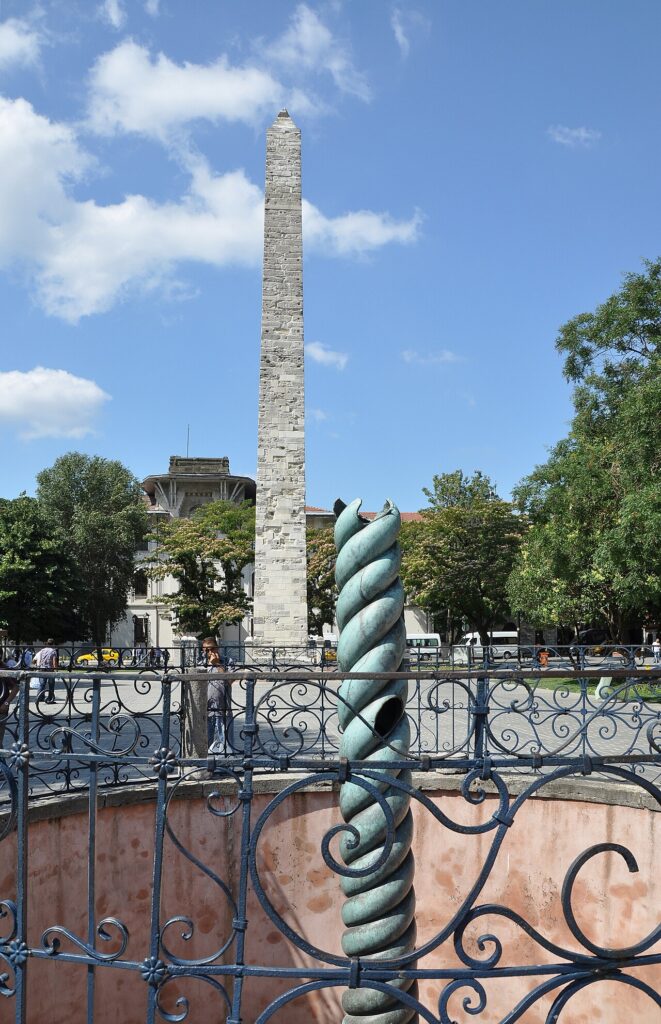
The Hippodrome you walk across today was the city’s social and political heart. The chariot factions were not sports teams; they were political parties, and their riots could topple emperors. The Egyptian Obelisk still standing there was erected by Constantine’s successor, Theodosius, in the fourth century — hauled from Luxor to stand in the middle of the racetrack for a hundred thousand spectators.
Justinian and the Great Church
In 532 AD, Constantinople burned. The Nika riots — an uprising by the chariot factions — destroyed much of the city center, including the great cathedral. The emperor Justinian responded with the single most audacious building project of the ancient world: a new cathedral so vast that, as his historians reported, he exclaimed on its completion, “Solomon, I have outdone thee.”
That building is Hagia Sophia. Completed in 537 AD — in less than six years — its dome spans 31 meters and, until the completion of Seville Cathedral in the sixteenth century, it was the largest enclosed space on earth. The architects solved the engineering problem of a square base supporting a round dome with the pendentives you can see today, and the interior’s mosaics, marble, and gold made it the wonder of the Christian world. For nearly a thousand years, Hagia Sophia was the center of Orthodox Christianity — the place where emperors were crowned and the patriarch of Constantinople presided.
The Latin Interlude and the Byzantine Twilight
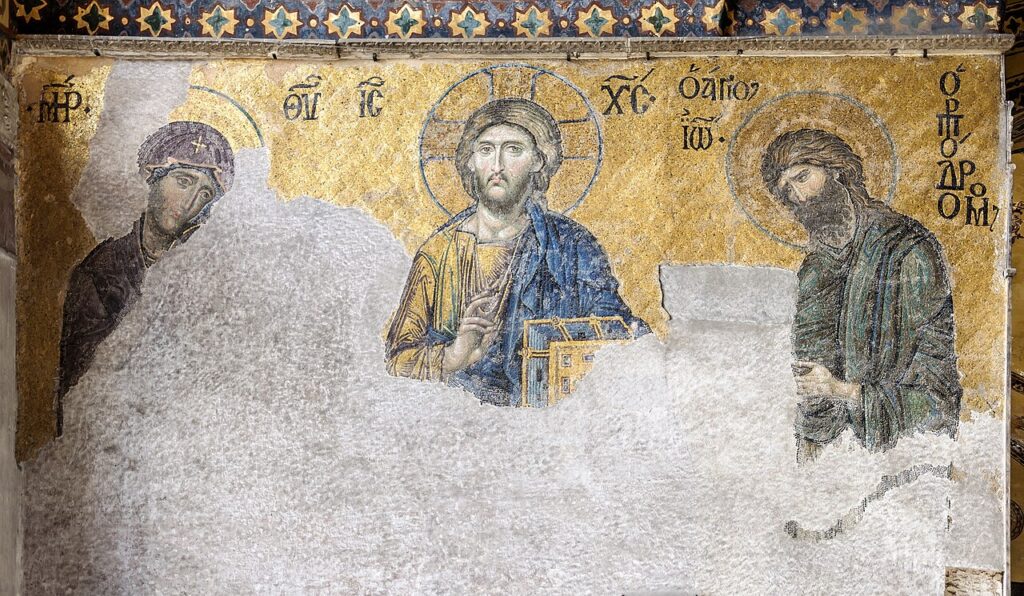
The Fourth Crusade — intended for Jerusalem, diverted to Constantinople — sacked the city in 1204 and looted Hagia Sophia’s treasures. The Byzantine Empire limped on in exile and recovered the city in 1261, but it was a shadow of itself. The last centuries of Byzantium are visible in Sultanahmet’s smaller buildings: the Little Hagia Sophia, built in the 520s, survived as a neighborhood church-mosque; the mosaics that remain in Hagia Sophia — the Deesis, the Zoe panel — date from this twilight period, when the empire could still summon world-class artists but little else.
1453: The Conquest and the Ottoman City
On May 29, 1453, the Ottoman sultan Mehmed II took Constantinople after a fifty-three-day siege. The story is written into the neighborhood: the land walls the Ottomans breached, the churches they converted, and the city they rebuilt as the capital of an empire that would stretch from Vienna to Baghdad.
Mehmed’s first act was to convert Hagia Sophia into a mosque — the great church became the imperial mosque of the new power. Around it, the Ottomans built the city you see today. The Grand Bazaar took shape in 1461, the year after Mehmed ordered its construction. The Topkapi Palace rose on the old Byzantine acropolis as the seat of the sultans. And over the following centuries, the skyline acquired its defining silhouette: the domes and slender minarets of the great imperial mosques.

Suleyman, Sinan, and the Golden Age
The sixteenth century was the Ottoman golden age, and its monument is the Suleymaniye Mosque, built for Suleyman the Magnificent between 1550 and 1557. Its architect, Mimar Sinan, is the single most important name in Ottoman architecture — the man who perfected the engineering of the great domes and minarets, who said the Suleymaniye was his journeyman’s work and the Selimiye in Edirne his masterpiece. Around the mosque rose the complex that accompanied every imperial foundation: the school, the hospital, the library, the baths, the soup kitchen.
Sultanahmet’s own great mosque came slightly later, built between 1609 and 1616 by Sultan Ahmed I — the Blue Mosque, with its six minarets and its interior of more than twenty thousand Iznik tiles. The name that sticks is the visitors’ invention: the tiles’ blues. The mosque was built directly opposite Hagia Sophia, a deliberate statement that the Ottoman city had its own answer to the Byzantine wonder.
From Empire to Republic
The Ottoman state lasted until 1922. Its end is written in the neighborhood in subtle ways: the sultans’ palace became a museum in 1924, the year after the Republic was proclaimed; Hagia Sophia became a museum in 1935, and the founder of the Republic, Atatürk, is still the subject of the portraits hanging in shops and offices throughout the district.
The twentieth century treated the old city gently by accident — the modern financial and business districts grew on the other side of the Golden Horn, leaving the peninsula’s fabric intact. In 1985, the historic areas of Istanbul, including Sultanahmet, were inscribed as a UNESCO World Heritage site, protecting the very buildings that made the neighborhood a pilgrimage for travelers.
The Culture of the Neighborhood Today
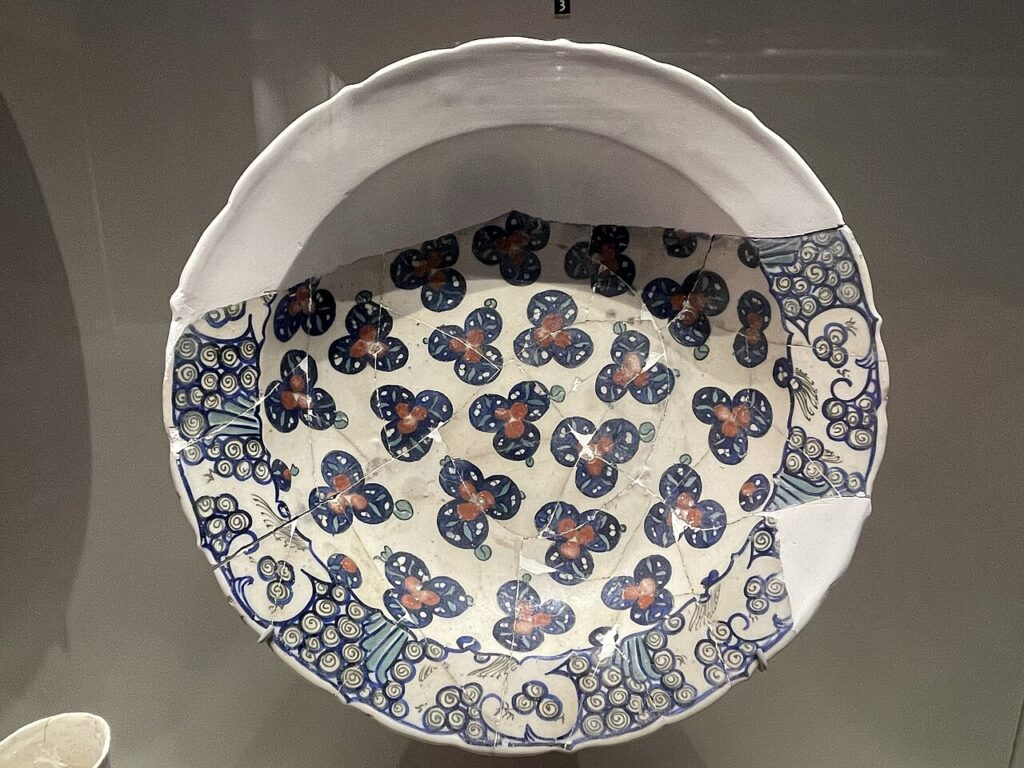
Sultanahmet’s culture is the living residue of all those centuries. The call to prayer rings out five times a day from the minarets — the same sound that has marked the hours here since the Ottoman conquest. The hammams still run their steam and scrub rituals. The tea gardens, the bazaars, the coffeehouses: these are Ottoman institutions, uninterrupted. The neighborhood’s carpets, ceramics, and confectionery are the direct descendants of the guild crafts. And the visitor experience — the slow walk from Hagia Sophia to the Blue Mosque to the cistern — is a walking tour through fifteen hundred years of a city that has been sacred, imperial, and cosmopolitan in turn.
The Layers Above: Museums and the Modern City
The history below ground and in the buildings is matched by the history on display in the neighborhood’s museums. The Museum of Turkish and Islamic Arts, housed in the sixteenth-century palace of Ibrahim Pasha beside the Hippodrome, holds one of the world’s great carpet collections and a reconstructed Ottoman room — history you can walk into. The archaeology museum’s collections, spread through its gardens near Gulhane, carry the story from the Greek colony to the empire’s end. And the small museums around the old city fill the gaps between the monuments.
The twentieth century left its own layer. The Republic’s founder, Ataturk, appears in portraits throughout the district; the palaces and mosques were restored and opened to visitors; and in 1985 the historic areas of Istanbul — with Sultanahmet at their core — were inscribed as a UNESCO World Heritage site. The neighborhood today is a working city quarter as much as an open-air museum: people live in the wooden houses, pray in the mosques, trade in the bazaars, and raise children on the same streets that Romans, Byzantines, and Ottomans walked. That layering — not any single monument — is the real subject of Sultanahmet.
The Takeaway
Sultanahmet is not a collection of attractions; it is a single continuous story. From the Greek colony of Byzantium to Constantine’s Christian capital, from Justinian’s great church to the Ottoman conquest, from Suleyman’s golden age to the modern Republic, the same square kilometer has hosted the sacred and the imperial for two thousand years. Walk it with that story in mind, and the monuments stop being sights and start being history — the deepest, most layered history any neighborhood in Europe has to offer.
Frequently asked questions
Why is the area called Sultanahmet?
After the Blue Mosque — the Sultan Ahmed Mosque, built 1609–1616 — whose name the whole district adopted. The official name of the district is now also Sultanahmet.
What is the oldest building in Sultanahmet?
The Little Hagia Sophia, built in the 520s — a decade before the great Hagia Sophia. The Hippodrome’s structures and the cisterns also date to the same period.
When did Hagia Sophia become a mosque?
Twice: in 1453 after the Ottoman conquest, and again in 2020 after a period as a museum (1935–2020). It is a working mosque today.
Why does the Blue Mosque have six minarets?
The story is that Sultan Ahmed wanted a gold minaret (altın), and the architect heard “six” (altı) — the mosque is famous for being the only imperial mosque with six. Historians note the tale may be legend, but it is the legend everyone tells.
What is the best way to understand the history?
Walk the route: the Hippodrome first (the Byzantine center), then Hagia Sophia (the Byzantine church), the Blue Mosque and Suleymaniye (the Ottoman answer), and Topkapi (the Ottoman state). Each building is a chapter.

All Over Information
The All Over Information editorial team researches and writes practical English-language guides to Turkey. Facts are checked against official and local sources before publication, prices are published as dated ranges rather than quotes, and guides are revised when things change. We accept no sponsored posts, paid placements or paid links.
More guides like this
Sultanahmet on a Budget: Money-Saving Travel Tips
Sultanahmet is one of the easiest great cities to visit cheaply, once you know the local arithmetic.
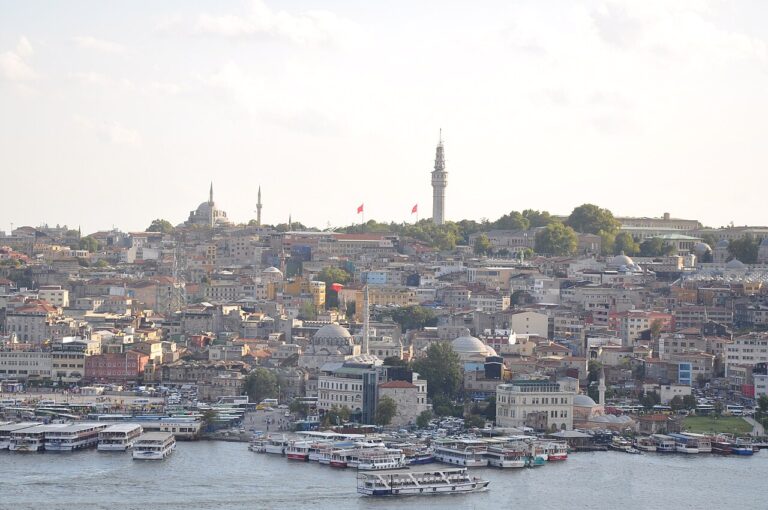
Photography Spots in Sultanahmet You Can’t Miss
Sultanahmet is a photographer's dream that does half the work for you.

The Best Day Trips from Sultanahmet
Sultanahmet is a superb base for a week of Istanbul, partly because the city around it is enormous and partly because so…
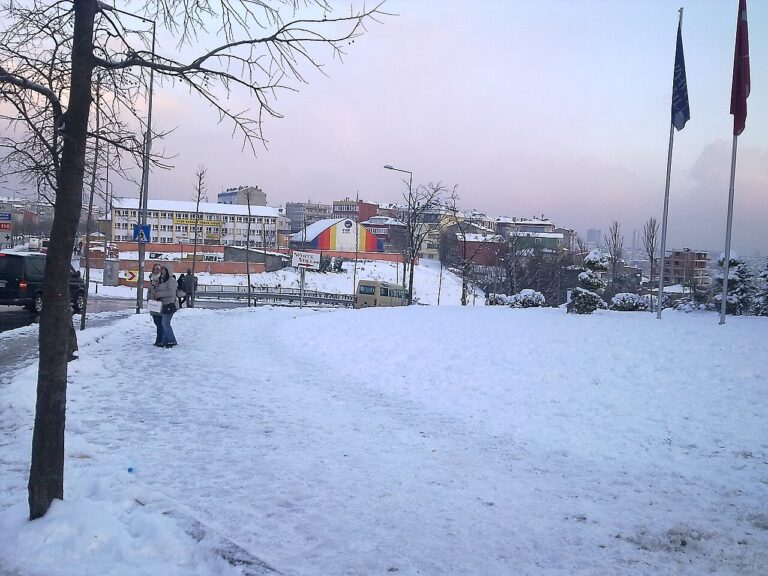
Sultanahmet in Winter: What to Expect
Winter is Istanbul's secret season, and Sultanahmet is its best-kept secret.

A Foodie’s Guide to Sultanahmet
Istanbul is one of the world's great food cities, and the good news for visitors is that its most historic neighborhood is…

Top 10 Things to Do in Sultanahmet
Sultanahmet packs more history per square kilometer than almost any district in Europe.